Abscess vs Cyst
Both are lumps under the skin. Both can get red, sore and swollen. People use the words as if they mean the same thing, and they do not.
A cyst is a sac. An abscess is an infection. A cyst is a closed pocket of skin material that built up slowly. An abscess is a pocket of pus your body walled off to trap bacteria.
That difference decides the treatment. Draining an abscess fixes it. Draining a cyst does not, because the sac stays behind and fills again.
What it is
Bacteria get under the skin, usually Staphylococcus aureus. Your immune system walls them off, and the wall fills with pus. It is an active infection.
A sac forms from a hair follicle and slowly fills with keratin — the same protein your skin and nails are made of. Nothing is infected. It is a plumbing problem, not a germ problem.
How fast it appeared
An abscess comes up quickly, often over two to five days, and keeps getting worse.
A cyst grows slowly. Many people say it has been there "forever" and only recently started to bother them.
How it feels
Warm to the touch and painful even without pressing. As it fills, the centre goes soft and boggy — doctors call this fluctuance. It feels like a small water balloon under the skin.
Firm or rubbery, and it rolls under your finger when you push it. Most cysts do not hurt at all unless they get inflamed.
The skin over it
The skin is stretched and angry-looking. It may come to a yellow or white point in the middle as it gets ready to drain.
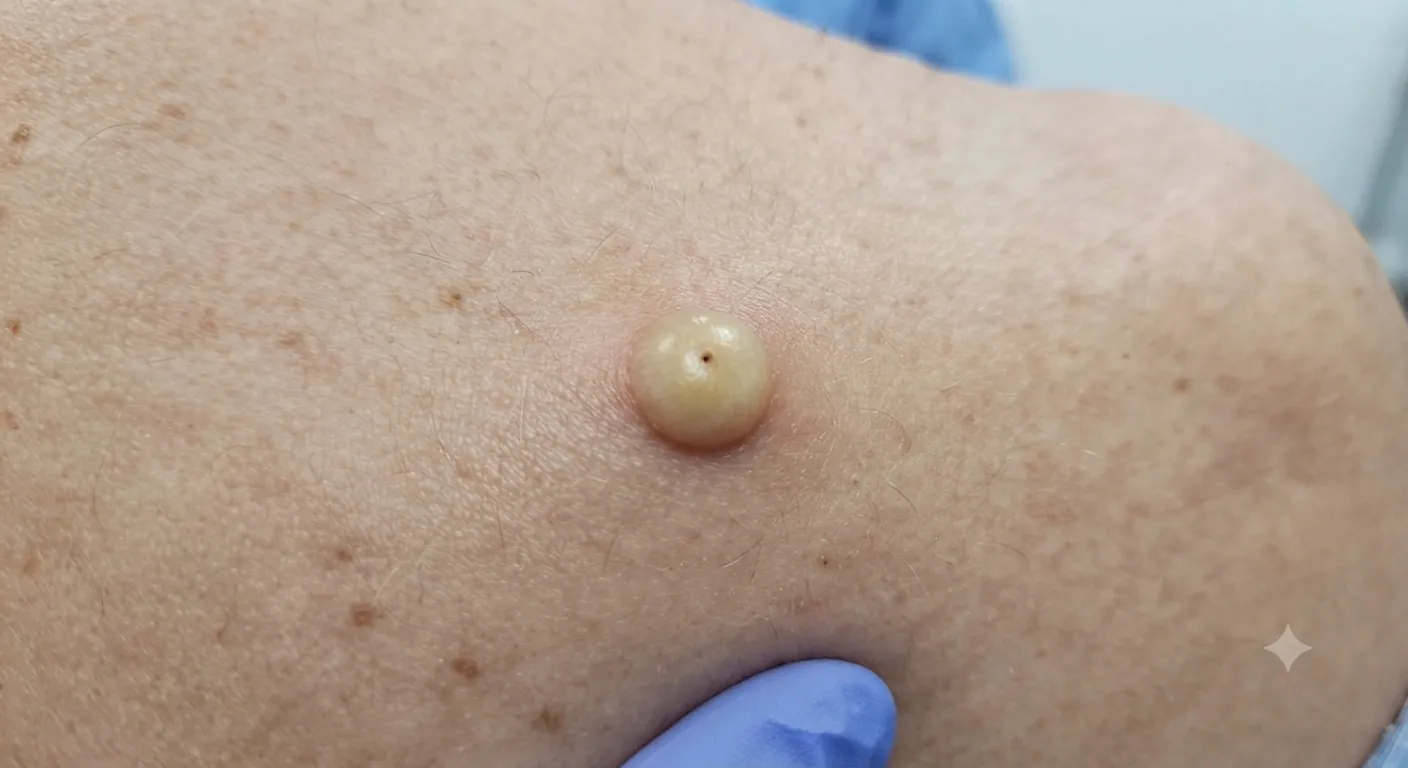
Skin colour or slightly yellow. Look closely for a tiny dark opening in the centre, called a punctum. That dot is the old follicle, and it is close to a giveaway for a cyst.
Do you feel unwell
A larger abscess can come with fever, chills or a general run-down feeling. Redness may spread outward into the surrounding skin.
A cyst is a local problem. It does not make you feel ill anywhere else.
How it is treated
A clinician numbs the area, opens it and lets the pus out. Relief is usually immediate. Antibiotics alone often do not clear an abscess, because the drug cannot get into a walled-off pocket — drainage is the treatment, and antibiotics are added only in certain cases.
A quiet cyst can be left alone. If you want it gone, the sac has to come out in one piece, done when the area is calm rather than inflamed. Squeezing out the contents empties it for a while, but the sac stays and refills.
Does it come back
Once drained it generally settles for good. Abscesses that keep returning in the armpits, groin or under the breasts may be hidradenitis suppurativa, which is a different condition and needs its own plan.
Any part of the sac left behind can refill. This is why draining a cyst is a temporary fix and removal is the permanent one.
Is it a cyst or an abscess?

The one that fools everyone
A cyst that ruptures under the skin turns red, hot and painful within a day or two. It looks exactly like an abscess, and even doctors treat it as one at first.
Here is the part most pages leave out: a ruptured cyst is often not infected. The keratin inside leaks into the surrounding tissue and the body reacts to it, which produces the same redness and pain as an infection without any bacteria involved.
Two clues point back toward a cyst: there was a lump in that exact spot before it flared, and there is a dark punctum in the centre. If either is true, mention it to whoever sees you — it changes the plan, because the sac will still need removing later.
Do not do this to either one
Do not squeeze, pop or dig at it. Pushing on an abscess can force bacteria deeper instead of out. Pushing on a cyst can rupture the sac under the skin and turn a painless lump into a painful one.
Do not try to drain it with a needle or a blade at home. You cannot sterilise skin properly, you cannot see how deep it goes, and you risk scarring and a worse infection.
Do not wait it out on the face. Infections near the nose and eyes need to be seen promptly.
When to see a dermatologist
- The lump is hot, painful, and getting bigger day by day
- You have a fever, chills, or redness spreading out from the lump
- It is on your face, especially near your nose or eyes
- You have diabetes, a weakened immune system, or take medication that suppresses it
- It keeps coming back in the same spot, or in the armpits, groin or under the breasts
- It has drained on its own but will not heal shut
Two of those deserve emphasis. Spreading redness with a fever suggests the infection is no longer walled off. And repeated abscesses in skin folds are the usual first sign of hidradenitis suppurativa, which is treatable but often goes unrecognised for years.