Start here
Acne is not a hygiene problem, and it is not caused by what you ate last night. It starts deep in the pore weeks before anything shows on the surface, which means the spot you are looking at today was set in motion about six to eight weeks ago. That single fact changes how you treat it. You do not treat spots. You treat the whole area where you get them, every day, whether or not there is anything there right now. The caveat I repeat most: nothing gets a fair verdict before 12 weeks. Most people quit at week four, which is usually the point where skin looks its worst and the treatment has only just started working.
— Dr. Schwarz, Board Certified Dermatologist
Key Facts
−
| How common | The most common skin condition in the country - roughly 50 million people a year |
| Who gets it | Most teenagers get some. About 15 percent of adult women still have it in their 30s and 40s |
| Curable or managed | Managed - most acne settles with age, but it can come back |
| Prescription needed | Not always. Mild acne often clears with over-the-counter treatment |
| Time to improve | About 12 weeks |
Types
−
How It Looks by Skin Tone
−
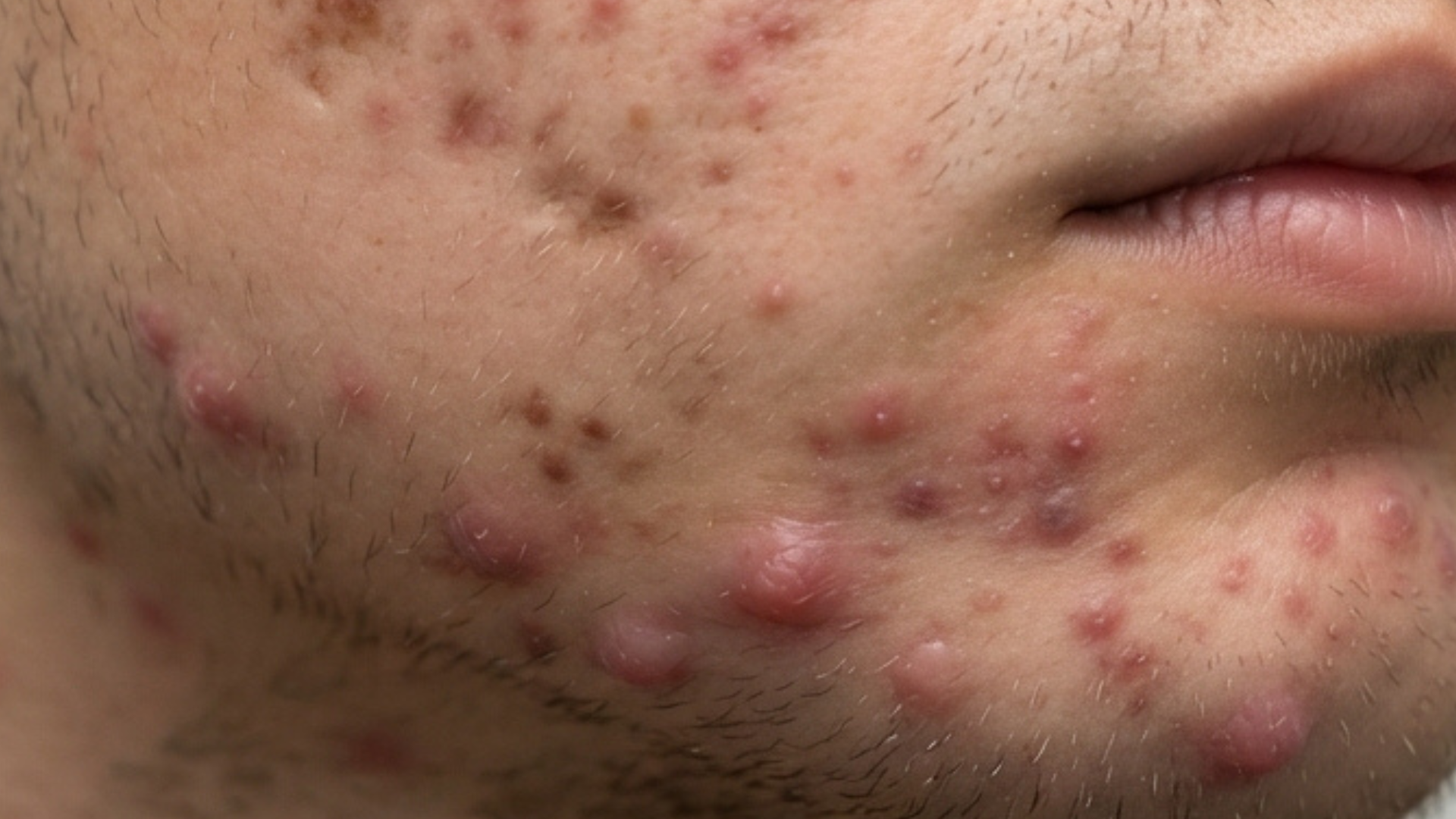
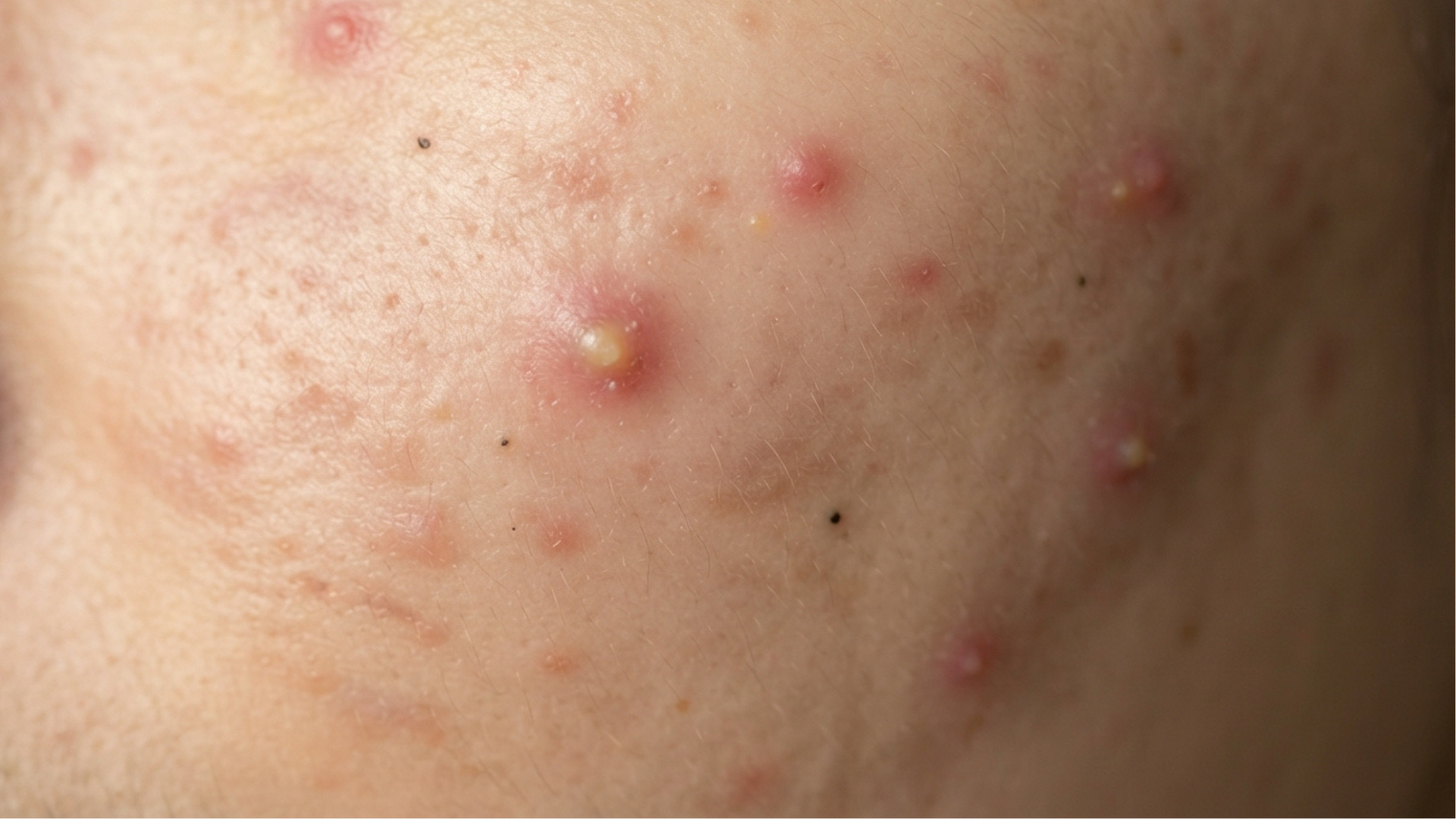
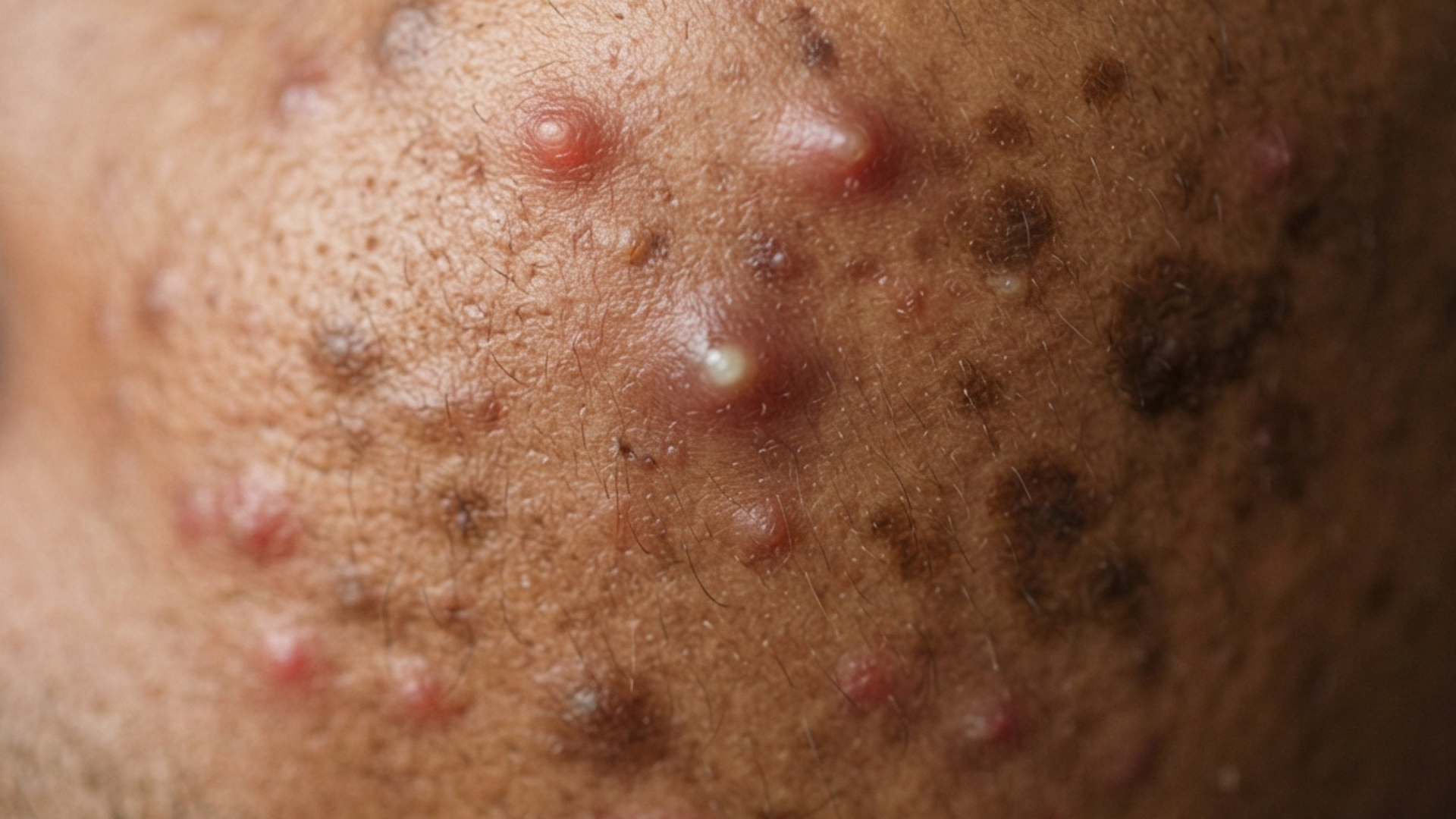
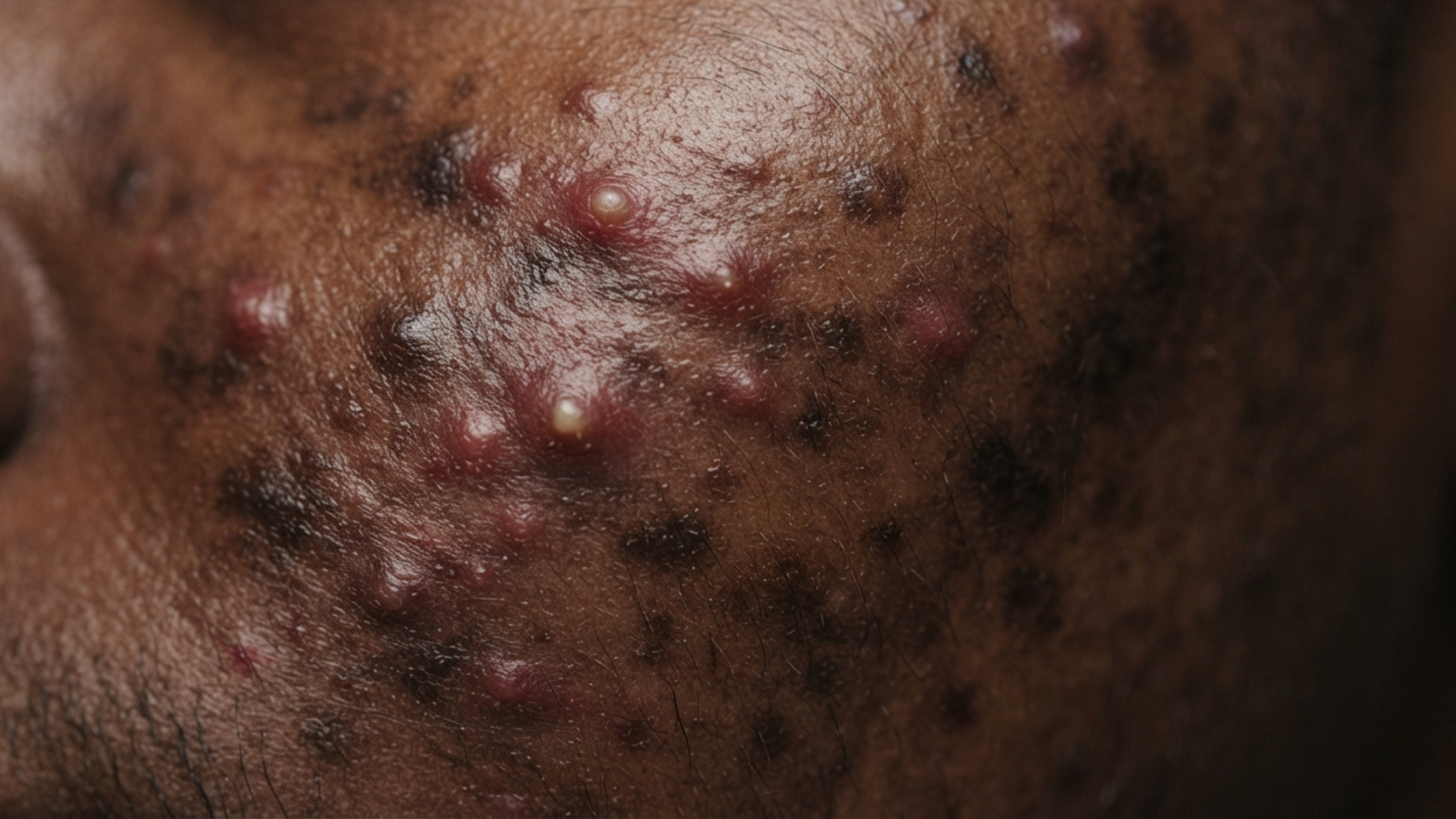
On brown and Black skin, the spot is rarely the main problem. What it leaves behind is. Acne heals into flat dark marks, called post-inflammatory hyperpigmentation, and those marks routinely take six to twelve months to fade - far longer than the spot took to clear. That changes the priority: the goal is to stop new inflammation early rather than treat marks after the fact, and to add a daily sunscreen, because sun exposure makes existing marks darker and slower to go. The part that is easy to miss is redness. Inflammation on darker skin often looks brown or violet rather than red, so acne here is regularly judged as milder than it is - and treated less aggressively than it should be. Deep or nodular acne on the jawline, chest and shoulders also carries a higher risk of raised, thickened scars, which is a reason to treat sooner rather than wait it out.
Where It Shows Up
−
Causes
−
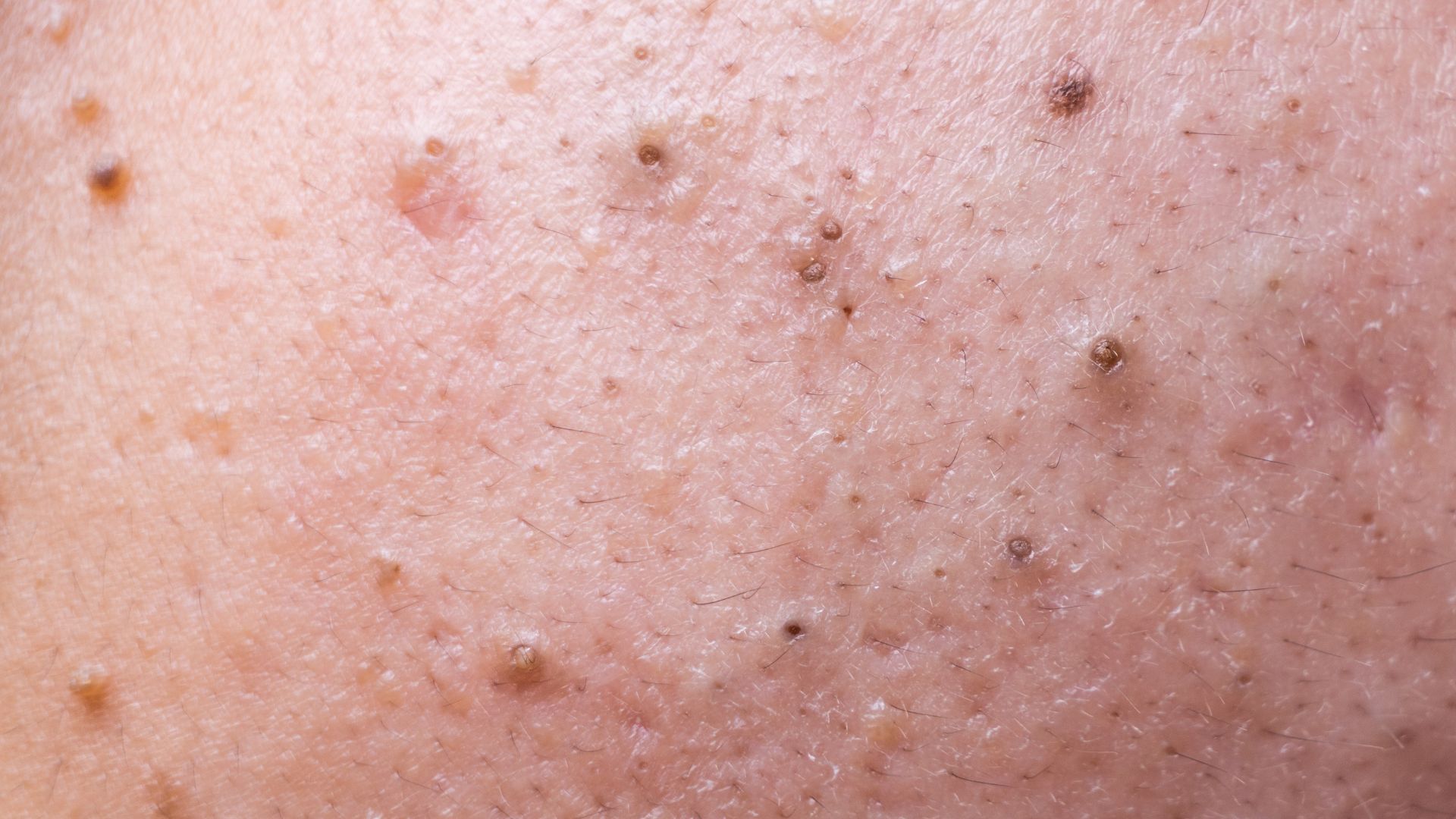
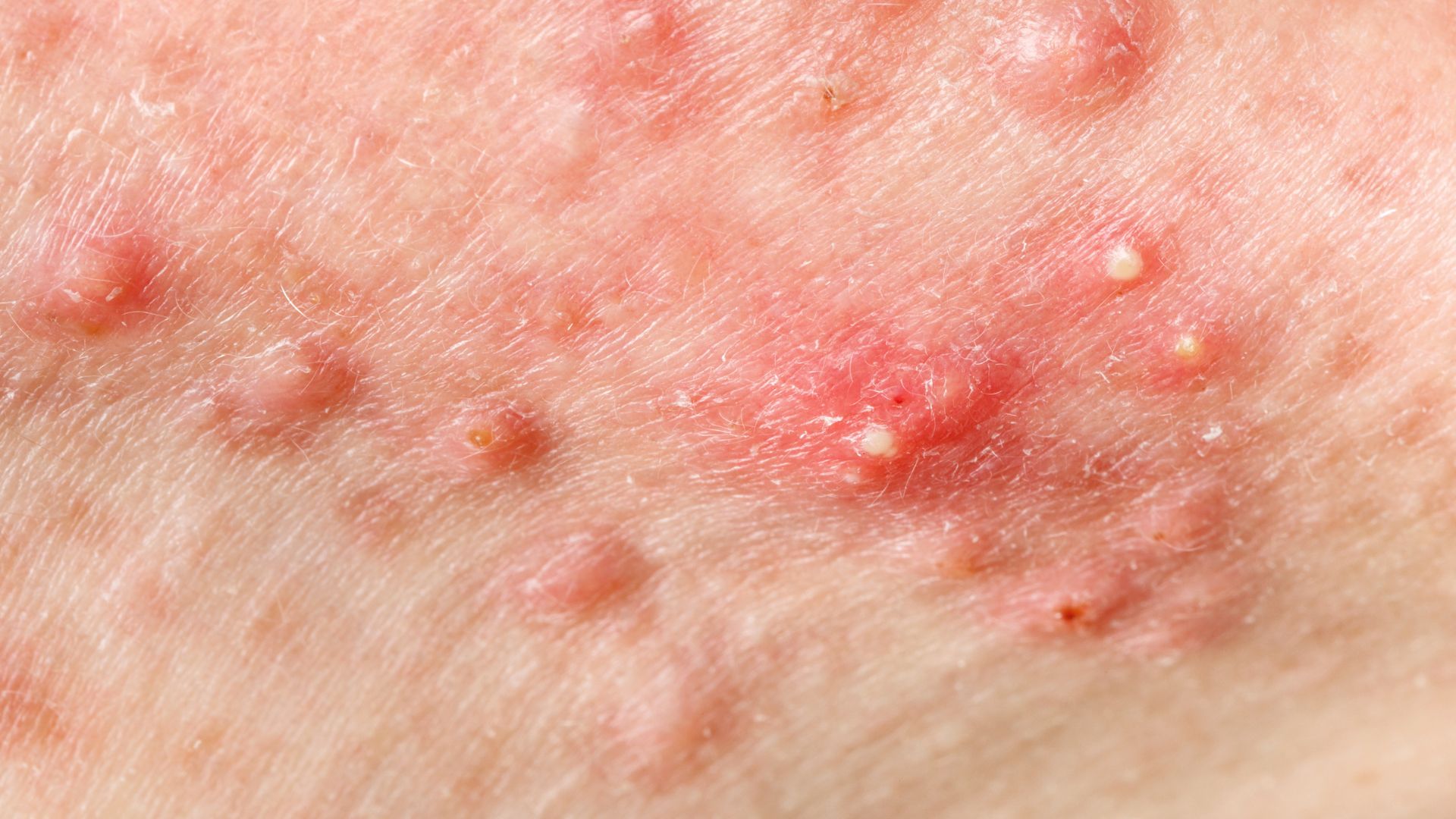
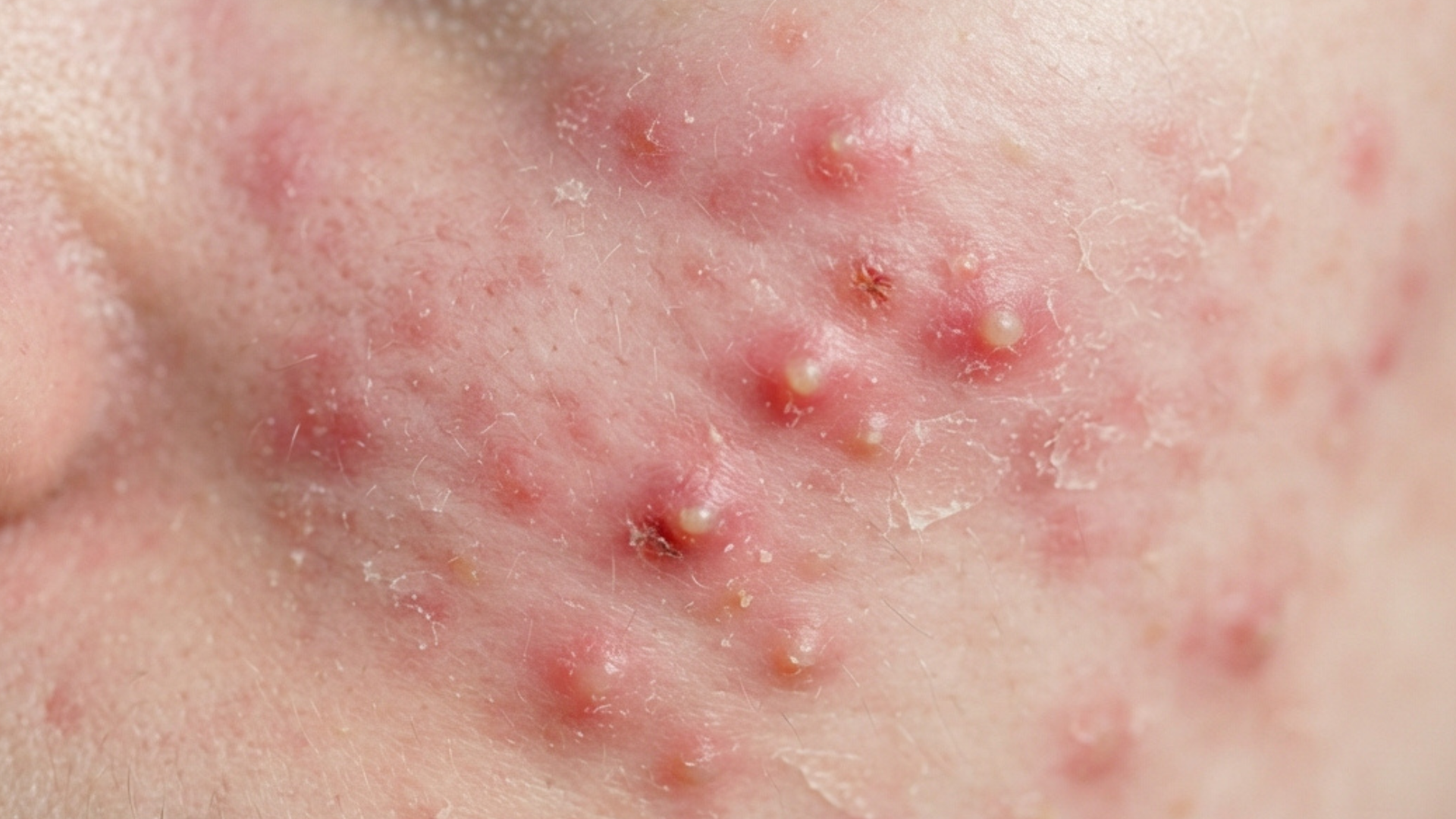
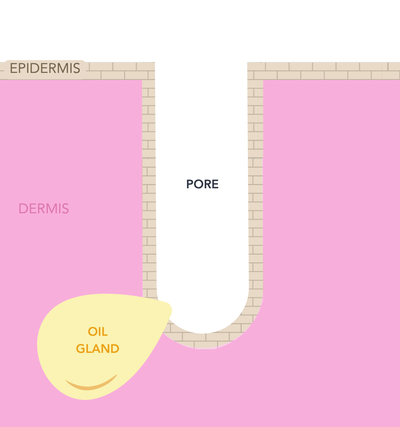
Four things happen inside a pore, in order. The cells lining the pore stop shedding cleanly and stick together, blocking the opening. Oil keeps being made behind the block, so pressure builds. A normal skin bacterium called Cutibacterium acnes multiplies in that trapped oil. The immune system reacts to it, and the pore becomes red, swollen and sore.
Normal pore
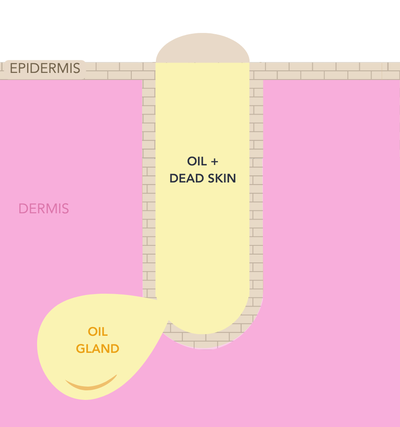
Whitehead
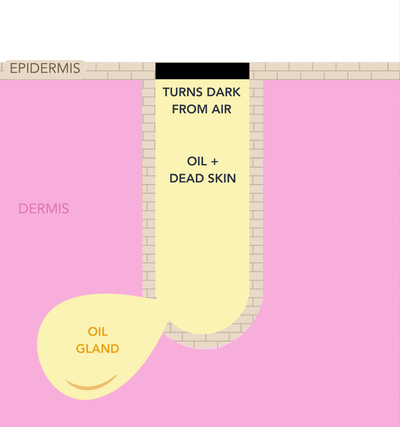
Blackhead
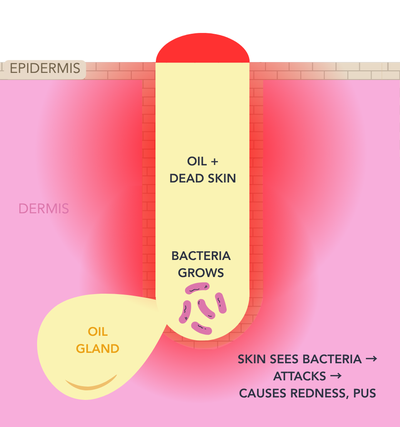
Inflammatory acne
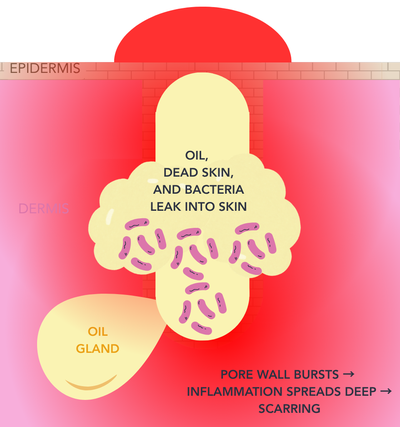
Nodular acne
A blackhead is a block that is open to the air and has oxidized. A whitehead is the same block sealed under the surface. A papule, pustule, nodule or cyst is what happens once inflammation joins in.
Risk Factors
−
Some things genuinely raise the odds, and none of them are your fault.
What Makes It Worse
−
- Picking and squeezing It pushes inflammation deeper, turns a spot that would have faded into a mark that lasts months, and is the single biggest cause of scars that did not need to happen.
- Scrubbing and over-washing when it flares Stripping the skin damages the barrier, which makes it red and sore, and forces you to stop the treatments that actually work. Twice a day with a gentle cleanser is enough.
- Adding more products When acne flares, most people add a third and fourth active. That causes irritation, not clearance. One good active used consistently beats four used erratically.
- Heavy oil-based products, particularly hair products. Pomades, oils and heavy conditioners run onto the forehead, hairline and back, and cause a stubborn pattern of small bumps along the hairline. Look for the words non-comedogenic or oil-free.
- Friction and trapped sweat Helmet straps, sports gear, backpacks, tight collars and face coverings all press oil and sweat into pores. Shower and change out of damp clothes soon after.
- Stopping treatment as soon as it works Acne treatment is maintenance, not a course. Skin usually goes back to how it was within two to three months of stopping.
What Makes It Better
−
- Pick one proven active and use it every night. A retinoid, benzoyl peroxide or azelaic acid - not all three at once.
- Strip the routine back A gentle cleanser, a moisturizer, one active, and a sunscreen is a complete acne routine. Everything else is optional.
- Give it 12 weeks before deciding Real change shows between weeks six and twelve. Judging it at week four is judging it during the worst part.
- Start strong actives slowly Two or three nights a week to begin with, applied to dry skin, with moisturizer on top or after. Build up as the skin tolerates it. This is how you get to use the strong thing at all.
- Wear sunscreen daily It will not clear acne, but it is what stops the dark marks left behind from deepening and dragging out for months.
Products
−
And what is your skin like the rest of the time?
Pick the tile that looks most like yours and the routine is built for it. Showing the basics everyone needs.
Treatments
−
Pick the tile above that looks most like yours and this list narrows to what suits it. The basics stay put - a gentle cleanser, a moisturizer and a daily sunscreen are right whichever kind of acne you have.
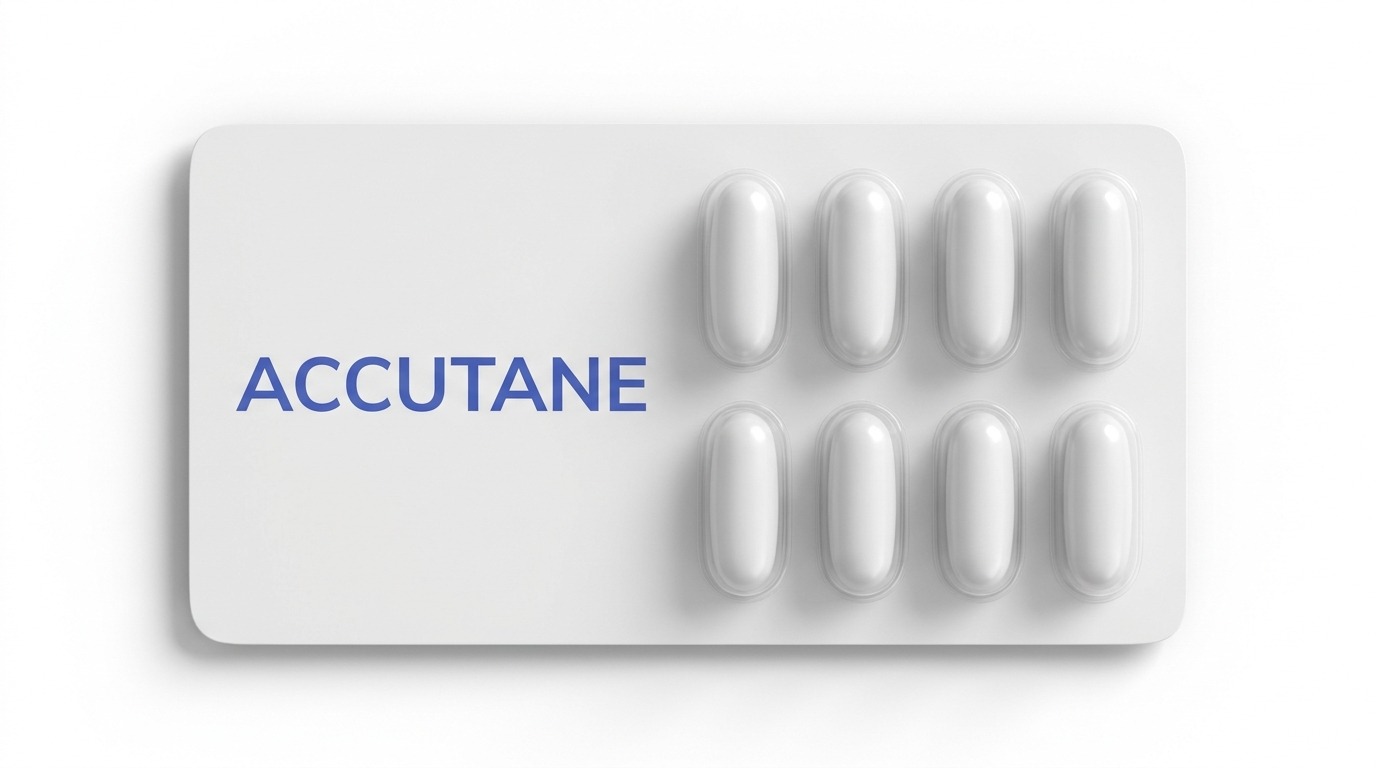
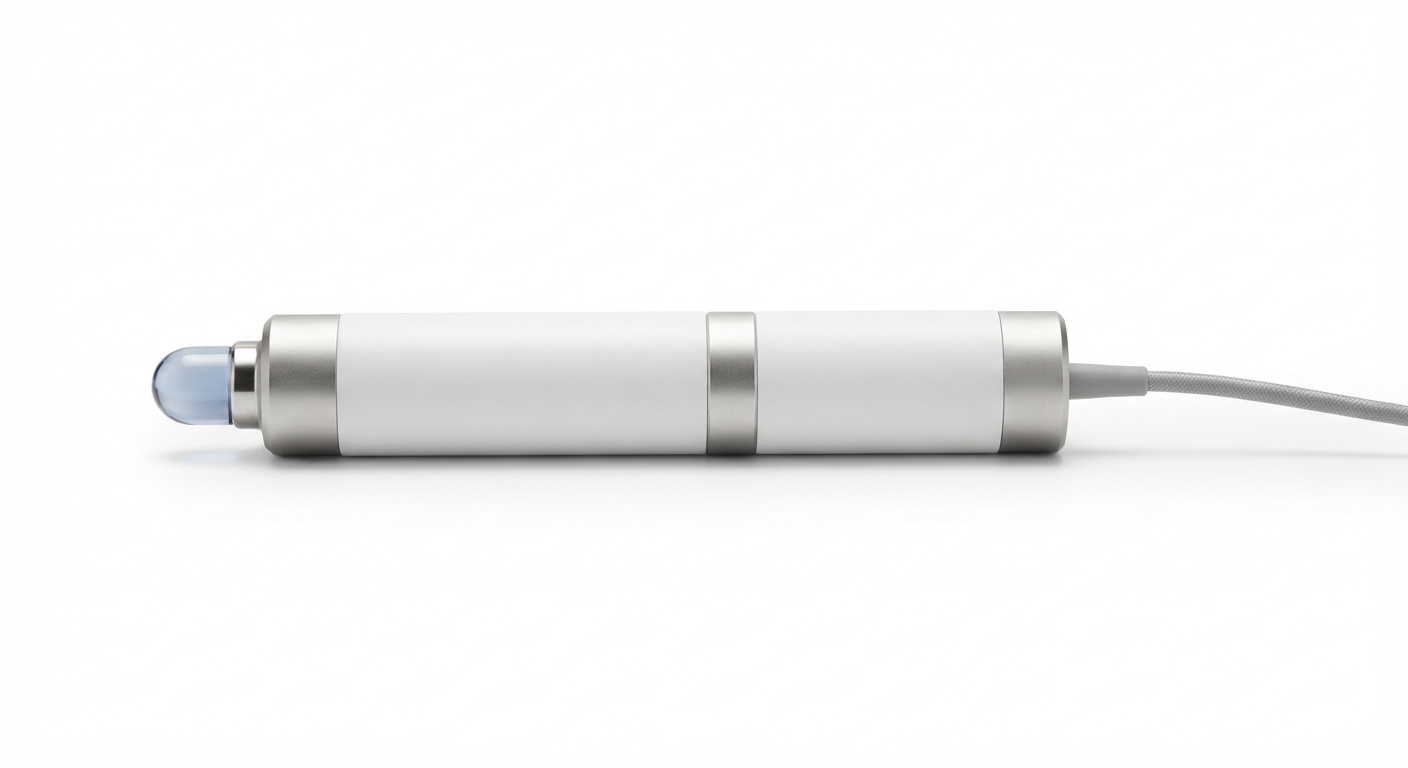
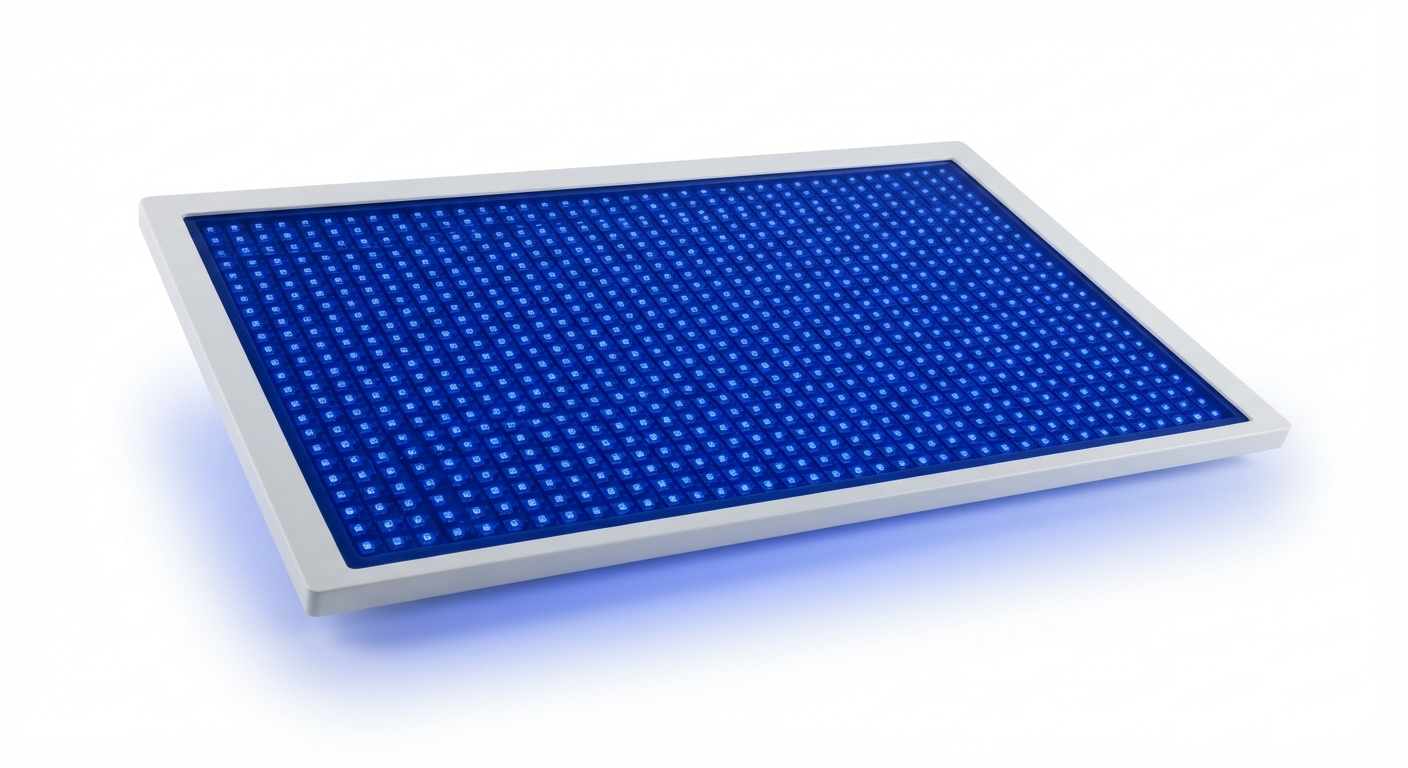
No treatments match that type yet.
Who Should Be Careful
−
- Pregnancy Isotretinoin, all retinoids including over-the-counter adapalene, spironolactone and the tetracycline antibiotics all come off the table. Azelaic acid, benzoyl peroxide and topical clindamycin are the usual replacements, and are generally considered safe in pregnancy. Tell any prescriber early if you are pregnant, planning to be, or breastfeeding.
- Other conditions Polycystic ovary syndrome changes the order of treatment - hormonal options tend to work better than antibiotics. A history of inflammatory bowel disease or significant depression is not an automatic bar to isotretinoin, but it is a conversation to have before starting, not after.
- Other medicines Tetracycline antibiotics should not be combined with isotretinoin, because together they raise pressure around the brain. Spironolactone needs care alongside potassium supplements, ACE inhibitors or other potassium-raising drugs. Some acne treatments also make skin more sun-sensitive. Give the prescriber your full medicine list, including supplements.
What to Expect
−
When to See a Doctor
−
It is worth going in earlier than most people do. Acne that scars cannot be undone later, and the treatments that prevent scarring are all prescription-only.
Book if you have deep, painful lumps under the skin, if spots are leaving marks or dents that stay, if 12 weeks of over-the-counter treatment has changed nothing, if acne is affecting your mood or how you live, or if adult acne appears suddenly alongside irregular periods or new hair growth. The visit gets you prescription strength on the day, a combination chosen for your pattern rather than a guess, and treatment started before the damage is permanent.
Complications
−
- Effect on mood Acne is consistently linked with lower confidence, anxiety and low mood, and the link does not track with how severe it looks to anyone else. It counts as a reason to treat it.
Lookalikes
−
FAQ
+
Does acne ever go away?
For most people it settles substantially by the mid-twenties. But about one in six women still has it into their 30s and 40s, and it can return after pregnancy, stopping the pill or a change in hormones. It is better thought of as controlled than cured.
Does what I eat cause acne?
Diet is a smaller factor than the internet suggests. The best evidence points at high-glycemic diets - a lot of sugar and refined carbohydrate - and, less consistently, at skim milk. Chocolate and greasy food have never held up. Changing your diet is not a substitute for treating the skin.
Why does my skin get worse when I start a new treatment?
That is purging. Retinoids speed up how fast clogs already forming under the surface come up, so several weeks of spots arrive at once. It usually peaks around weeks two to six and settles by week eight. If it is still worsening past 10 to 12 weeks, that is irritation, not purging.
Is it ever okay to pop a spot?
No, and the reason is practical rather than moral. Squeezing pushes the contents sideways into the surrounding skin, which turns a spot that would have gone in days into a mark that lasts months, or a scar that lasts forever. A large, painful lump can be injected in clinic and settles in a day or two - that is the safe version of popping it.
Do I need antibiotics?
Sometimes, but not on their own and not for long. Antibiotics are used alongside benzoyl peroxide or a retinoid, usually for three to four months, then stopped while the topical treatment carries on. Used alone or indefinitely they stop working and drive resistance.
Is my acne hormonal?
Almost all acne is hormonal in the sense that hormones drive oil production. The label is only useful if it changes treatment - deep spots along the jawline and lower face in an adult woman, flaring before periods, often respond better to hormonal treatment than to antibiotics.
References
+
- Reynolds RV, Yeung H, Cheng CE, et al. Guidelines of care for the management of acne vulgaris. J Am Acad Dermatol. 2024. — American Academy of Dermatology, 2024
- Novel 1726 nm laser demonstrates durable therapeutic outcomes and tolerability for moderate-to-severe acne across skin types. J Am Acad Dermatol. 2023. — Journal of the American Academy of Dermatology, 2023