Certain Dri vs Drysol
Certain Dri is the strongest antiperspirant you can buy without a prescription. Its clinical roll-on is 12% aluminum chloride. Drysol is a prescription solution at 20%. Both work the same way and both go on at night, and the stronger one stings more people.
What it is
Sold on the shelf, no appointment needed. There is also a milder everyday version made with aluminum sesquichlorohydrate, which is gentler and less powerful.
A liquid in an alcohol base, applied with a bottle applicator or a cotton ball. In the US, anything above 15% needs a prescription.
What you do
Onto completely dry skin at bedtime, then wash it off in the morning. Nightly at first, then a few nights a week.
The same routine. Usually three nights in a row to begin with, then once or twice a week to keep it working.
How it works
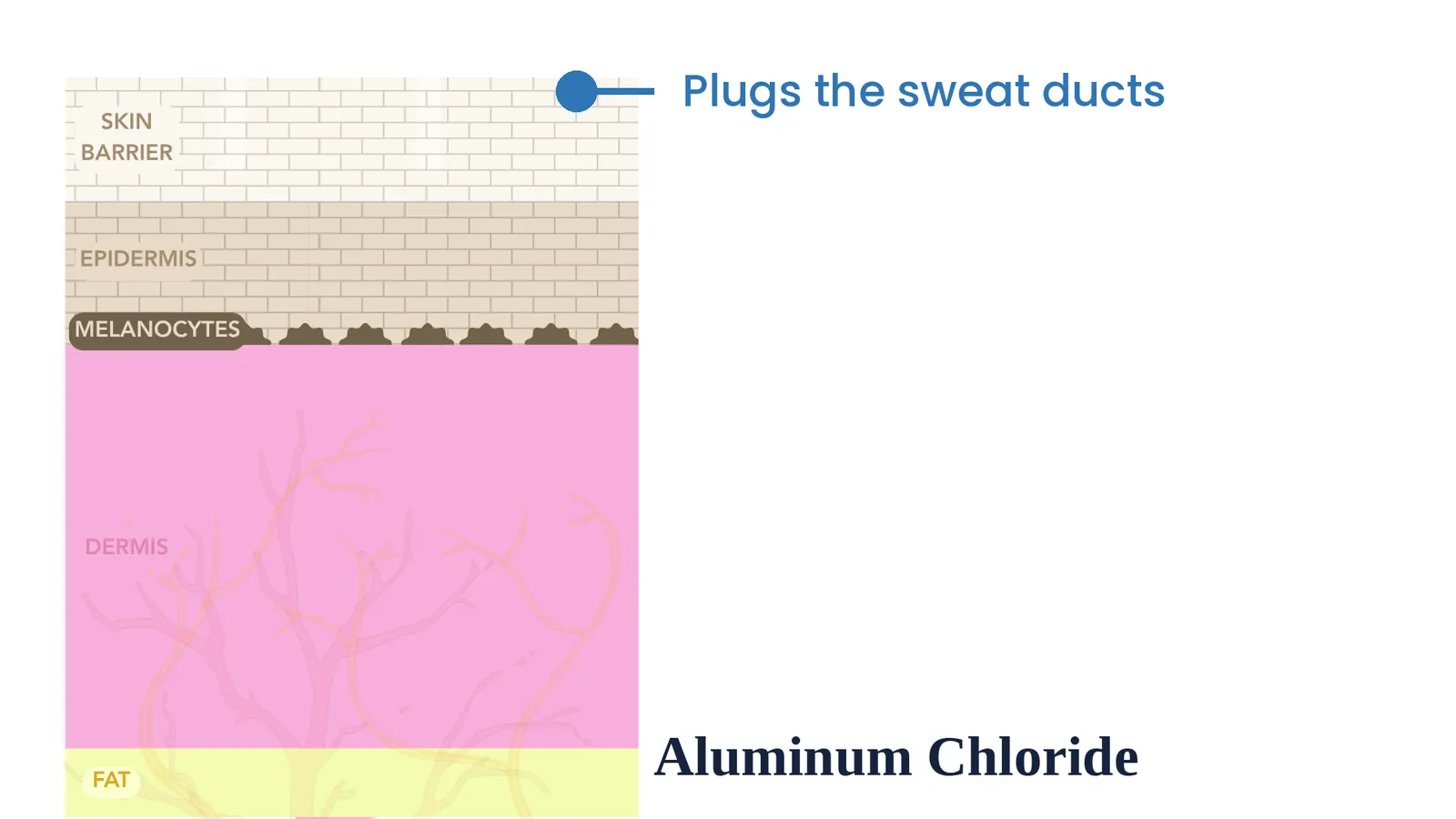
Aluminum salts react with sweat and form a plug near the top of each duct, so sweat cannot get out. The plug wears away over days.
The same mechanism at a higher concentration, so more ducts get blocked and the effect lasts longer.
How long until it works
Most people notice a difference within a few nights, with the full effect inside two weeks.
Similar. If four nights change nothing at all, it is unlikely to be your answer.
How long each application lasts
Which is why it is a maintenance routine rather than a course you finish.
Once it is established, once or twice a week keeps most people dry.
Where you can use it
The label is written for underarms. Hands and feet have much thicker skin and usually need something stronger.
Different strengths exist for underarms and for palms and soles, because the skin is so different in each place.
The downside
Irritation is the main complaint. It is usually mild and settles if you apply it less often or wash it off earlier.
Around a quarter to a third of people get stinging, burning or an itchy rash. It usually settles within about a week of carrying on.
Cost
A drugstore purchase with no appointment attached.
The medicine itself is inexpensive. The visit and the prescription are the real cost.
The difference is strength, not chemistry
Both are aluminum chloride, and both plug the sweat duct: The salt reacts with sweat inside the duct and forms a temporary plug near the surface. Nothing is switched off. The sweat simply cannot get out at that spot.
Drysol is stronger, so it works for more people and stings more people: 20% against 12% is a real gap in both directions. If Certain Dri is not enough, Drysol is the obvious next step rather than a different idea.
Start with the one you can buy: It costs less, needs no appointment, and for mild to moderate sweating it is often enough. Trying it first also tells your doctor something useful if you do end up asking for a prescription.
How to use either one without burning your skin
Apply to completely dry skin: Water and aluminum chloride together make an acid on the skin, and that is what the burning is. A few seconds with a hairdryer on cool before you apply is a trick that works.
Apply at bedtime and wash it off in the morning: You sweat least at night, so the plug forms properly. Washing in the morning does not undo it, because the plug is already inside the duct.
Wait a day or two after shaving: Freshly shaved skin has tiny nicks in it, and that is where most of the stinging comes from.
Back off before you give up: Most irritation settles if you drop to every other night, or wash it off after four hours instead of eight. Quitting after one bad night is the most common way people decide it does not work for them.
What neither one does
Neither one stops your body making sweat: They block the exit. That is why the effect wears off over days and why you have to keep using them.
Neither one is really a deodorant: Less sweat does mean less smell, because odour comes from bacteria feeding on sweat. But a plain aluminum chloride product has no fragrance and nothing antibacterial in it.
Neither one is likely to be enough for severe sweating: If you soak through shirts, drip from your hands, or plan your day around it, there are stronger options and they work.
If Drysol is not enough
Glycopyrronium wipes are usually the next step: They block the nerve signal to the sweat gland instead of plugging the duct, and you wipe the underarm once a day.
Iontophoresis is the standard answer for hands and feet: You rest your hands or feet in trays of water carrying a weak electrical current, for about 20 minutes, several times a week at first. It is fiddly, and it works.
Botulinum toxin injections stop underarm sweating for months: A grid of small injections blocks the signal to the glands. It usually lasts six to nine months and is the most reliable option for underarms.
Tablets and a heat-based device are options too: Anticholinergic tablets reduce sweating all over, with a dry mouth as the usual trade-off. A microwave-based treatment destroys underarm sweat glands permanently in one or two sessions.