CoolSculpting vs Liposuction
CoolSculpting is better when you want a small change and no time off. It freezes a pinched fold of fat through the skin, and most people go back to work the same day. Liposuction is better when you want a clear change in one go. A surgeon suctions the fat out through tiny cuts, so far more comes off in a single session, but it is an operation with a real recovery. Neither one tightens loose skin.
What actually happens
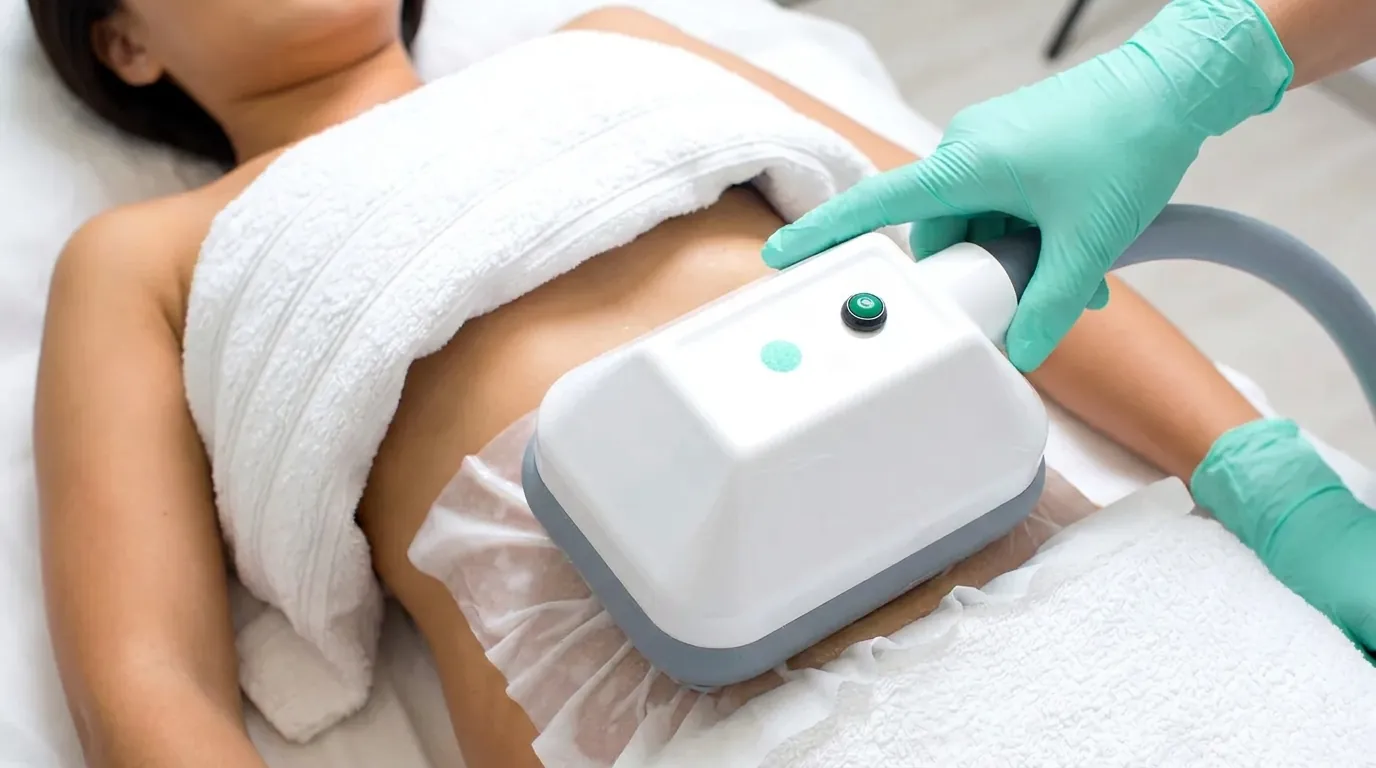
The applicator holds a fold of tissue cold for about 35 to 45 minutes. Your body clears the damaged fat cells over the following weeks.
The surgeon numbs the area with fluid, makes small cuts, and moves a cannula through the fat layer to draw it out.
How much it changes
Enough to see in clothes and in photos. Not enough to change a dress size.
The surgeon can take a lot or a little and can shape as they go. This is the flatter result most people picture.
Anaesthetic
Nothing is injected and nothing is numbed. The cold does the numbing on its own.
Small areas can be done awake. Bigger plans usually mean sedation or a general anaesthetic.
Recovery
The area is numb, red and firm for days to weeks. A deep ache can arrive a few days later.
Most people take about a week away from normal life, wear a compression garment for several weeks, and wait three to six months for the shape to settle.
How long until you see it
Usually two rounds per area, spaced four to eight weeks apart.
Bruising and swelling hide the result at first. The final shape is judged at three to six months.
The main downside
Paradoxical adipose hyperplasia: months later the treated area becomes firmer and larger rather than smaller. It affects about 0.22% of people, roughly 1 in 455, and liposuction corrects it.
Taking too much from one spot, or not blending into the next, leaves a contour you can see. Fixing it is harder than getting it right the first time.
Cost
The at-home or drugstore version
A gel pack starts cold and warms up while you wear it. The clinic device holds one set temperature for the whole session, and that steady cold is what damages the fat cell.
Nothing you can buy removes fat from under the skin. Massage devices, wraps and creams move fluid for a few hours.
Who each suits
The difference is how much comes off
CoolSculpting thins a fold. Liposuction empties one: Freezing damages some of the fat cells inside the applicator and your body clears them over weeks.
Suction takes the fat out in the room: The surgeon can see and feel how much has gone, and can keep going until the shape looks right.
That is why the results are not in the same league: Someone hoping for a surgical result from a course of freezing will spend real money and still be disappointed.
Loose skin decides more than people expect
Neither one shrinks skin: Both leave the skin exactly as they found it.
Taking fat out from under slack skin can make it hang more: If you pinch the area and mostly skin comes away, fat is not your main problem.
Skin that hangs in a fold needs surgery to remove it: That is a different operation from liposuction, and a surgeon should say so at the consultation.
Neither one is a weight-loss treatment
Both change the shape of one area: They do not change the number on the scale in any meaningful way.
Both need a stable weight to hold: The fat cells that are left can still enlarge, so a big weight gain will show up in the treated area and everywhere else.
Both work best close to your usual weight: Clinics turn people away for this reason, and a clinic that never does is worth a second thought.
Before you book
Ask a surgeon and a non-surgical clinic separately, then compare what each said about your skin.
Ask how many CoolSculpting cycles the plan needs and what the whole course costs, not the price of one.
For surgery, ask who is operating, what their training is, and what the full quote covers.
Ask to see photos of people with your build, not the best result the clinic has ever had.