Heat Rash vs Sunburn
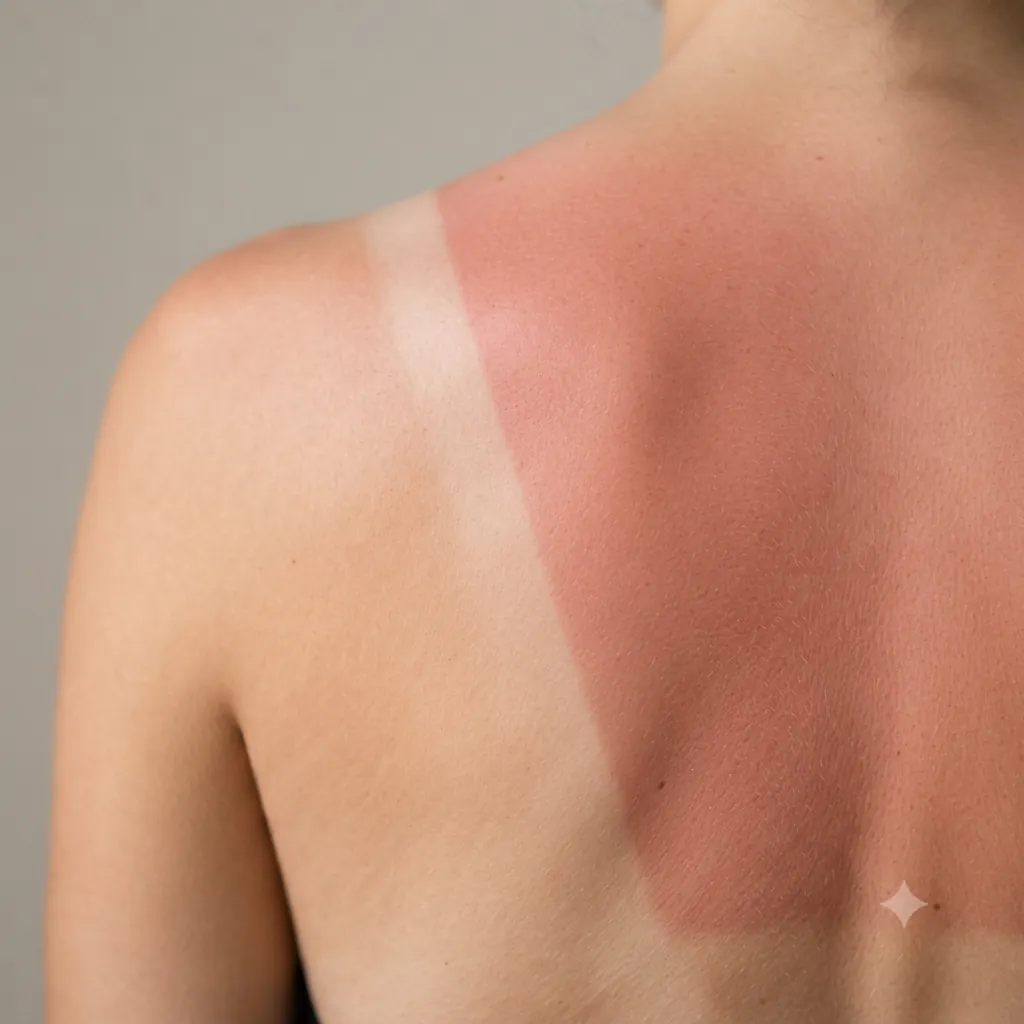
Heat rash is blocked sweat ducts. It is a field of tiny prickly bumps under clothing, and it fades within days of cooling down. Sunburn is ultraviolet damage. It is flat, even redness on exactly the skin the sun reached, it peaks about a day later, and it peels.
What it is
Sweat ducts get blocked, so sweat backs up and leaks into the skin around them. The skin reacts to the trapped sweat.
UV light damages skin cells. The body responds by widening blood vessels and sending in inflammation, which is the redness and the heat you feel.
What it looks like
Pinhead clear blisters, or small inflamed bumps, close together. The skin between them looks normal.
A whole area changes colour at once. On brown and black skin a burn can look darker, or feel hot and tight rather than look red.
How it feels
A stinging, tingling, prickly feeling that gets worse the moment you sweat.
Tender to touch, tight, and warm to the hand. Bad burns blister and can come with chills and headache.
Where it shows up
Neck, chest, back, waistband, under the breasts, in skin folds, and under a backpack strap. Babies get it on the neck and face.
Shoulders, nose, tops of the ears, the parting in your hair, the tops of your feet. It stops at the edge of a sleeve.
When it appears
While you are still hot and sweaty, or shortly after.
Redness builds after you come indoors and peaks around 24 hours. You can burn badly and feel nothing at the time.
How long it lasts
It clears quickly once the skin cools down and stays dry.
The redness fades over several days, then the top layer sheds. Peeling means the damaged cells are being replaced.
What helps
Loose cotton, a fan or air conditioning, a cool shower, and drying the skin properly afterwards. Calamine or a light lotion for the itch. Thick creams make it worse by blocking the ducts further.
Cool showers, aloe or a plain moisturizer, extra fluids, and ibuprofen in the first day to bring the inflammation down. Leave blisters alone.
Does it leave a mark
It clears without a trace.
A single burn heals. Repeated burns are the strongest link there is to skin cancer, and to the brown patches and fine lines people call ageing.
When it needs a doctor
Bumps that turn into sore pus spots, or a rash that lasts more than a few days in a cool room, are worth having checked.
Large blistered burns, or a burn alongside fever, chills, confusion or vomiting, need proper medical care rather than a shelf product.
The border tells you which one it is
Sunburn stops where your clothes started: The line is sharp: a pale strip under a watch strap, a white shoulder under a vest, a red V at the neckline. Nothing but sun draws a border that neat.
Heat rash appears where your clothes sat: Under the waistband, along the bra line, in the crease of the neck, under a pack strap. It is the opposite map.
When both happened on the same day, read each area on its own: A hot afternoon outdoors can leave you with burnt shoulders and a prickly chest at the same time.
Why heat rash feels prickly
Every bump is a pocket of trapped sweat: The duct is blocked, so the sweat has nowhere to go. The more you sweat, the more pressure builds, which is why the prickling gets worse in the heat and eases as soon as you cool down.
Thick creams make it worse: Ointments and heavy lotions sit over the duct openings and keep them blocked. Something light, or nothing at all, works better.
Cool and dry is the whole treatment: Air on the skin does more than anything you can buy, and most heat rash clears within a couple of days on that alone.
Sunburn keeps developing after you come inside
The redness peaks about a day after the sun: Skin that looks faintly pink at six in the evening can be properly burnt by breakfast. That delay is exactly why people carry on sitting out.
Ibuprofen in the first few hours helps: It lowers the inflammation while the burn is still building. It does much less once the redness has already peaked.
Peeling is not something you can prevent: The damaged cells have to go. Keep the skin moisturized, leave blisters intact, and cover the area from the sun while it heals, because new skin burns very easily.
Getting hot is not what burns you
Heat and UV are different things: You can burn badly on a cold, breezy or overcast day, because clouds let plenty of UV through. You can also get heat rash indoors in a heatwave with no sun at all.
That is why "it did not feel hot" means nothing: Wind on a boat or a ski slope hides a burn while it is happening.
Sunscreen prevents one and not the other: It stops the burn. It does nothing for blocked sweat ducts, and a thick water-resistant sunscreen on a very hot day can even add to heat rash.