Hydroquinone vs Retinol
Hydroquinone blocks your skin from making pigment. It is the faster and stronger fader, and it is used in courses of a few months rather than forever. Retinol speeds up how quickly your skin sheds and replaces itself. It works more slowly, does more for texture and lines, and you can keep using it for years. They are often used together, and then the hydroquinone stops while the retinol carries on.
What it does
It blocks tyrosinase, the enzyme your pigment cells use to make melanin. Less new pigment goes into the skin, so the dark patch fades.
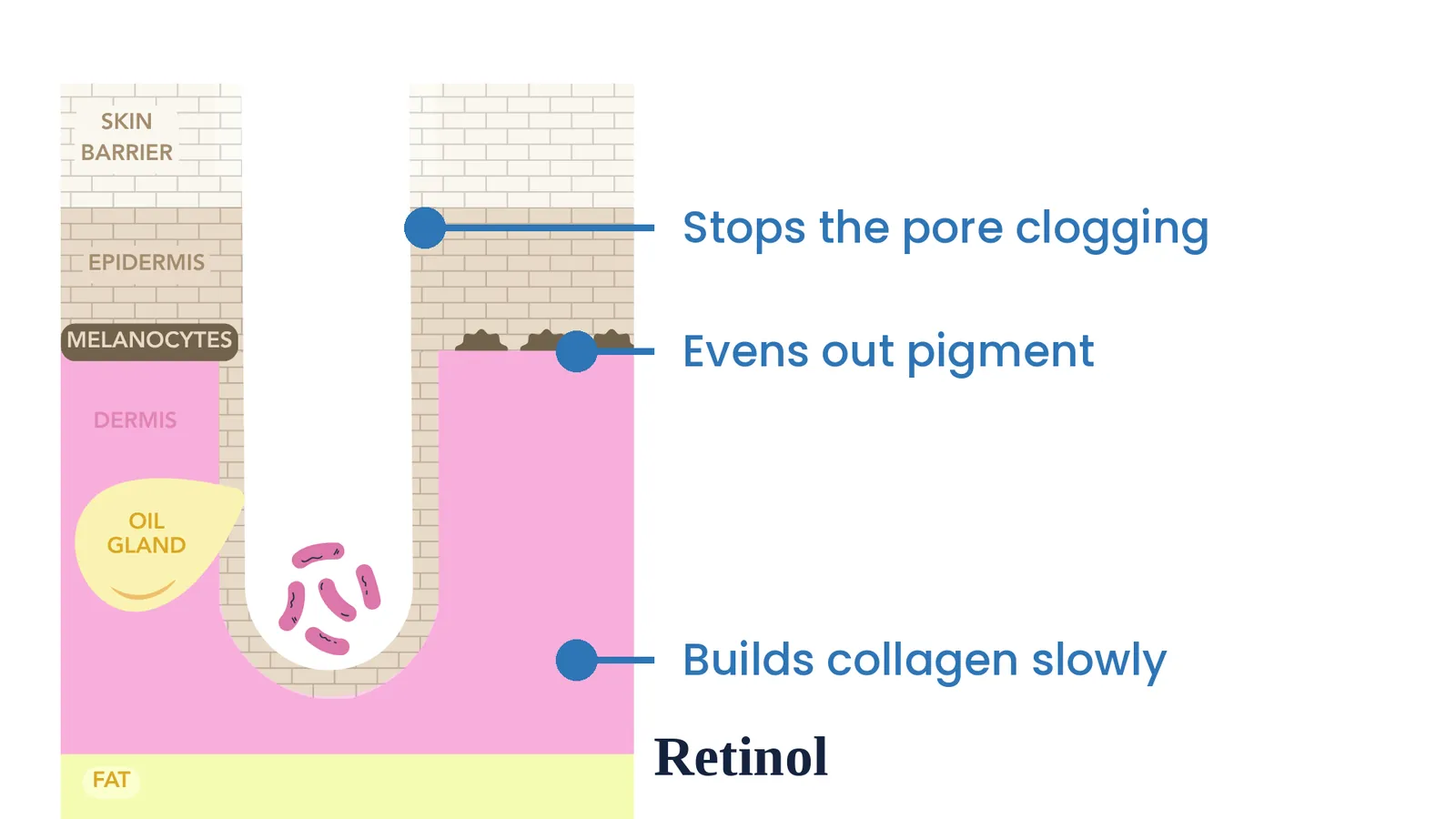
It pushes pigmented cells to the surface and off faster than they would go on their own, and it builds collagen while it does it.
What it is best at
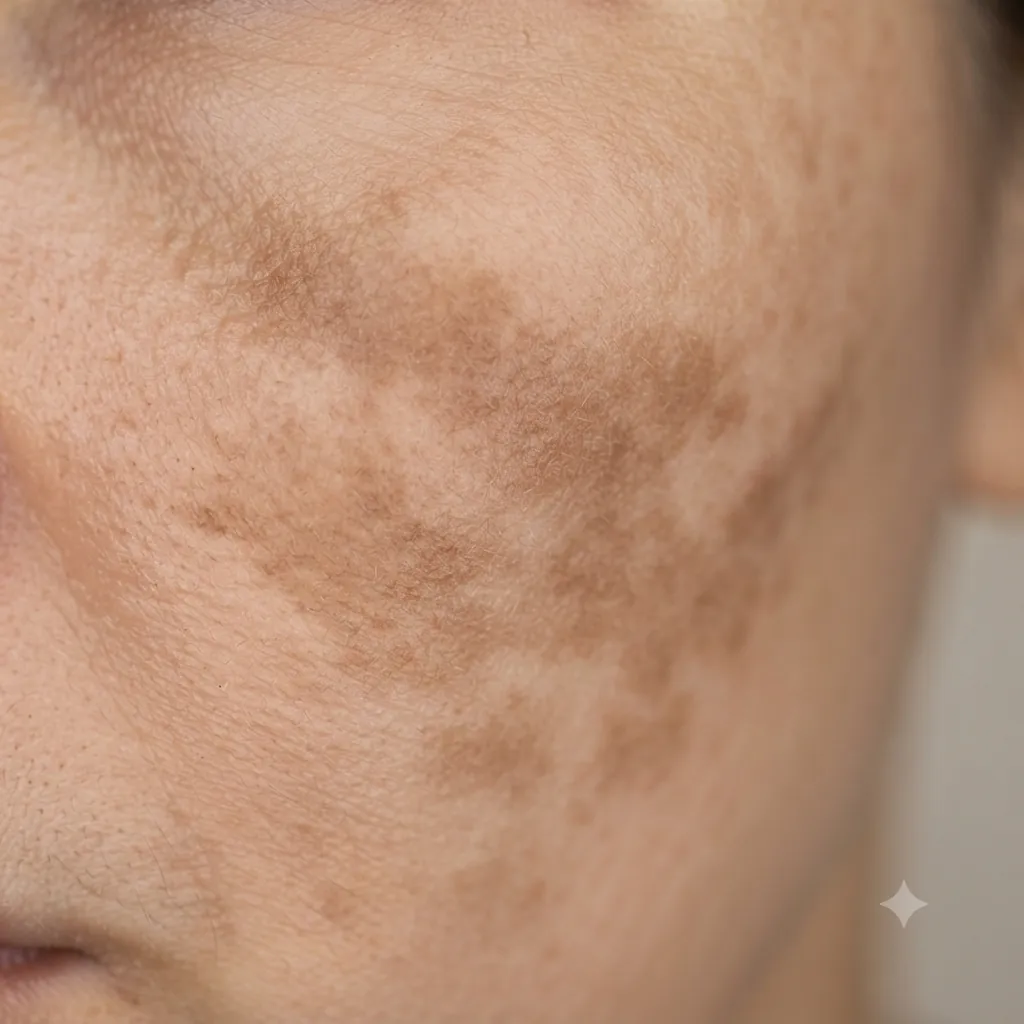
Brown patches on the cheeks and upper lip, and the marks left behind by spots. It is the strongest fader most people will be offered.
Uneven tone, rough texture, fine lines and mild dark marks. It is a general skin treatment that happens to fade pigment.
How fast you see a change
Most of what it is going to do, it does within three months.
Pigment is the slowest thing retinol improves. Texture usually shows up first.
How long you use it
It is prescribed as a course. Your dermatologist stops it, often for two or three months, before deciding whether to run another.
There is no limit. Most people who use it use it for years.
Where you get it
It was pulled from drugstore shelves in the United States. Anything sold openly online as high-strength hydroquinone is worth being cautious about.
Drugstore, department store, online. Strengths run from very gentle to fairly strong.
What it feels like
Usually well tolerated. Some people get redness or irritation, especially on thin skin.
The first few weeks are the worst of it. Starting two or three nights a week and building up avoids most of it.
Sunscreen
Cost
Plain hydroquinone is inexpensive. Compounded blends and branded combinations cost considerably more.
A drugstore retinol and a luxury one contain the same molecule. Price mostly buys the texture of the cream and the packaging.
The at-home or drugstore version
Azelaic acid, vitamin C, niacinamide, alpha arbutin and tranexamic acid are all sold without a prescription and all fade pigment. They are slower and milder than hydroquinone, but they are the same idea, and they can be used for as long as you want.
The prescription version is tretinoin, which is stronger and faster. Retinol is a weaker relative your skin has to convert before it works. It is a slower version of the same thing, not a different thing.
Who each suits
Does hydroquinone bleach your skin permanently?
No. Hydroquinone does not permanently bleach skin: It slows pigment production while you use it. When you stop, your pigment cells go back to working normally, and colour returns over weeks to months.
There is one rare problem worth knowing about: Using strong hydroquinone for many months on end can cause a blue-grey staining of the skin. Doctors call it exogenous ochronosis. It is harder to treat than the dark patch you started with. It is uncommon, and it is tied to long use without a doctor watching. That is why hydroquinone is prescribed in courses rather than forever.
Used the way it is prescribed, it is a well-established treatment: Dermatologists have used it for decades. The rule is simple: use it for a defined period, under supervision, then stop.
Why it comes in courses and retinol does not
Hydroquinone has a job with an end point: It fades a patch, and once the patch has faded, keeping it on your skin adds risk without adding benefit. So a typical course runs three to six months, then stops.
Retinol has no end point: It is doing ongoing work — turnover, collagen, keeping tone even. Stopping it means your skin slowly returns to how it was. That is why it is a habit rather than a treatment.
Using them together
Many pigment plans use both: A common approach is hydroquinone at night for a course, with a retinoid alongside it, and sunscreen every morning. The prescription triple cream sold for melasma is hydroquinone, a retinoid and a mild steroid in one tube, for exactly this reason.
They do different halves of the job: Hydroquinone stops new pigment being made. The retinoid clears out what is already there and helps the hydroquinone get in. Neither one does both well on its own.
The retinol is what you keep: When the hydroquinone course ends, the retinoid and the sunscreen are what stop the patch creeping back.
Before you start
Get the patch identified first. Melasma, sun spots and post-spot marks look similar and do not respond the same way.
Ask for a stop date with hydroquinone, and put it in your calendar.
Start retinol two or three nights a week. Going in nightly from day one is the most common reason people quit.
Buy the sunscreen before the actives. Without it, neither one will hold.