Keratosis Pilaris vs Rosacea
Keratosis pilaris is rough, bumpy skin caused by plugged hair follicles. It is a texture problem first and a redness problem second, and it is classically on the upper arms and thighs. Rosacea is flushing and lasting redness on the middle of the face. The skin stays smooth. Run a fingertip over the patch: rough like fine sandpaper points to keratosis pilaris, smooth but red points to rosacea.
What it is
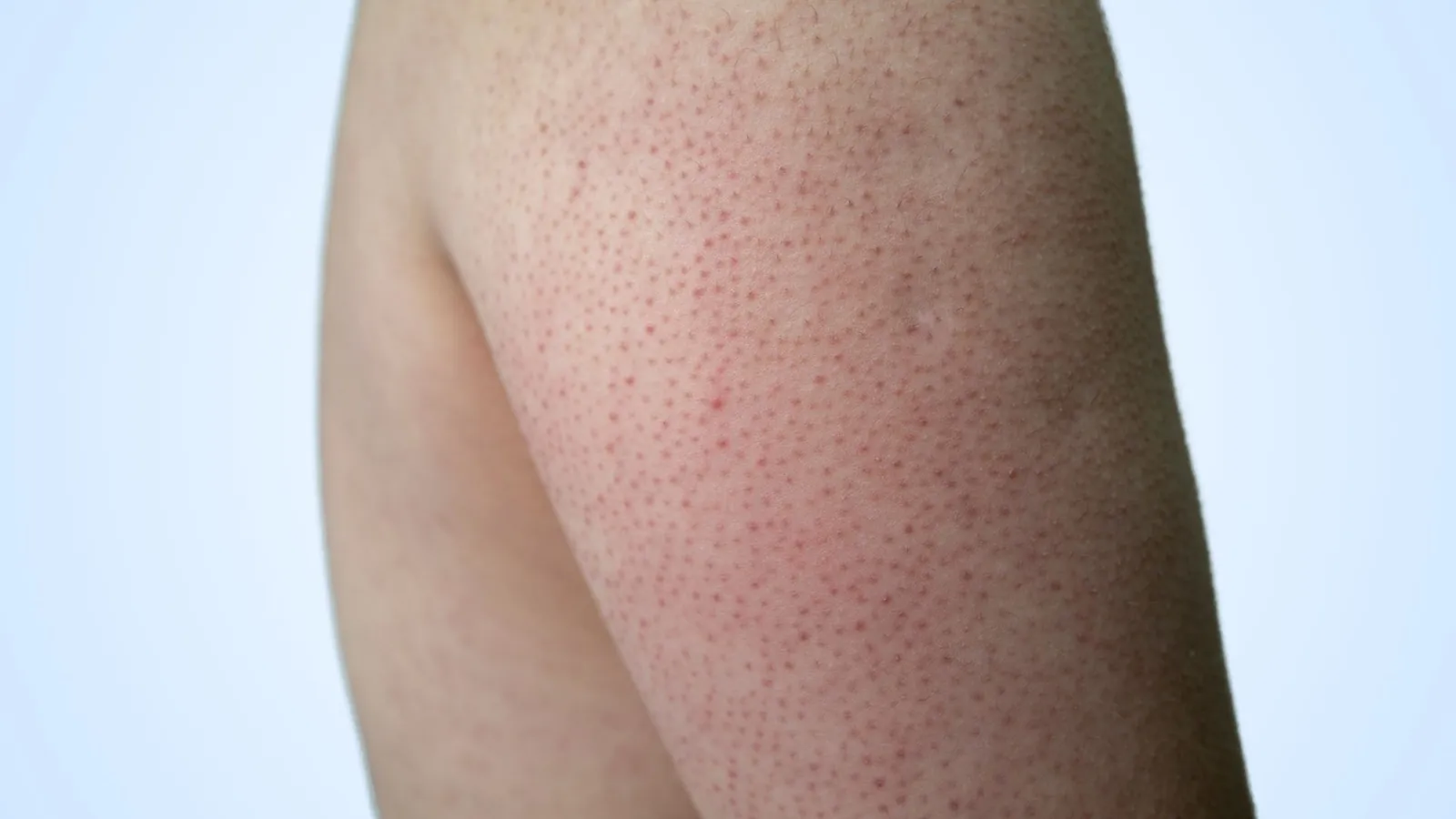
Keratin, the protein in the surface of the skin, builds up and plugs the opening of each follicle. Every bump is one blocked follicle with a trapped hair inside.
Blood vessels in the central face widen too easily and stay widened. Inflammation follows, and in some people that adds bumps and pustules.
What it looks like
Small skin-coloured, red or brown bumps packed evenly over a patch, one per follicle. There may be pink around them, but the bumps are the main event.
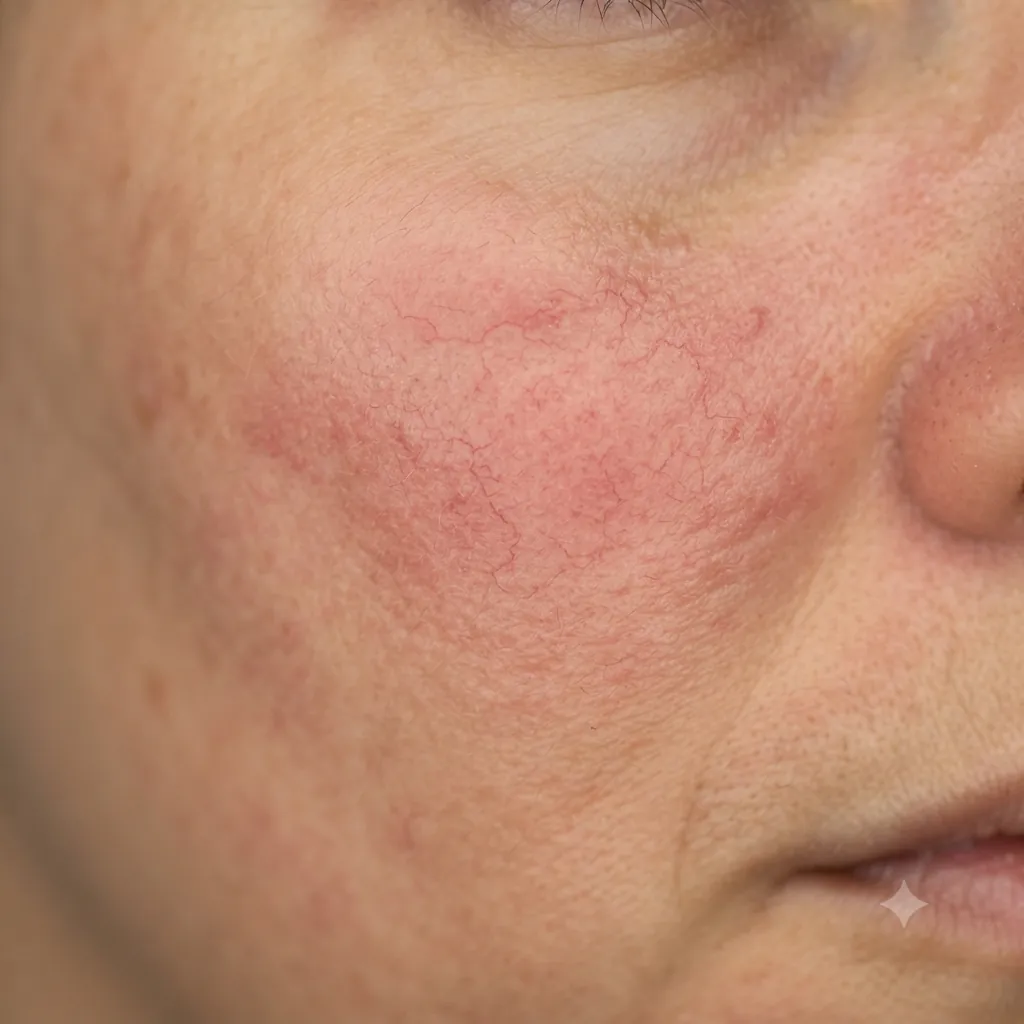
Flushing that comes and goes at first, then a lasting pink or red over the cheeks, nose, chin and forehead. Fine visible blood vessels often appear in it.
How it feels to touch
This is the single most useful difference. Close your eyes and run a finger over it and the texture is unmistakable.
Flushed rosacea skin feels normal, or sometimes tight and dry. Where there are pustules they are separate spots, not an even grain.
Size
Each bump is about the size of a pinhead, and they are all much the same size.
Redness covers whole areas of the face. Any spots are pinhead to small-pea sized and scattered.
Does it itch or hurt
It can itch a little when the skin is dry, especially in winter. Most people notice how it feels rather than how it stings.
Rosacea skin often stings with skincare, feels hot during a flush, and reacts to products other people tolerate. Eyes can feel gritty too.
Where it shows up
Backs of the upper arms first, then the fronts of the thighs and the buttocks. In children and teenagers it also appears on the cheeks, which is where it gets confused with rosacea.
Cheeks, nose, chin and centre of the forehead. It spares the skin around the eyes and the sides of the face.
What sets it off
Worse in winter, better in summer. Nothing you eat or drink changes it.
Also hot drinks, exercise, cold wind and stress. Triggers vary, and most people can name their own within a few weeks.
What it does over time
It often starts in childhood, peaks in the teens, and settles down through the twenties and thirties. It is harmless throughout.
Rosacea is a long-term condition. Flushing tends to become fixed redness over years, and untreated inflammation can thicken the skin of the nose in a small number of people.
How it is treated
A thick moisturiser is the base. Add a cream with urea, lactic acid, glycolic acid or salicylic acid to loosen the plugs. It improves the texture while you use it, and returns when you stop.
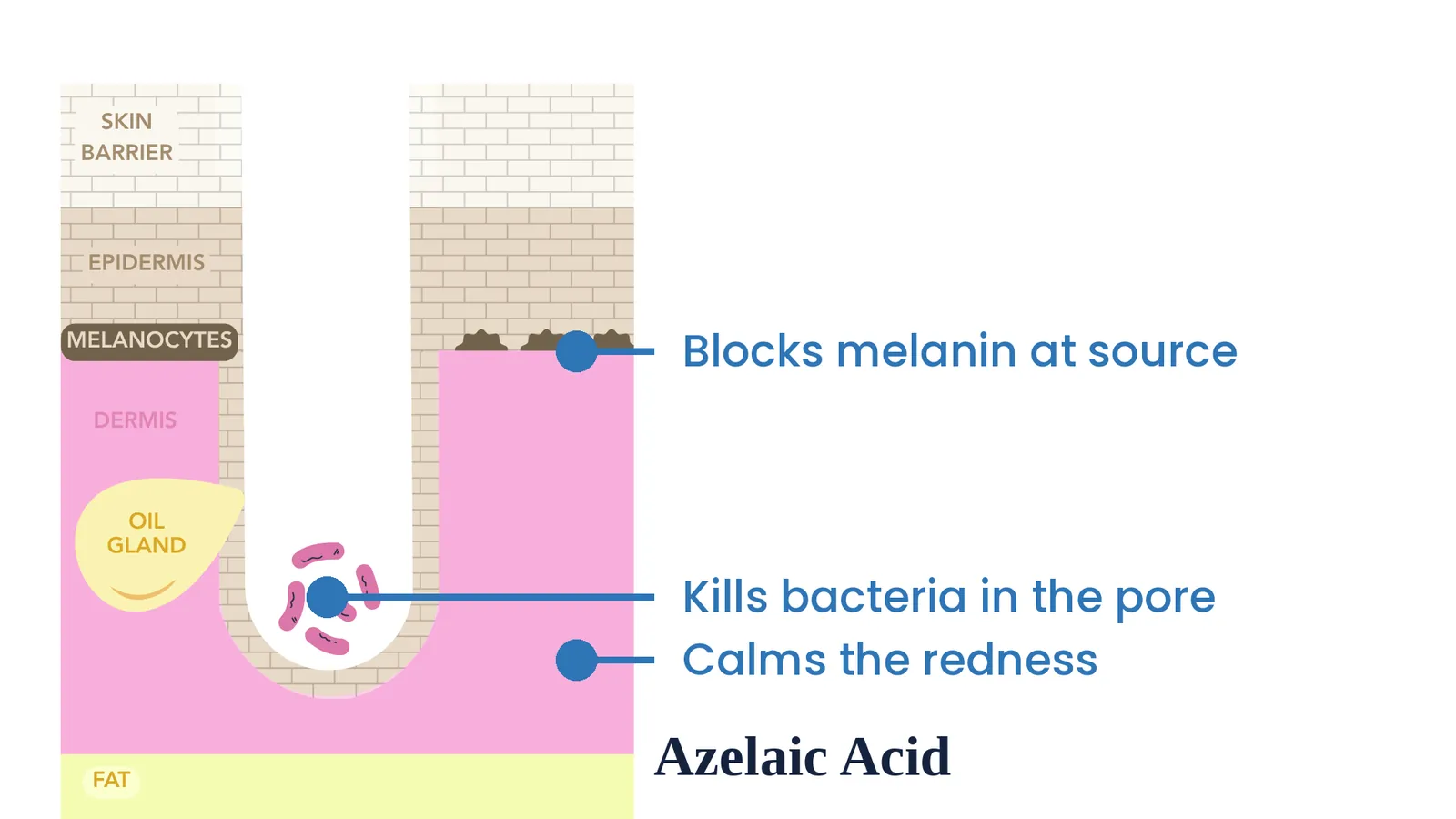
Sunscreen and gentle cleansing come first. Metronidazole, azelaic acid or ivermectin cream treat the bumps. Brimonidine narrows vessels for a few hours, and laser or intense pulsed light treats fixed redness and visible vessels.
Cost
Drugstore moisturisers and acid creams, no prescription needed.
Prescription creams are inexpensive. Laser and light treatment is a course of clinic visits and is usually cosmetic.
Touch tells you more than sight
Keratosis pilaris is diagnosed with a fingertip: The surface has an even grain to it, because every follicle in the patch is plugged. It feels like the back of a nail file or the skin of a plucked chicken.
Rosacea skin is smooth: The redness sits under an intact surface, so there is nothing to feel. Rosacea can produce spots, but they are scattered bumps and pustules with clear skin between them, not an even field of pinhead bumps.
Why cheeks cause the confusion
Keratosis pilaris on the cheeks is common in children and young adults: It makes red, slightly rough cheeks that look permanently windburnt. That looks like early rosacea in a photograph, and it is often treated as rosacea for months before someone touches it.
Rosacea is uncommon before the late twenties: It usually starts between 30 and 50. A red-cheeked eight-year-old almost never has rosacea, and very often has keratosis pilaris.
The rest of the body settles most cases: Check the backs of the upper arms. Rough bumps there plus red cheeks is one condition in two places, not two conditions.
What each treatment does, and does not do
Keratosis pilaris improves with moisture and gentle chemical exfoliation: Urea and lactic acid soften the plugs so the follicle can clear. Scrubbing harder only makes the skin redder. It does not make it smoother. And the bumps come back within weeks of stopping.
Rosacea improves with trigger control and prescription creams: Nothing on a drugstore shelf reduces the redness for long. Sunscreen does the most work of anything, because sun is the most common trigger.
Using the wrong one makes the skin worse: Acid creams meant for the arms are too harsh for a rosacea cheek and often set off stinging and more redness. Rosacea creams do nothing for keratin plugs.
See a doctor if
Facial redness has lasted for months and is getting worse
Your eyes are gritty, dry or sore alongside the redness
Skincare products sting on contact
The bumps on your arms are itchy, sore or leaving marks
The redness came on suddenly
The skin of your nose is thickening