Micellar Water vs Witch Hazel
Micellar water is a cleanser. It lifts makeup, oil and grime off the surface and carries them away on a cotton pad. Witch hazel is an astringent toner. It degreases skin that is already clean and leaves it feeling tight, and most drugstore bottles contain alcohol. They are not alternatives to each other. Witch hazel does not clean your face, and micellar water does not tone it.
What is actually in the bottle
Mild cleansing agents float in water and group into microscopic balls called micelles. The outside of each ball likes water. The inside likes oil.
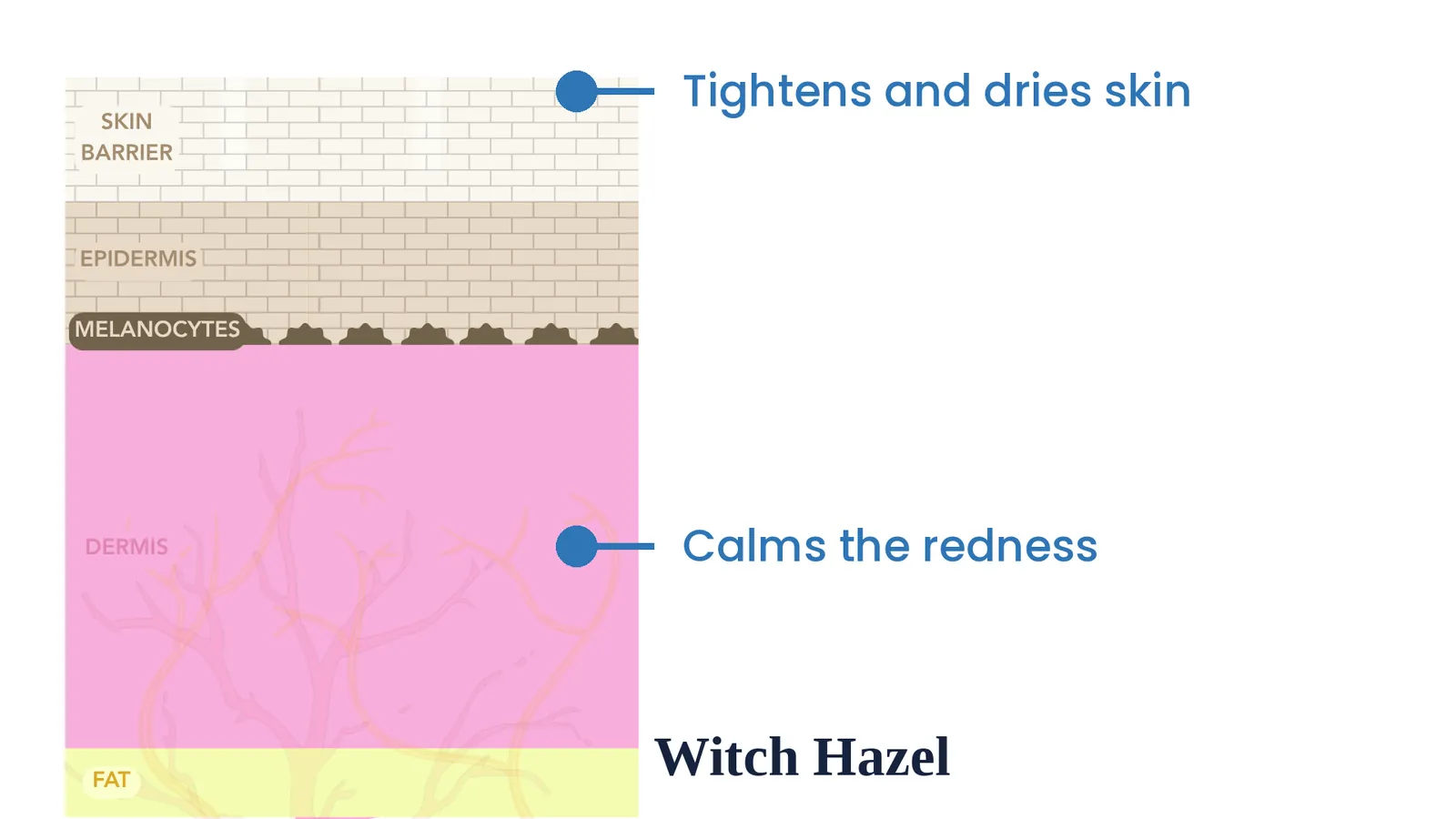
An extract from the bark and leaves of the witch hazel shrub. It is rich in tannins, which make skin feel tighter. Most drugstore versions are distilled with alcohol.
What it does on your skin
The oil-loving centre of each micelle grabs makeup, sunscreen and the day's grime. Wiping with a pad lifts all of it away.
Tannins briefly shrink the look of pores and the alcohol strips surface oil. Skin feels squeaky and matte for a while.
What it will not do
It is a cleansing step. It does not shrink pores, reduce oil production or clear acne.
Wiping witch hazel over unwashed skin removes some grease and almost none of the makeup or sunscreen. It is not a cleanser.
Where it goes in your routine
Use it to take the day off, morning or night. Everything else goes on after.
It is an optional step on already-clean skin, before serum and moisturizer.
How your skin feels after
No tightness. Some formulas leave a faint film, which is the leftover cleansing agents.
That tight feeling is often read as clean. It usually means the skin barrier has just been stripped.
Alcohol content
Most micellar waters are alcohol-free and made for sensitive skin and the eye area.
Standard drugstore witch hazel is around 14% alcohol. Alcohol-free versions exist and are worth looking for.
Who it suits
Also handy when you cannot get to a sink.
Some people with very oily or acne-prone skin like it a few times a week. Dry, sensitive or eczema-prone skin usually does badly with it.
The downside
Dragging a cotton pad across the eyes irritates them over time. Some formulas need rinsing or they leave a sticky film.
Daily use of the alcohol version is the common cause. Stripped skin can produce more oil in response, which is the opposite of what people are after.
Cost
A large bottle costs a few dollars and does dozens of washes.
One of the least expensive products in any pharmacy.
Why people mix these two up
Both are clear liquids you put on a cotton pad: That is the whole reason for the confusion. The routine step looks identical, so the products get treated as swaps.
They sit at opposite ends of the routine: Micellar water is step one and removes things. Witch hazel is an optional step two and adds an astringent to skin that is already clean.
Using witch hazel instead of a cleanser leaves makeup on: Sunscreen and long-wear foundation are built to resist water, and witch hazel is mostly water and alcohol. It cannot break them down.
The alcohol is the part that causes trouble
Alcohol is why witch hazel feels so satisfying: It evaporates fast, takes surface oil with it, and leaves skin matte within seconds.
Alcohol is also why witch hazel irritates: Used daily, it dries the outer layer, and dry skin gets flaky, itchy and easily stung by everything applied after it. People with rosacea, eczema or a compromised barrier feel this quickly.
Look for an alcohol-free witch hazel if you want to use it at all: These keep the tannins and drop the sting. A few times a week on oily areas is plenty for anyone.
Do you rinse micellar water off?
Read the bottle: Many say no rinse needed, and for a light face of makeup that is fine.
Rinse if you wore sunscreen or full makeup: A single pass with a pad leaves both the residue and the cleansing agents behind. A quick splash of water, or a normal cleanser afterwards, sorts it out. This is the double cleanse people talk about, and it is nothing more complicated than that.
Be gentle around the eyes: Hold a soaked pad against closed lids for a few seconds and let the product do the work. Scrubbing at eye makeup is a common cause of irritated lids and lost lashes.
If you are using either one for acne
Neither product treats acne: Micellar water cleans and witch hazel degreases. Oil on the surface is not what causes a spot.
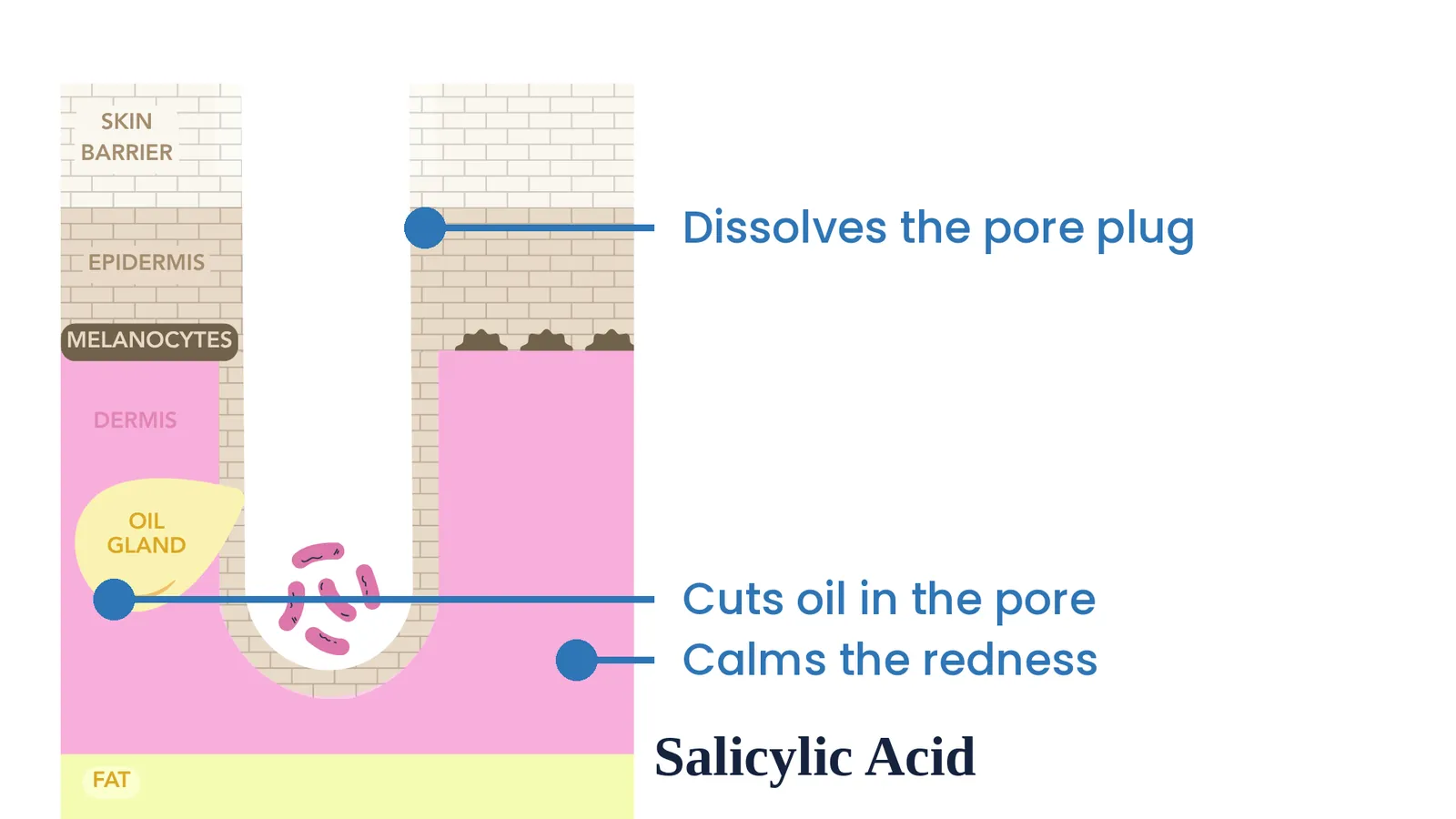
The active ingredients are the treatment: Benzoyl peroxide, salicylic acid, adapalene and prescription options do the actual work. A cleanser and a toner are the steps around them.
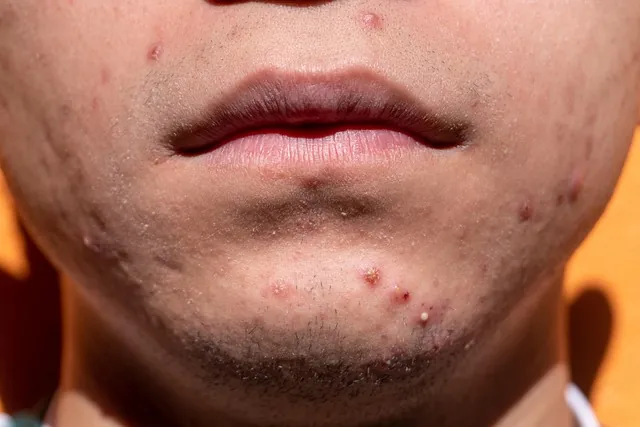
Over-drying makes acne look worse: Stripped, flaky skin sits on top of the spots and makes the whole area look angrier. If witch hazel is leaving your face tight, that is a reason to stop, not a reason it is working.
Before you buy
If you only want one, buy the micellar water. Cleansing is not optional; toning is.
Check the witch hazel label for alcohol, and choose alcohol-free if it is there.
Skip toner entirely if your skin is dry, sensitive or eczema-prone.
If you wear sunscreen daily, plan to rinse after micellar water.
Neither one replaces a moisturizer, and neither one replaces sunscreen.