Sculptra vs Filler
Sculptra is better for a face that has thinned out all over. It builds your own collagen over three to six months, across two or three visits. Hyaluronic acid filler is better for one area you can point at, and for anyone new to injectables. It works the day you have it, and it can be dissolved if you change your mind.
What it does
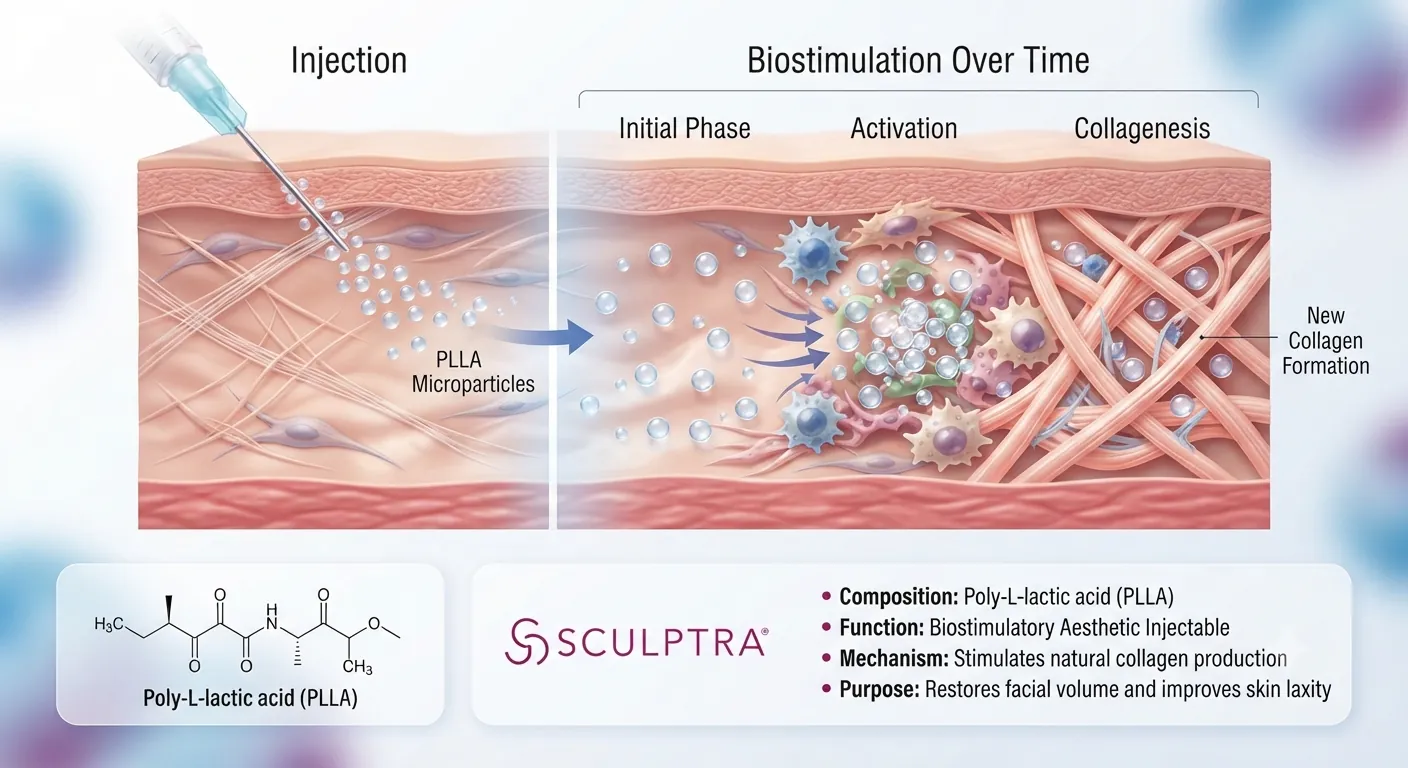
Poly-L-lactic acid is the same material used in dissolvable stitches. It prompts your skin to lay down collagen, then it breaks down and leaves.
A gel made from hyaluronic acid, a sugar your skin already makes. It sits where it is placed and holds the space open.
When you see the result
You look much the same for the first few weeks. Any fullness on the day is swelling, not result.
You walk out with the change. Swelling settles over about two weeks and the look settles with it.
How many visits
Spaced about a month apart. It is a course, not an appointment.
A top-up later if you want more.
How long it lasts
What it suits
Hollow cheeks, temples, a face that has lost volume everywhere at once. It is also used on the body, such as crepey skin above the knees.
Lips, chin, under-eye hollows, a single deep fold. It can be placed precisely and shaped as it goes in.
Can it be undone
You wait it out, and that takes months to years.
An enzyme called hyaluronidase dissolves it, usually within a day or two.
What the appointment is like
Numbing first. Many injectors then ask you to massage the area for five minutes, five times a day, for five days.
Most products contain a numbing agent already. Avoid heat and hard exercise for a day or two.
Side effects to expect
Small lumps under the skin are the one to know about. They are uncommon, and they can appear months later. Spreading the product widely and massaging afterwards lowers the risk.
Lumps and unevenness happen here too, but they turn up in the first days and can be dissolved.
Cost
Ask what the whole plan costs, not what one session costs.
Easier to price up front. Repeat visits add up over the years.
The at-home or drugstore version
No cream carries poly-L-lactic acid down to the layer where collagen is built. Collagen drinks and collagen creams are a different thing wearing the same word.
A serum holds water in the top layer of skin and plumps the surface for a few hours. Filler goes millimetres down. Same molecule, different depth, different job.
Who each suits


The real decision is instant versus gradual
Filler answers a narrow question: can you fill this: A thin lip, a deep fold, a flat chin. The injector places gel exactly where the volume is missing, and you both look in the mirror before you leave.
Sculptra answers a wider one: can my whole face look less drawn: It is spread thinly across a large area, and the change arrives so slowly that most people notice it in photos rather than in the mirror.
That is why they are not really rivals: Plenty of people end up with both over time, using Sculptra for general fullness and filler for a specific feature.
Reversibility is the bigger deal than longevity
Hyaluronic acid filler can be taken back out: If it looks wrong, migrates, or you simply hate it, hyaluronidase dissolves it in a day or two.
Sculptra cannot be taken back out: There is no antidote. If you do not like the result, the plan is to wait, and the wait is measured in years.
If this is your first injectable, that one difference should decide it: Lasting twice as long is only an advantage if you like what you see. Filler lets you find out what you like at low cost.
What neither one does
Neither one softens a frown line or crow's feet: Those lines come from muscle movement, and botulinum toxin is the treatment that works on muscle.
Neither one tightens loose skin: If sagging is your main complaint, volume will not fix it. Energy devices or surgery are the honest answer.
Has anyone compared them directly
Only in one small area: A trial put poly-L-lactic acid against hyaluronic acid filler in the nasolabial folds, the lines running from nose to mouth, and both improved them. That is not the question most people are actually asking. Nobody has tested a gradual collagen builder across a whole face against gel placed in one spot, so the choice comes down to what you want and how you feel about permanence.
Before you book
Ask how many sessions the plan involves and what the total will cost.
Ask what happens if you do not like the result. For Sculptra the honest answer is "we wait," and you want to hear it said out loud.
Ask whether they have treated your specific area with this product before.
Bring a photo of yourself from a few years ago, not a photo of someone else.