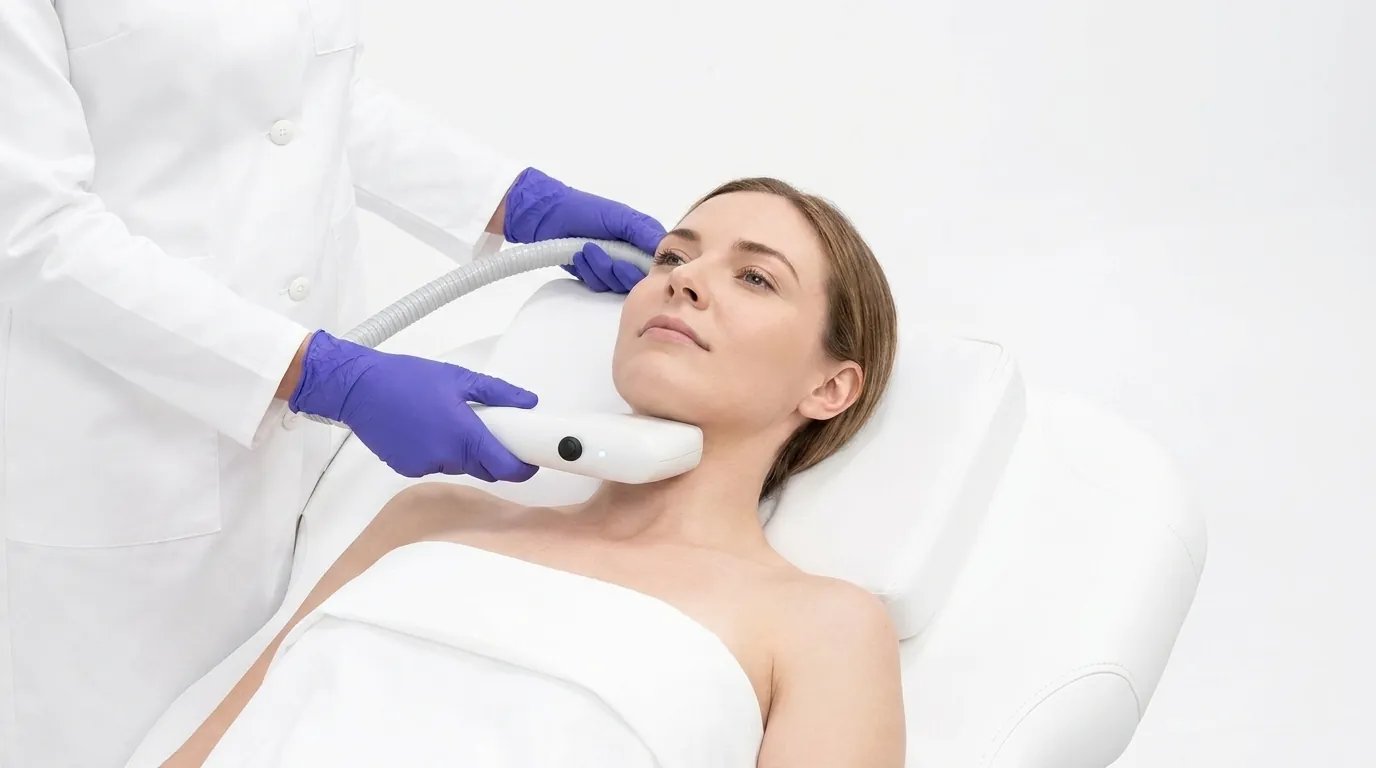
Thermage vs Fraxel
Thermage firms. It heats a block of skin from the outside in a single visit, never breaks the surface, and is aimed at crepey texture and mild slackness. Fraxel resurfaces. It puts columns of controlled heat into the skin to treat texture, acne scars, sun damage and lines, and it costs you several days of peeling. They fix different complaints, so the choice is firmness against surface quality.
What it does to your skin
Current passes through the tissue to a pad on your back. The skin's own resistance to that current is what makes the heat.
The laser treats a fraction of the surface and leaves the skin in between untouched. That untouched skin heals the rest.
Does it break the surface
A coolant spray protects the top of the skin while the heat builds underneath. Nothing is punctured or removed.
That is the point. The healing is what lays down new collagen and remodels a scar.
What it is best at
Thin skin, fine wrinkles and skin that has lost its snap, including around the eyes.
Sunken acne scars, rough or crepey skin, fine lines, brown spots and surgical scars.
What it will not do
The surface is never broken and no light is involved, so scarring and pigment are untouched.
Resurfacing changes the surface. Slackness sits deeper than it reaches.
What it feels like
The tip is stamped across the area with a spray of coolant before and after each pulse. Uncomfortable rather than dreaded.
Numbing cream first. The heat lingers for hours afterwards.
Downtime
Redness and slight swelling for a few hours. Make-up the same day is normal.
Swelling and a bronzed, rough look for five to seven days. The strongest version removes surface skin and needs one to two weeks of wound care.
How many sessions
Repeated after a year or two if you liked it.
The gentler setting is a course, four to six weeks apart.
How long until it works
Collagen contracts a little on the day, then rebuilds slowly.
Skin looks brighter once the peeling ends. Scars and texture keep improving for months.
How long it lasts
These are the usual clinic figures rather than measured ones.
New collagen is real change. Sun exposure brings new pigment back sooner.
Skin tone
Radiofrequency heats tissue rather than aiming at colour, so it is reasonable across skin tones.
Any laser can leave a patch that heals darker. That is more likely on deeper skin tones, and it is managed with lower energy and longer gaps.
Cost
One visit, so the total is easier to pin down. Ask how many pulses are included.
Ask what a full plan costs rather than one visit.
The at-home or drugstore version
They warm the top of the skin a little. The clinic device drives current through the full thickness of the skin with a return pad, which is a different scale of heating.
Home fractional wands reach only the very top of the skin at a fraction of the power. A nightly retinoid is slower than resurfacing and it genuinely works on texture and fine lines.
Who each suits
Firmness or surface
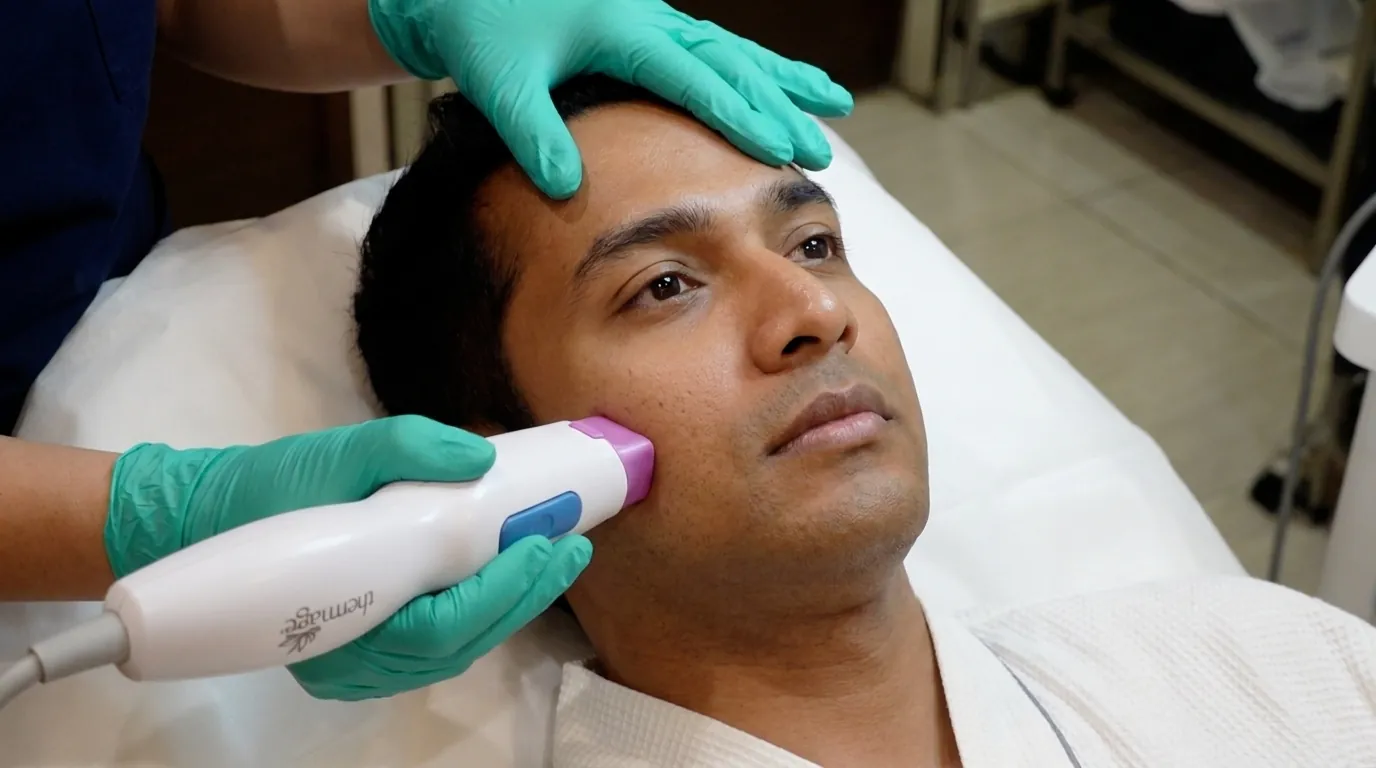
Thermage is aimed at the quality of the skin, not its finish: Heating the full thickness makes collagen contract and then rebuild, and the result is skin that feels tighter and looks less crepey.
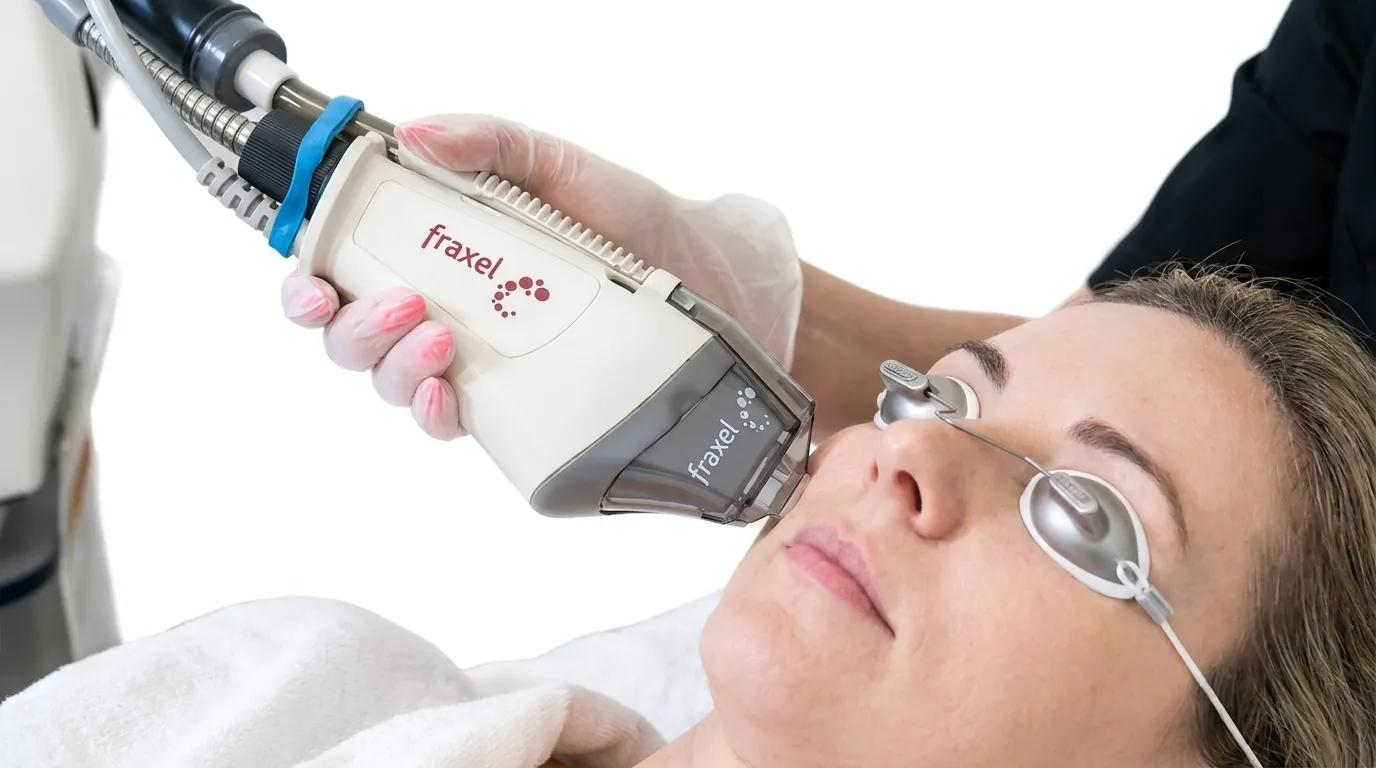
Fraxel is aimed at the finish: It remodels the layers where scars, roughness and brown spots live, by injuring them in a controlled way.
Neither does the other's job: Heat spread through intact skin cannot lift the floor of an acne scar. Columns of surface damage cannot firm a slack jawline.
Look in a mirror and decide which word fits: If it is "loose" or "crepey", start with Thermage. If it is "rough", "scarred" or "spotty", start with Fraxel. Thermage also leaves you red for only a few hours, where Fraxel costs you a week.
"Fraxel" is a family, not one machine
The name covers devices of very different strength: A price list saying "Fraxel" does not tell you which week you are buying.
The gentler versions leave the surface intact: They heat columns under the skin and let it flake lightly, and they are a course.
The strongest one removes surface skin: It does far more in one session and asks for proper wound care afterwards.
Ask which one is planned before you compare prices: Two clinics quoting the same brand may be selling very different treatments.
The risks worth knowing
Thermage's rare problems come from heat concentrating in one spot: Burns and blistering are uncommon. So is loss of fat under the skin, which leaves a small dent.
Fraxel's common problem is a dark mark left behind: Post-inflammatory hyperpigmentation, the brown staining after skin is inflamed, is the usual complaint and is more likely on deeper skin tones.
Who holds the handpiece matters more than which machine it belongs to: Both depend on the operator picking settings for your skin rather than for the brochure.
Before you book
Point at what bothers you. Loose and crepey is one machine; rough and scarred is the other.
With Fraxel, ask which device and which setting, and why that one.
Ask what the whole plan costs, not one visit.
Tell the clinic about a pacemaker, an implanted defibrillator or metal near the area before radiofrequency.
Mention melasma, active acne, recent isotretinoin or a history of cold sores before any laser.