Upper vs Lower Blepharoplasty
Upper blepharoplasty treats a heavy, hooded upper lid. The surgeon removes a strip of loose skin, and sometimes a little fat, from above the eye. Lower blepharoplasty treats bags and puffiness under the eye. It moves or removes the fat pads that push forward, and sometimes tightens the lid. These are two different operations on two different problems, and the lower one is the harder of the two to get right.
The problem it fixes
Skin that folds over the crease, hides your eyeshadow, rests on your lashes, or cuts into what you can see above you.
Pads of fat that bulge forward and cast a shadow, often worse in the morning.
What the surgeon does
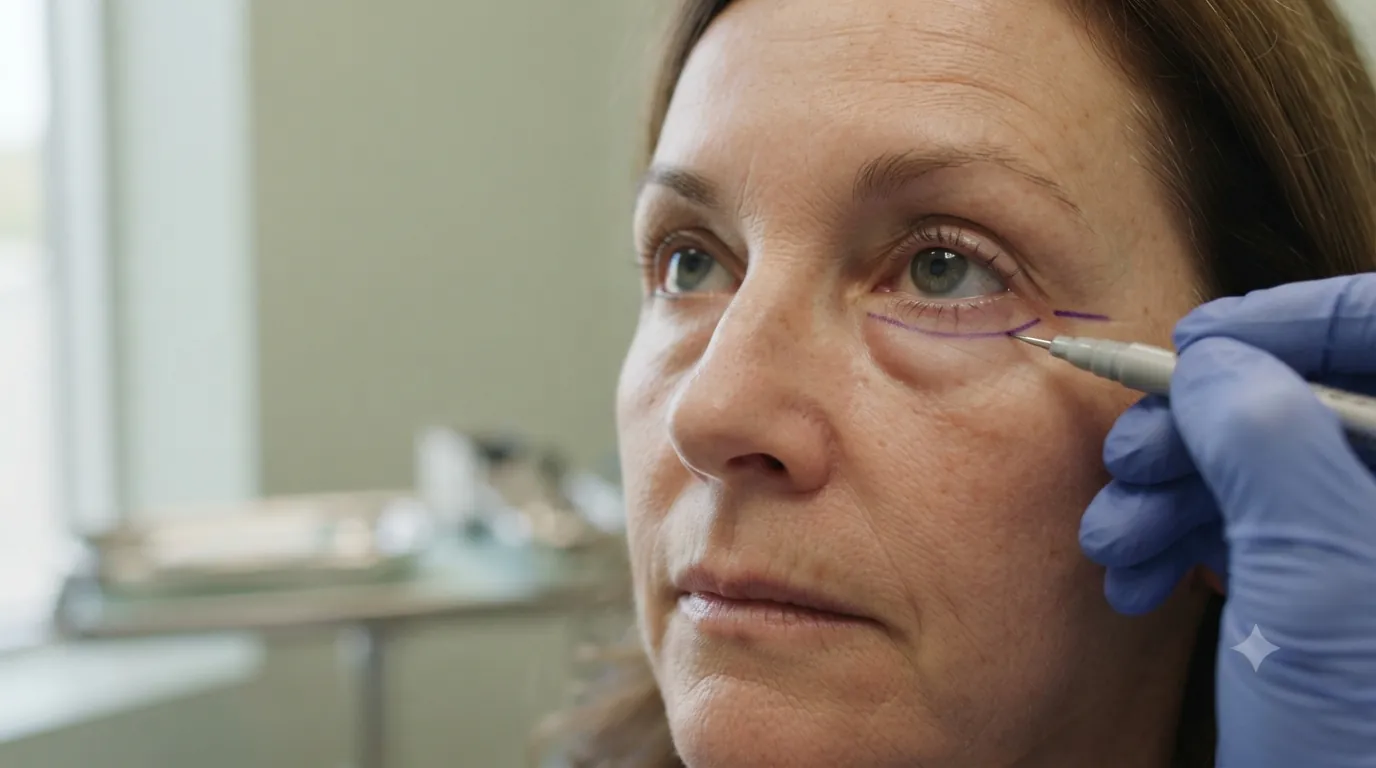
The fold is marked while you sit up, then trimmed. A little muscle or fat may go with it. The edges are stitched inside the natural crease.
Fat is trimmed, or spread down into the hollow below to smooth the step. Loose skin may be tightened, and the lid may be anchored at its outer corner.
Where the scar is
It fades to a fine line most people cannot find.
When only fat is being handled, the cut is made inside the lid. If skin is being removed, the cut sits just under the lash line.
What it is like on the day
Usually done in a clinic room. You feel pressure, not pain.
Longer than the upper, and more often done with sedation.
Recovery
Bruising and swelling peak in the first few days. Stitches come out around day five or six. Most people are back at work inside a week.
Slower and blotchier. Bruising can spread down the cheek. Swelling under the eye takes longer to settle than most people expect.
What it will not do
If the brow itself has dropped, removing lid skin can make the eye look tighter but leave the heaviness. A brow lift is the different operation.
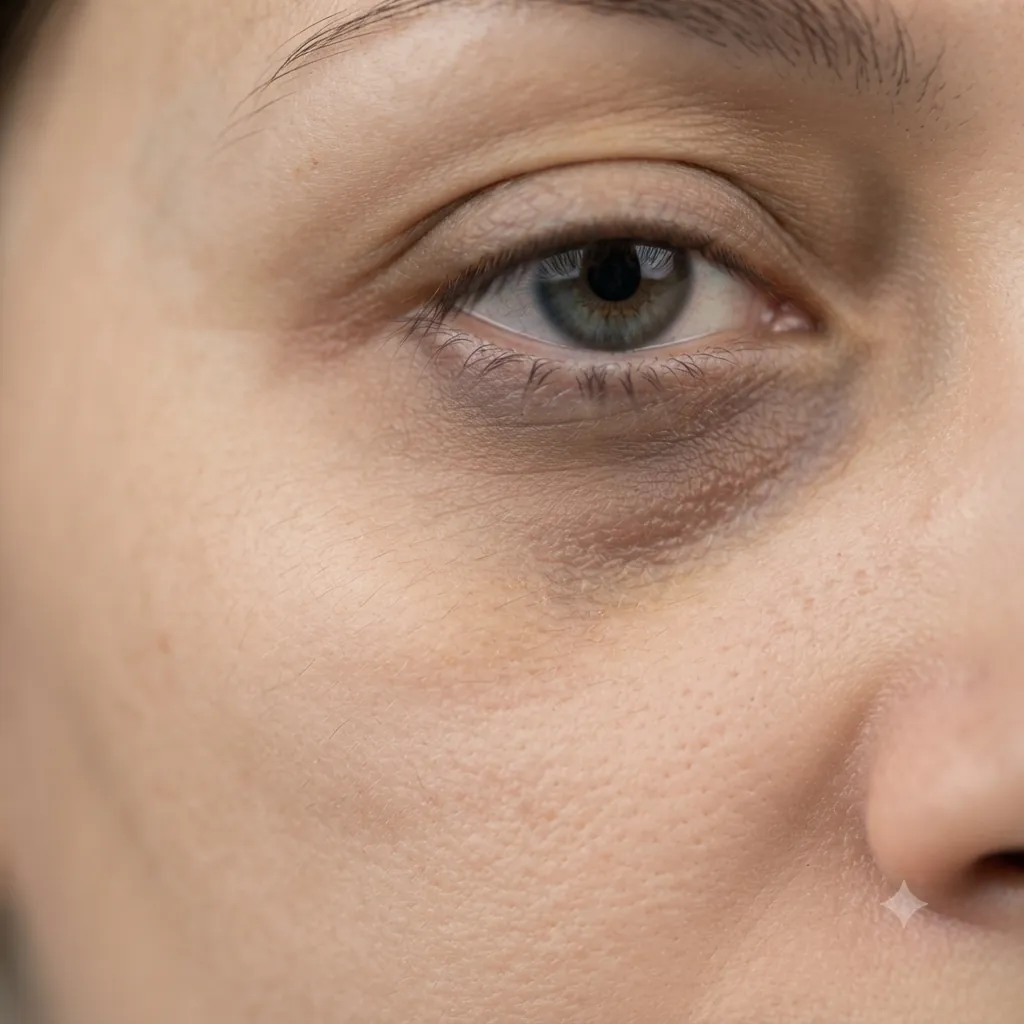
If the darkness is pigment in the skin rather than shadow from a bulge, surgery changes very little.
Main risk to know
If too much skin comes off, the lid may not shut completely, which leaves the eye dry and gritty. Usually temporary. Slight unevenness between the two sides is the more common complaint.
Called ectropion. The lower lid sags outward or the white below the iris shows more, changing the shape of the eye. It is the reason lower lid surgery is the riskier of the two and why surgeon choice matters most here.
Cost and insurance
When the hood blocks your upper field of vision, insurance may pay. It usually needs a vision test and photographs first.
Bags rarely affect sight, so this is normally paid for privately.
The at-home or drugstore version
Creams cannot remove skin. Eyelid tape and glue hide a hood for an evening and do nothing lasting.
Caffeine gels and cold compresses shift fluid, so morning puffiness looks better for an hour or two. They do nothing to a fat pad. Under-eye filler is the real non-surgical option, and it is a different tool for a different problem.
Who each suits
Hollows and dark circles are usually not a surgery problem
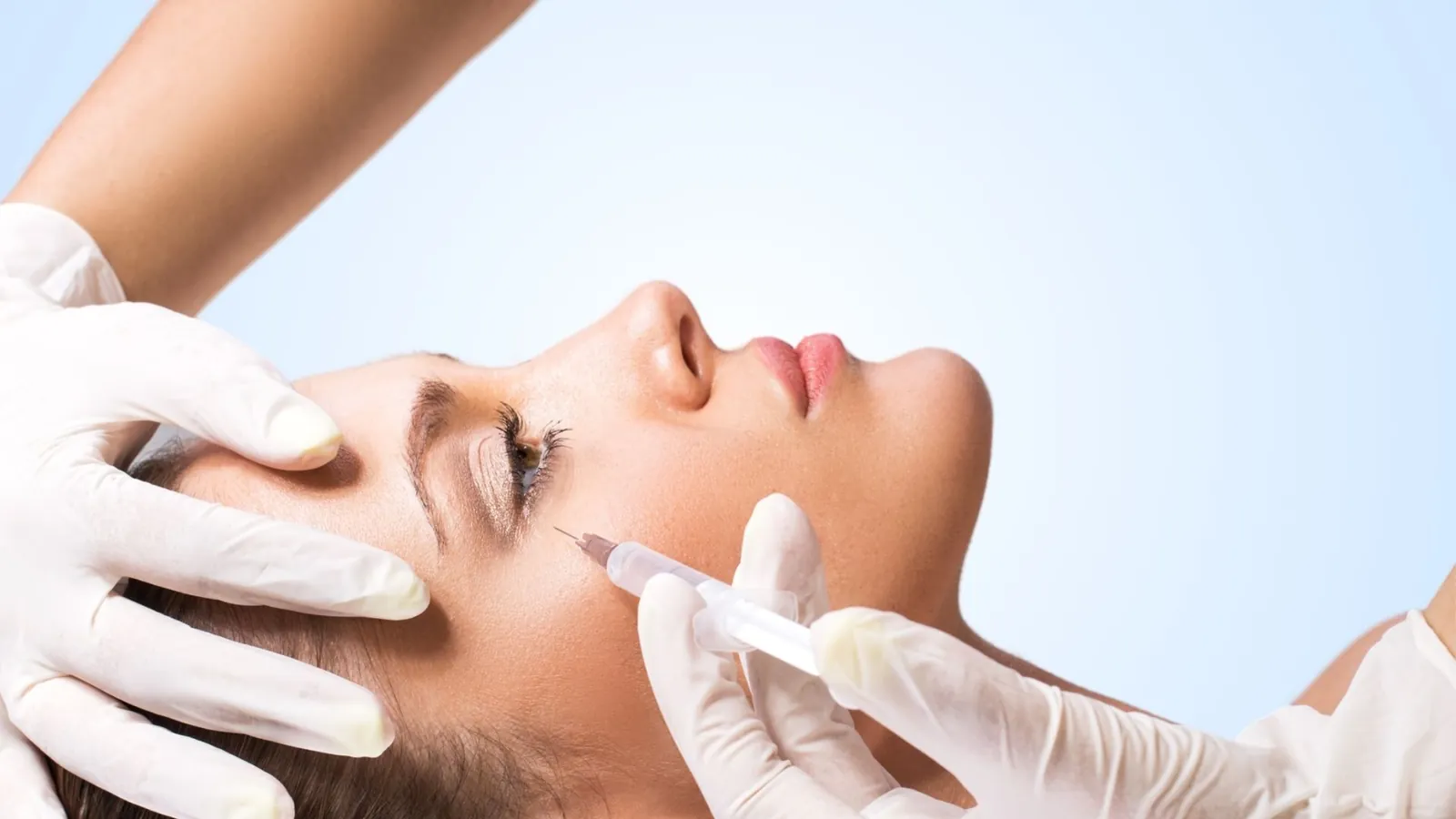
Under-eye filler is often the better answer for a hollow: A hyaluronic acid filler placed in the groove smooths the step between lid and cheek, in one appointment, with no cutting. It can be dissolved if you dislike it.
Surgery is the better answer for a bulge: If fat is pushing forward, adding filler around it can make the whole area look heavier rather than smoother.
Dark circles need a diagnosis before either: Shadow from a bulge, hollowness, thin skin showing the blood vessels beneath, and brown pigment all look similar in a mirror and none of them respond to the same treatment.
Many people are told they need both
Upper and lower can be done in the same operation: It is a common combination, and doing them together means one recovery instead of two.
It also raises the stakes: More swelling, a longer time looking bruised, and two sets of risks at once. There is nothing wrong with starting with the upper lids, seeing how the face looks, and deciding about the lower ones later.
Who should do it
Choose a surgeon who operates around eyes regularly: Oculoplastic surgeons train specifically in eyelids. Plastic surgeons and facial plastic surgeons also do a lot of this work.
Ask more questions about the lower lids than the upper ones: The lower lid has less room for error, so a surgeon's experience matters more there.
Before you book
Bring a photo of yourself from ten years ago. It shows what your own eye shape used to be.
Ask whether your heaviness is the lid or the brow. The answer decides the operation.
Ask to see photos of the surgeon's own patients, from the front and the side, at six months.
Say if you use eye drops or have dry eyes. It changes how much skin should be taken.
Ask whether a vision test could make the upper lids a covered claim.