Comparison

Boil vs Pimple

A zit and a pimple are the same thing. A boil is not. How to tell a blocked pore from an infected follicle, and when a boil needs draining.
Written & medically reviewed by the Dermapedia team
At a Glance

A zit and a pimple are the same thing. One word is casual, the other is slightly less casual. There is no medical difference, and no doctor will treat them differently.

A boil is not the same thing. A pimple is a blocked pore. A boil is a bacterial infection of a hair follicle, and it goes deeper, hurts more, and lasts longer.

The quick version: a pimple comes up in a day or two, peaks, and is gone within a week. A boil keeps growing for several days, becomes genuinely painful, and gets big enough that you stop wanting to touch it.

Boil
Infected follicle
Pimple
Blocked pore
A boil involves the whole follicle and the tissue around it, so it sits proud of the skin and stays sore for days rather than hours. Compare the size of the red area to the lump itself — that spread is what makes a boil throb even when nothing is touching it.
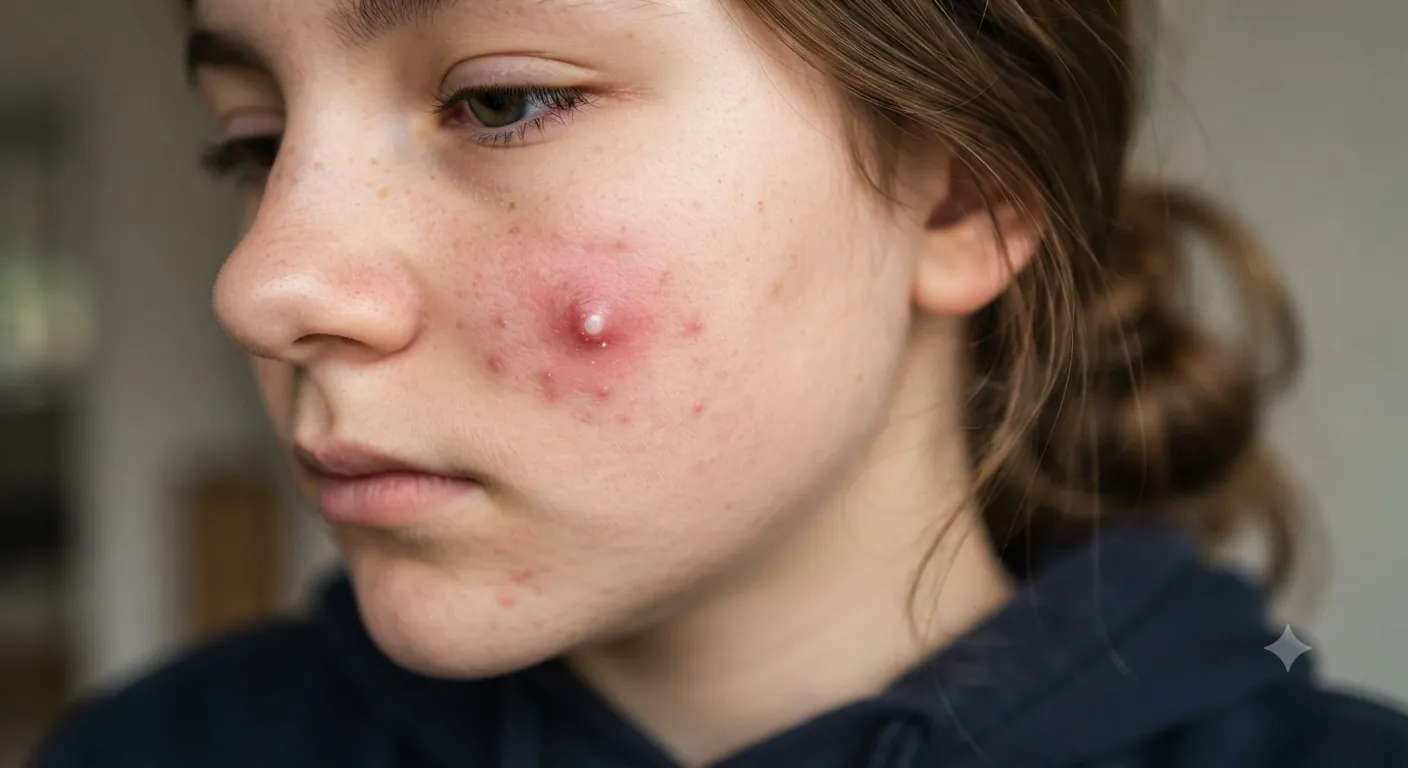
A pimple is shallow, comes to a head quickly, and rarely arrives alone. The other small spots and the faded brown marks from earlier ones are the giveaway: this is acne on oily facial skin, not a single infected follicle.

What it is

A pocket of pus around a hair.

Bacteria — usually Staphylococcus aureus — get into a follicle and your body walls them off. It is a small abscess.

A blocked pore.

Oil and dead skin plug the opening. Normal skin bacteria multiply in the trapped oil and the area gets inflamed.

Size

Pea-sized to golf-ball

Keeps growing over several days.

Small

A few millimetres, and it stops growing quickly.

How much it hurts

A lot

Throbs on its own, not just when pressed. Often too tender to lie on.

Mildly

Sore if you press it. Easy to forget about otherwise.

Both
Pain is the most useful single difference. A spot that hurts when you are not touching it is not an ordinary pimple.

How long it lasts

One to three weeks

Builds for days, comes to a head, drains, then heals.

Three to seven days

Where it shows up

Where hair and friction meet

Back of the neck, armpits, groin, buttocks, thighs, waistband line.

Where skin is oiliest

Face, chest, upper back, shoulders.

Do you feel unwell

Sometimes

A large boil can come with fever or feeling generally run down.

No

What to do about it

Warm compress, and get it seen if it grows.

A warm damp cloth for ten minutes, three or four times a day, helps it come to a head and drain on its own. If it keeps growing, a clinician numbs it and drains it — that gives immediate relief.

Leave it alone and treat the skin.

Benzoyl peroxide or salicylic acid on the area. It will resolve. Picking is what turns a three-day spot into a three-month mark.

Antibiotics

Sometimes

Draining is the main treatment. Antibiotics are added for larger boils, spreading redness, fever, or certain locations.

No

Not for an ordinary spot.

Both
Antibiotics alone often will not clear a boil, because the drug struggles to reach inside a walled-off pocket of pus. This is why draining matters.

Does it scar

Often

Deeper damage, so more likely to leave a mark.

Only if you pick it
Both
Squeezing either one pushes material deeper instead of out. This is the single most common cause of a scar that did not need to happen.
Close-up of a raised, dome-shaped red lump on pale skin, ringed by a wide pink flush, with a small yellow-white point of pus at its centre.
A boil involves the whole follicle and the tissue around it, so it sits proud of the skin and stays sore for days rather than hours. Compare the size of the red area to the lump itself — that spread is what makes a boil throb even when nothing is touching it.
A young person's cheek with several small red acne spots, one of which has a visible white head, and faded marks from earlier spots.
A pimple is shallow, comes to a head quickly, and rarely arrives alone. The other small spots and the faded brown marks from earlier ones are the giveaway: this is acne on oily facial skin, not a single infected follicle.

So is a zit different from a pimple?

No. Same thing, two words. "Zit" is informal, "pimple" is the everyday word, and the medical terms describe the specific type:

  • Whitehead — a closed plugged pore
  • Blackhead — an open plugged pore; the dark colour is oxidised oil, not dirt
  • Papule — a small red bump with no visible head
  • Pustule — a red bump with a white or yellow centre
  • Nodule or cyst — a deep, firm, painful lump that never comes to a head

That last group is the one that matters. Deep painful lumps that last weeks are cystic acne, and they need prescription treatment. Waiting them out is how people end up with permanent scars.

The one that gets missed

Repeated boils in the armpits, groin, buttocks, or under the breasts are often not boils at all. That pattern — the same few areas, over and over, sometimes with tunnels or scarring between them — is hidradenitis suppurativa.

It is a long-term inflammatory condition, not an infection, so courses of antibiotics keep helping a little and never fixing it. It is very commonly mistaken for bad luck with boils for years before it is named. It is treatable, and getting the right name is the whole first step.

If you have had more than two or three "boils" in a skin fold, mention that pattern specifically to a doctor.

Do not squeeze either one

With a pimple, squeezing pushes the contents deeper into the skin, which makes the inflammation worse and is the main reason spots leave brown marks and dents.

With a boil, squeezing can push bacteria further in, and can spread the infection to the surrounding skin.

Neither one has anything useful you can get out at home.

See a doctor if

  • The lump is bigger than a pea and still growing
  • You have a fever or chills
  • Red streaks are spreading out from it
  • It is on your face, especially near your nose or eyes
  • You have diabetes or a weakened immune system
  • You keep getting them in the same skin folds
  • Your spots are deep, painful, and leaving marks — that needs prescription treatment, not another cleanser
Questions people ask+
Pimple vs boil — what is the difference?A pimple is a blocked pore. It comes up in a day or two, peaks, and is gone within a week. A boil is a bacterial infection of a hair follicle, so it goes deeper, keeps growing for several days, and becomes painful enough that you stop wanting to touch it.
What is the difference between a zit and a pimple?Nothing. They are two words for the same thing. "Zit" is just the more casual one, and no doctor treats them differently.
What is the difference between a boil and a pimple?A pimple is a blocked pore. A boil is a bacterial infection of a hair follicle — essentially a small abscess. A boil is bigger, much more painful, lasts one to three weeks instead of a few days, and often needs draining.
How do I know if it is a boil?Three things: it keeps growing past a few days, it throbs when you are not touching it, and it turns up where hair and friction meet rather than where your skin is oily. Any two of those point to a boil.
Can I pop a boil at home?No. Squeezing can push bacteria deeper and spread the infection. Warm compresses several times a day help it come to a head on its own. If it keeps growing, it needs to be drained properly, which is quick and gives immediate relief.
Do boils need antibiotics?Not always. Draining is the main treatment, and antibiotics alone often fail because the drug cannot reach inside a walled-off pocket of pus. Antibiotics get added for larger boils, spreading redness, fever, or certain locations.
Why do I keep getting boils in the same place?Repeated boils in the armpits, groin, buttocks or under the breasts are often not boils at all — that pattern is usually hidradenitis suppurativa, a long-term inflammatory condition. It gets mistaken for bad luck with boils for years. Mention the pattern specifically to a doctor.
Is a boil the same as a carbuncle?A carbuncle is several boils joined together under the skin into one larger mass. Same problem, bigger, and more likely to come with fever and to need clinical drainage.
Are boils contagious?The bacteria can spread — to other parts of your own skin, and to people you share towels, razors or bedding with. Cover it, wash your hands, and do not share those things while it is open.
What is a cystic pimple?A deep, painful acne lump that never comes to a head. It is severe acne, not an infection, and it does not respond to drugstore products. It scars, so it is worth treating with prescription options rather than waiting out.