Cyst vs Pimple
The word "cyst" gets used for two completely different things, and that is where the confusion starts.
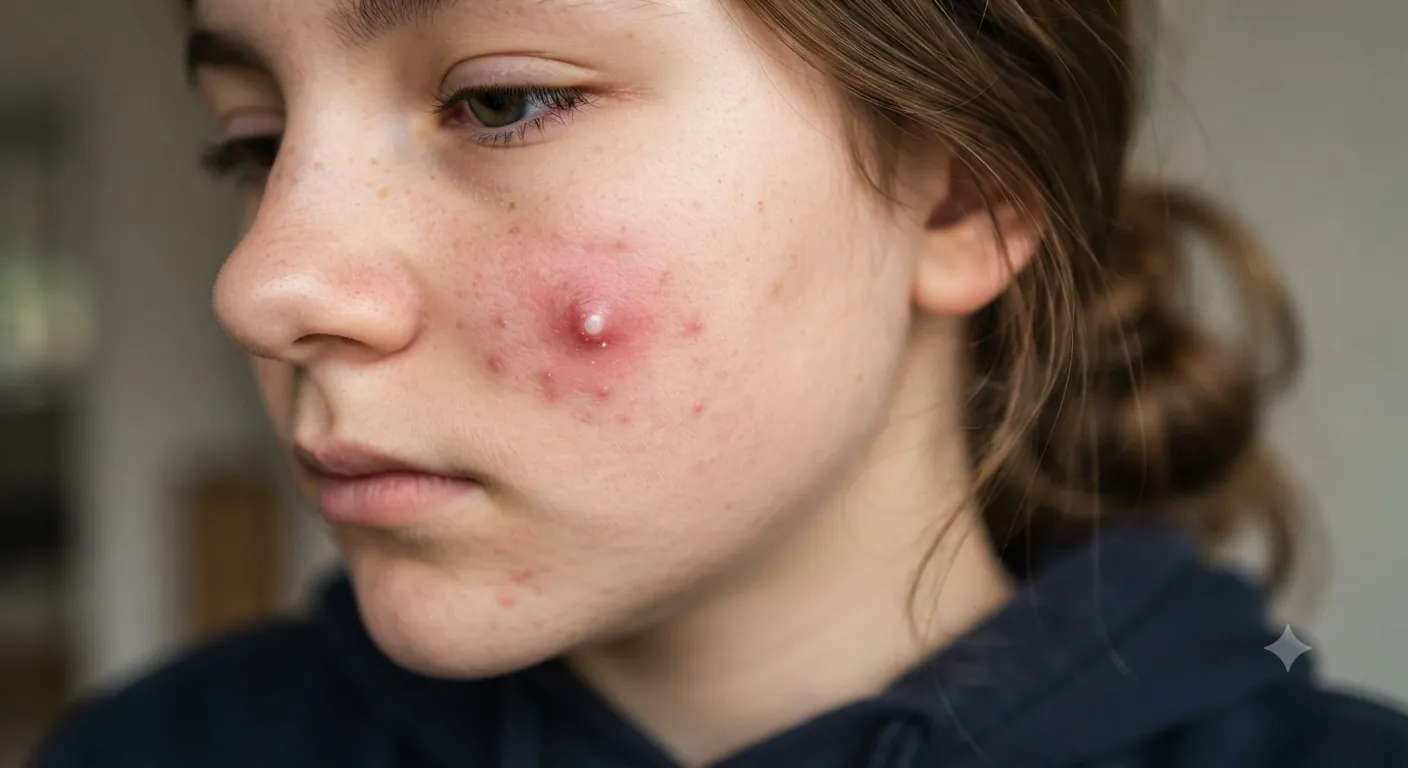
A cystic pimple is severe acne. It is deep, inflamed, painful, and it belongs to the same process as the rest of your breakouts. It comes and goes.
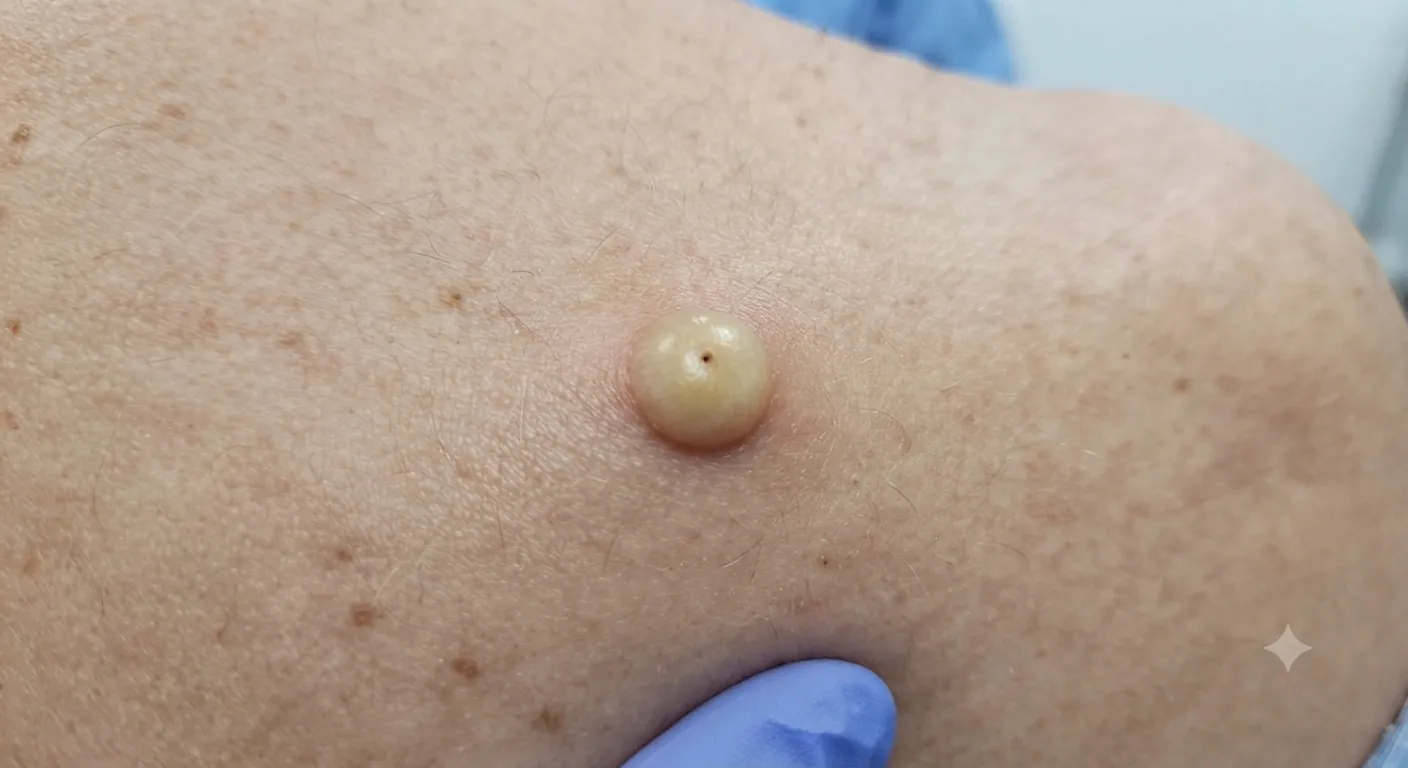
An epidermoid cyst is a sac under the skin. It is not acne. It has been there for months or years, it does not hurt, and it does not go away, because there is a physical pocket that keeps refilling.
The fastest way to tell: how long has it been there? Weeks means acne. Years means a cyst.
What it is
A sac grows from a hair follicle and slowly fills with keratin, the protein in skin and nails. Nothing is infected and nothing is inflamed. It is structural.
Oil, dead skin and bacteria plug a pore far below the surface. The inflammation spreads into the surrounding tissue instead of coming to a head.
How long it has been there
Often "forever." Many people only notice it when it snags on a razor or a collar.
Comes up, lasts one to three weeks, resolves, and another appears somewhere else.
Does it hurt
Firm, rubbery, and it rolls under your finger. Only painful if it ruptures.
Deep, throbbing, tender before you can even see much on the surface.
The centre
Look closely for a small opening in the middle, called a punctum. That dot is the old follicle, and it is close to a giveaway.
Just a red or skin-coloured swelling under the surface, with no visible head.
How many
Occasionally a few, in the same general area.
Comes with other acne — blackheads, papules, marks from previous spots.
Where
Also places acne rarely goes.
Jawline, chin, cheeks, chest, upper back.
What actually treats it
Creams and acne treatments do nothing, because there is nothing for them to act on. If you want it gone, the whole sac has to be taken out in one piece — a short procedure under local anaesthetic, done when it is calm rather than inflamed.
Prescription treatment. A dermatologist may inject a small dose of steroid directly into a single painful lump, which usually flattens it within a day or two.
Does it come back
Squeezing the contents out empties it for a while. The sac stays and refills.
But new ones appear until the underlying acne is treated.
Why it matters
The trap: a cyst that flares
An epidermoid cyst that ruptures under the skin becomes red, hot and painful within a day or two. At that point it looks exactly like a severe inflamed spot, and plenty of people treat it as one.
Two clues point back toward a cyst: there was a painless lump in that exact spot before it flared, and there is a dark dot in the centre. If either is true, say so to whoever sees you — it changes the plan, because the sac will still need removing once the inflammation settles.
Why cystic acne deserves urgency
Deep acne scars. Not always, but often, and the dents and marks it leaves are much harder to treat than the acne was.
There is no drugstore product that reaches this kind of acne. Benzoyl peroxide, salicylic acid, and every "spot treatment" work on the surface, and this is happening well below it. Months spent working through cleansers is months of scarring.
If your spots are deep, painful lumps that last more than a week, that is the point to see someone. Prescription options work, and there are several — this is one of the more treatable things in dermatology.
Do not squeeze either one
With a cystic pimple, squeezing forces the contents deeper and widens the area of damage. It is the main reason a spot leaves a permanent dent.
With a cyst, squeezing can rupture the sac under the skin and turn a painless lump you had ignored for years into a painful, inflamed one that now needs urgent attention.
Neither one has anything useful you can get out.
See a dermatologist if
- A lump has been there longer than a month without changing
- Your spots are deep and painful, or are leaving marks and dents
- A long-standing lump suddenly turns red, hot and sore
- A lump is growing quickly, feels hard, or is fixed in place
- You have an event coming up and one painful spot — a steroid injection can settle it in a day or two, and that is a normal thing to ask for