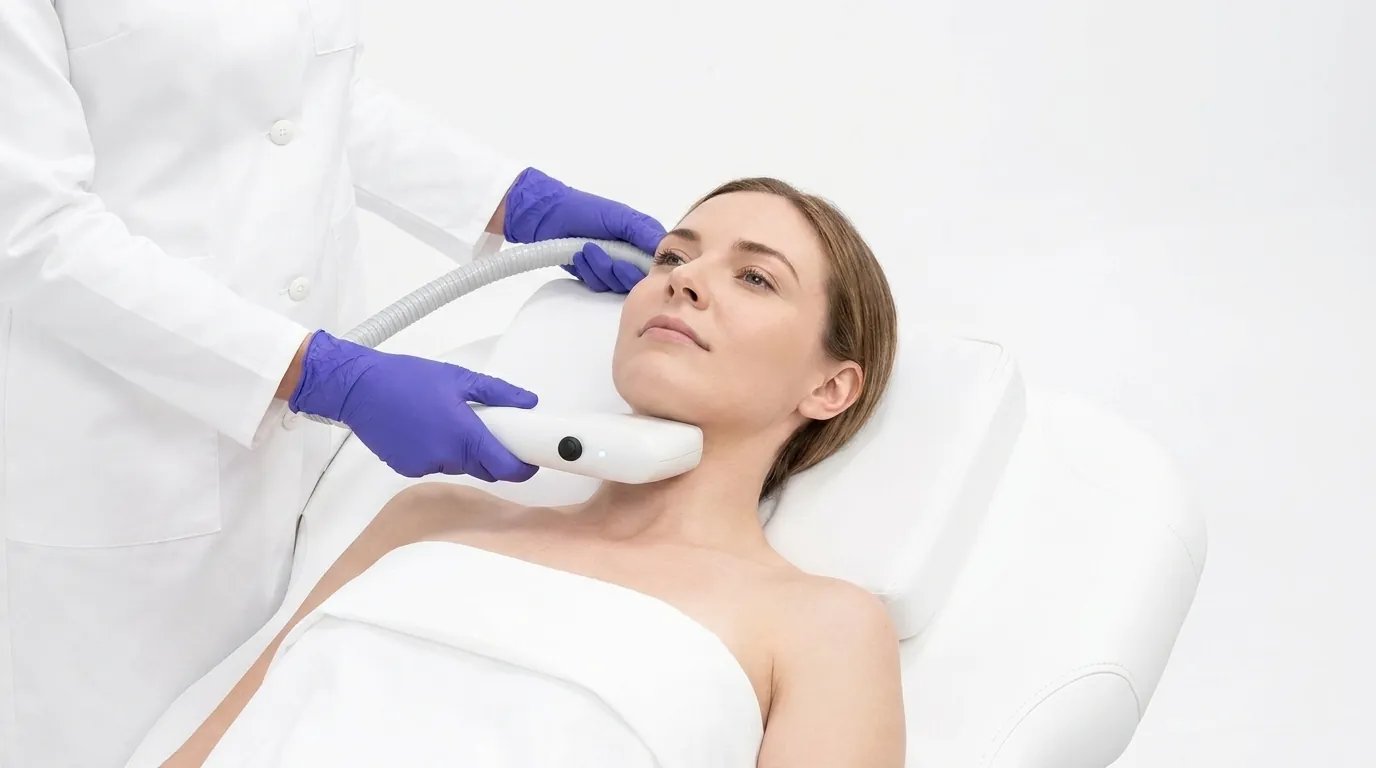
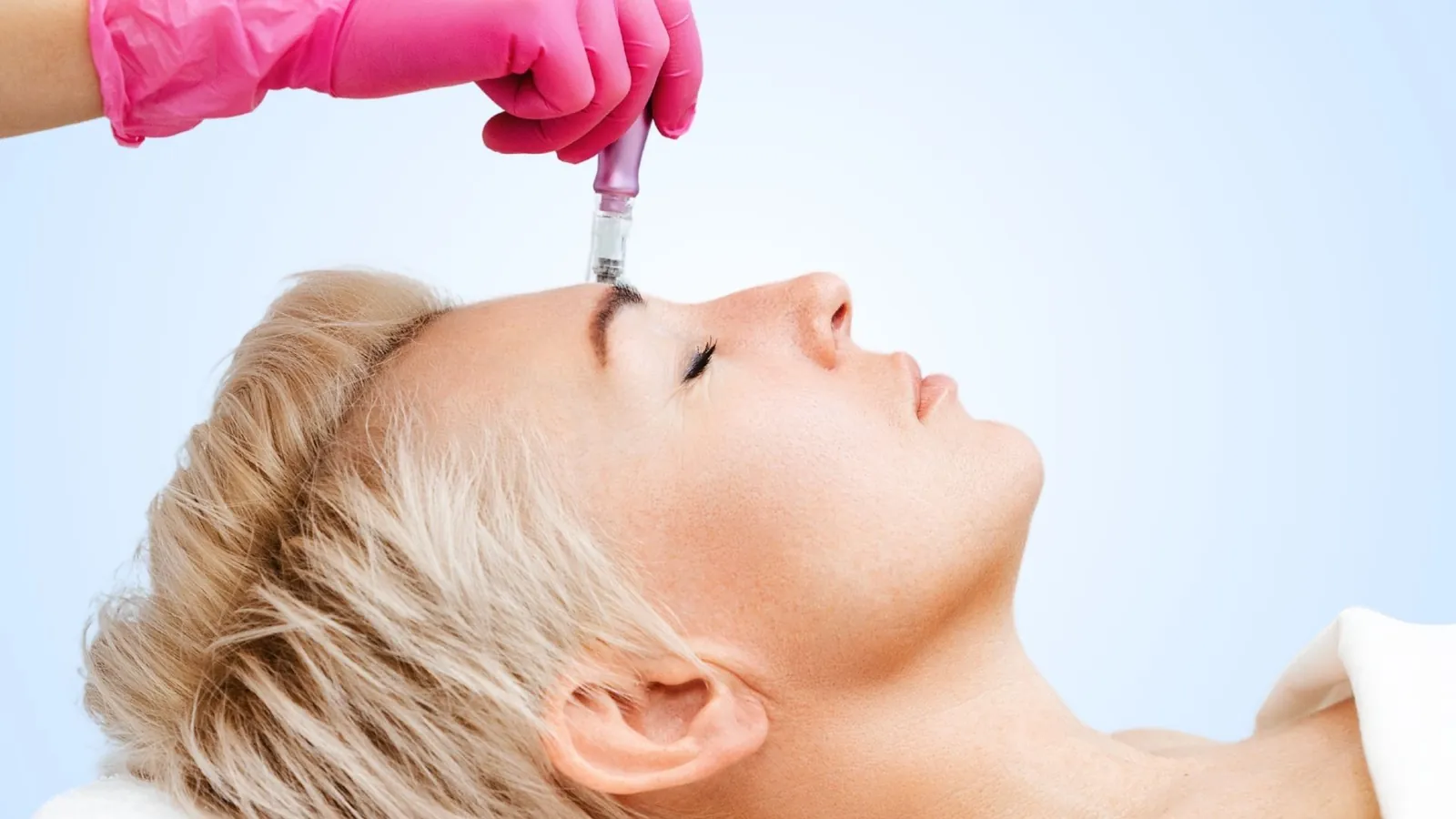
EmFace vs Ultherapy
Emface works on muscle as well as skin. It is a course of four short visits, and most people feel nothing worse than warmth and a tapping sensation. Ultherapy heats one deep layer, the sheet of tissue a surgeon pulls on in a facelift. It is a single long session, it hurts, and it is the better answer for a jawline that has genuinely dropped. No published trial has put the two side by side.
What it is
Two things at once. Gentle radiofrequency heat in the skin prompts new collagen. Electrical pulses contract the muscles that hold the face up.
A handpiece places heat at chosen depths, down to about 4.5 mm. That is below the fat, in the layer that supports the lower face.
What you do
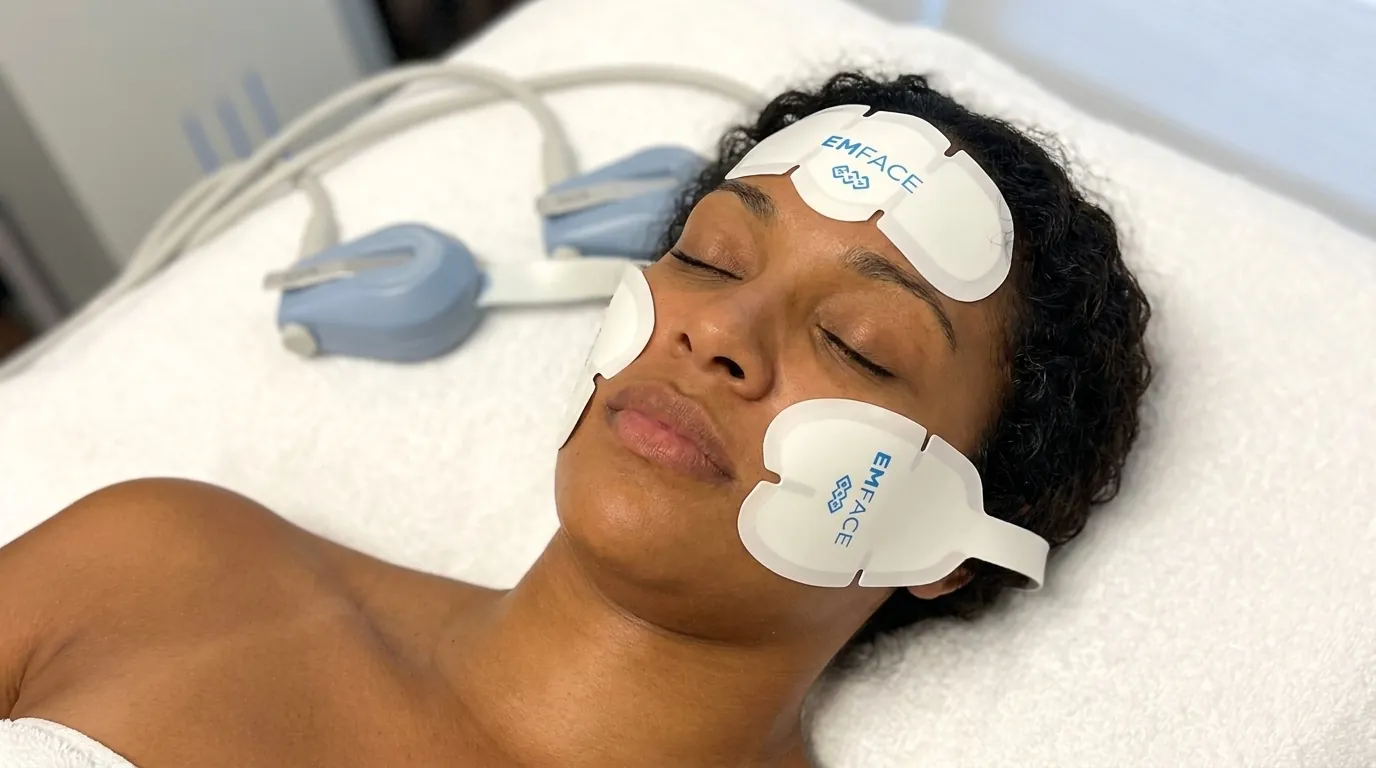
Applicators are strapped to the forehead and cheeks. You lie still. Visits are usually a week or so apart.
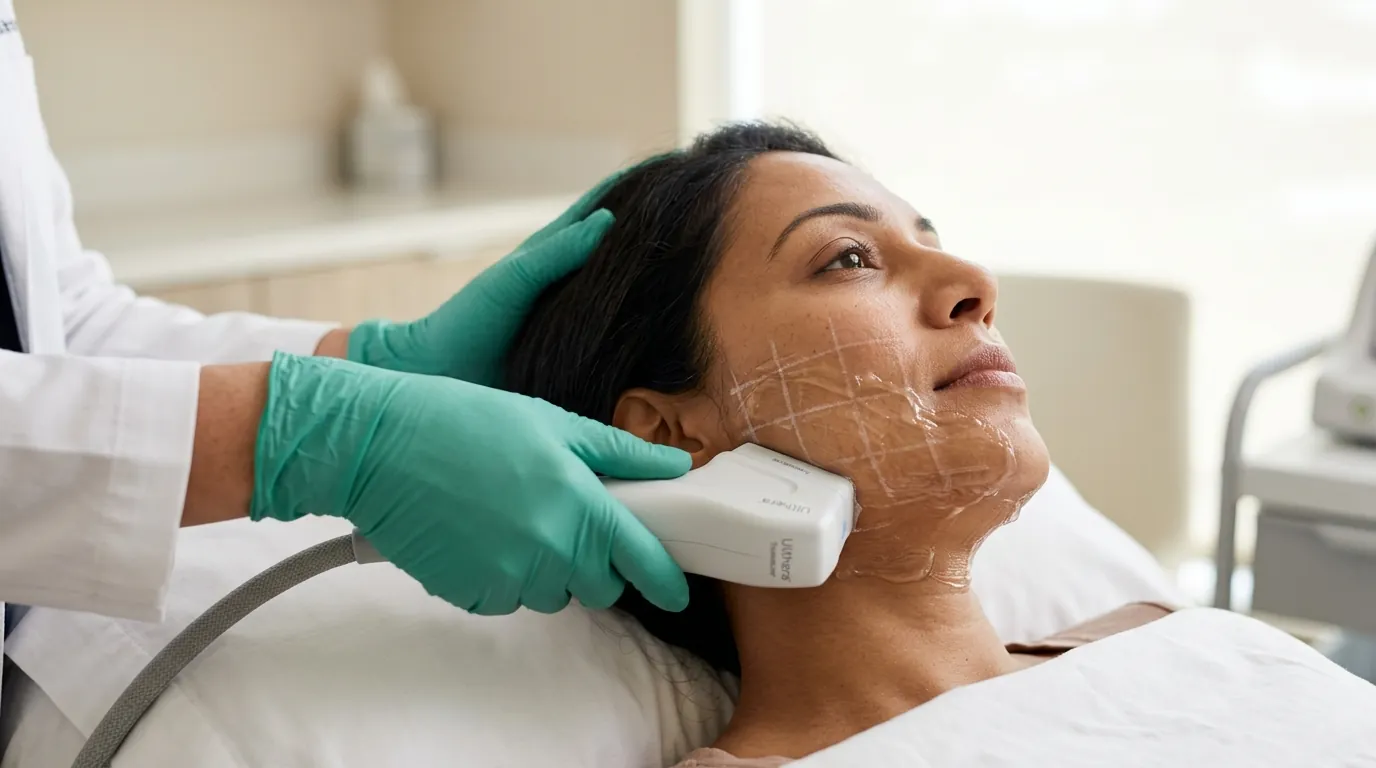
The operator sees the tissue on a screen and delivers hundreds of pulses, line by line.
What it feels like
The muscle pulses feel strange rather than sore. Numbing cream is not needed.
Numbing cream is standard and many clinics add oral pain medicine. Some people rate it the most painful treatment they have had.
What you should see
Smoother forehead lines, a slightly raised brow, more shape across the cheek.
Firmer skin as well, but the selling point is lift where the face has dropped.
What it will not do
How long until it works
Some change shows in the first week or two. Then it builds.
Almost nothing happens on the day. The result is new collagen.
How long it lasts
Downtime
A little pinkness for an hour. You can go straight back to work.
Swelling and tenderness for a few days. Patchy numbness along the jaw can last a week or two.
Cost
Ask what a maintenance visit costs on top, because the plan assumes you will have them.
Ask which areas the quote covers. Face, neck and under the chin are often billed separately.
The at-home or drugstore version
Home microcurrent wands pass a tiny current across the surface. They do not contract a muscle the way the clinic device does, and the heat they add is negligible.
Nothing sold for home use focuses ultrasound several millimetres down. A device that could would not be safe without training.
Who each suits
They are aimed at different tissue
Emface treats skin and muscle together: The radiofrequency side warms the skin so it makes collagen. The electrical side makes the lifting muscles of the face contract, hundreds of times per session, which is meant to leave them firmer.
Ultherapy treats one deep layer and ignores the muscle: It heats the fibrous sheet below the fat until it contracts, then your body rebuilds collagen there over the following months.
That is why one tones and the other lifts: A stronger cheek muscle changes the shape of a face that is starting to flatten. It does not pull up skin that has already dropped past the jaw.
Comfort is the real practical difference
Emface is easy to sit through: Twenty minutes, warmth, and a pulsing that feels like a light tap. People book it in a lunch hour and go back to work.
Ultherapy is hard to sit through: The sensation is a deep, sharp burst of heat, repeated hundreds of times. The brow and the neck are the worst of it. Some people need medication to finish the session.
That matters more than it sounds: Both treatments have to be repeated to stay ahead of the ageing that caused the problem. A session you dread is one you will not rebook.
What the evidence looks like
Ultherapy has the longer published record: It has been studied for well over a decade, and the lift it produces along the brow, jaw and neck is modest but real.
Emface has a shorter record, and much of it comes from the maker: The published studies are small, and the follow-up is short. That is normal for a new device, but it means the numbers quoted in clinics should be treated as early.
Nobody has compared them directly: Any clinic that tells you one beats the other is giving you an opinion, not a result.
What neither one does
Neither fills a hollow: Flat cheeks and deep folds are a volume problem, and volume needs filler or fat.
Neither softens a set frown line the way botulinum toxin does: Lines carved by muscle movement are a different job.
Neither works fast: If you are booking for an event, book at least three months ahead.
Before you book
Point at what bothers you in a mirror. A flat cheek and a hanging jowl are treated by different machines.
Ask how many sessions are in the plan, and what a year of upkeep costs.
Ask to see the clinic's own before-and-after photos, taken in the same light and at the same angle.
If a fold of skin lifts freely when you pinch it, ask whether surgery is the better answer. A fair clinic will say so.