Sofwave vs Ultherapy
Sofwave is the easier one to sit through. It heats the middle layer of the skin, takes about 30 to 45 minutes, and most people get through it without pain medicine. Ultherapy reaches deeper, down to the layer a surgeon pulls on in a facelift. It is the more painful of the two, and it is the one to ask about if sagging along the jaw and neck is your main complaint. No published trial has put the two side by side, so the choice comes down to depth against comfort.
What it is
A handpiece delivers ultrasound to about 1.5 mm below the surface. The heat prompts new collagen.
The same idea, but the operator can choose depths down to about 4.5 mm, under the fat.
What it feels like
Cooling on the handpiece protects the surface. Numbing cream is usual and is often enough.
Many clinics offer numbing cream plus oral pain medicine, and some offer a nerve block. Reports range from mild to the worst treatment a person has had.
What you should see
A softer jawline, a tidier neck, finer lines. The change is modest.
Brow, jawline and under-chin lift, because it reaches the layer that holds those areas up.
What it will not do
How long until it works
Some early smoothing in the first month, then a slow build.
Occasionally a small lift on the day, but the real change is the collagen.
How long it lasts
How many visits
A second session three to six months later if the first one did not go far enough.
Repeated for maintenance rather than to finish the job.
Downtime
Pinkness for an hour or two. Redness or mild swelling for a day or so.
Swelling, tenderness and sometimes bruising for a few days. Tingling or patchy numbness along the jaw can last a week or two.
Cost
The at-home or drugstore version
Home ultrasound wands sold for tightening put a small fraction of the energy into the skin surface. They never reach the layer this device heats.
The gap is bigger still. Nothing sold for home use heats tissue millimetres down, and a device that could would not be safe without training.
Who each suits
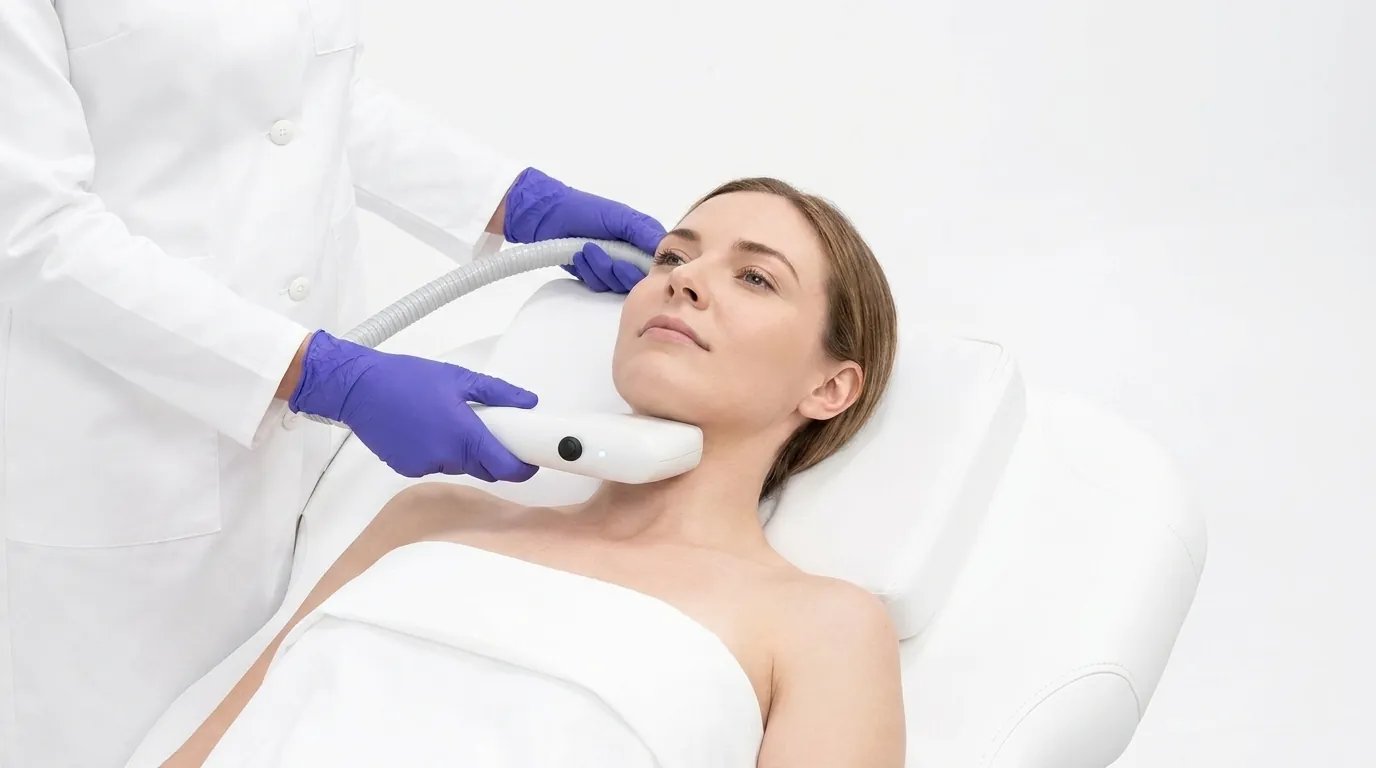
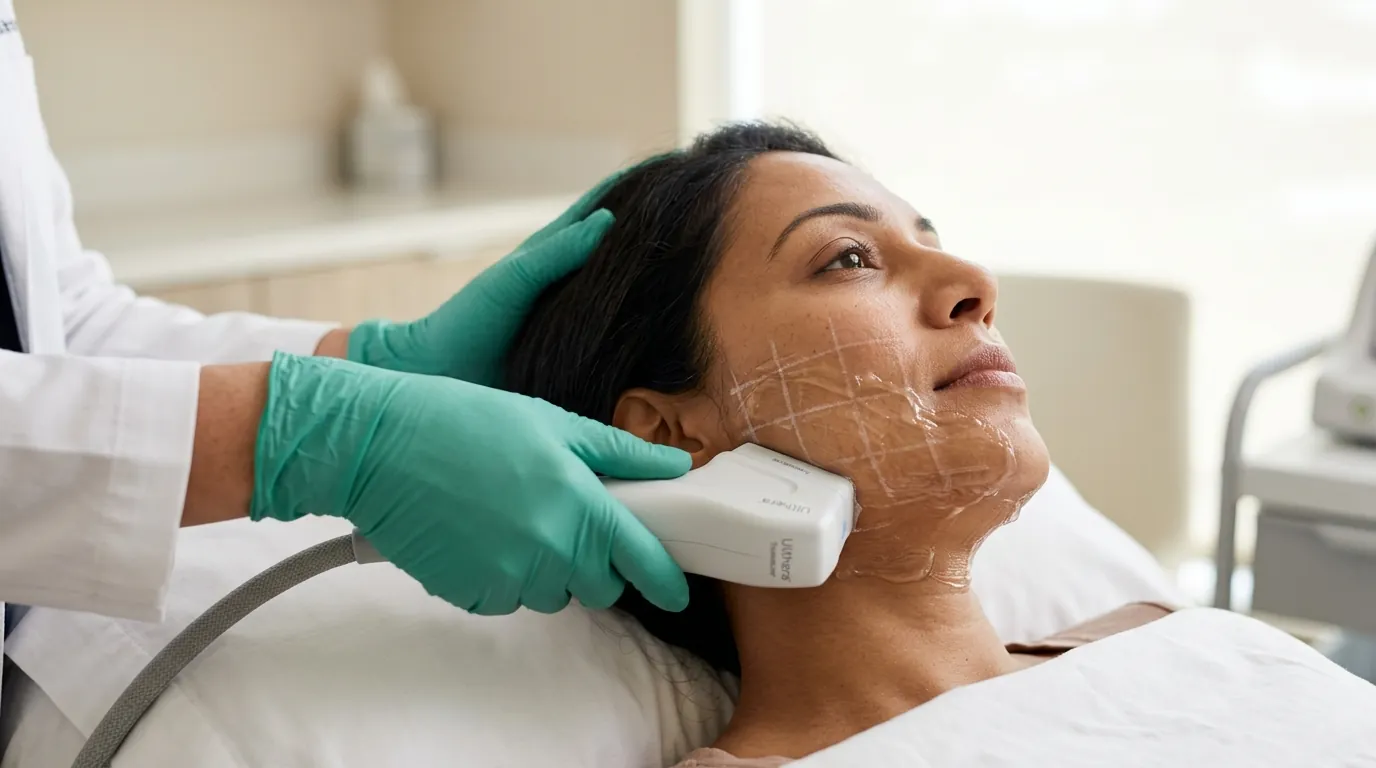
They work the same way, at different depths
Both use ultrasound to heat skin from the inside: The heat is a controlled injury. Your body repairs it by laying down new collagen, and that is what firms the skin over the following weeks.
Sofwave keeps its heat in the middle layer of the skin: That is where collagen sits, so it is a sensible target for texture, fine lines and mild slackness.
Ultherapy can place heat much deeper: At its deepest setting it reaches the sheet of tissue below the fat that a surgeon tightens in a facelift. Reaching that layer is why it can claim lift rather than firmness alone.
Deeper is not automatically better: The deep heat is what produces lift, and it is also what produces the pain and the small nerve risks. If your skin is only slightly loose, the extra depth buys you very little.
Pain is the real decision
Ultherapy has a reputation for hurting, and it is earned: The sensation is a deep, sharp pulse of heat, repeated hundreds of times. Thin areas such as the brow and the neck are the worst of it. Some people rate it a three out of ten. Others need medication to finish the session.
Sofwave is much easier for most people: The surface is cooled during treatment, the energy stops short of the deeper nerves, and the session is roughly half as long.
Comfort is not a small point: A treatment you dread is one you will not come back for, and both of these need repeating to stay ahead of the ageing that caused the problem.
The risks worth knowing
Both are low-risk in trained hands: Redness, swelling and tenderness are common with either, and settle within days.
Ultherapy carries a small extra risk from working deep: Temporary numbness or tingling along the jaw is the usual version. Rarely, a nerve is irritated enough to cause a few weeks of weakness or a drooping lip. It recovers.
Sofwave carries a smaller version of the same list: Because the energy stops in the skin, the main problems are surface ones: redness, small welts, and rarely a burn if settings are wrong.
Who holds the handpiece matters more than which machine it belongs to: Both devices depend on the operator knowing facial anatomy and choosing settings for your skin.
What neither one does
Neither fills a hollow: Flat cheeks and deep folds are a volume problem, and volume needs filler or fat.
Neither softens a frown line: Lines made by muscle movement are treated with botulinum toxin.
Neither works quickly: If you are booking for an event, book at least three months ahead.
Before you book
Ask which areas will be treated and how many pulses. That, not the brand name, drives the result and the price.
Ask what pain relief is offered, and say plainly how much pain you are willing to accept.
Ask to see the clinic's own before-and-after photos, taken in the same light and at the same angle.
If a fold of skin lifts freely when you pinch it, ask whether surgery is the better answer. A fair clinic will say so.