Forehead Reduction vs Hair Transplant
Forehead reduction is for a high hairline you were born with. The surgeon cuts along your hairline, removes a strip of forehead skin, and pulls the whole hairline down in one operation. A hair transplant is for a hairline that is receding or thinning. It adds hair, one follicle at a time, and takes about a year to show. If your hair is still falling out in a pattern, forehead reduction is usually off the table.
What it actually does
Your hairline is already dense. The surgeon lifts the scalp, removes a band of forehead skin, and brings the whole hairline forward as one piece.
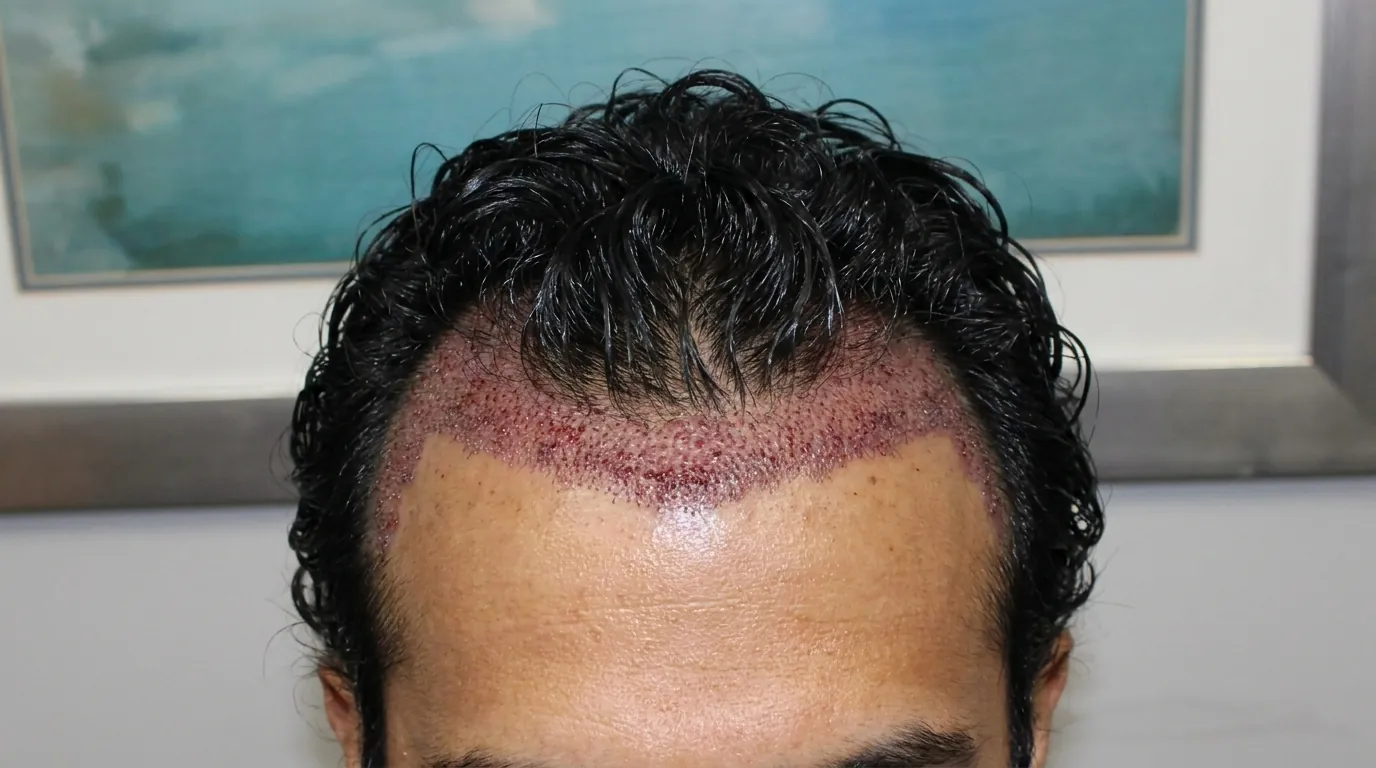
Follicles are taken from the back and sides of your head and placed one by one into the thin area. The new hairline is drawn, not moved.
Who it suits
Someone whose forehead has always looked tall, with a stable hairline and a scalp loose enough to stretch forward.
Someone losing hair at the temples or through the front, with enough hair at the back to spare.
What rules it out
Pattern loss will keep moving your hairline backwards, and it will move backwards behind the new scar. A tight scalp also rules it out, because there is nothing to stretch.
Very advanced loss may not leave enough hair at the back to build a hairline that looks right.
When you see the result
Swelling and bruising take a couple of weeks to settle. The new hairline is there from day one.
The grafted hairs shed at two to four weeks, regrow from month three or four, and look finished at around twelve months.
The mark it leaves
Placed so hair grows through and in front of it. It stays pink for months and softens over roughly a year. Numbness behind the scar is common at first and usually fades.
Tiny dots, or a fine line with the strip method, in the donor area. Short hair covers them.
Recovery
Expect swelling and bruising around the eyes and forehead in the first week. It is a real operation.
Scabs and redness in the treated area, then back to normal.
How much it changes
More is possible if your scalp is loose, or if a tissue expander is placed first at a separate operation.
Density comes out at around half your original, which reads as full from normal distance.
Cost
Priced as an operation, paid once.
The total depends on how large the area is.
The at-home or drugstore version
No cream, device or serum moves a hairline. Skin is not pulled forward by anything you can buy. Styling is the only non-surgical option, and it hides the forehead rather than changing it.
These are real treatments, but they keep hair rather than create it. They can thicken what is still growing at a receding hairline. They will not build a hairline where the follicles are gone.
Who each suits
They are not really competing
These two operations solve different problems: Forehead reduction changes where your hairline sits. A transplant changes how much hair is in it. Someone with a tall forehead and thick hair has nothing to gain from grafts. Someone with a receding hairline has nothing to gain from moving a line that is already thinning.
The test is what your hairline is doing: A hairline that has been the same shape since your teens is a candidate for lowering. A hairline that has crept back over the last five years is not.
Why ongoing hair loss rules out forehead reduction
Lowering a hairline moves a problem forward, it does not stop it: If pattern loss is active, the newly placed hairline will thin like the old one did. The scar then ends up on show rather than hidden behind hair.
Surgeons look for a stable hairline and a loose scalp: A family history of heavy hair loss makes most of them cautious, and some will ask you to be on medication and stable for a year before they will operate.
A transplant does not have that requirement: It still works while loss is active. Your surgeon plans for the loss to continue, which is why hairlines are designed higher and softer than the one you had at eighteen.
They are sometimes done together
Grafts are often used to soften the scar line: Hair placed in front of and through the scar breaks up the straight edge, so the hairline looks irregular the way a natural one is.
This is usually staged: Most surgeons wait several months after the lowering before adding grafts, so the scar has settled and they can see what it needs.
Before you book
Ask whether your hairline has been stable, and take an old photo to the consultation.
Ask how much lowering your scalp laxity actually allows.
Ask to see the surgeon's own healed scars at one year, not at one month.
Ask whether grafts along the scar are included or a separate cost.
If there is heavy hair loss in your family, ask about that directly before anything else.
%2520-%2520Render.webp)