Scalp Micropigmentation vs Hair Transplant
Scalp micropigmentation is a tattoo that copies the look of close-shaved stubble. No hair grows. It suits a shaved or very short style, and it works no matter how much hair you have lost. A hair transplant moves real hair that grows. You can comb it, cut it and wear it long, and it is permanent. The two are often done together, because pigment behind grafted hair hides the gaps between them.
What you actually get
Thousands of tiny pigment dots, matched to your hair colour and placed at about the depth a follicle sits. The scalp reads as shaved rather than bald.
Follicles are moved from the back and sides of your head to the thin area. They grow, and you cut them like the rest of your hair.
What hair length it works with
Convincing from conversation distance with a buzz cut. At longer lengths, or close up, the dots read as flat because they have no texture.
It is your hair, so it behaves like your hair.
Who can have it
It works at any stage of loss, including a fully bald scalp. It is also used to cover transplant scars and to soften a wide part in longer hair.
Advanced loss may not leave enough hair at the back and sides to cover the front convincingly.
Time to a finished result
Usually two to four sessions spaced a week or two apart, each a few hours. It looks right as soon as the last one has settled.
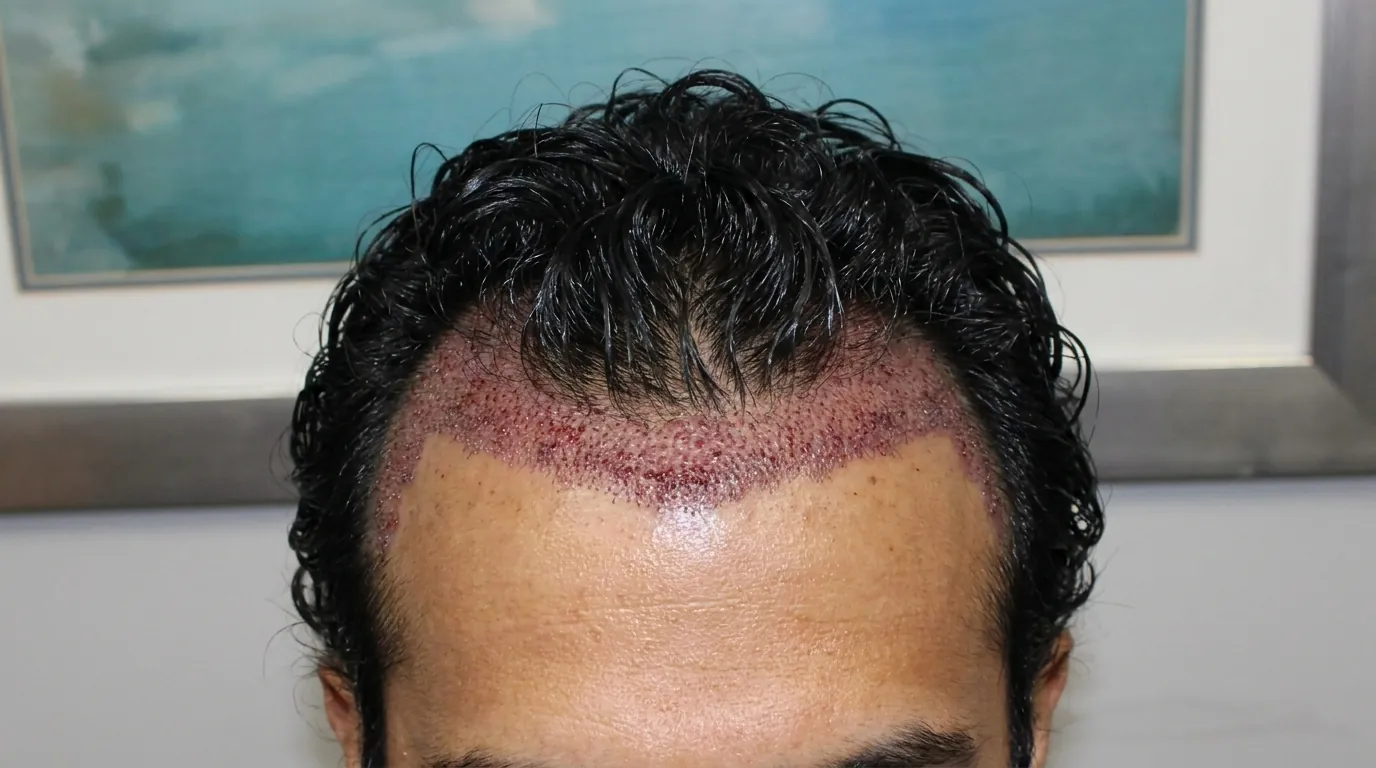
Grafted hairs shed at two to four weeks, regrow from month three or four, and look finished at around twelve months.
How long it lasts
Most people need a top-up somewhere between year three and year six. Oily skin fades sooner.
The moved follicles keep growing. Hair around them can still thin, so the picture changes over time.
Downtime
The scalp looks pink and slightly raised. No sweating, swimming or washing the scalp for a few days after each session.
Swelling, scabs and redness, then tiny marks in the donor area that short hair covers.
What tends to go wrong
Pigment lightens over years, sometimes unevenly. A poor pigment or a heavy hand leaves dots that turn bluish, or dots too large to pass as follicles. Fixing that means laser removal, which is slow and rarely perfect.
Hair spent on a hairline designed too low cannot be reclaimed. There is also the usual surgical set: swelling, scabbing, and small permanent marks at the back.
Cost
Priced by how much scalp is covered and how many sessions it takes. Top-ups every few years are part of the cost.
Usually priced per graft.
The at-home or drugstore version
Keratin powders cling to hair you still have and wash out at night. They only work if there is hair to cling to, so they cover thinning, not baldness. Home tattoo kits are the same tool in untrained hands, on skin, permanently.
Nothing you buy moves a follicle. Minoxidil and finasteride protect the hair you still have and are often used alongside surgery, but they do not add hair to a bald area.
Who each suits
SMP does not grow hair, and it is not pretending to
Micropigmentation is a cosmetic tattoo: It changes the colour of your scalp so the contrast between skin and hair disappears. That is the whole mechanism. It does nothing to the follicles underneath.
That makes it very good at one look: A close shave is easy to copy, because real stubble is also just dots of colour at skin level.
It gets harder as hair gets longer: Real hair casts shadows and stands off the scalp. Pigment lies flat. Past a short buzz cut the difference starts to show, which is why the best results are on men who shave.
The fading is the honest downside
Pigment does not stay put forever: Your body slowly breaks it down and carries it away, so the shadow lightens over the years. Sun exposure and oily skin speed that up.
Colour can drift as well as fade: Good practitioners use pigments made for scalps and dilute them to match your hair, so they lighten cleanly. Standard tattoo inks can settle towards blue, and that is the version people mean when they say SMP looks fake.
Plan for maintenance, not permanence: Ask what a top-up costs before you start, and budget for one every few years.
Doing both is common
Grafts add hair, pigment removes the contrast behind it: A transplant can only reach about half your old density, and gaps between hairs are what makes a scalp look thin. Pigment darkens the skin in those gaps, so the same amount of hair looks thicker.
It also covers donor scars: That includes the dots left by follicle extraction and the fine line from the strip method.
Order matters: Surgery first, pigment afterwards, once the transplanted hair has grown and you can see what is left to hide.
Before you book
Ask to see healed work at three years, not fresh work at one week.
Ask what pigment they use and how they dilute it for your hair colour.
Ask what a top-up costs and how often their clients need one.
Ask what happens if you decide to grow your hair out.
If your scalp scabs or flakes, settle that first. Pigment does not hold well in irritated skin.
%2520-%2520Render.webp)