HydraFacial vs Microdermabrasion
HydraFacial does the exfoliating inside a stream of fluid, and delivers a serum in the same pass. It is gentler, there is no dust, and skin looks hydrated straight afterwards. Microdermabrasion does the same job dry, with fine crystals or a diamond-grit tip and a vacuum. Both work on the same thin layer of dead cells, and no study has ever compared them head to head.
What it is
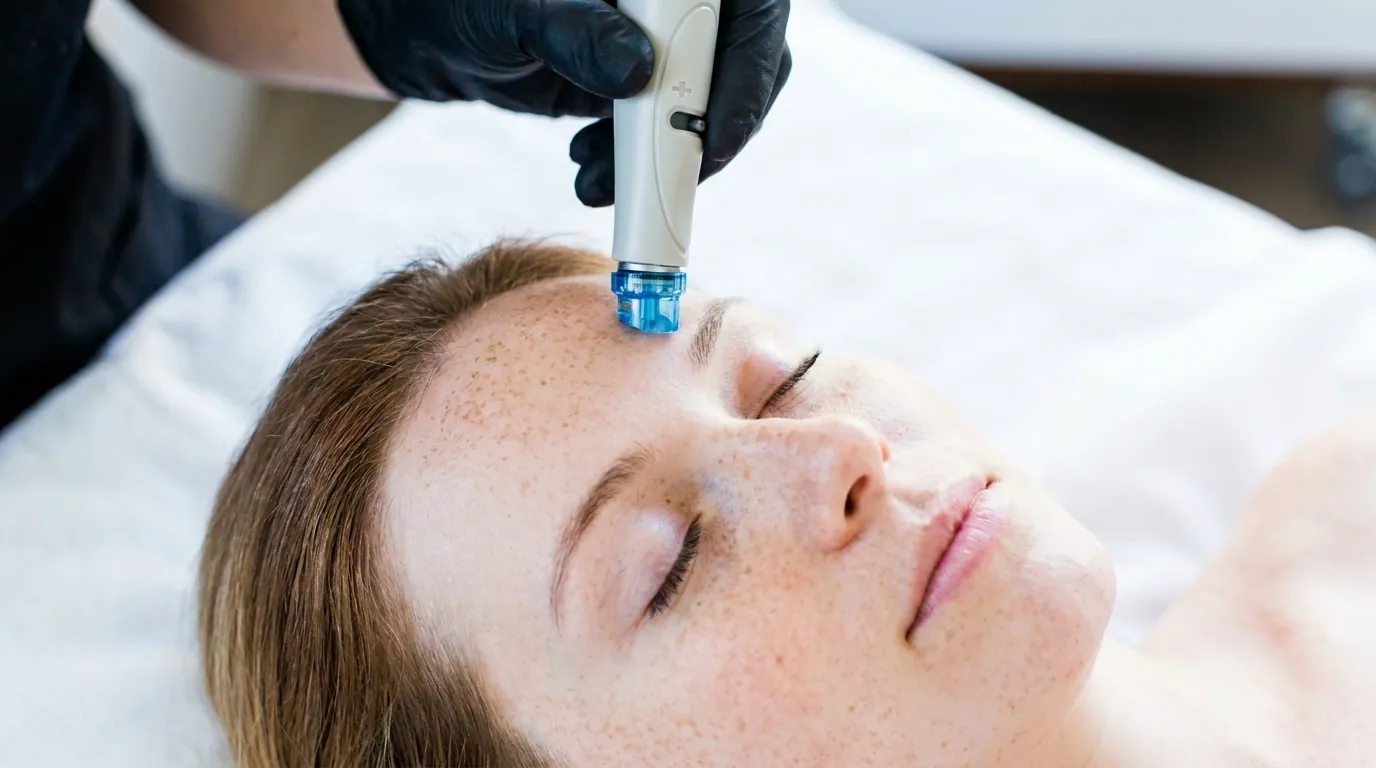
A spiral tip abrades the surface while fluid is pumped in and suction pulls the fluid, dead cells and pore contents into a waste jar.
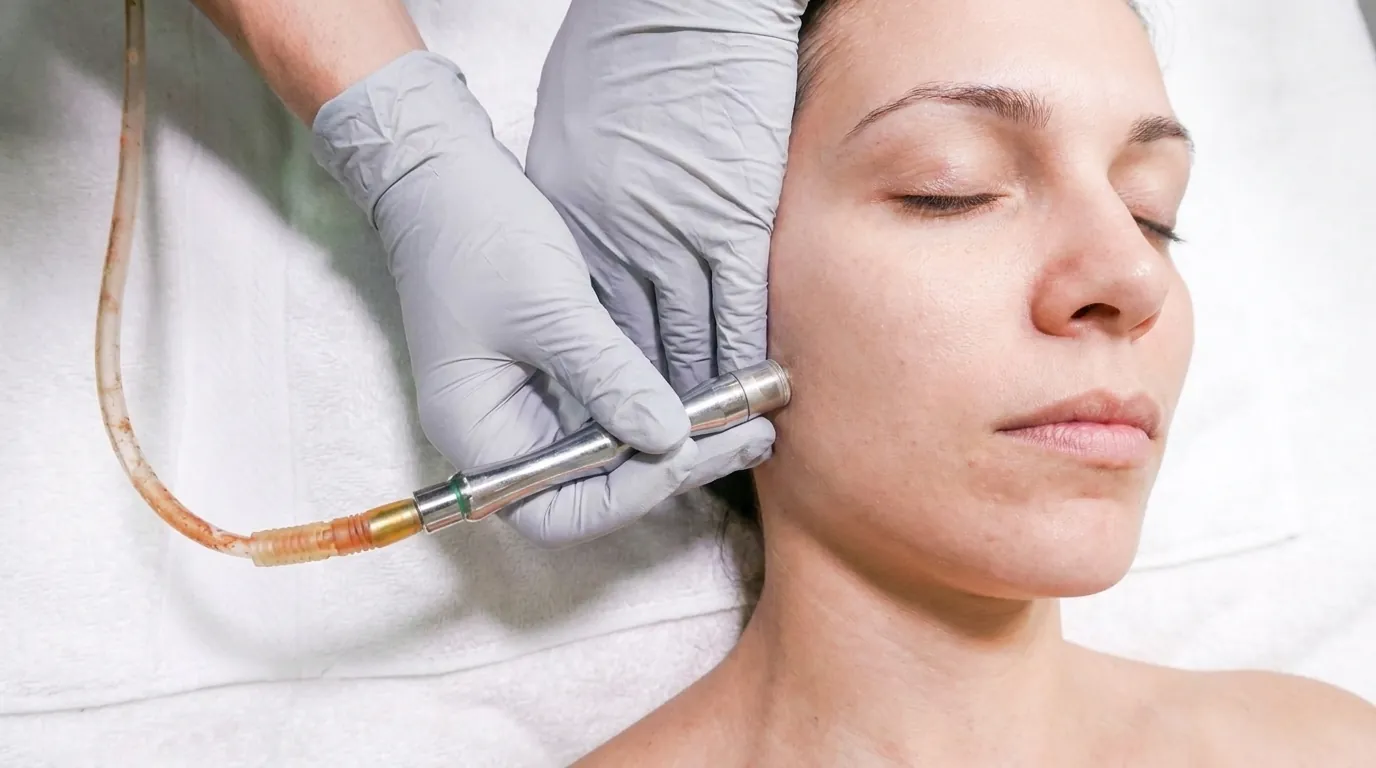
Crystal machines spray fine crystals at the skin and vacuum them back. Diamond-tip machines use a grit-covered wand and draw skin against it with suction.
What the fluid changes
The fluid lubricates, so the pass feels gentler, and it carries mild acids or hydrating ingredients onto skin that has just been scuffed.
Whatever the clinic applies afterwards goes on separately, once the abrading is done.
How deep it goes
Imaging in a small study found the layer thinned from about nine microns to about seven straight after treatment, and measured slightly thicker than baseline two weeks later.
In one study of people given a single treatment, no change in the thickness of that layer could be detected at all.
What it is best at
The strongest supporting evidence is for the delivery idea: a mild acid applied with suction cleared whiteheads and blackheads better than the same acid applied alone.
It has the far larger published record, and the findings there are modest: better contour and texture, limited effect on pigment and acne.
What it feels like
Comfortable enough that most people book it before an event. Skin is a little pink afterwards.
Crystal versions leave dust near the eyes, which is why eye shields are standard. Ask for the diamond tip if that bothers you.
How long the result lasts
It is a maintenance treatment, and clinics sell it on a monthly schedule.
Same story, and published protocols usually ran weekly for six sessions.
Cost
Branded platform, single-use tips and serums are all in the price.
Quality varies enormously between machines, and the price does not tell you which one you are getting.
The at-home or drugstore version
Home pore vacuums use a fraction of the suction and have no serum system. They are the same idea at a much lower setting.
Home kits with fine crystals or a small grit tip do the same thing gently. Used too often they irritate more than they smooth.
Who each suits
Same target, different delivery
Both machines are aimed at the outer layer of dead cells, and both remove a small amount of it: The difference is whether that happens dry or inside a stream of fluid.
Wet has two real advantages: It is more comfortable, and a solution can be put onto the skin at the moment it is most permeable.
Dry has one real advantage: It has been studied far more, over far longer, and the machines are cheaper to run.
What neither one does
Neither one builds collagen: The one imaging study that looked for a change in collagen at two weeks did not find one.
Neither one treats acne: Both can clear blackheads and make skin look better the same day. The major dermatology guidelines do not recommend facials or blackhead extraction as acne treatment.
Neither one fixes scars, deep lines or melasma: Those sit far below the layer these machines reach.
Has anyone compared them directly
No trial has put HydraFacial against microdermabrasion: Anything you read about which one is better is reasoning, not measurement.
What the reasoning can support is narrow: Wet treatment is gentler and adds a delivery step. Dry treatment is cheaper and better studied. Neither of those is a claim about your face at three months.
Before you book
Ask which machine is used, and whether the tip is new and single-use.
Ask for eye protection and check it is in place before the handpiece touches your skin, especially with a crystal machine.
Pause retinoids and strong acids for a few days beforehand. They make irritation much more likely.
If you get cold sores, say so at booking rather than on the day, since antiviral medicine has to be started in advance.
Skip either one if your skin is currently broken, sunburned or inflamed.