Ingrown Toenail vs Fungus
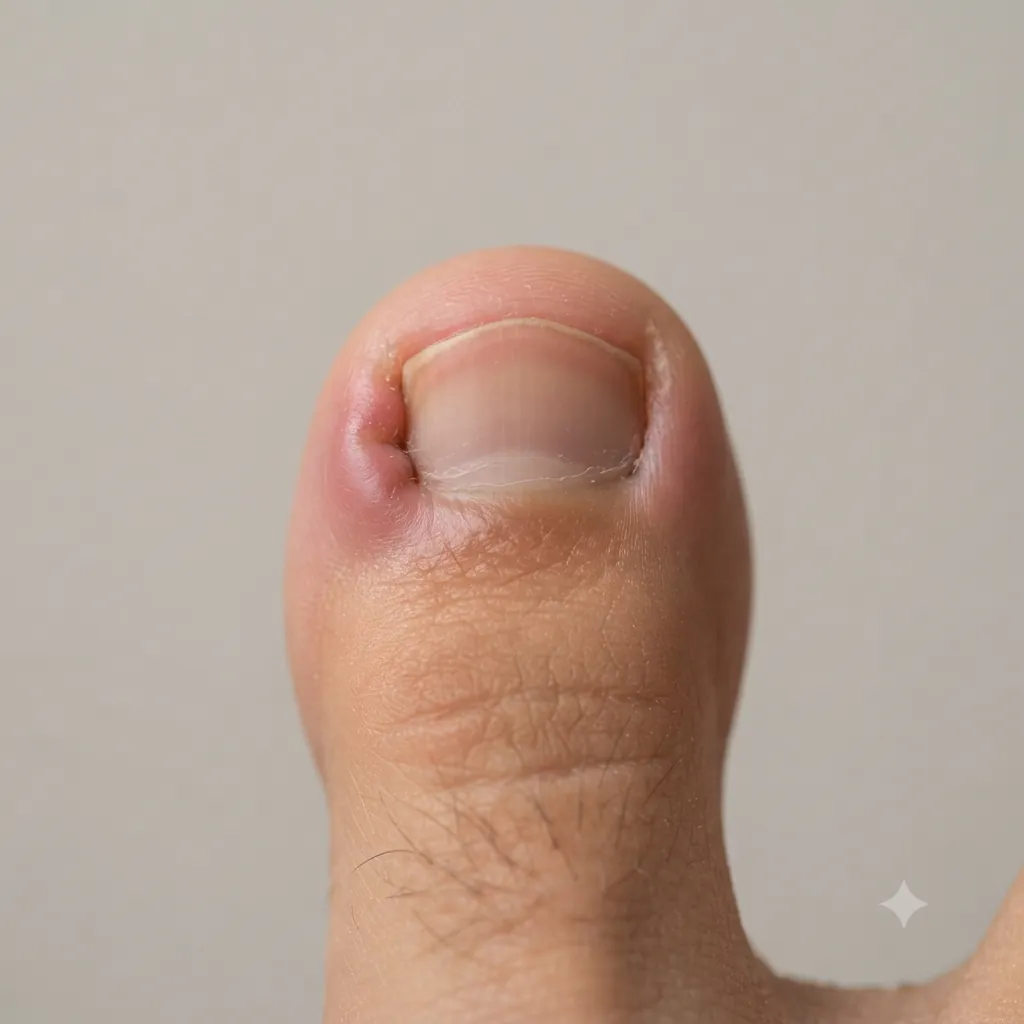
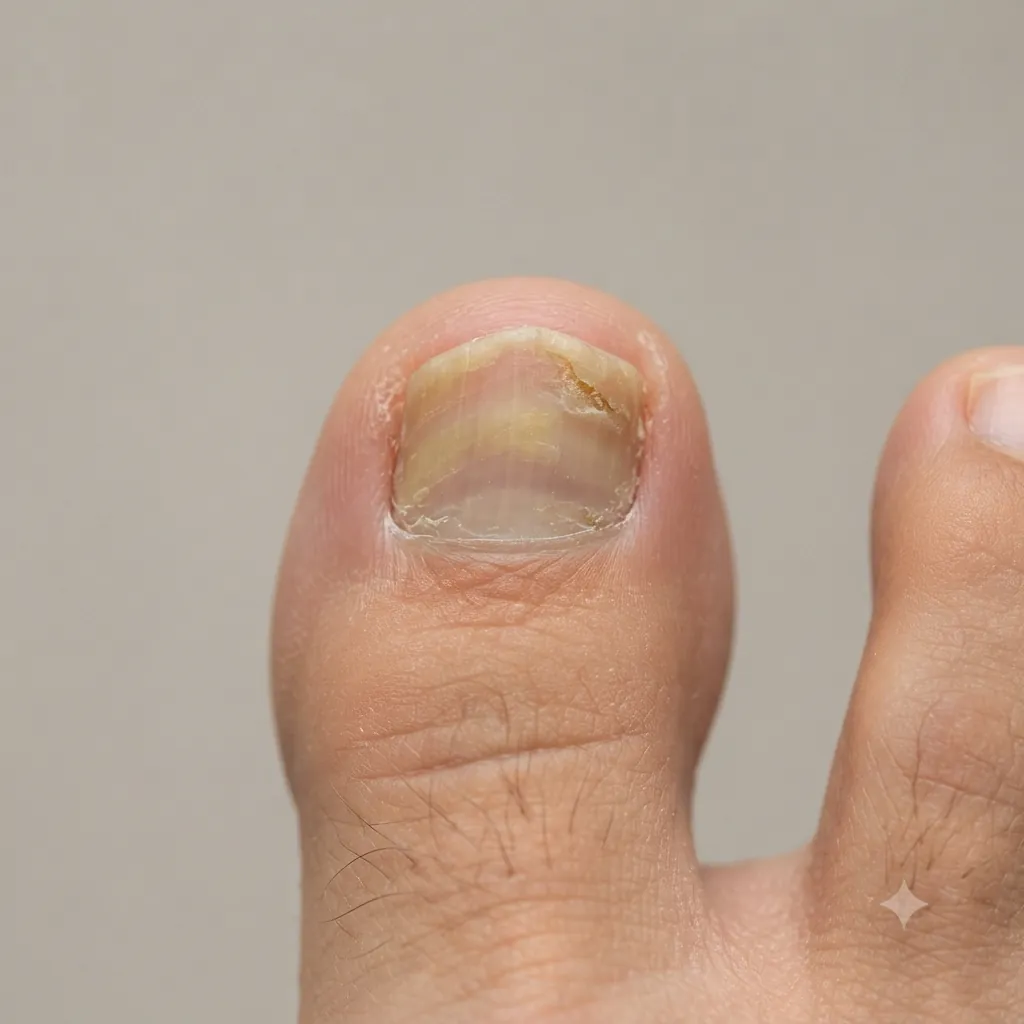
An ingrown toenail is a mechanical problem at the edge of the nail. The corner of the nail presses into the skin beside it, and that one spot turns red, swollen and sore. Toenail fungus is an infection inside the nail itself. The nail turns thick, yellow-brown and crumbly, and it usually does not hurt at all. Pain on one side of the toe points to an ingrown nail. A nail that looks wrong but feels fine points to fungus.
What it is
The edge of the nail pushes into the soft skin fold beside it. The skin reacts like it would to a splinter. Nothing is infected at the start.
Fungus gets under the nail, usually from the free edge, and feeds on the keratin the nail is made of. The nail is being slowly eaten from within.
What it looks like
The nail itself looks normal. The skin next to it is swollen, shiny and sometimes has a small bead of yellow fluid at the corner.
The skin around it looks normal. The nail thickens, lifts away from the nail bed, and the edge crumbles when you cut it.
Does it hurt
Throbs in a tight shoe, hurts when the bedsheet presses on it, and is tender to touch on that one side.
Most people notice the colour and thickness long before they feel anything. A very thick nail can start to press and ache inside a shoe.
Where on the toe
Almost always the outer or inner corner. One side at a time.
Starts at the outer corner or the tip, then spreads back toward the base. Often more than one toe.
What it does over time
Days to weeks. The skin can pile up over the nail edge and start to weep. It settles fast once the nail stops digging in.
Fungus does not clear on its own. It creeps back along the nail and often spreads to the neighbouring toes.
How it is treated
Warm salt-water soaks, roomier shoes, and a clinician lifting or trimming the offending corner. A stubborn one is treated by numbing the toe and removing a narrow strip of nail edge.
A prescription tablet course, usually about twelve weeks, or a medicated nail lacquer for milder cases. The medicine kills the fungus; the damaged nail still has to grow out.
How long until it looks normal
A toenail grows roughly a millimetre a month, so even a cured nail looks bad for a year while the healthy nail replaces it.
Can you have both at once?
Fungus makes an ingrown nail more likely: A fungal nail thickens and changes shape, and a thick, curved nail edge digs into the skin more easily. So a toe can be fungal and ingrown at the same time.
Treat the painful problem first: The ingrown edge is what hurts, and relieving it takes days. The fungus takes months either way, so it can wait its turn.
The quick test at home
Look at the nail, then look at the skin.
Nail normal, skin angry: Ingrown toenail.
Nail thick and discoloured, skin normal: Fungus.
Both: Likely both, and it is worth having someone look at it.
A nail clipping settles it: If the picture is mixed, a clinician can send a small clipping to be examined for fungus. That matters, because antifungal tablets are a three-month commitment and plenty of thick, discoloured nails turn out not to be fungal at all.
What makes each one come back
Ingrown nails come back from how the nail is cut: Rounding the corners, or cutting them short, leaves a spike of nail that the skin then grows over. Cut straight across, no shorter than the tip of the toe.
Fungus comes back from where the feet live: Warm damp shoes, shared changing-room floors, and athlete's foot on the skin nearby all reseed the nail. Treating the skin and rotating shoes matters as much as the tablets.
See a doctor if
The toe is red, hot and spreading beyond the nail fold
There is pus, or the skin has grown up over the nail edge
The same toe goes ingrown over and over
A thick or discoloured nail is painful
One nail alone is dark, streaked, or changing shape
You have diabetes, neuropathy, or poor circulation — do not treat either one at home