Melasma vs Rosacea
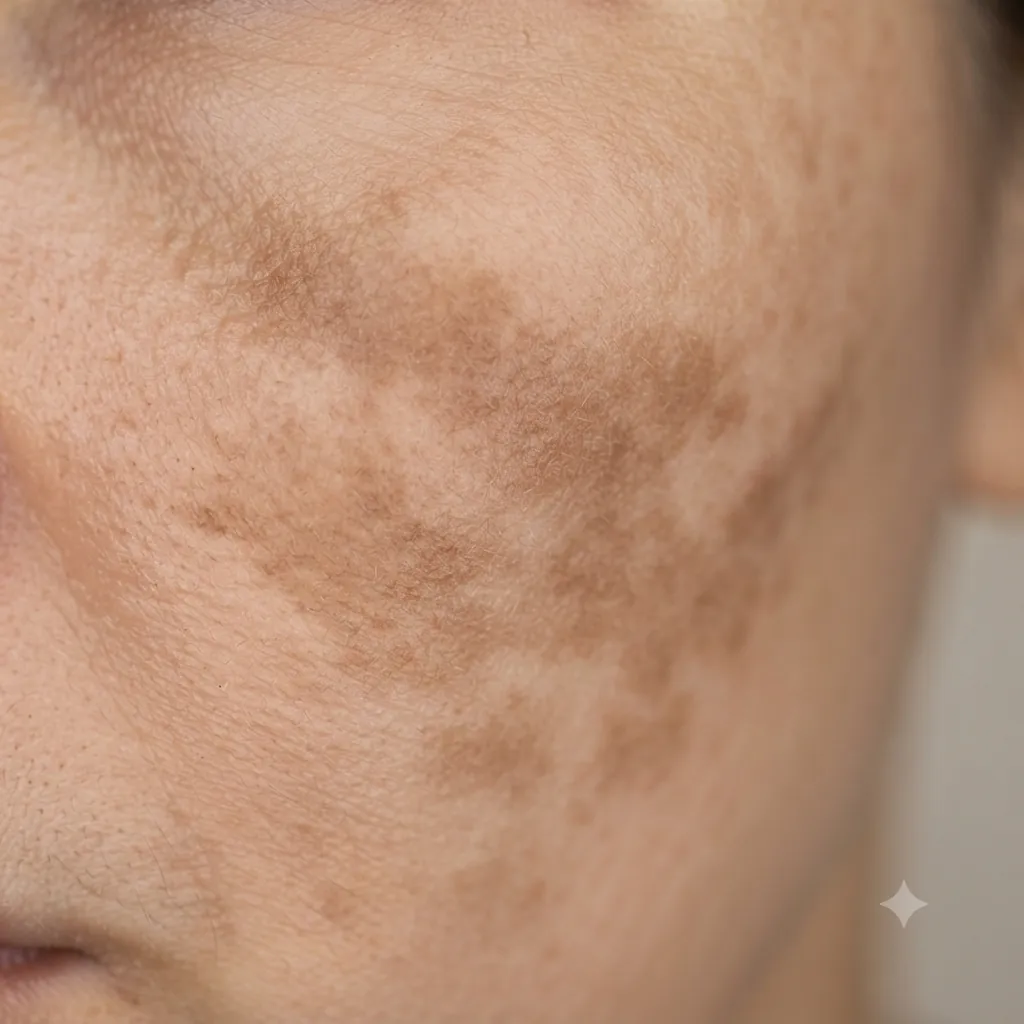
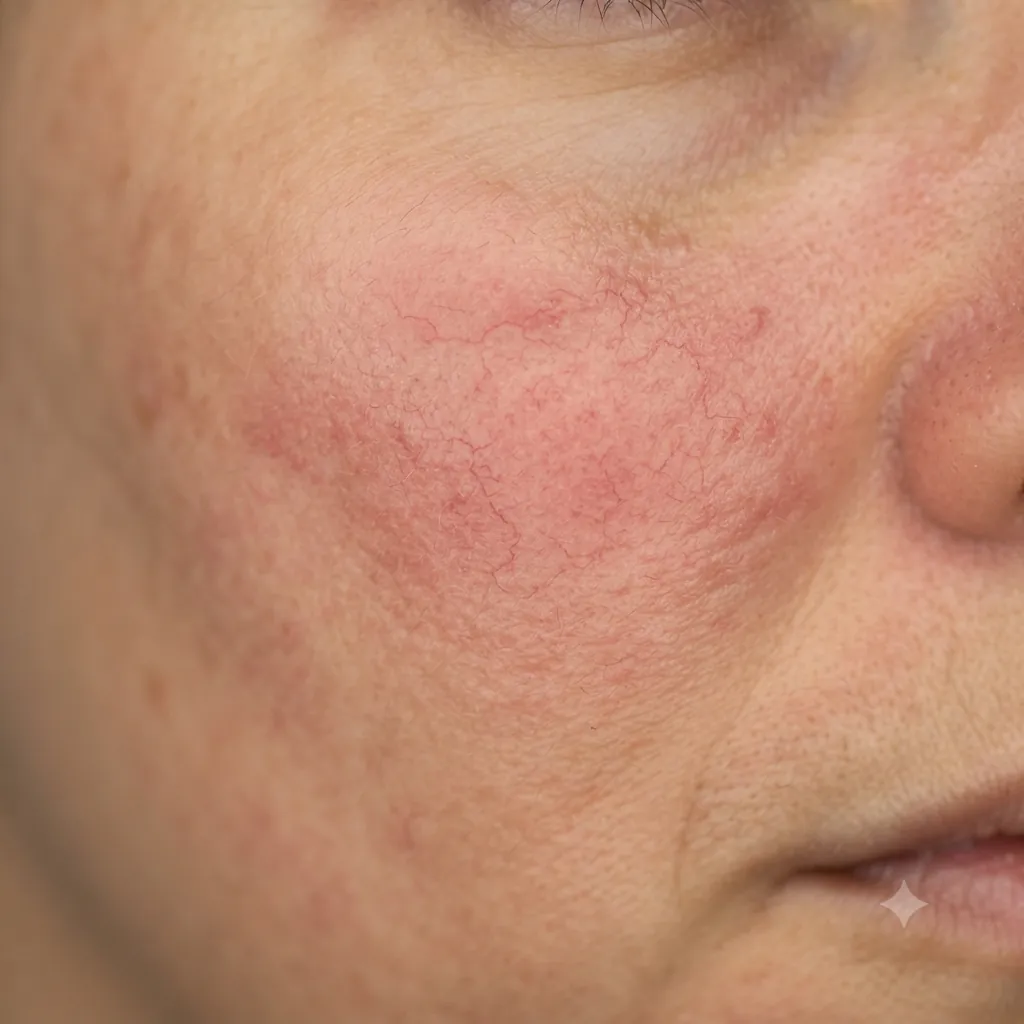
Melasma is a brown or grey-brown patch of extra pigment. The skin feels completely normal. Rosacea is redness, flushing and sometimes bumps. The skin feels warm, and it often stings with ordinary skincare. Both sit on the middle of the face, which is why they get mixed up, and a person can have both at once.
What it is
Pigment-making cells in the skin switch on too easily and lay down extra pigment. Sun, heat and hormonal changes all push them.
Blood vessels in the central face widen too easily and stay widened. Inflammation follows, and in some people that adds bumps and pustules.
What it looks like
Usually symmetrical across both cheeks, the forehead or the upper lip. Only the colour changes — the surface looks normal.
Flushing that comes and goes at first, then a lasting pink or red. Fine visible blood vessels often appear inside it.
Colour
Never red. Pigment sitting deeper in the skin looks greyer or slate-coloured.
Press a finger on it and the skin goes pale for a second, then refills.
Shape and edges
Patches fade gradually into normal skin, and one side of the face broadly mirrors the other.
The redness has no border at all. Any bumps are scattered, with clear skin between them.
How it feels
No heat, no stinging, no itch. Melasma is something you see, not something you feel.
Flushes feel hot. Products other people tolerate can sting on contact, and the eyes can feel dry or gritty.
Where it shows up
Sometimes the forearms and the sides of the neck as well. It sticks to skin the sun reaches.
It spares the skin around the eyes and the sides of the face.
What makes it worse
Including hormonal changes from hormonal birth control. Heat on its own is a trigger, so hot kitchens, saunas and a sunny car window all count.
Also hot drinks, exercise, cold wind and stress. Triggers vary, and most people can name their own within a few weeks.
What it does over time
It lightens in winter and with treatment, then comes back with sun, heat or a hormonal change. It rarely clears once and stays clear.
Flushing tends to become fixed redness over years, and untreated inflammation thickens the skin of the nose in a small number of people.
How it is treated
Daily broad-spectrum sunscreen, ideally tinted with iron oxides, is the treatment that matters most, and melasma comes back without it. Hydroquinone, azelaic acid, tranexamic acid and gentle peels lighten it. Lasers are used cautiously, because heat and light can darken it.
Sunscreen and gentle cleansing come first. Metronidazole, azelaic acid or ivermectin cream treat the bumps. Laser and intense pulsed light treat fixed redness and visible vessels.
Brown or red decides it
Melasma is a pigment problem, so it is brown: Extra pigment sits in the skin. Pressing on it changes nothing, because no blood is involved.
Rosacea is a blood vessel problem, so it is red: Press a finger on rosacea and the skin blanches for a second, then refills as the vessels open again. That one second is the most useful test on this page.
Photographs are where people go wrong: Warm indoor lighting and phone cameras push both toward the same muddy pink-brown. Judge the colour in daylight, in a mirror, not on a screen.
Why the middle of the face confuses everyone
Both conditions favour the cheeks, nose and forehead: That is where the sun lands and where facial blood vessels sit closest to the surface, so two unrelated conditions end up in the same place.
Both flare with sun and heat: Noticing that your face looks worse after a beach day or a hot shower tells you nothing that separates the two.
Age barely helps: Melasma usually starts in the twenties or thirties, rosacea between 30 and 50. The overlap is wide, so colour and feel do the real work.
A person can have both
Melasma and rosacea often turn up in the same face: Brown patches sit over a background of redness, and the mix looks like one muddy discolouration. Judging colour, edge and stinging separately untangles it.
The two treatments pull against each other: Rosacea skin stings easily, and several standard melasma treatments are irritating. Irritation makes rosacea flush, and inflammation is one of the things that darkens melasma. Going slowly matters more here than in either condition alone.
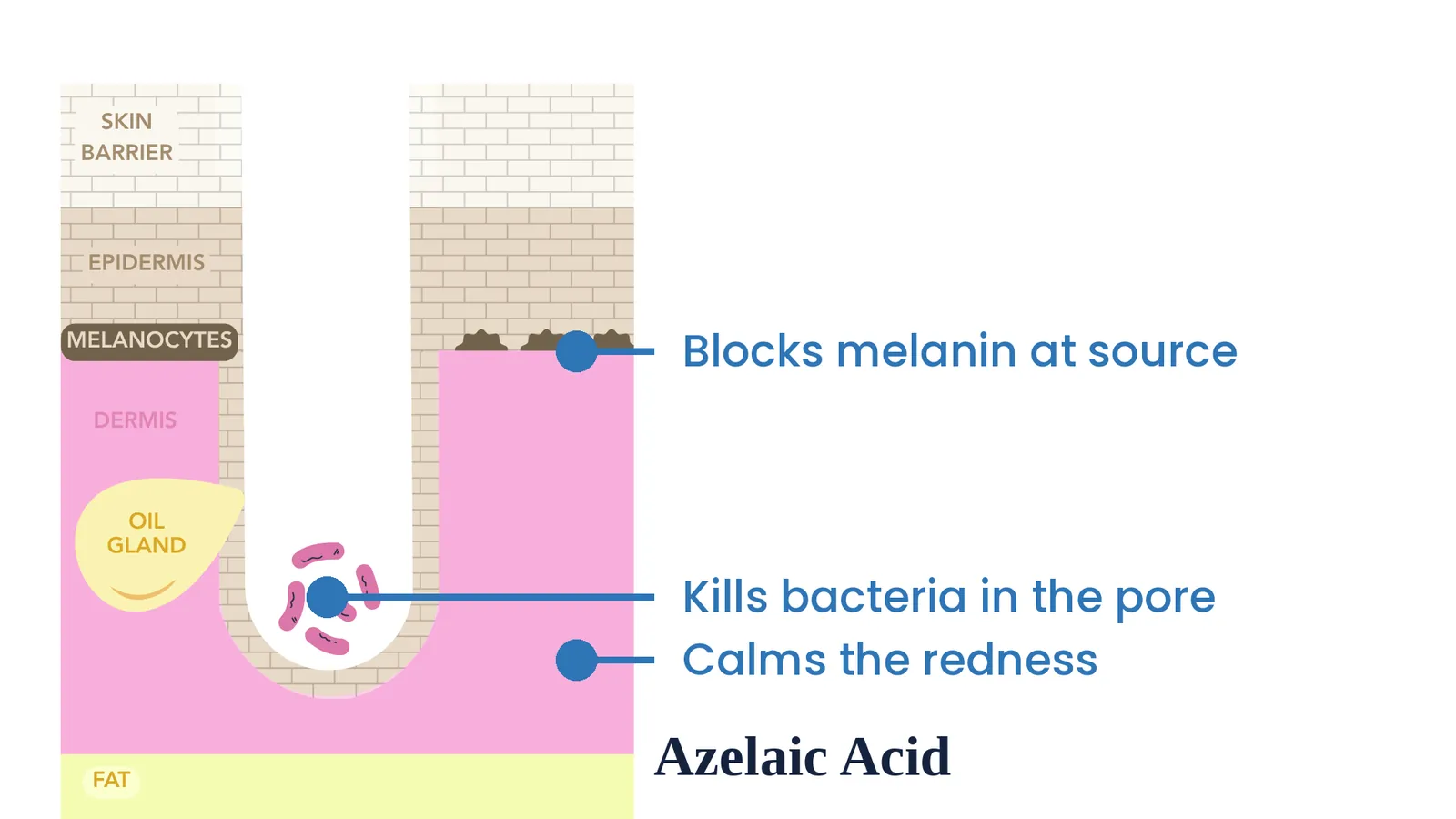
Azelaic acid is the common ground: It calms rosacea bumps and lightens melasma, and sensitive skin usually tolerates it. It is often the first thing a dermatologist reaches for when both are present.
See a doctor if
Facial redness has lasted months and is getting worse
Your eyes are gritty, dry or sore alongside the redness
Skincare stings on contact
A brown patch keeps spreading despite daily sunscreen
The redness came on suddenly
You have both brown and red and are not sure where to start