Microdermabrasion vs Microblading
Microdermabrasion sands the surface of your skin. It is a facial treatment for dullness and rough texture, done with a spray of fine crystals or a diamond-grit tip, plus a vacuum. Microblading tattoos hair-like strokes into your eyebrows, by hand, with pigment, and it lasts a year or more. These two treatments have nothing in common except the first five letters, so almost everyone who compares them meant one or the other.
What it is
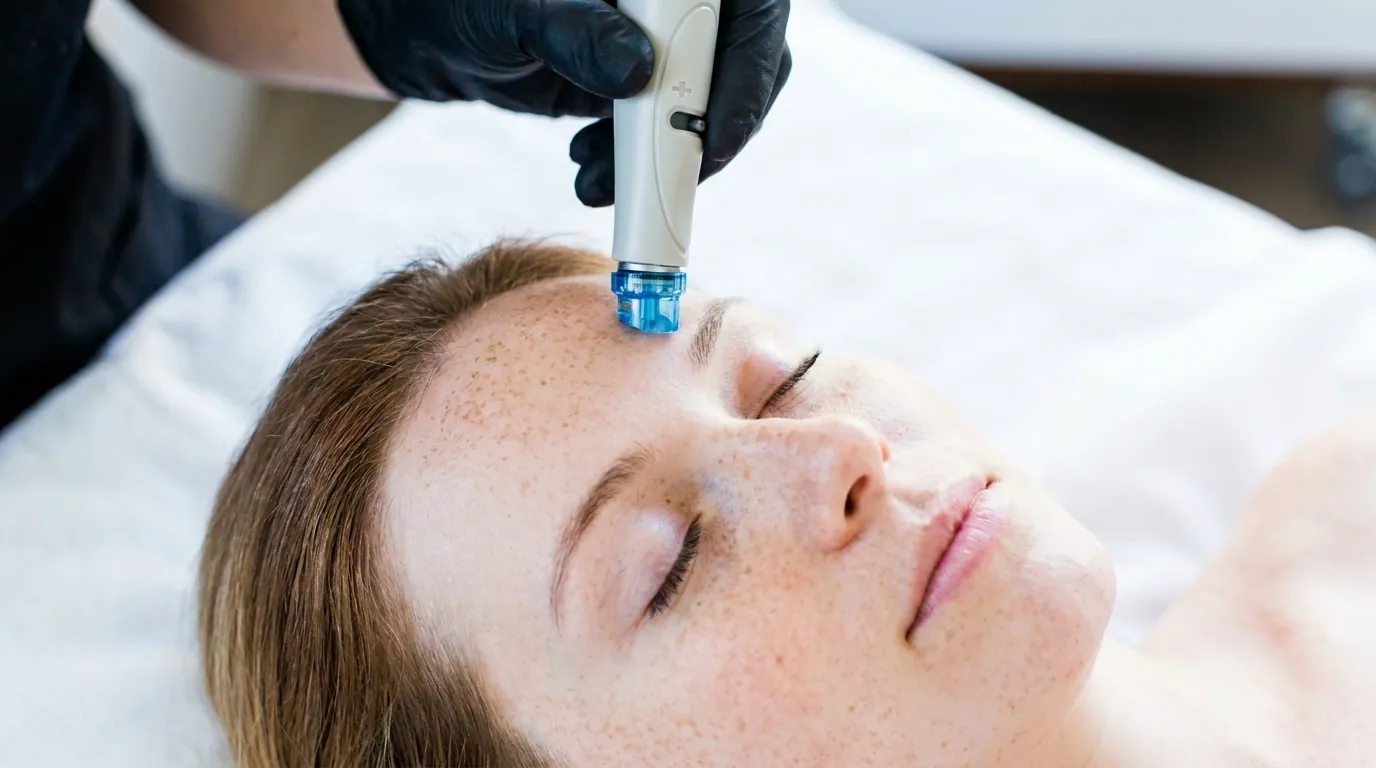
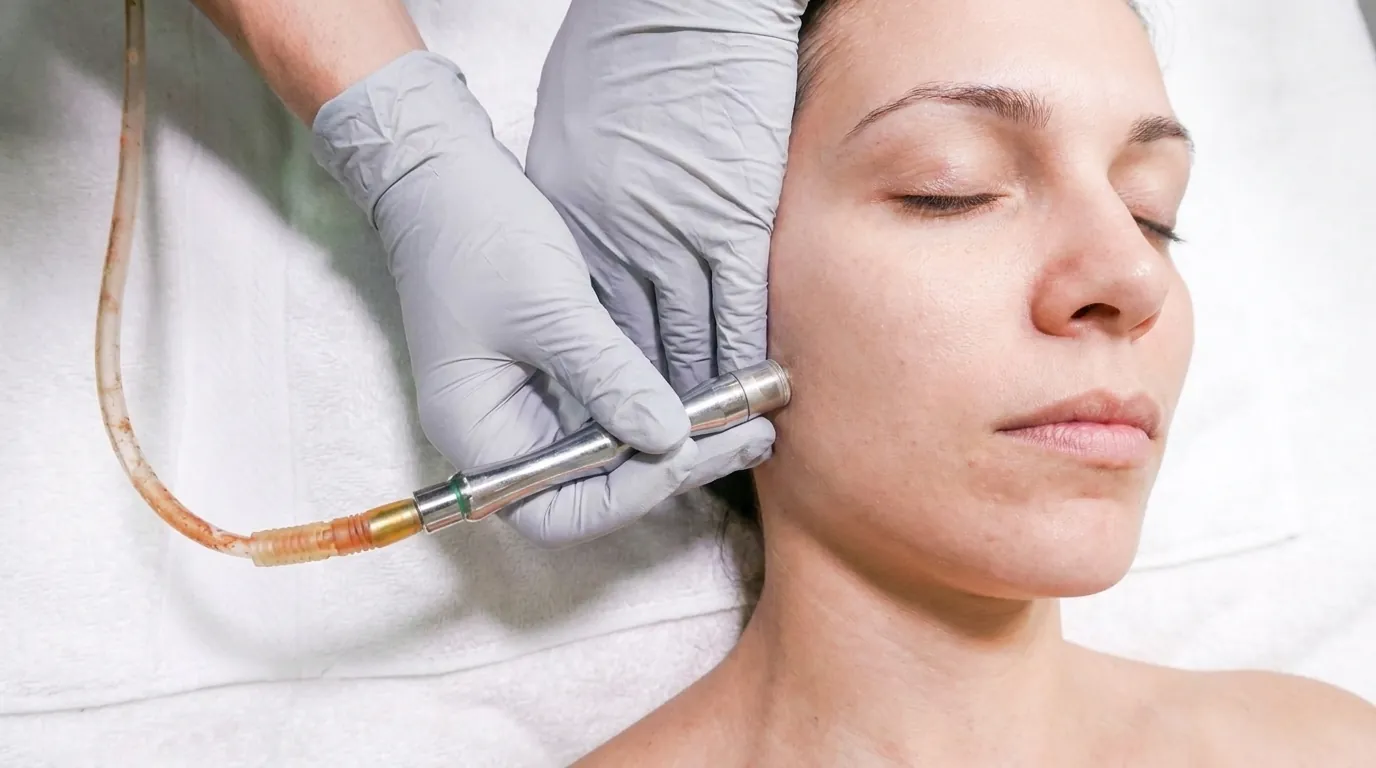
A handpiece either sprays fine crystals at the skin or drags a diamond-grit tip across it, while a vacuum pulls the loosened cells away.
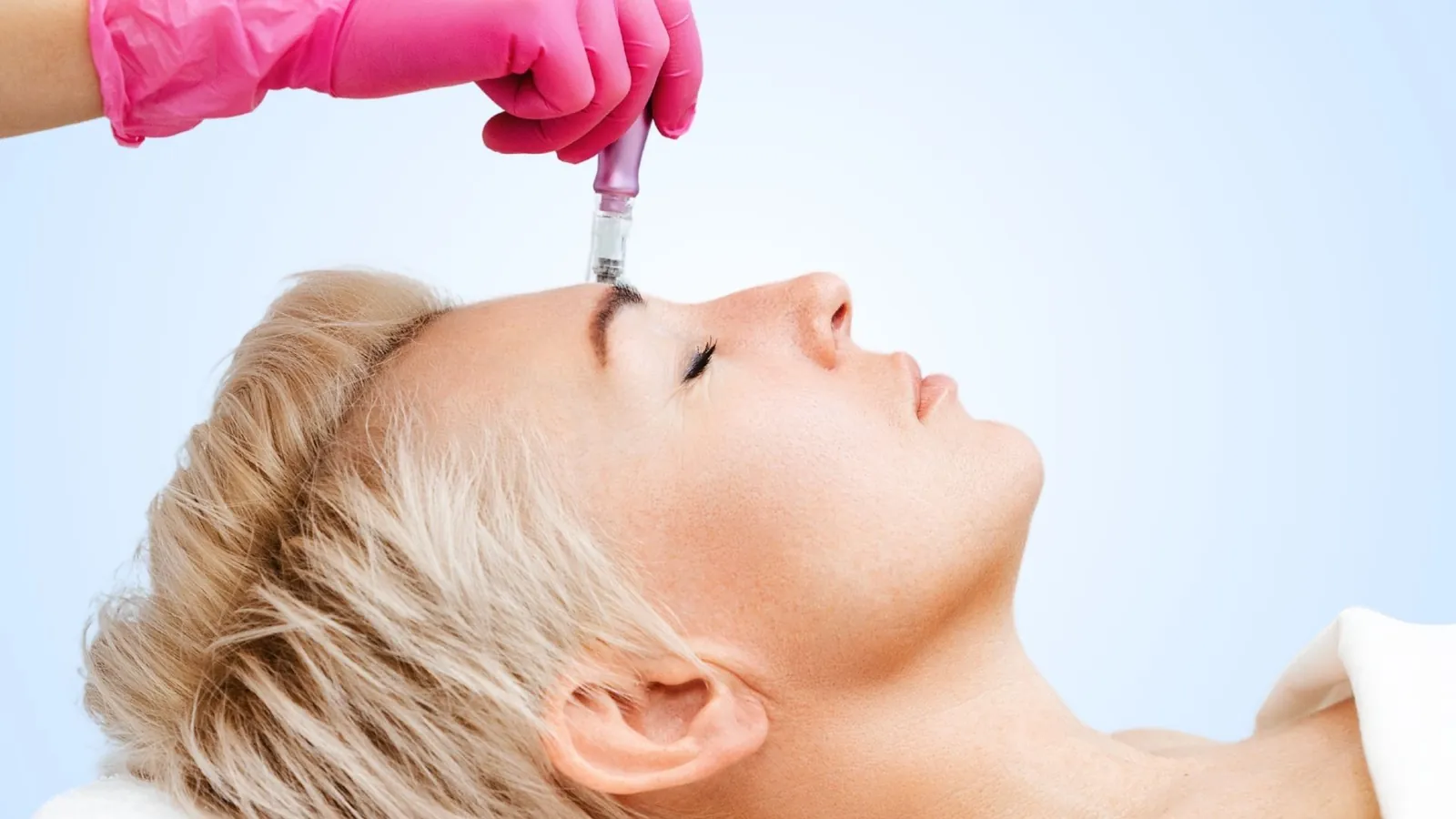
A hand tool with a row of tiny blades draws fine strokes and deposits pigment just under the surface, so the strokes look like individual hairs.
Where on you it is done
It is a whole-surface treatment, not a spot treatment.
The shape is drawn on and agreed with you before any pigment goes in.
What it is for
Surface texture and a same-day glow. It is also used to prepare skin before other treatments.
It fills gaps and rebuilds a shape, so you stop drawing brows on every morning.
Does it break the skin
That layer is about as thick as a tenth of a hair, and it grows back within days.
It is a tattoo. That is why it lasts, and why it takes time to heal.
How long until you see the result
Skin looks brighter and feels smoother straight away.
Colour looks dark and sharp for the first week, then softens and fades as it heals. A touch-up at six to eight weeks sets the final look.
How long it lasts
Clinics usually sell it as a course, because a single session does very little on its own.
Most people book a refresh every 12 to 18 months as it fades.
What it feels like, and the downtime
Mild stinging and a dragging feeling. There is nothing to hide afterwards.
A numbing cream is used. Afterwards the brows scab lightly, itch and flake, and they must be kept dry.
The downside
Measured changes are small and short-lived. It will not fix scars, deep lines or pigment problems.
Colour can shift toward warm or grey over time, and removal takes several laser or saline sessions. Pigment can also spread slightly, blurring fine strokes.
Cost
Ask what a course of six costs rather than what one costs.
Check whether the six-week touch-up is included in the quoted price.
The at-home or drugstore version
Home kits and small suction wands do the same thing with far less power. They will not reach clinic settings, but they are the same idea.
Brow pens and pomades draw on the surface and wash off. Home "microblading" tools put pigment into skin without training or sterile technique.
Who each suits
If you landed here by mistake, this sorts it
If your question is about your skin, you mean microdermabrasion: Dull skin, rough patches, blackheads, big pores, wanting a glow before a wedding.
If your question is about your eyebrows, you mean microblading: Thin brows, gaps, over-plucked arches, wanting to stop using a pencil.
Two other names get pulled into the same search: Microneedling makes tiny channels in skin to build collagen, and it is a skin treatment. Microshading is a dot-and-shade version of brow tattooing, and it is a brow treatment.
What microdermabrasion actually does
It removes the outer layer of dead cells, and that layer is thinner than people expect: It measures roughly nine microns on the face, about a tenth the width of a hair, and it rebuilds itself within days.
That explains why the results are real but small: Skin looks brighter and feels smoother, and the effect fades over the following week or two.
It also explains why it is sold in courses: One session is a polish. Any lasting change comes from repeating it, and even then the change is modest.
What microblading actually does
It is tattooing, done with a hand tool instead of a machine: Pigment is placed in fine strokes that follow the direction your own brow hairs grow.
Healing is the part people are least prepared for: The brows look darkest in the first few days, then scab and flake, and roughly a third of the colour drops out as they heal. That is normal, and it is why the touch-up exists.
The result depends on the artist far more than the tool: Shape, stroke direction and pigment choice are judgement calls, and they are what separates good brows from bad ones. Ask to see healed photos taken at six weeks, not fresh photos taken on the day.
What neither one does
Neither one treats acne: Extraction and surface polishing can make skin look better today, but they are not acne treatment.
Neither one grows hair: Microblading draws hairs that are not there. It does nothing to the follicles.
Before you book
Check licensing. Tattooing rules differ by state and county, and microblading is regulated as tattooing in most places.
Ask about single-use tools. Blades and cartridges should be opened in front of you.
For microblading, ask for a patch test of the pigment and numbing cream, and ask what happens if the shape heals unevenly.
For microdermabrasion, pause retinoids and strong acids for a few days beforehand, and skip it if your skin is broken, sunburned or already irritated.