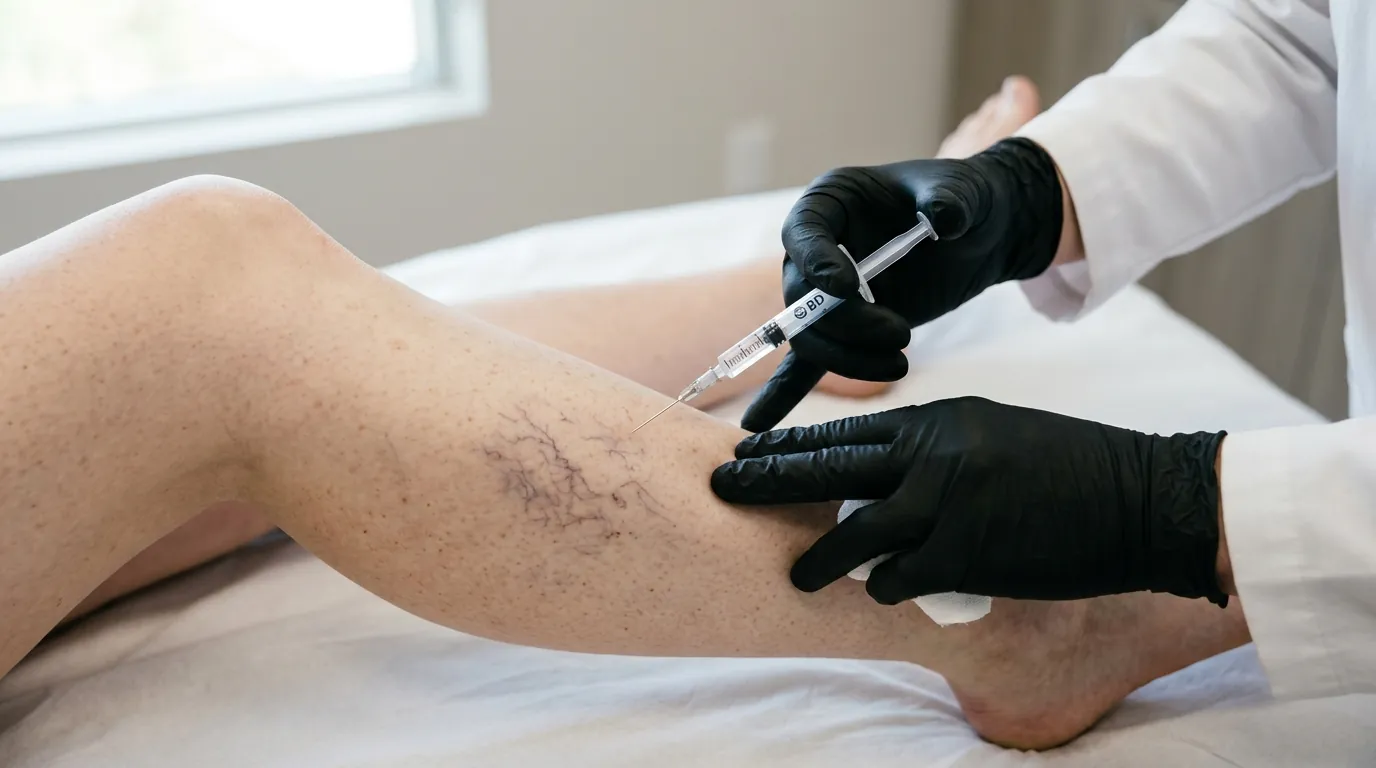
Microphlebectomy vs Sclerotherapy
Microphlebectomy is better for a bulging vein you can see and feel. The vein is pulled out through nicks so small they need no stitches, and the bulge is gone that day. Sclerotherapy is better for spider veins and small surface veins. It is an injection, repeated over a few visits, and the vein fades over weeks. Vein size decides, and both are usually done after the larger vein feeding them has been closed.
What actually happens
The skin is numbed, then a series of nicks a few millimetres wide are made along the vein. A small hook lifts it out in short lengths. The nicks are taped, not stitched.
A liquid or foam is injected into the vein. It irritates the lining so the vein swells shut, and your body clears it over the following weeks.
Which veins it is for
Wide, twisting branch veins on the calf or thigh, roughly the width of a finger or more.
Fine red and purple lines, and small ropey veins close to the surface.
What it feels like
The numbing stings. After that you feel pulling and pressure rather than pain.
Each injection stings for a second. Some solutions cause a short cramping ache in the leg.
How soon you see a result
The bulge is gone as soon as the vein is out. Bruising then hides the result for two to three weeks.
Treated veins darken first, then fade. The final look takes a few months.
How many visits
Long or widespread veins may be split across two sessions.
Spaced a few weeks apart. Large clusters take more.
Downtime
Compression stockings for a week or two. Walking is encouraged. No heavy lifting or hard exercise for a few days.
Stockings for a week or two. Skip the gym and long standing for a day.
The main downside
Heavy bruising for two to three weeks is normal. Each nick leaves a small pale mark that usually fades to nothing, though skin that scars easily may keep them. A patch of numb skin can last months.
A brown line along the treated vein can last months. A blush of new tiny vessels can appear nearby. Both usually fade, but not always.
Does the vein come back
It has been removed, so there is nothing left to reopen. New veins can still form elsewhere.
An injected vein can reopen and refill, especially a large one. Touch-up injections are common.
Cost and insurance
Covered more often when the vein aches, swells or bleeds.
The at-home or drugstore version
Nothing sold to the public removes a vein. Skin is broken and a vessel is taken out, which needs sterile conditions and anaesthetic.
Compression stockings ease aching and swelling but remove nothing. Creams cannot reach a vein. Handheld "vein removal" pens act on the skin surface only and can leave marks.
Who each suits
They treat different sizes of the same problem
They are not really rivals: A single leg often gets both, sometimes at the same appointment. The bulging branches are hooked out, and the fine surface veins are injected later.
Neither is usually the first step: If the trunk vein under the skin is leaking, it is closed first with ablation or foam. Treating the branches while the pressure is still there invites them back.
An ultrasound is what sorts this out: It shows whether blood is flowing backwards in the deeper veins. That scan, not the look of your leg, decides the order of treatment.
Why removal holds up better on big veins
A removed vein cannot reopen: That is the plain advantage of microphlebectomy on a wide vein.
An injected vein has to be absorbed: In a large vein there is more to absorb, and a segment can reopen and refill. That is why injections are aimed at smaller veins, where the vessel is thin enough to seal properly.
Foam narrows the gap: Whipping the drug into a foam lets it treat medium veins a plain liquid cannot. For the widest bulges, removal is still the more direct answer.
What neither one does
Neither one stops new veins forming: Family history, standing work and time keep making them. Touch-ups years later are normal.
Neither one fixes the underlying leak: Only closing the trunk vein does that.
Before you book
Ask what your ultrasound showed and whether the source vein has been treated.
Ask whether the bulging veins and the spider veins are separate appointments and separate costs.
Ask how long the bruising usually lasts, and plan around it.
Ask which parts insurance is likely to cover.