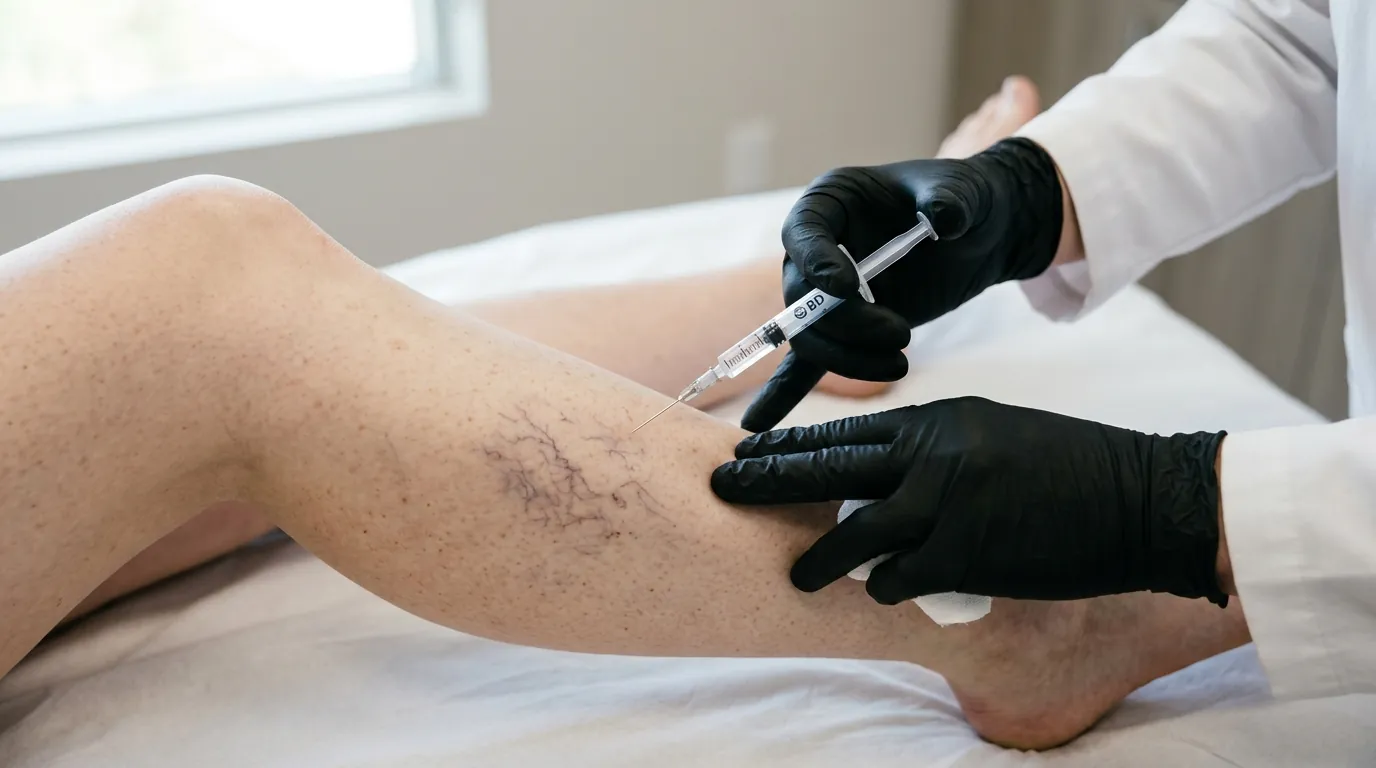
Varithena vs Sclerotherapy
Varithena is a ready-made foam for large varicose veins, including the trunk vein under the skin. It is injected with ultrasound guiding it, usually in one visit. Plain sclerotherapy is better for spider veins and small surface veins. It is a course of injections spaced weeks apart. Both use the same kind of drug, so the real question is vein size, not brand.
What it is
Polidocanol mixed into a fine, even foam in a canister. The bubbles push blood out of the way so the drug touches the vein wall directly.
The same family of drug in liquid form. For medium veins many doctors whip their own foam at the bedside with a syringe.
Which veins it is for
Twisted trunk veins and big branches, usually found on ultrasound rather than by eye.
The fine red and purple lines, and small ropey veins you can see near the surface.
How it is done
The leg is scanned while the foam is injected, so the doctor can watch it fill the vein and spasm it shut. No heat, and no numbing fluid along the vein.
Several small injections per visit, sometimes with a light or vein finder to spot feeding veins.
What it feels like
The injection itself is quick. Legs often feel tight or achy for a few days afterwards.
Each injection stings for a second. Some solutions cause a short cramping ache.
How many visits
A follow-up scan checks the vein stayed closed. Surface veins are usually mopped up separately.
Spaced a few weeks apart. Large clusters take more.
Downtime
Compression stockings for about a week. Walking daily is part of the instructions.
Stockings for a week or two. Skip the gym and long standing for a day.
The main downside
A treated trunk vein can feel firm and sore for a few weeks. The rare serious problem is a clot spreading into a deep vein, which is why walking matters.
A brown line along the treated vein can last months. A blush of new tiny vessels can appear nearby. Both usually fade.
Cost and insurance
Treating varicose veins that ache, swell or bleed is often covered by insurance.
The at-home or drugstore version
Nothing sold to the public produces a controlled foam or puts it into a vein under ultrasound.
Compression stockings ease aching and swelling but remove nothing. Creams cannot reach a vein. Handheld "vein removal" pens act only on the skin surface and can leave marks.
Who each suits
Varithena is sclerotherapy, scaled up
They are the same idea at different sizes: Both put a drug into a vein to irritate the lining so it seals shut and your body absorbs it.
Foam works on bigger veins because it does not get diluted: A liquid mixes with the blood already in a large vein and loses strength. Foam displaces that blood and stays in contact with the wall.
The ready-made foam is standardised: Hand-mixed foam varies with whoever makes it and breaks down faster. Varithena is made to the same consistency every time, which is the argument for using it in a big vein.
How it compares with heat ablation
Foam and heat close trunk veins at similar rates: Pooled comparisons of the two approaches have not shown a clear winner for keeping the vein shut (pooled analysis of foam versus thermal ablation).
Foam avoids the numbing fluid: Heat ablation needs a line of anaesthetic injected along the whole vein to protect the tissue around it. Foam does not, which is why some people find it easier.
Foam suits veins a catheter struggles with: Very twisted veins, veins close to the skin, and veins that have been treated before are all easier to reach with an injection than with a tube.
What neither one does
Neither one stops new veins forming: Both treat the veins you have today.
Neither removes a bulge you can feel: A vein standing proud of the skin is often better hooked out through tiny nicks, in a procedure called microphlebectomy.
Before you book
Ask what your ultrasound showed, and which vein is being treated.
Ask whether surface spider veins are included or are a separate cost.
Ask how many sessions the plan involves in total.
Ask which parts insurance is likely to cover.