Milia vs Warts
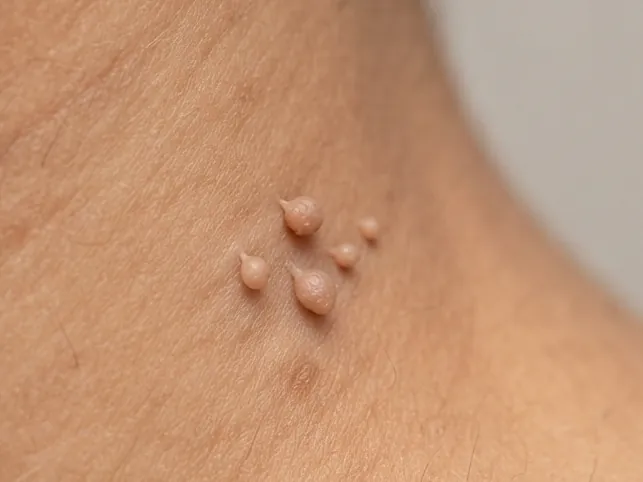
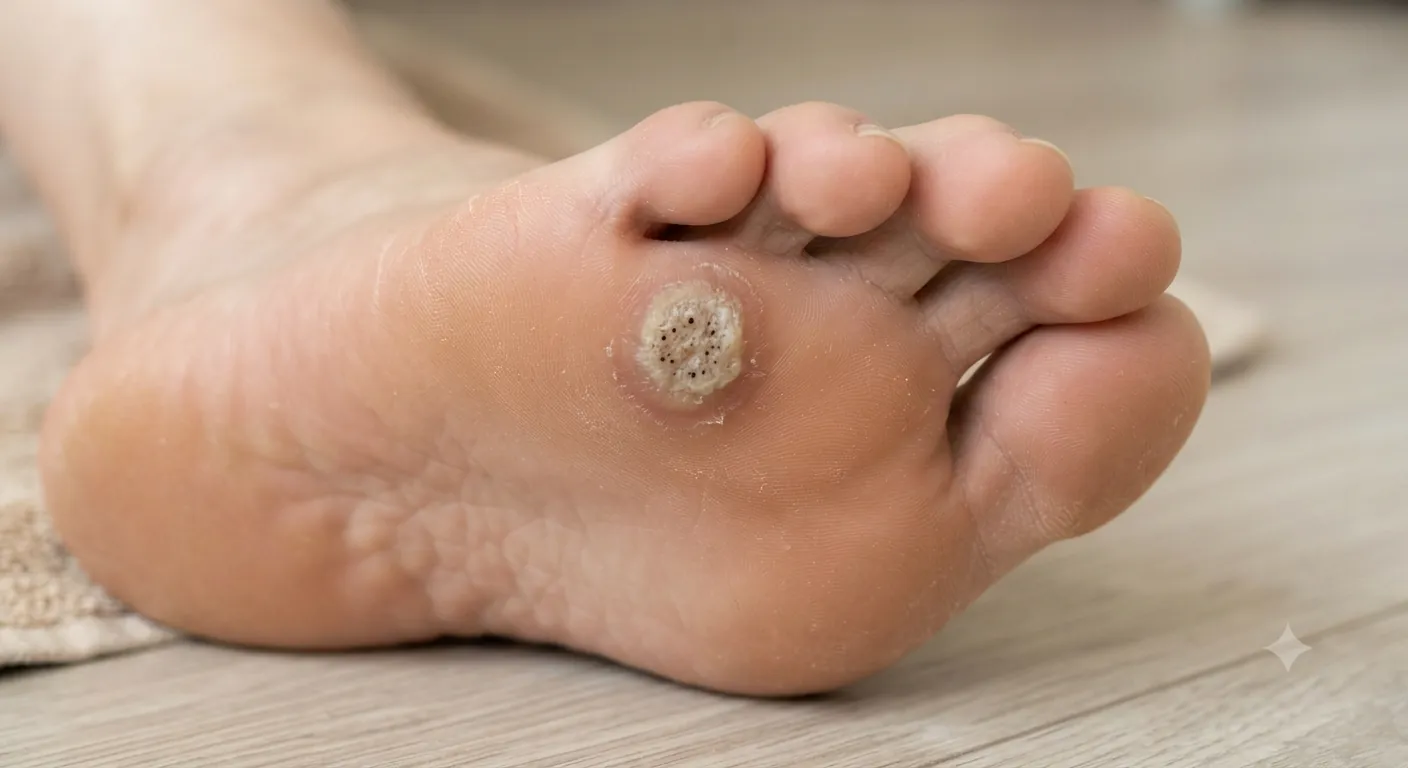
Milia are tiny keratin cysts trapped just under the surface of the skin. They are smooth, white and firm, they do not itch, and you cannot catch them from anyone. Warts are a virus growing in the top layer of skin. They are rough on top, often flecked with tiny dark dots, and they are contagious. Run a fingertip over it: smooth points to milia, rough points to a wart.
What it is
Keratin is the protein that makes up the surface of your skin. A small amount gets sealed into a closed pocket under the skin, with no opening for it to come out of.
A human papillomavirus, usually type 2 or 4, gets into the outer layer of skin through a small break. It makes the skin cells there grow faster, and the growth is what you see.
What it looks like
Round, dome-shaped and even in colour, with no opening on top. It looks like a grain of sand sitting under the skin.
Cauliflower-like on top, with thickened skin around it. Most have tiny black or dark red dots inside, which are small blood vessels feeding the wart.
Size
About the size of a pinhead, and it stays that size.
It starts small and thickens over weeks. Several can join into one larger patch.
Does it itch or hurt
Milia are painless. People notice them by sight, not by feel.
Warts on the hands are usually painless. A wart on the sole of the foot takes your body weight and can feel like standing on a stone.
Where it shows up
Eyelids and under the eyes most of all, then the nose, cheeks and forehead. Newborns get them across the nose and chin.
Backs of the hands, around the fingernails, knees and the soles of the feet. Warts also turn up on the face, where they look flatter.
Is it contagious
You did not catch milia, and you cannot pass them on. Sharing towels and pillows is fine.
The virus spreads by skin contact and by damp shared surfaces such as pool decks and changing room floors. It also spreads on your own body, so picking or shaving over a wart moves it.
What it does over time
Milia in babies clear within a few weeks. In adults they often sit quietly for months, and some stay for years.
The immune system eventually recognises the virus and the wart disappears. In children that often takes months to two years. Adults tend to take longer.
How it is treated
A clinician opens the surface with a sterile needle and lifts the keratin out. It takes seconds per bump, usually needs no anaesthetic, and the skin heals over within about a week. A retinoid cream can clear a crop slowly instead.
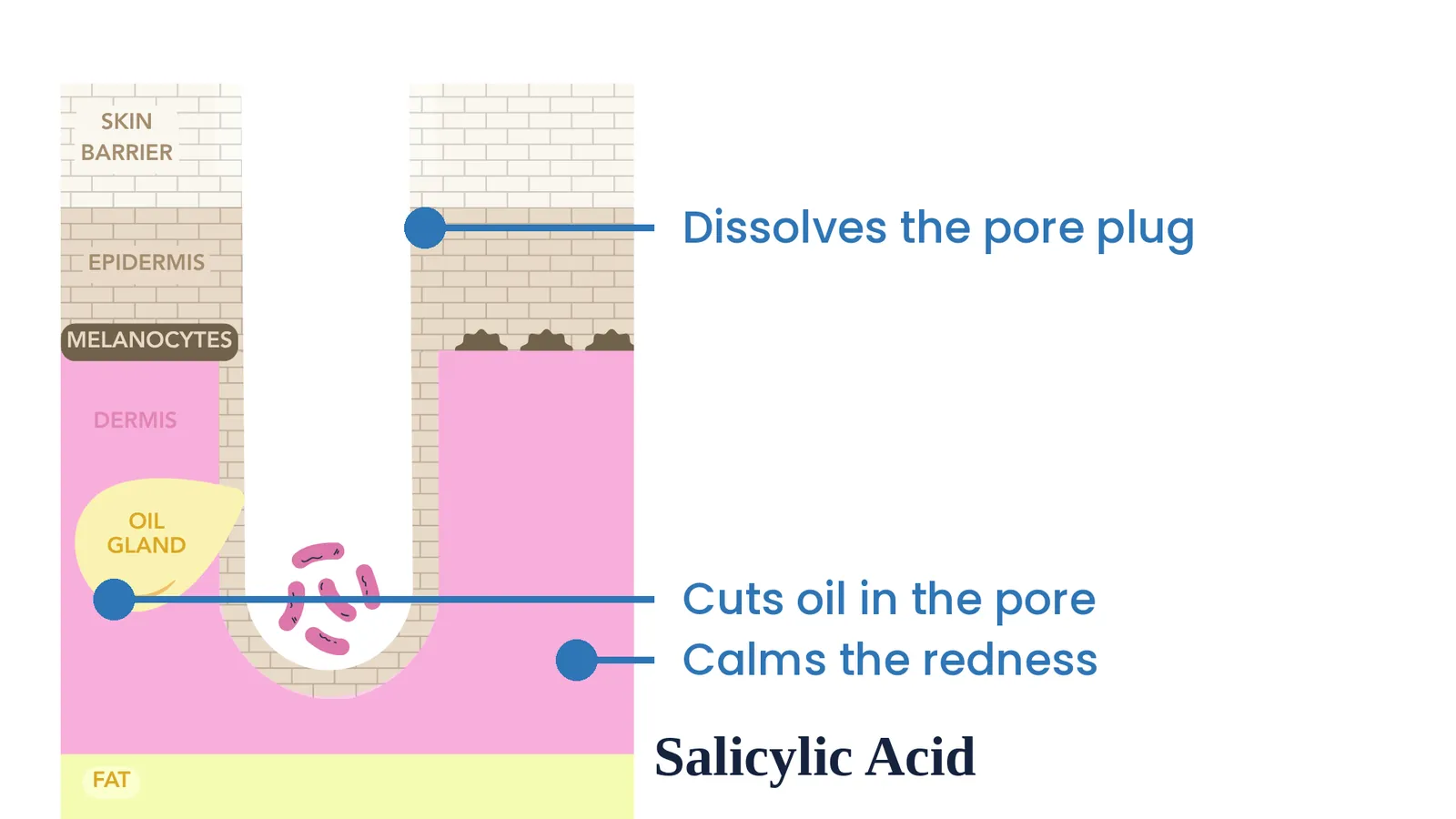
Daily salicylic acid with filing between applications is the usual first step, and it takes weeks to months. Liquid nitrogen freezing in a clinic is the common next step, over several visits.
Cost
A short cosmetic appointment. Several milia are usually done in one sitting.
Salicylic acid is an inexpensive drugstore purchase. Repeat freezing visits add up, and warts are often treated as a medical problem rather than a cosmetic one.
Texture is the test
Milia are smooth: Draw a fingertip across one and the surface feels like normal skin with a small firm bead underneath. The colour is even white or pale yellow all the way across.
Warts are rough: The surface feels dry and grainy, like fine sandpaper, and the edge is a thickened rim. The dark dots people call seeds are not seeds. They are tiny blood vessels, and they are the single most useful sign that a bump is a wart.
Only one of them can spread
Milia cannot pass to another person or to another part of your body: Nothing living is inside them. A crop of milia on the cheeks appeared for the same reason at the same time, not because one gave rise to the next.
Warts can pass to another person and to another part of your body: Picking a wart, biting the skin around it, or shaving over it moves the virus to new skin. Warts near the fingernails are common in people who bite their nails.
Neither one should be picked
Squeezing a milium does nothing, because there is nothing to squeeze out of: A milium is sealed. Pressure only bruises the thin skin over the top, and on the eyelid that leaves a brown mark or a small dent.
Picking a wart makes it multiply: The virus lives in the material you are pulling off. That is how one wart on a finger becomes four in a ring around it.
What else looks like a wart
A corn on the foot is the usual mix-up: A corn has a hard clear core and no dark dots, and it sits over a pressure point. A wart interrupts the fingerprint lines of the skin. A corn does not.
See a doctor if
A bump bleeds without being knocked
It has changed colour, size or shape
Warts are spreading despite months of drugstore treatment
A wart is on the face, and you want it treated without a mark
You have diabetes or a weakened immune system
Milia have appeared in a patch on skin that was burned, blistered or scarred