Oligio vs Ultherapy
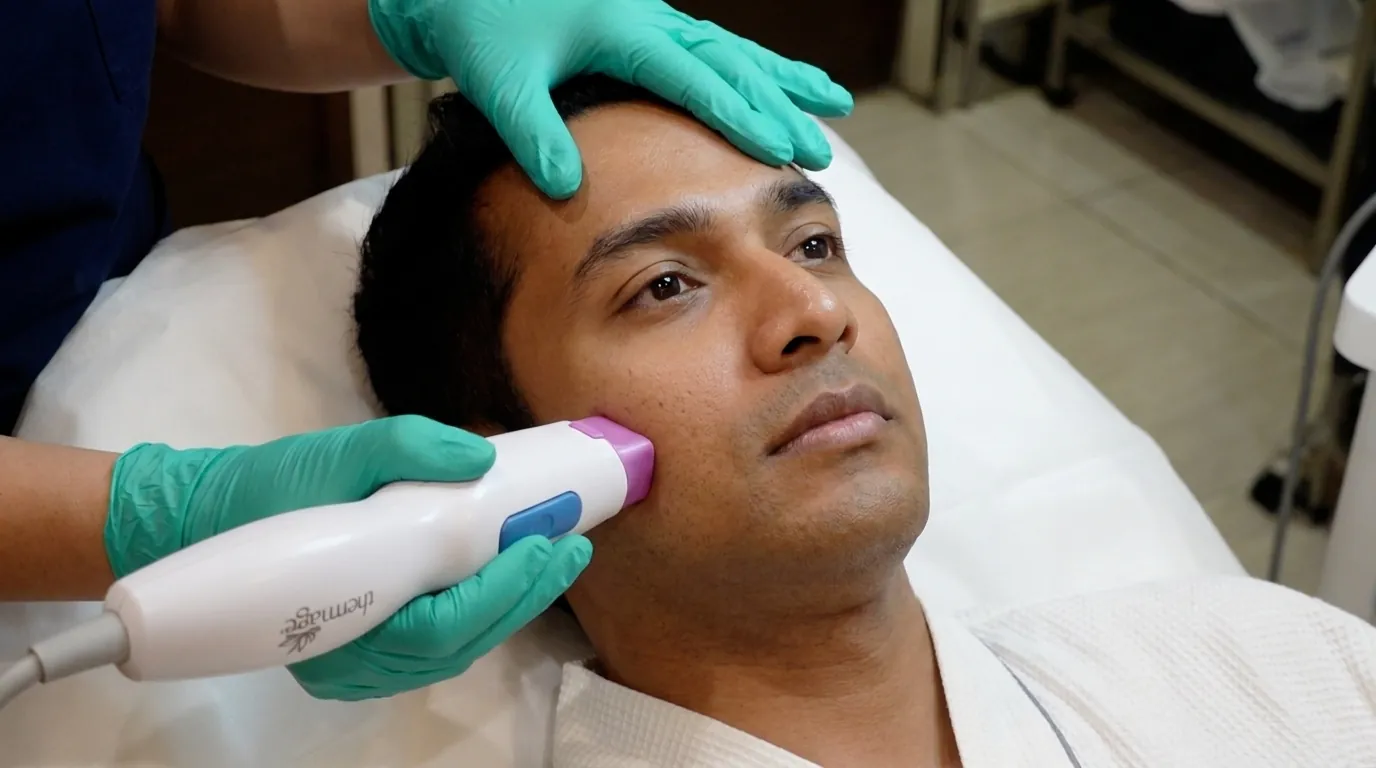
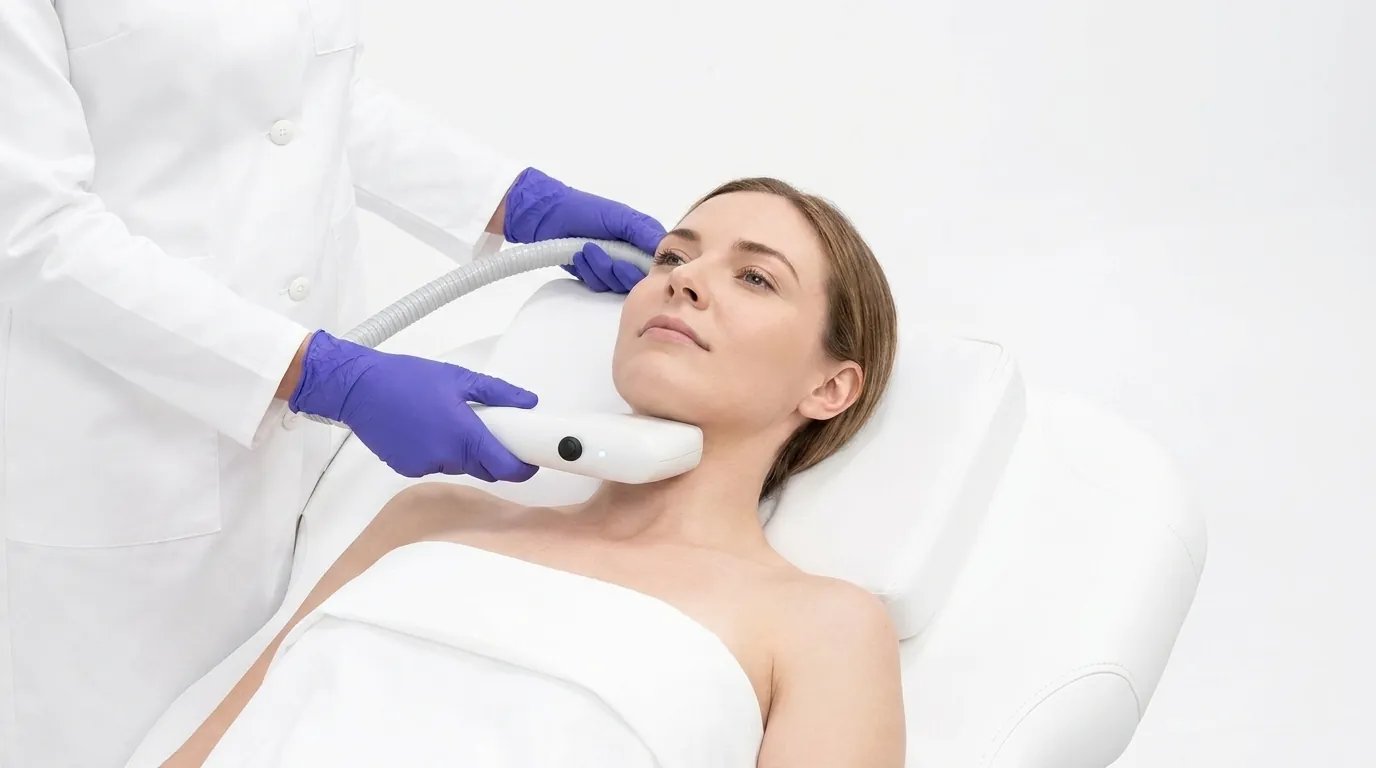
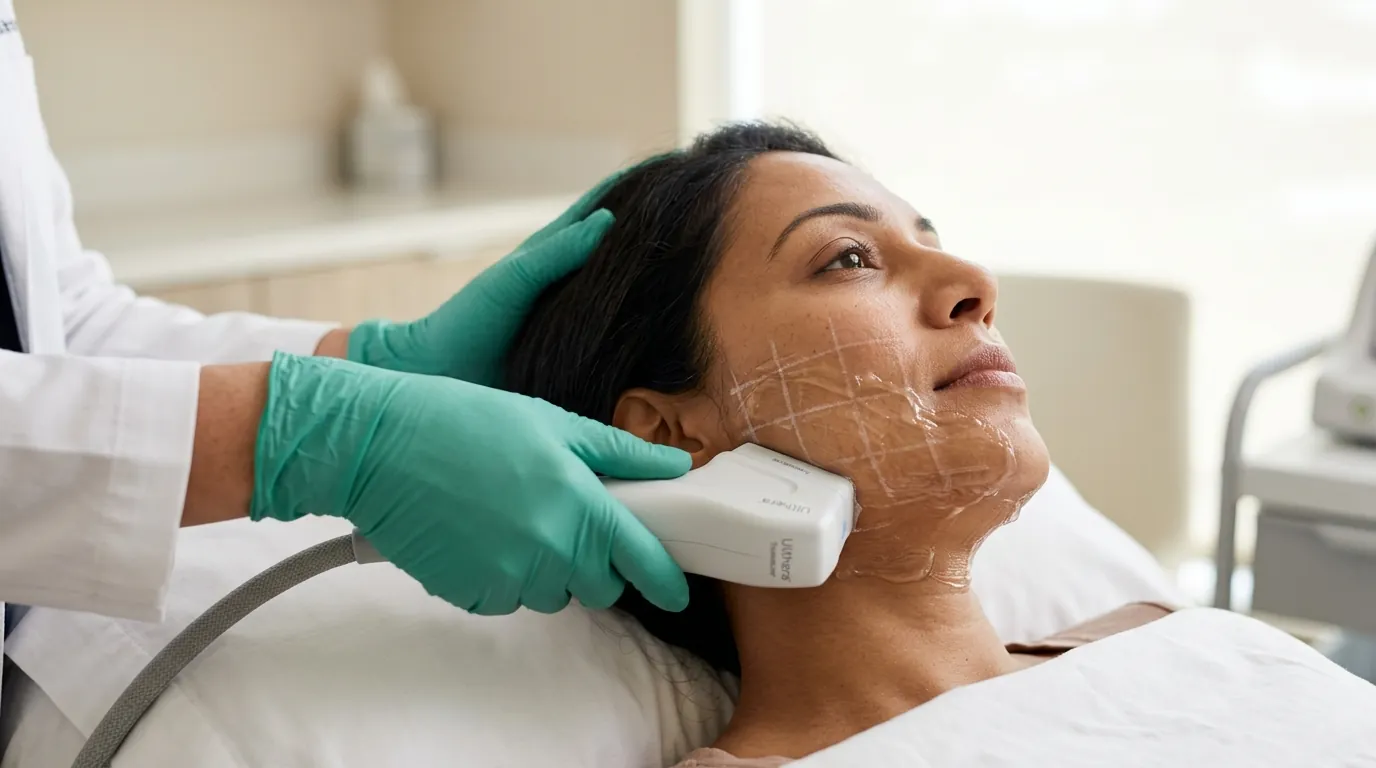
Oligio is a radiofrequency treatment for skin quality. It heats a block of skin gently and steadily, the session is easy to sit through, and it is aimed at crepey texture and mild slackness. Ultherapy is a focused ultrasound treatment aimed at lift. It places heat much deeper, in the layer a surgeon pulls on in a facelift, and that depth is what makes it hurt. Different energy, different depth, different problem solved.
What it is
A Korean-made device. Current passes through the tissue to a pad on your body, and the skin's resistance to it makes the heat.
Sound energy does nothing until it reaches the chosen depth, where it makes a tiny spot of heat.
Where the heat goes
Warmest in the skin itself, spreading into the fat below. It cannot be aimed at one layer.
Usually about 1.5, 3 and 4.5 mm. The deepest setting sits under the fat, in the layer that holds the lower face up.
What you should see
Crepey texture, fine lines, a mild tightening across the cheek and jaw.
Jowls, a heavy jawline, a loose neck, a drooping brow.
What it will not do
What it feels like
The handpiece cools the surface and vibrates as it works, which is designed to blunt the heat. Most people manage without medication.
Numbing cream is standard and many clinics add oral pain medicine. The brow and neck are the worst of it.
How long until it works
A little tightening in the first weeks, then a slow build.
Occasionally a small lift on the day, but the real change is the collagen.
How long it lasts
It is often sold as regular upkeep rather than a one-off.
Downtime
Redness and warmth for a few hours.
Swelling and tenderness for a few days. Patchy numbness along the jaw can last a week or two.
Cost
Often priced per number of shots. Ask how many are included.
Priced per area. Face, neck and under the chin are often billed separately.
The at-home or drugstore version
They warm the top of the skin a little. The clinic device drives current through the full thickness with a return pad, which is a different scale of heating.
Home ultrasound wands do not focus. They spread a fraction of the power across the surface and never reach the depth this works at.
Who each suits
Two different kinds of energy
Radiofrequency heats tissue by pushing current through it: Your skin resists the current, and that resistance makes heat. The warming is broad, so a whole area firms up a little.
Focused ultrasound heats one spot at one depth: Everything above the focus is left untouched, which is how a deep layer can be reached without burning the surface.
Neither depends on colour in the skin, unlike lasers, which work by aiming energy at pigment. Both are used across skin tones.
Oligio is Korea's answer to Thermage
Oligio uses the same principle as Thermage: Both are monopolar radiofrequency devices with surface cooling, and both heat a volume of skin rather than a chosen layer.
Oligio's selling point is comfort and price: It delivers energy in a steadier, gentler way and adds vibration to distract from the heat, and in the markets where it is sold it usually undercuts Thermage.
Its published record is short: It is a newer machine, and most of what is written about it comes from clinics rather than from independent research.
Depth is the real decision
Oligio cannot choose a depth: It heats a volume. That is fine if the skin itself is the problem, because the skin is what you want warmed.
Ultherapy can choose a depth, and that is why people book it: Its deepest setting reaches the fibrous sheet below the fat.
Deeper is not automatically better: Deep heat produces the lift, and it also produces the pain and the small nerve risks. If your skin is only slightly loose, the extra depth buys you very little.
The risks worth knowing
Both are low risk in trained hands: Redness, swelling and tenderness settle within days with either.
Radiofrequency's rare problems come from heat concentrating too much: Burns and blistering are uncommon. So is fat loss under the skin, which leaves a small dent.
Ultherapy's rare problems come from working deep: Temporary numbness or tingling along the jaw is the usual version. Rarely a nerve is irritated enough to cause a few weeks of weakness or a drooping lip, and it recovers.
Before you book
Point at what bothers you in a mirror. Thin, crepey skin and a hanging jaw are different problems.
Ask how many shots or lines are planned. Under-treating is the most common reason people see nothing.
Ask to see the clinic's own before-and-after photos, taken in the same light and at the same angle.
Tell the clinic about a pacemaker, an implanted defibrillator or metal near the treatment area before booking Oligio.