PDRN vs Retinol
PDRN is a repair ingredient made from salmon DNA. The version with real evidence behind it is injected into the skin at a clinic, not applied from a bottle at home. Retinol is a cream with decades of research behind it. If you are choosing between two things you can buy in a serum, retinol is the one that has been shown to work.
What it is
Short pieces of DNA that appear to support repair and calm inflammation in skin.
A single, well-defined molecule. Skin converts it into the active form once it is applied.
What it is meant to do
Calmer skin, better texture, and thicker, less easily irritated skin over a course.
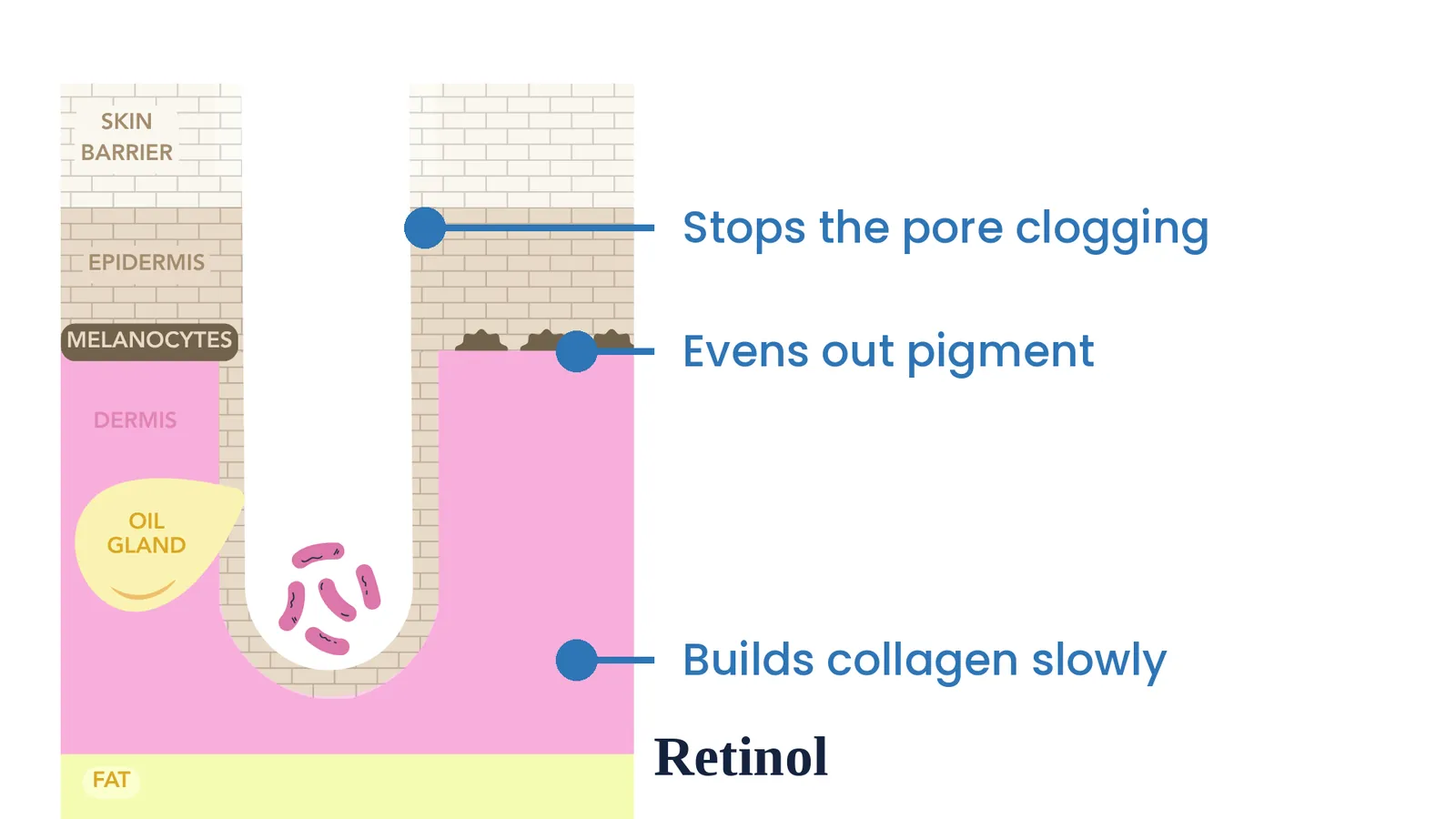
Faster cell turnover, clearer pores, more even tone, and collagen over months.
Does it reach living skin
PDRN is a large molecule, and large molecules do not usually cross intact skin. That gap is exactly why the injected version exists.
Retinol is small and dissolves in oil, and it is well established that it reaches the living layers of skin.
How good is the evidence
The studies people quote were mostly done on the injected form. Serum studies are few, small, and often use formulas full of other hydrating ingredients.
Retinoids are the most studied anti-ageing ingredients in skincare, with consistent results across many years.
How long until you see a change
The injected course usually takes two to four weeks to show and builds for around three months. No such timeline is established for a cream.
Texture first, then tone, then lines. The first six weeks often look worse rather than better.
What it feels like
PDRN serums are hydrating and rarely sting. The injections are a different experience, with small bumps and possible bruising for a day or two.
Peeling around the nose and mouth in the early weeks is normal. Starting two nights a week avoids most of it.
The downside
Any improvement from a PDRN serum could as easily come from the humectants and barrier ingredients it is mixed with.
Redness, flaking and stinging while skin adjusts. It also makes skin burn more easily, so sunscreen is not optional.
Cost
The serums are premium-priced. The injected course is a clinic treatment charged per session, and it is usually three of them.
A drugstore retinol and a luxury one hold the same molecule. Price mostly buys the texture and the packaging.
The at-home or drugstore version
It is also the version with the least evidence behind it. A cream cannot place anything inside the skin, which is what the clinic treatment is for.
The prescription version is tretinoin, which is stronger and faster because skin can use it directly. Retinol has to be converted first, so it is a slower version of the same thing.
Who each suits
The research is for the injection, not the bottle
Almost everything written about PDRN comes from the injected form: That is a course of small injections spread across the face, done in a clinic, usually three sessions a few weeks apart.
A serum is not the same treatment in a cheaper form: PDRN is a big molecule, and intact skin is very good at keeping big molecules out. Nobody has clearly shown that a serum gets it where it needs to be.
Retinol does not have that problem: It is small, it dissolves in oil, and its route into the skin has been mapped for decades.
What a PDRN serum probably does
It hydrates, and hydration is worth something: These serums are pleasant, and skin does look better after using them.
The base may be doing the work: PDRN serums are usually built on humectants and barrier ingredients that would improve skin on their own. Separating the DNA fragments from the rest of the formula has not been done.
That makes it limited evidence, not disappointing evidence: Nobody has run the study that would settle it. That is a different situation from an ingredient that was tested and failed.
What each one is actually for
Retinol is for change you can see: Lines, rough texture, uneven tone and blocked pores all respond to it, given three to six months.
PDRN is aimed at skin quality: Thin, easily irritated, dull-looking skin is what the injected course targets. It does not lift, fill or clear acne.
They are not competing for the same job: Someone with sun damage and blackheads wants retinol. Someone whose skin looks fragile and tired is the person a clinic offers PDRN to.
Can you use both
Yes, and they do not clash: A PDRN serum in the morning and retinol at night is a common way to run them.
The serum can make retinol easier: Its hydrating base takes the edge off the dry, flaky stage, in the same way any good moisturizer does.
Do not swap retinol out for it: Replacing a well-evidenced ingredient with an unproven one is the expensive mistake here.
Before you buy
If a serum is the plan, judge it as a hydrating serum and price it that way
Ask a clinic offering PDRN how many sessions the course is and what the total costs
Start retinol two or three nights a week and build up over a month
Give retinol three months before deciding it has not worked
Keep sunscreen in the routine with either one
Anyone claiming a cream matches the injections is going past the evidence