Niacinamide vs Retinol
Niacinamide is the supporting ingredient. It calms redness, controls shine and helps the skin barrier hold water, and it suits almost anyone. Retinol is the one that changes your skin. It has far better evidence for fine lines, rough texture and acne, and many people use niacinamide alongside it to make it bearable.
What it does
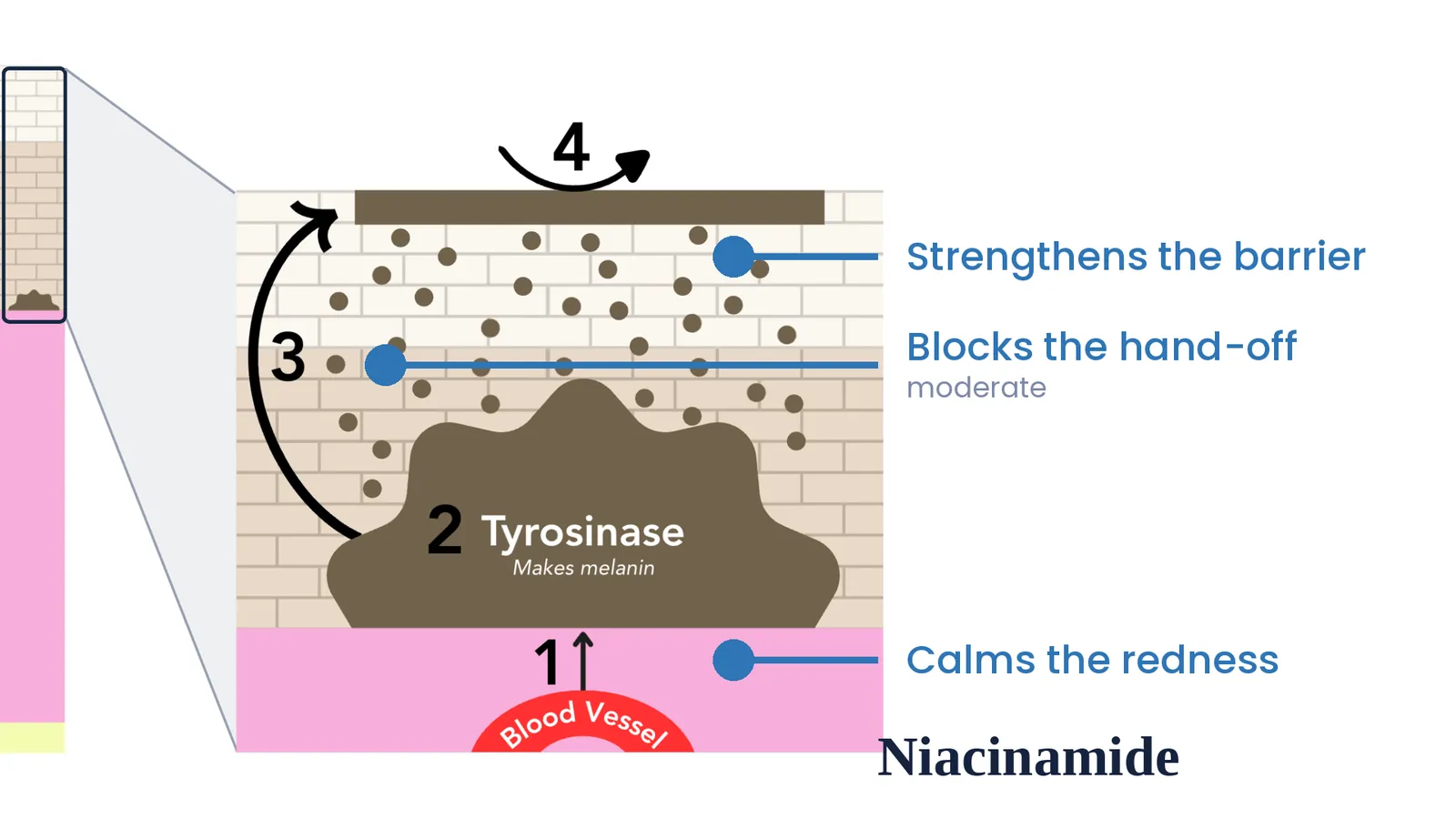
It lowers inflammation and helps your skin build more of its own barrier fats. Skin holds water better and stings less.
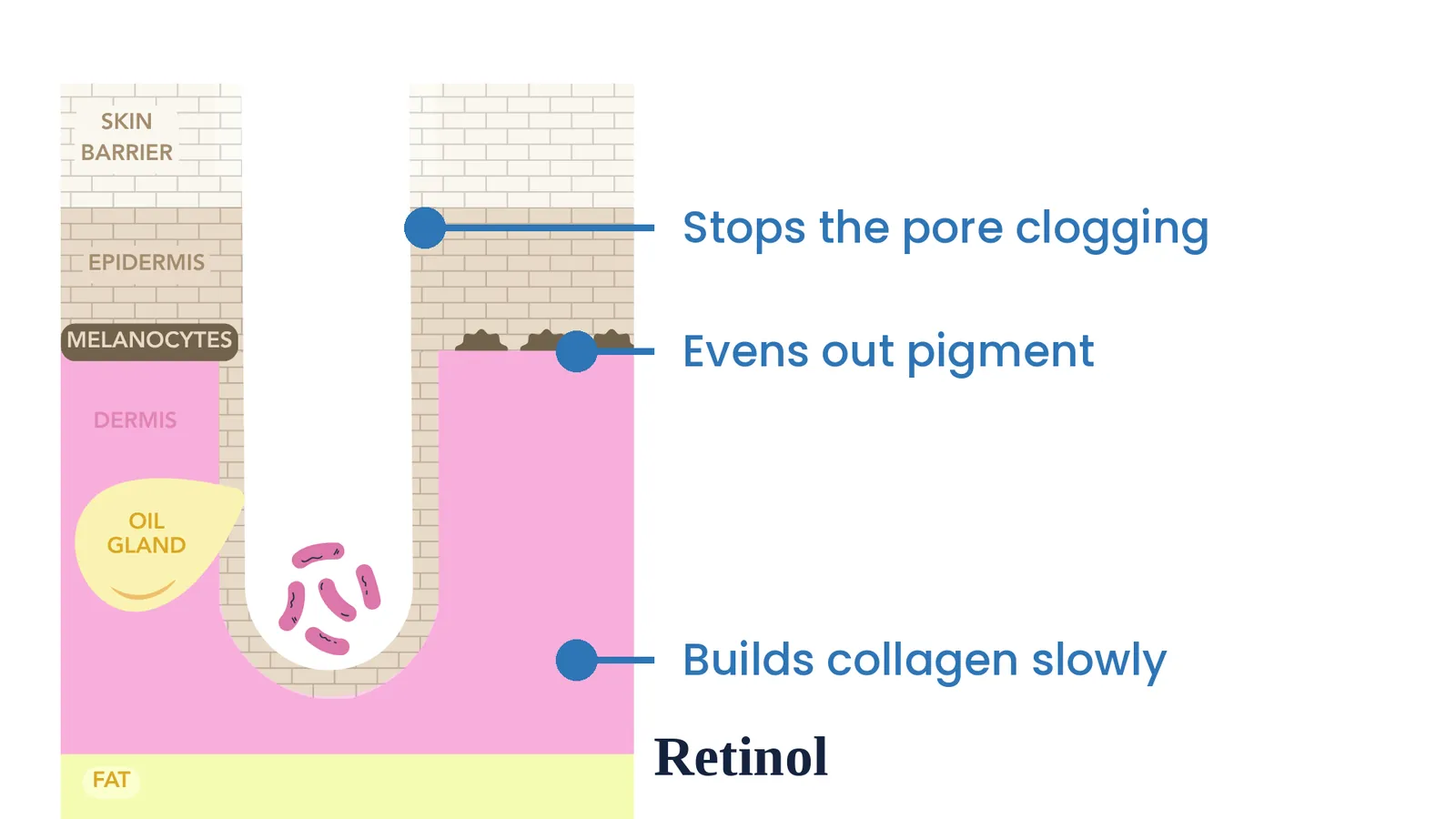
It tells skin cells to shed and renew faster, which keeps pores clear, and over months it prompts collagen.
What it is best at
Flushing, visible oil by the afternoon, and skin that reacts to everything.
Rough skin, sun damage, blackheads and uneven tone. It is the closest thing skincare has to an all-rounder.
What it will not do
Niacinamide helps at the edges of ageing. It does not rebuild collagen in any meaningful way.
Retinol causes irritation before it repairs anything. On a face that is already sore it makes things worse.
How long until you see a change
Oil and redness settle first. The barrier feels better before it looks different.
Texture improves first, then tone, then lines. The first six weeks often look worse rather than better.
What it feels like
A light serum that layers under anything. A small number of people flush or sting.
Peeling around the nose and mouth in the early weeks is normal. Starting two nights a week avoids most of it.
How long it lasts
Cost
It is already in a large share of drugstore serums and moisturizers.
A drugstore retinol and a luxury one hold the same molecule. Price mostly buys the texture and the packaging.
The at-home or drugstore version
There is no prescription niacinamide and no stronger clinic equivalent. What is on the shelf is the whole ingredient.
The prescription version is tretinoin, which is stronger and faster because skin can use it directly. Retinol has to be converted first, so it is a slower version of the same thing rather than a different thing.
Who each suits
One changes the skin, the other supports it
Retinol acts on the skin cells themselves: It changes how they mature and shed, which unblocks pores, smooths the surface and slowly builds collagen. That is why one product covers acne, texture and lines at the same time.
Niacinamide acts on the conditions around those cells: It lowers inflammation, helps the barrier hold water, and reduces how much oil shows on the surface. It does not rebuild anything.
So the two are not close on results: Retinol has the stronger evidence for every visible sign of ageing. Niacinamide has the stronger record for comfort.
Using them together
They can go on the same face on the same night: The old warning that niacinamide cancels out other actives came from a lab quirk that does not happen on real skin.
A simple order works: Damp skin, then niacinamide, then retinol, then moisturizer. Using niacinamide in the morning and retinol at night is equally fine.
Niacinamide is often the reason people manage to keep going: Irritation is the main cause of people quitting retinol, and niacinamide takes the edge off it.
Which one to start with
Start with niacinamide if your skin is red, oily or easily upset: It is cheap, it works on those things within weeks, and it rarely causes a problem.
Start with retinol if your concern is lines, texture or spots: Nothing milder substitutes for it, and the change you want only comes from an ingredient that alters how skin behaves.
Do not treat niacinamide as a gentler retinol: They sit next to each other on the shelf, but they are not the same kind of ingredient.
Before you start retinol
Use it two or three nights a week for the first month, then build up
A pea-sized amount covers the whole face, and more does not work faster
Put moisturizer over the top, and under it as well if it stings
Buy sunscreen at the same time, since retinol makes skin burn more easily
Give it three months before deciding it has not worked
Add niacinamide from the start rather than waiting for trouble
%2520-%2520Render.webp)