Ceramide vs Niacinamide
Ceramides are the fats your skin barrier is built from. Putting them on replaces what dry or damaged skin has run short of. Niacinamide asks your skin to make more of its own. They come at the same problem from opposite ends, which is why so many barrier creams hold both.
What it does
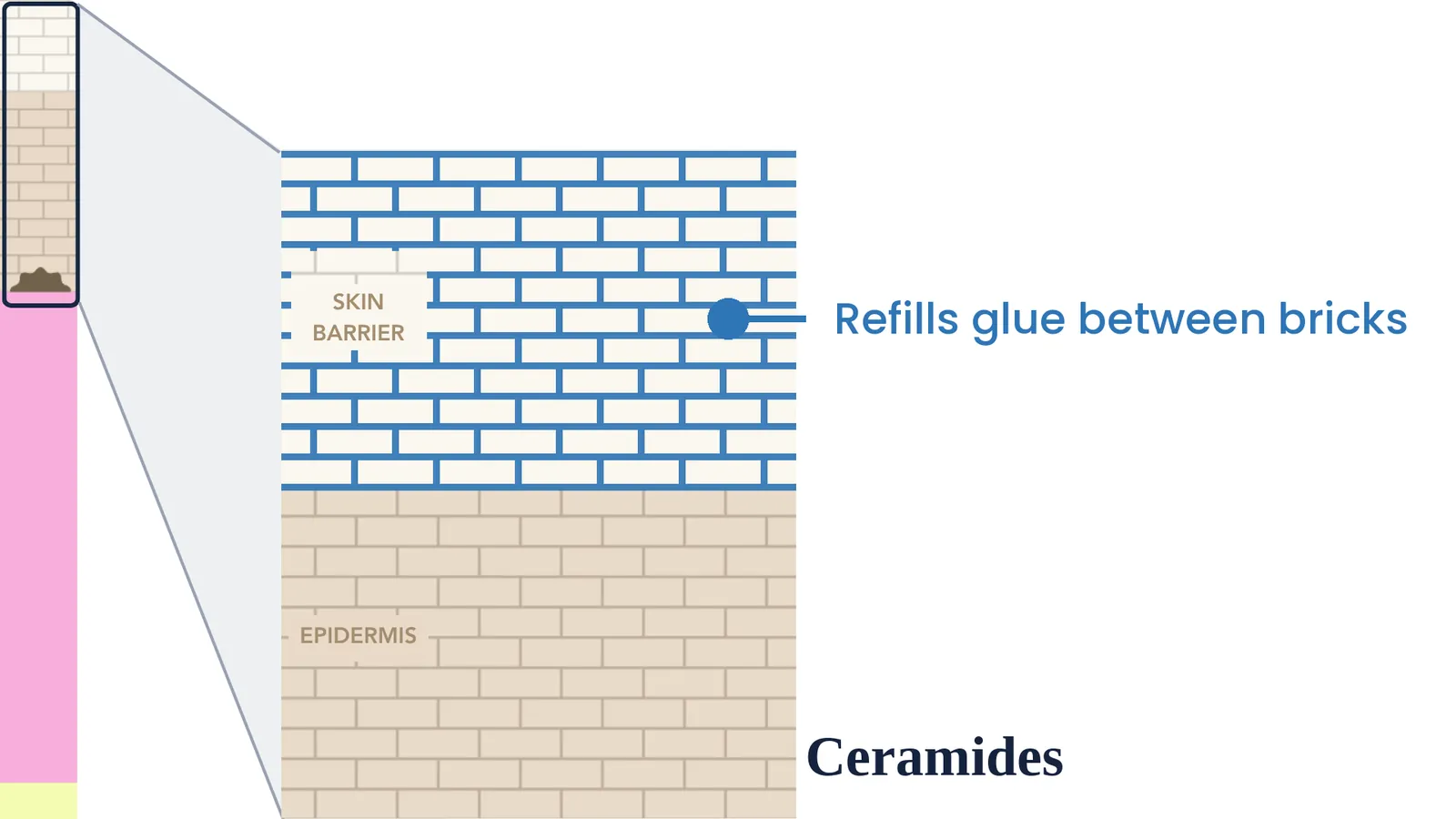
It tops up the mortar between skin cells, so less water escapes and fewer irritants get in.
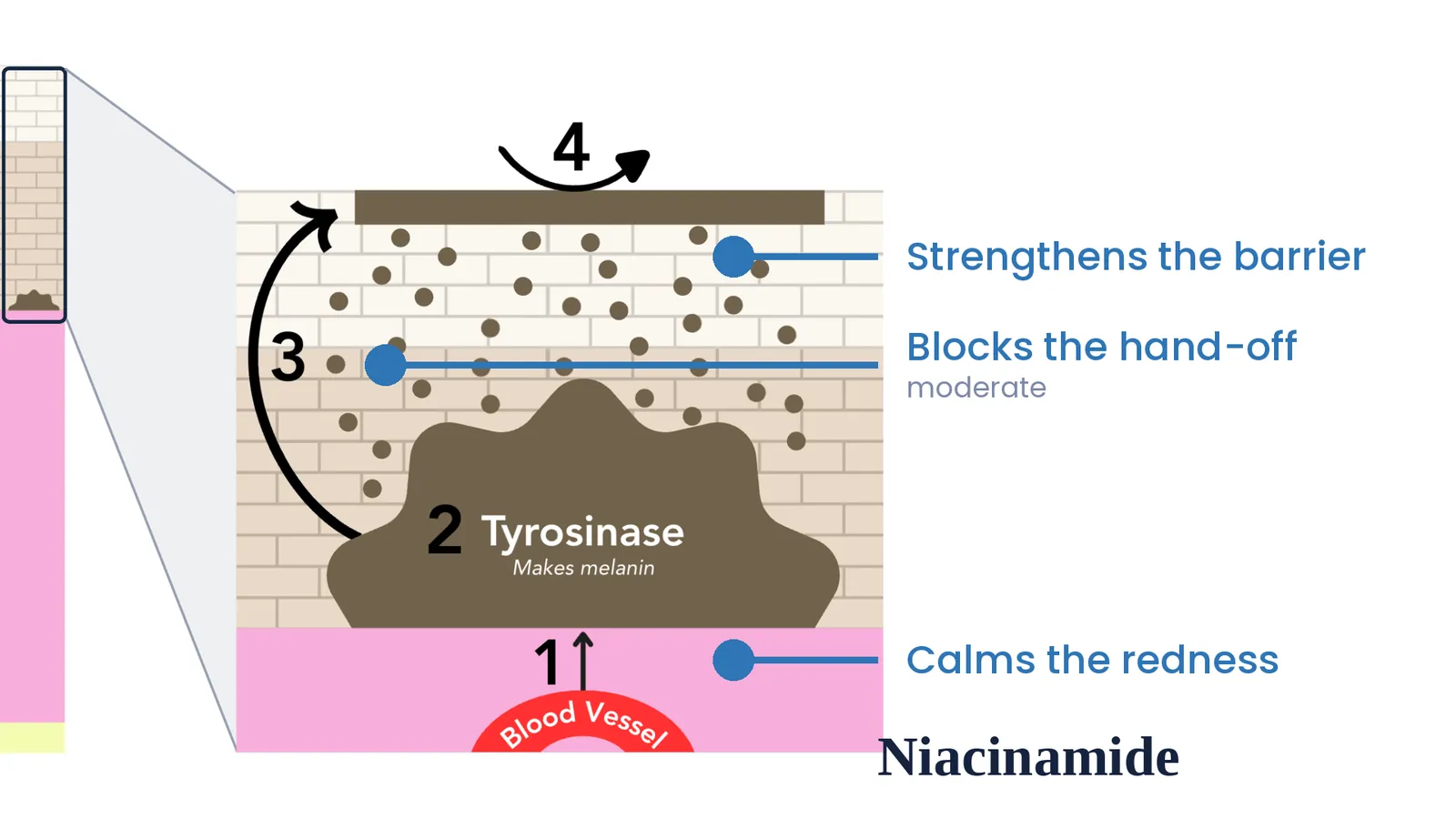
It raises the amount of ceramides and other fats your skin makes, and it calms inflammation while it does it.
What it is best at
Skin that feels tight, cracks in winter, or stings when anything goes on it.
Flushing, visible shine by the afternoon, and skin left sore by acids or a retinoid.
What it will not do
Ceramides moisturize. They do not reduce inflammation or change how much oil you make.
Niacinamide is a serum ingredient, not a cream. It still needs something over the top to hold water in.
How long until you see a change
Skin feels more comfortable the first evening. The barrier itself takes two to four weeks to rebuild.
Redness and shine settle first. The barrier effect is felt before it is seen.
What it feels like
Most ceramide products are creams. Oily skin sometimes finds them heavy.
A light serum that layers under anything.
The downside
The texture, more than the ingredient. Lighter ceramide lotions exist and work the same way.
A small number of people get a warm, pink flush or mild stinging in the first week.
Cost
Drugstore barrier creams are among the best-value products in skincare.
It is already in a large share of drugstore serums and moisturizers.
The at-home or drugstore version
Pharmacy ceramide creams contain the same lipids as expensive ones. There is no prescription version worth chasing.
There is no prescription niacinamide and no stronger clinic equivalent. What is on the shelf is the whole ingredient.
Who each suits
They fix the same barrier from opposite ends
Ceramides hand your skin the material directly: Think of the barrier as a brick wall. Skin cells are the bricks, and ceramides and other fats are the mortar. A ceramide cream puts mortar back where it has worn away.
Niacinamide gets your skin to make the mortar itself: It raises how much of those fats your skin produces, so the improvement comes from inside rather than from the tube.
One is faster and one lasts better: The cream works the evening you use it. The serum takes weeks, but it changes what your skin is doing rather than what is sitting on it.
Do you need both
For most people, yes, and it is easy: Plenty of single products carry both, which is why they appear together on so many labels.
Use both if your skin is dry and red: The ceramide cream handles the tightness and flaking. The niacinamide handles the redness that a moisturizer alone will not touch.
One is enough if only one thing is wrong: Dry and comfortable skin needs the cream. Oily skin that flushes needs the serum.
The order that works
Niacinamide first, ceramide cream second: Thin things before thick things, every time.
Damp skin helps: Apply the serum within a minute of washing, then the cream over the top before the skin dries out.
Neither one interferes with your other products: There is no gap to leave and no conflict to plan around, which is what makes this a low-effort pairing.
What neither one will do
Neither is a treatment: They make skin more comfortable and more resilient. They do not clear acne, fade melasma or soften deep lines.
Neither replaces a retinoid: Niacinamide in particular gets sold as a gentle alternative to one. It supports the skin around the problem rather than changing how skin cells behave.
Neither one fixes a rash on its own: Eczema and dermatitis need treating, and these two make the skin easier to live with alongside that treatment.
Before you buy
Look for ceramides paired with cholesterol and fatty acids, since they work as a set
Check that niacinamide sits high on the ingredient list, not at the very bottom
A single cream containing both is a reasonable way to start
Give niacinamide six to eight weeks before judging it
If skin is stinging badly, use the ceramide cream alone for a week first