Ceramide vs Hyaluronic Acid
Hyaluronic acid brings water into the skin. It is a humectant, a molecule that binds water and holds it near the surface. Ceramides stop that water leaving again. They are the fats the skin barrier is built from, so these two are a pair rather than a choice.
What it does
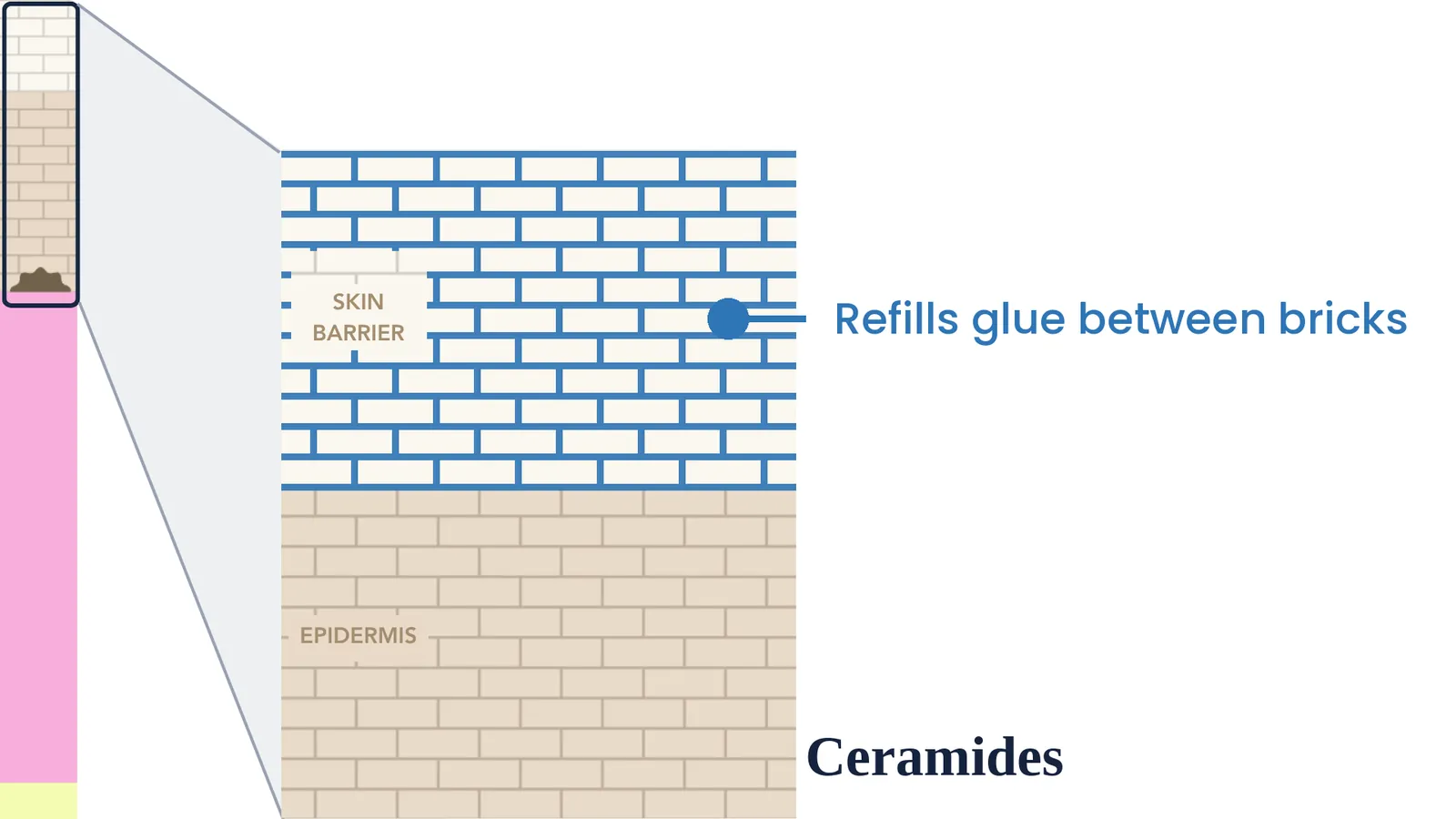
It replaces the fats between skin cells, so water stops escaping through the surface.
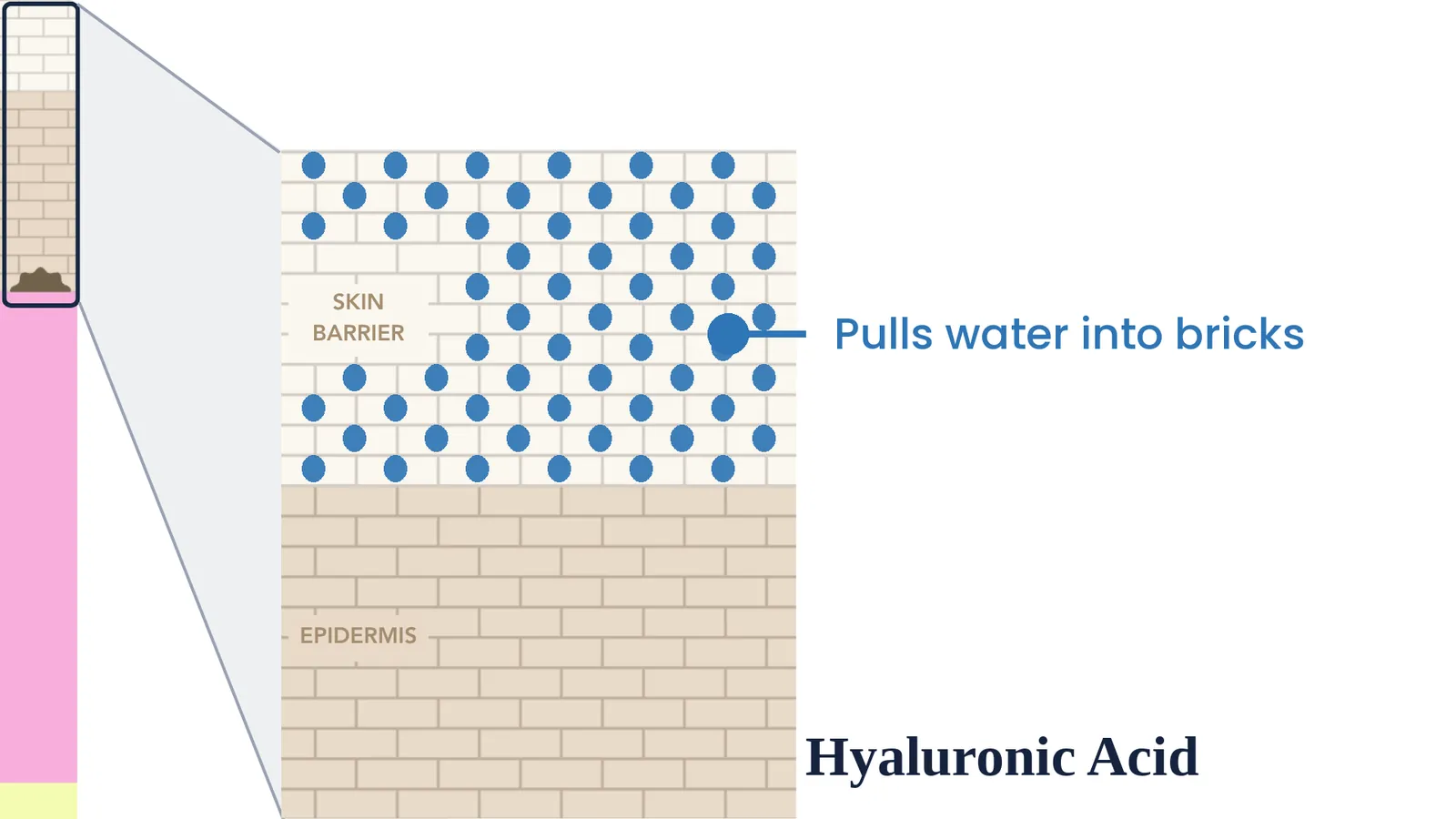
It binds water from your moisturizer and from the air, and holds it in the outer layers of skin.
What it is best at
Skin that feels tight in winter, stings when products go on, or flakes around the nose and cheeks.
Skin that feels papery and looks flat even though it is not really dry.
What it will not do
Ceramides hold on to what is already there. On truly parched skin they need a humectant underneath.
Hyaluronic acid has no sealing effect. Used alone in dry air it can leave skin tighter than before.
How long until you see a change
The tight feeling eases the first evening. Rebuilding the barrier takes two to four weeks.
Skin looks plumper almost straight away. It is also short-lived, which is why it goes on daily.
How long it lasts
A cream keeps working for most of the day, and repeated use leaves the barrier stronger.
Water leaves the skin steadily. A moisturizer over the top slows that right down.
What it feels like
Most ceramide products are creams or thick lotions. Oily skin sometimes finds them heavy.
A thin serum that disappears in seconds. It can feel tacky until something goes over it.
The downside
Rich creams can feel greasy or clog easily on acne-prone skin. Lighter ceramide lotions do the same job.
In very dry air a humectant with nothing sealing it can draw water out of deeper skin instead of in.
Cost
Drugstore barrier creams are among the best-value products in skincare.
It is already in a large share of drugstore moisturizers and serums.
The at-home or drugstore version
Pharmacy ceramide creams hold the same lipids as expensive ones. There is no clinic version to chase.
The serum on the shelf is the same molecule a clinic uses. The injected version is a filler placed under the skin to add volume, which no serum can do.
Who each suits
Water in, water kept in
Hyaluronic acid is the water: It holds a lot of it, close to the surface, where it plumps the outer layers and softens fine dryness lines.
Ceramides are the lid: They fill the spaces between skin cells so the water underneath stays put instead of evaporating.
That is why one without the other disappoints: A humectant on unsealed skin dries out within hours. A rich cream on parched skin seals in very little.
Do you need both
Most people already have both without knowing: Barrier moisturizers usually contain a humectant and ceramides in the same tube, which is a perfectly good way to do it.
Layer them separately if your skin is very dry: A hyaluronic acid serum on damp skin, then a ceramide cream on top, is more than a single cream will manage.
One alone is fine if only one thing is wrong: Skin that is comfortable but dull needs the serum. Skin that is flaking and sore needs the cream.
The order that works
Damp skin, serum, cream: Apply the hyaluronic acid within a minute of washing while there is still water on your face for it to hold.
Never leave a humectant bare: The cream is not optional in dry air, in winter, or on a plane.
Neither one clashes with anything else: There is no waiting gap and no ingredient conflict, so both slot into any routine.
Which one your skin actually needs
Choose ceramides if the problem is flaking, tightness or stinging: Those are barrier problems, and a humectant will not fix them.
Choose hyaluronic acid if the problem is dullness in otherwise comfortable skin: That is dehydration, and it responds within days.
Choose both if your skin is being treated for something: Retinoids, acids and acne treatments all damage the barrier on the way to working, and this pairing is what keeps you on them.
Before you buy
Look for ceramides listed with cholesterol and fatty acids, since they work as a set
Apply hyaluronic acid to damp skin, never dry skin
Always put something over a hyaluronic acid serum
A single moisturizer with both is enough for most people
Oily skin should choose a light ceramide lotion rather than skipping ceramides