Snail Mucin vs Hyaluronic Acid
Snail mucin is a mixture, not a single ingredient. It is mostly water-binding sugars and soothing compounds, and it already contains hyaluronic acid of its own. Hyaluronic acid is one known molecule that holds water. Both hydrate and neither treats a skin condition, so you do not need both, though using both does no harm.
What it is
Snail secretion, filtered and bottled. It carries water-binding sugars, allantoin, glycoproteins and small amounts of hyaluronic acid and glycolic acid.
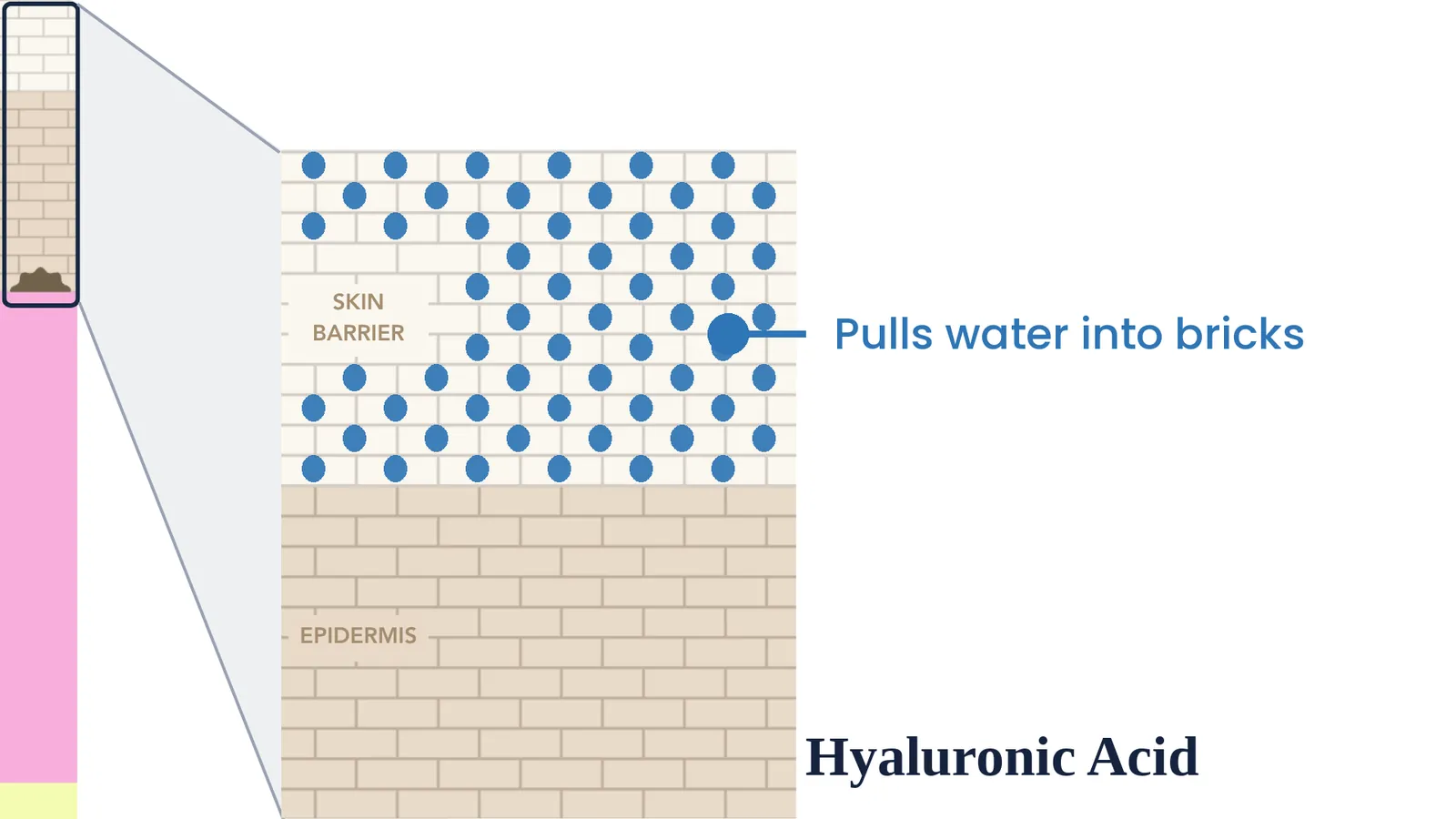
A sugar your body already makes. It is a humectant, meaning it binds water and holds it in the outer layers of skin.
What you will notice
Tightness eases and skin feels padded. Redness from over-exfoliating often settles.
Fine dryness lines soften and the surface looks smoother, usually within minutes.
What it will not do
It is not an acne treatment, a wrinkle treatment or a pigment treatment, whatever the packaging suggests.
Hyaluronic acid holds water. It does not clear spots, fade marks or build collagen.
How good is the evidence
Human studies report better hydration, smoother texture and faster healing. They are small and short. Limited means barely tested, not tested and disappointing.
Decades of use and a simple, uncontroversial mechanism. Nobody argues about whether it holds water.
What it feels like
The texture puts some people off. It sinks in within a minute or two.
Usually a thin serum. In dry air it can feel tacky until a moisturizer goes over it.
The downside
Allergy is uncommon but reported. It is not vegan, and farming and filtering standards vary between brands.
One of the best-tolerated ingredients in skincare. In very dry air it can pull water out of the skin instead of in, which is why a moisturizer on top matters.
Cost
The popular Korean essences are cheap. Luxury bottles cost far more for much the same filtrate.
It is already in a large share of drugstore moisturizers and serums.
The at-home or drugstore version
There is no clinic version of snail mucin. Nothing stronger exists behind a counter.
The serum on the shelf is the same molecule a clinic uses. The injected version is a filler placed under the skin to add volume, which no serum can do.
Who each suits
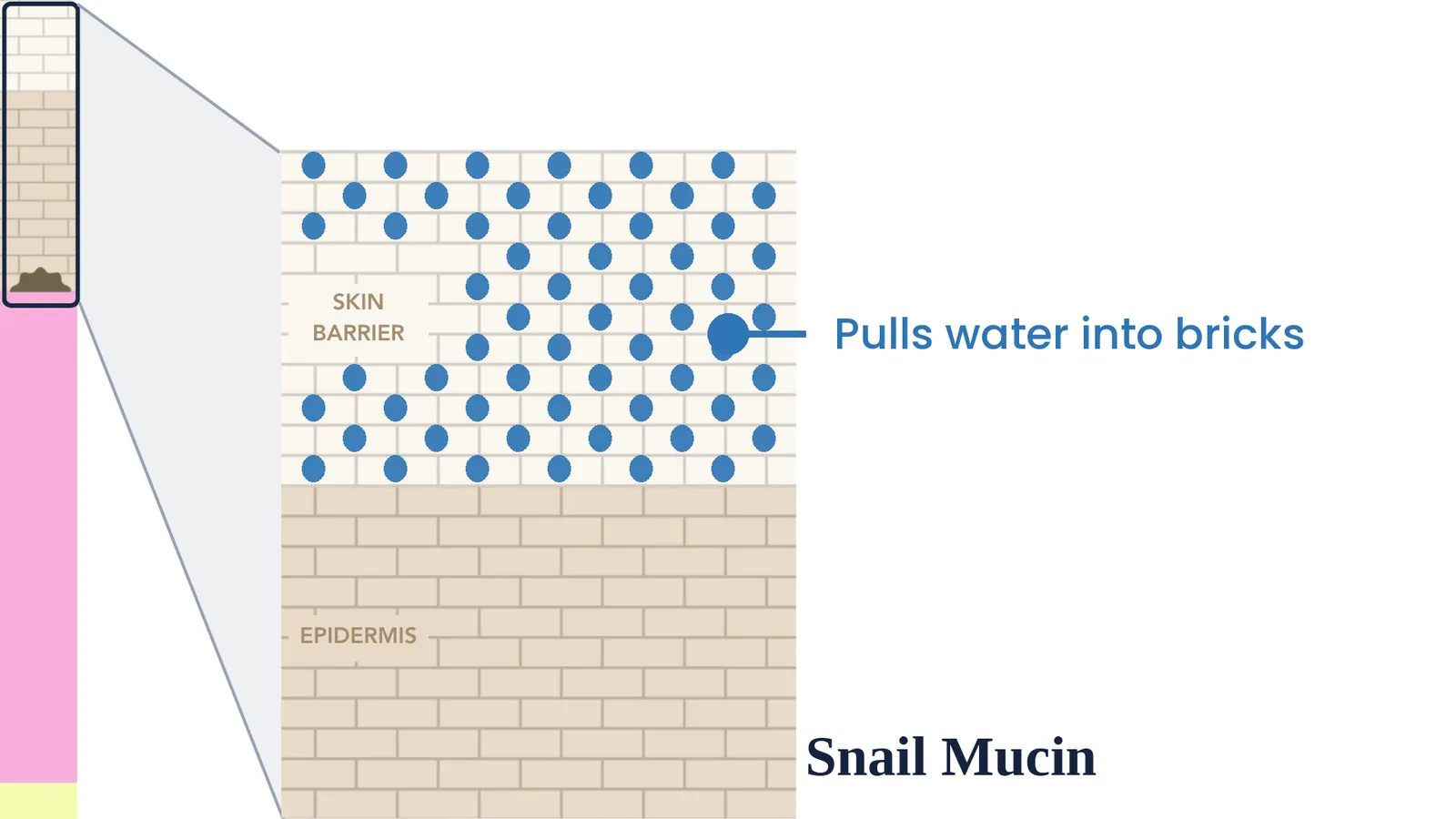
Snail mucin already contains hyaluronic acid
Snail secretion is a natural mixture: It holds water-binding sugars, plus small amounts of hyaluronic acid and glycolic acid. It also carries allantoin, which calms the skin.
That overlap is the whole story of this comparison: Part of what a snail essence does is exactly what a hyaluronic acid serum does, using the same kind of water-binding molecules.
It also means the amounts are not comparable: A hyaluronic acid serum is made to a set formula. What ends up in a snail essence depends on the snails, the farm and the filtering.
Do you need both, and in what order
You do not need both: One good hydrating layer is enough for most skin. Adding a second changes very little.
If you want both, put the thinner one first: Damp skin, then the hyaluronic acid serum, then the snail essence, then a moisturizer to seal it all in.
The moisturizer matters more than the order: Humectants pull water in, but something has to stop it evaporating again. Skipping that step is why hydrating serums sometimes leave skin tighter than before.
What snail mucin has and has not been shown to do
The hydration claim is on solid ground: Studies consistently report more moisture in the skin and less water lost through the surface.
The repair and wrinkle claims are early: Small trials have found smoother texture and improvement in fine lines over a few months. They involve few people and run for short periods, so the size of the effect is not settled.
Nothing here makes it a treatment: If your concern is acne, melasma or deep lines, this is not the ingredient that will move it.
Which one to reach for
Reach for hyaluronic acid if you want the predictable option: It is cheap, it is in almost everything, and it does one job you can count on.
Reach for snail mucin if your skin is dry and easily irritated: The soothing side of the mixture is what people notice most, especially skin recovering from acids or a retinoid.
Reach for neither if you were hoping to treat something: Both are comfort ingredients. Comfort is worth having, but it is not the same as a result.
Before you buy
Check where snail mucin sits in the ingredient list, since some products carry very little
Patch test on the inner arm for a few days if you react to things easily
Apply either one to slightly damp skin, then seal with a moisturizer
Do not expect either to replace an active ingredient
If you use both, thinner texture first and thicker second