Niacinamide vs Tretinoin
Niacinamide is a supporting ingredient. It calms redness, reduces oiliness and helps the skin barrier, and almost everyone can use it. Tretinoin does far more. It is a prescription retinoid that changes how skin cells behave inside the pore, and it has the strongest evidence of the two for acne, texture and fine lines. They are not alternatives — niacinamide is what makes tretinoin easier to stay on.
What you do
A serum or moisturizer layered under anything else. It fits into almost any routine without planning.
On dry skin, a few nights a week at first, building up. It goes on the whole face, not on spots.
What you will see
Less redness, less visible oil by the afternoon, and a stronger barrier so other products sting less. Mild help with dark marks.
Fewer blackheads and spots, smoother surface, more even colour, and softening of fine lines over months.
What it will not do
Niacinamide helps around the edges. It does not unblock pores or reverse sun damage.
Tretinoin causes irritation before it fixes anything, and it does nothing for oiliness in the short term.
How long until it works
Oil and redness respond first. The barrier effect is felt sooner than it is seen.
Skin often looks worse for the first four to six weeks. That stage is normal, and it is where most people quit.
How long it lasts
The downside
Flushing or mild stinging in a small number of people. It is one of the best-tolerated actives available.
Dryness and flaking in the first weeks are expected. Skin burns more easily, so daily sunscreen is part of the deal.
Cost
Widely available in drugstore serums and moisturizers.
Generic versions are the cheaper route. Branded creams and lotions cost considerably more, and insurance cover for adults is patchy.
The at-home or drugstore version
Niacinamide is an over-the-counter ingredient. There is no prescription version, and there is no stronger clinic equivalent.
Adapalene is a retinoid you can buy without a prescription, and it works on acne in the same way. Retinol is a weaker relative — skin has to convert it before it does anything, so it is slower and milder. Neither is tretinoin, but both are real versions of the same idea.
%2520-%2520Render.webp)
They do different jobs, and one supports the other
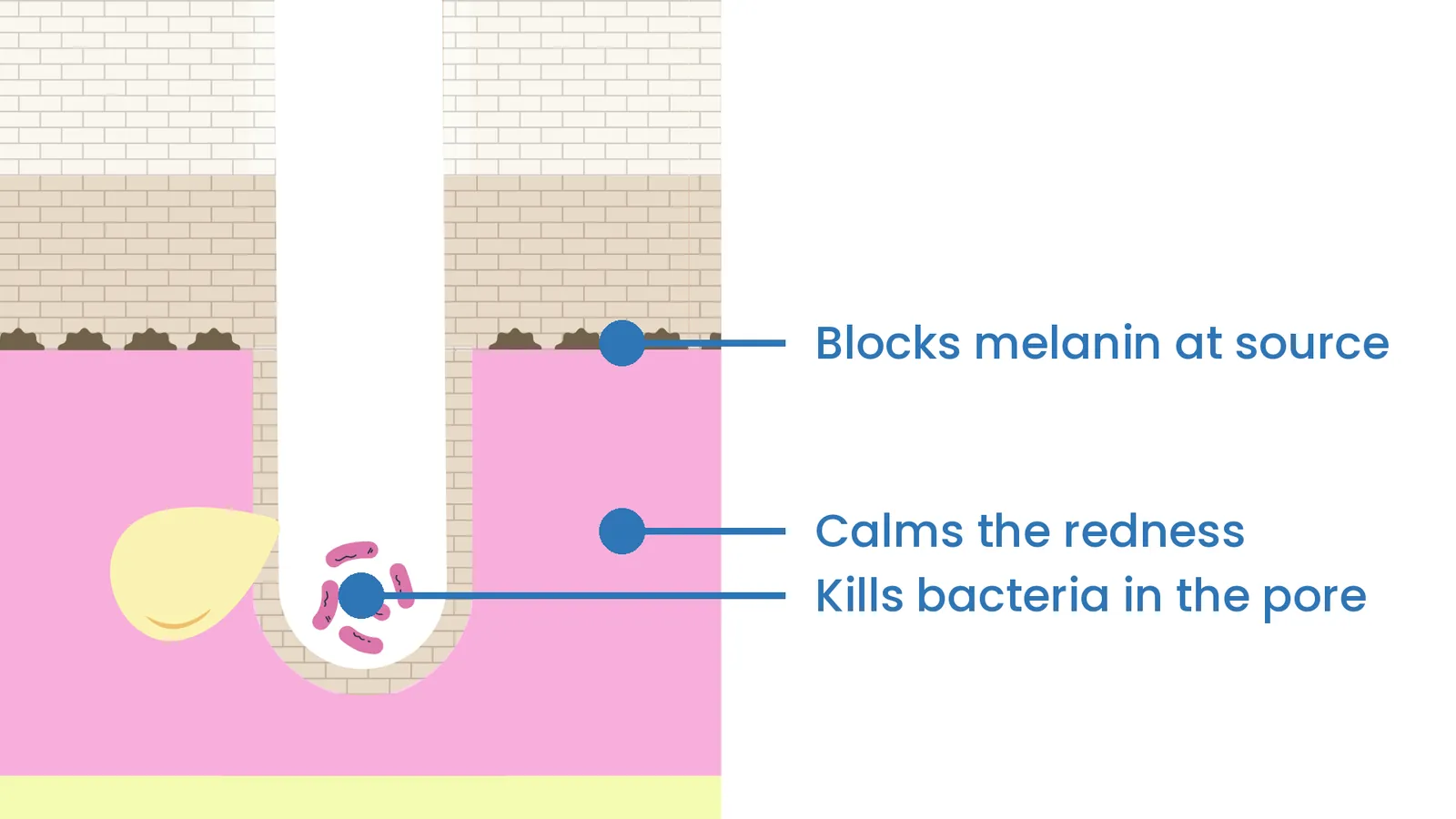
Tretinoin works inside the pore and in the deeper skin: It changes how skin cells stick together and shed, which keeps pores from blocking, and over months it prompts collagen. That is why it treats acne, texture and lines with one product.
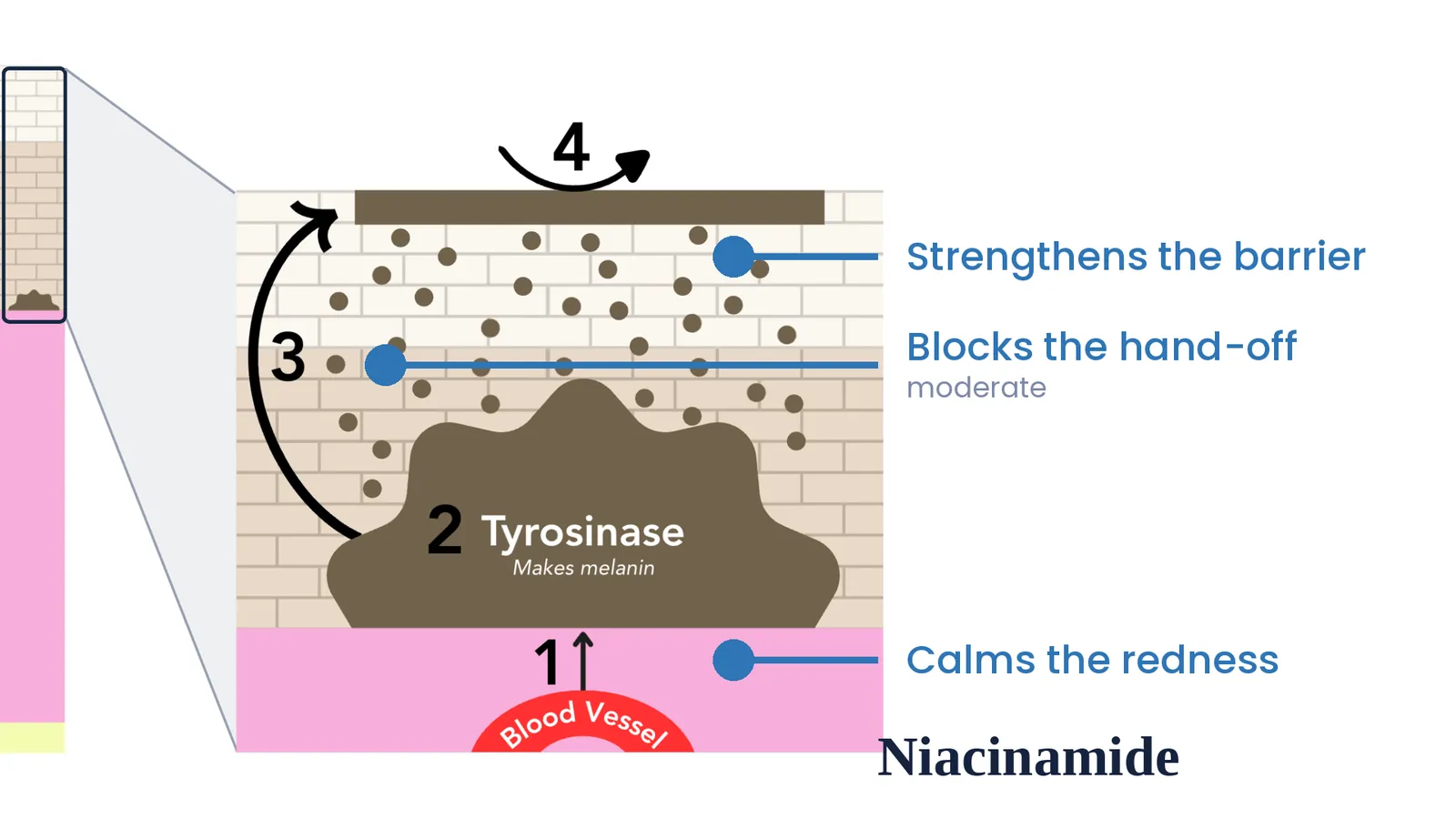
Niacinamide works on the surface and on inflammation: It supports the barrier that holds water in, calms redness, and reduces how oily skin looks.
Together they cover each other's weak points: The main reason people abandon tretinoin is irritation. Niacinamide reduces that irritation, so it is one of the more useful things to pair with it.
Using them together
They can be used in the same routine, on the same night: There is no ingredient conflict, despite what you may have read.
A simple order works: niacinamide first, then tretinoin, then moisturizer: Some people prefer niacinamide in the morning and tretinoin at night, which is equally fine.
Sandwiching helps if tretinoin stings: Moisturizer, then tretinoin, then moisturizer again. It slows absorption slightly and makes the first months tolerable.
Which to start with
Start with niacinamide if your skin is red, reactive or oily and your acne is mild: It is cheap, easy and unlikely to cause a problem.
Start with tretinoin if you have real acne, visible texture or sun damage: No over-the-counter product matches it, and waiting has a cost — deep spots left untreated are the ones that scar.
Do not expect niacinamide to substitute for a retinoid: It is a good ingredient that is often sold as more than it is.
Before you start tretinoin
Ask for the lowest strength first and build up from there
Use it two nights a week for a fortnight before going nightly
A pea-sized amount covers the whole face — more does not work faster
Buy the sunscreen at the same time as the prescription
Expect the skin to look worse before it looks better, and plan around anything important
Add niacinamide and a plain moisturizer alongside it rather than waiting for trouble