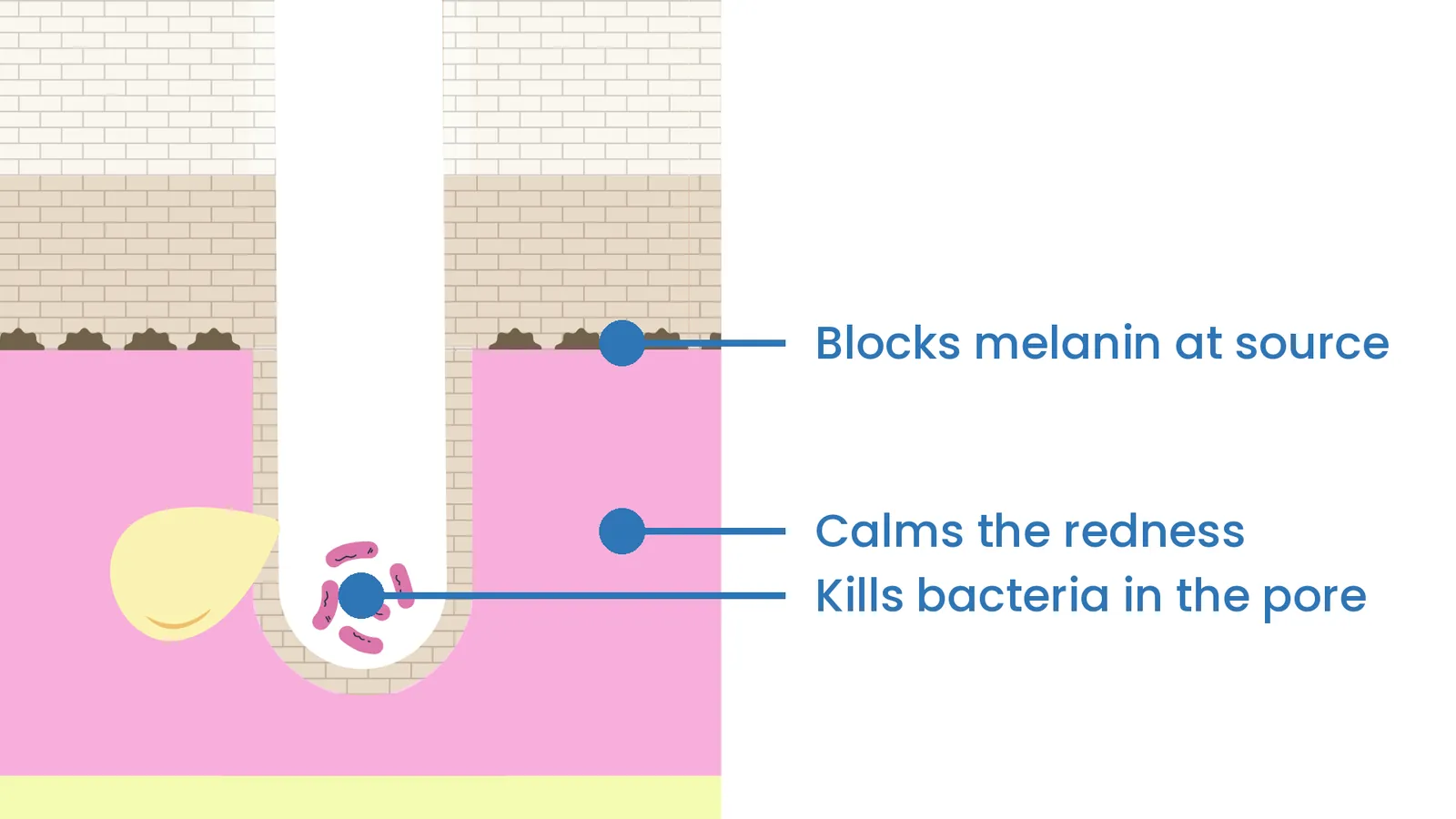
Benzoyl Peroxide vs Glycolic Acid
Benzoyl peroxide is better for red, inflamed pimples. It kills the bacteria multiplying inside the pore, and it is the strongest acne ingredient you can buy without a prescription. Glycolic acid is better for rough texture, dullness and the marks spots leave behind. It exfoliates the surface. If you are breaking out now, start with benzoyl peroxide. If the spots have gone and the marks have not, start with glycolic acid.
What you do
A wash, gel or cream. Treat the region that breaks out, not each spot, because you are preventing the next crop as much as treating this one.
A toner, serum or pad, usually at night. Some people use a stronger peel in a clinic every few weeks instead.
What you will see
Red, sore pimples calm down and fewer new ones appear. The change is in inflammation, not in texture.
Softer texture, less dullness, fewer blackheads, and a slow fade of post-acne marks.
What it will not do
Benzoyl peroxide does not exfoliate and does not treat pigment. It also does not reach deep cystic lumps.
Glycolic acid is not antibacterial. On angry, inflamed skin it can sting and make redness worse.
How long until it works
Some improvement inside two weeks. Judging it earlier than a month is the usual mistake.
Brightness comes early. Marks take months.
How long it lasts
The downside
Peeling and irritation in the first weeks are common. It also bleaches towels, pillowcases and coloured clothing, permanently.
It can sting on application and it makes skin more sensitive to sun. Daily sunscreen is not optional with an AHA.
Cost
One of the cheapest effective acne treatments on the shelf.
Drugstore serums and toners are cheap. A course of in-clinic peels costs considerably more.
The at-home or drugstore version
The over-the-counter product is the same ingredient a dermatologist prescribes. Prescription versions mainly combine it with a retinoid or an antibiotic in one tube, for convenience rather than raw power.
Drugstore glycolic acid works at the surface. A clinic peel is the same acid, stronger and formulated to go deeper, so it works faster — with a few days of flaking as the trade.
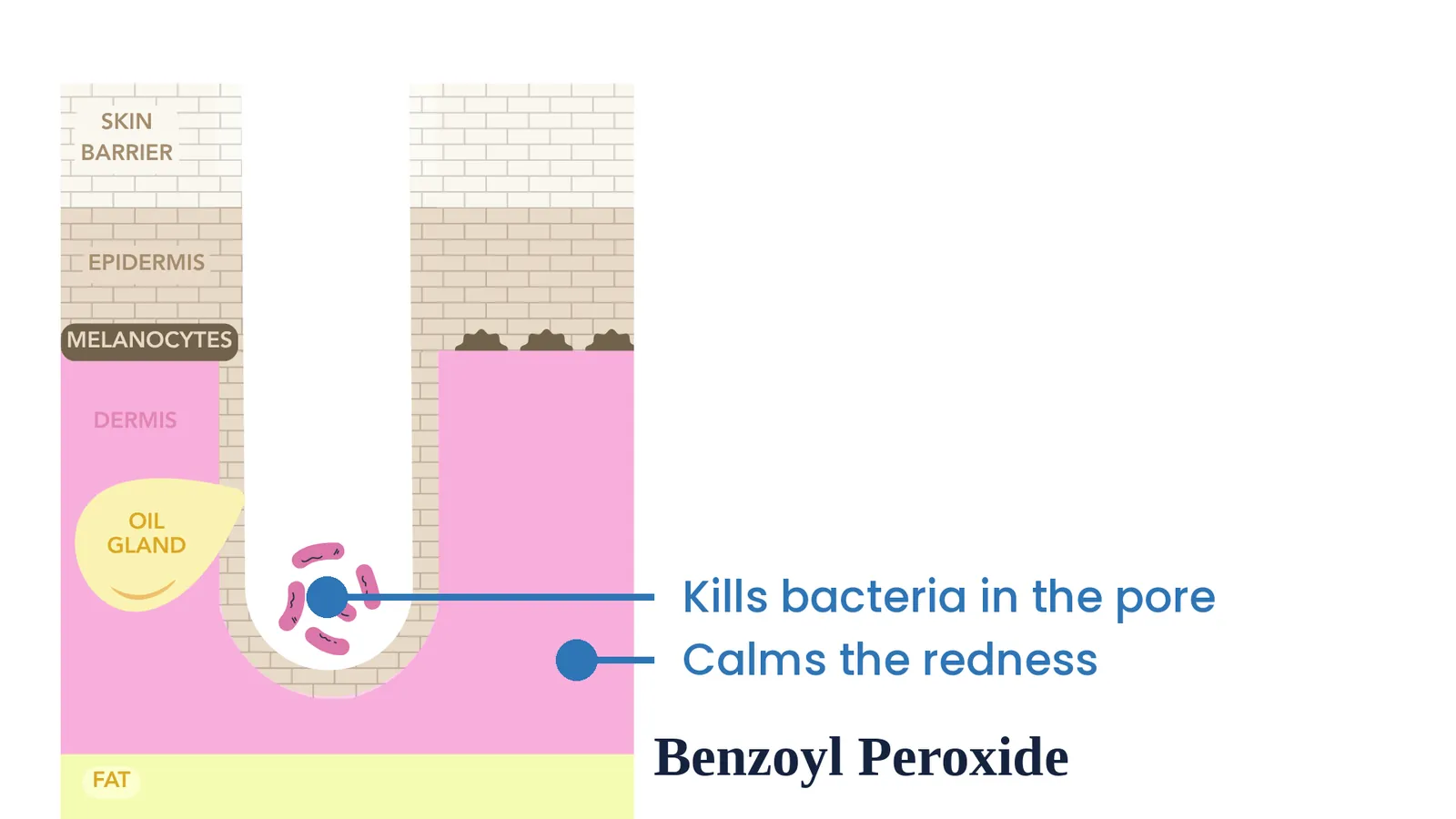
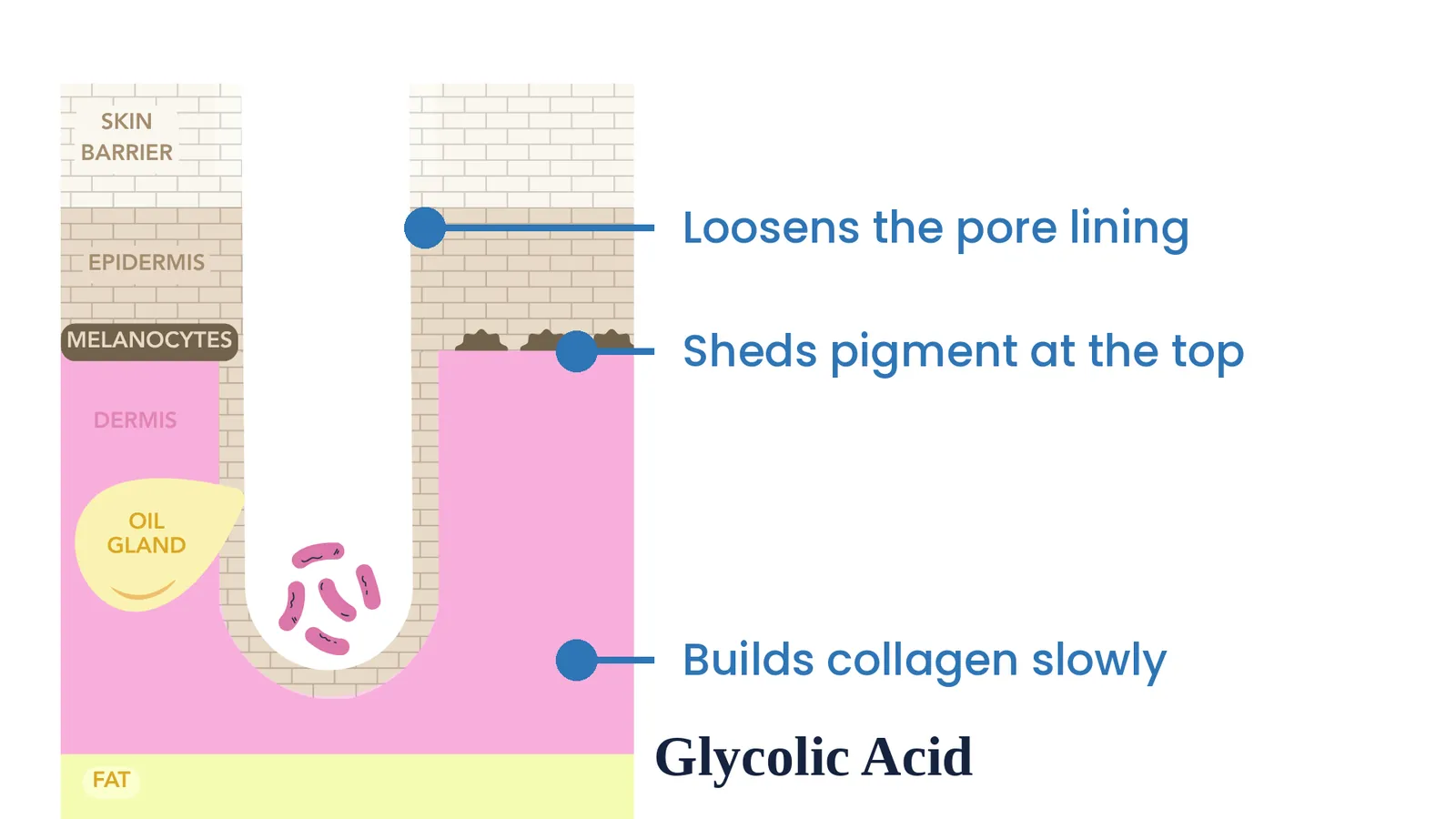
They work on different parts of the problem
Benzoyl peroxide attacks the bacteria inside a blocked pore: It releases oxygen into the pore, and the bacteria involved in acne cannot survive it. That is why inflamed spots settle.
Glycolic acid loosens the dead cells sitting on top of the skin: That smooths the surface and helps keep pore openings clear, but it does nothing to the bacteria below.
Bacteria do not become resistant to benzoyl peroxide: That matters, because they do become resistant to antibiotics. It is a large part of why benzoyl peroxide is still used alongside prescription acne treatment decades on.
Can you use both
Yes, and many people do — just not at the same moment: Benzoyl peroxide in the morning and glycolic acid two or three nights a week is a routine most skin can handle.
Layering them together is where trouble starts: Both are drying. Together, on the same skin, at the same time, they usually cause more irritation than either one earns you.
Irritated skin looks like worse acne: Redness, flaking and stinging get read as a failed treatment. Usually it means too much, too fast.
Getting the most out of benzoyl peroxide
A wash left on for a minute before rinsing is a good starting point: It gives you the effect with less of the dryness a leave-on gel causes.
Use white towels and old pillowcases: The bleaching is not a rumour and it is not reversible.
Moisturize on top: The people who stick with benzoyl peroxide are almost always the ones who moisturize alongside it.
Before you start either one
Pick one and give it six weeks before deciding whether it works
Start every other day rather than daily, on the whole area rather than on spots
Pair either one with a plain moisturizer from day one, not after the peeling starts
Wear sunscreen every morning — mandatory with glycolic acid, sensible with both
Do not add a third active in the same fortnight, or you will not know what caused what
See a dermatologist if the spots are deep, painful lumps, since neither product reaches them