Azelaic Acid vs Glycolic Acid
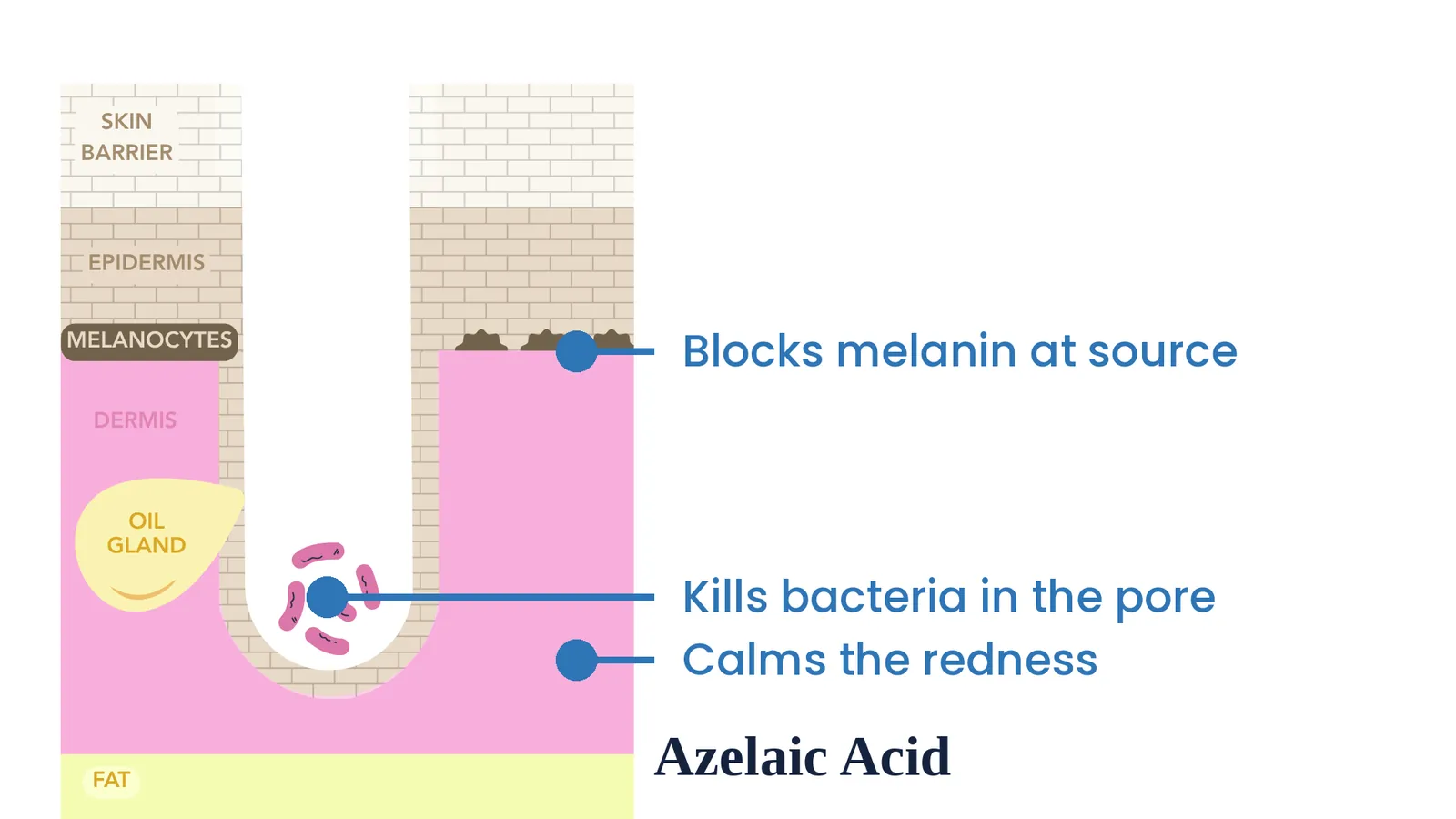
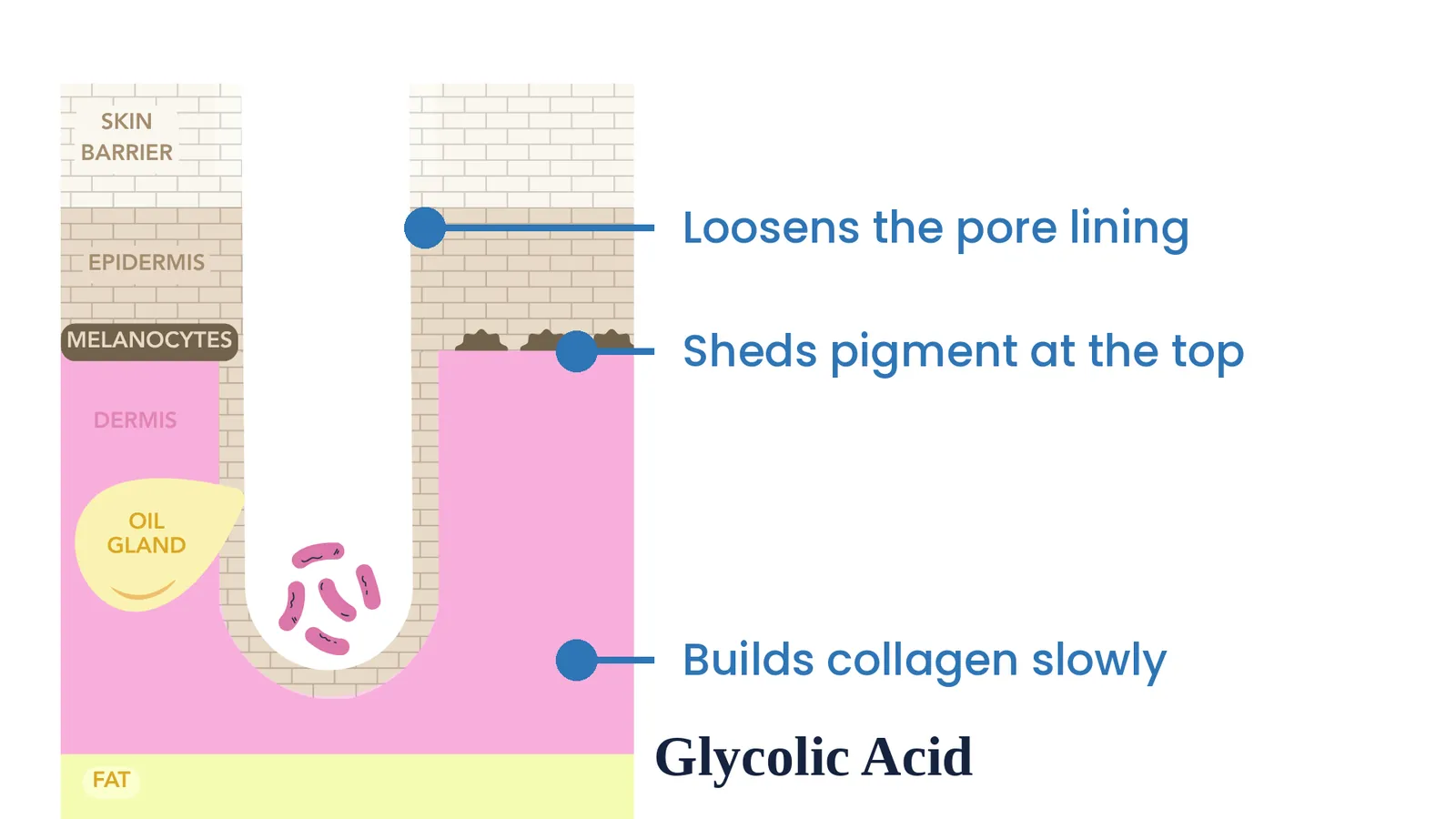
Azelaic acid is better for redness, dark marks and acne at the same time. It calms inflammation and slows pigment as it is being made, and it suits sensitive skin. Glycolic acid is better for rough texture and dullness. It lifts dead cells off the surface so skin looks smoother and brighter. They are not rivals — dermatologists often use one in the morning and the other at night.
What you do
A cream, gel or foam you smooth over the whole area, not just on spots. It layers under moisturizer and sunscreen.
A toner, serum or pad, usually at night. Some people use a stronger peel in a clinic every few weeks instead.
What you will see
Less redness, fewer inflamed spots, and brown marks left by old spots fading. It is a steady, quiet change.
Softer texture, less dull surface, smaller-looking pores, and a gradual fade of surface discolouration.
What it will not do
It does not smooth rough texture the way an acid does, and it does very little for fine lines.
Glycolic acid does not treat rosacea or inflammation. On reactive skin it can make redness worse.
How long until it works
Spots improve first. Pigment takes longer, because you are waiting for marked skin to be replaced.
Brightness comes early. Discolouration takes months.
How long it lasts
Stopping lets the redness and spots drift back over a few months.
Skin returns to its usual turnover once you stop.
The downside
A mild stinging or itching in the first couple of weeks is common and usually settles. Some gels feel gritty.
It can sting on application, and it makes skin more sensitive to sun. Daily sunscreen is not optional with an AHA.
Cost
Drugstore versions are inexpensive. The prescription strength costs more and may be covered by insurance for acne or rosacea.
Drugstore serums and toners are cheap. A course of in-clinic peels costs considerably more.
The at-home or drugstore version
The over-the-counter azelaic acid is genuinely the same ingredient at a lower strength. It works, just more slowly. The prescription version is the one used for rosacea and stubborn pigment.
Drugstore glycolic acid works at the surface. A clinic peel is the same acid, stronger and buffered differently, so it reaches deeper and works faster — with a few days of flaking as the trade.
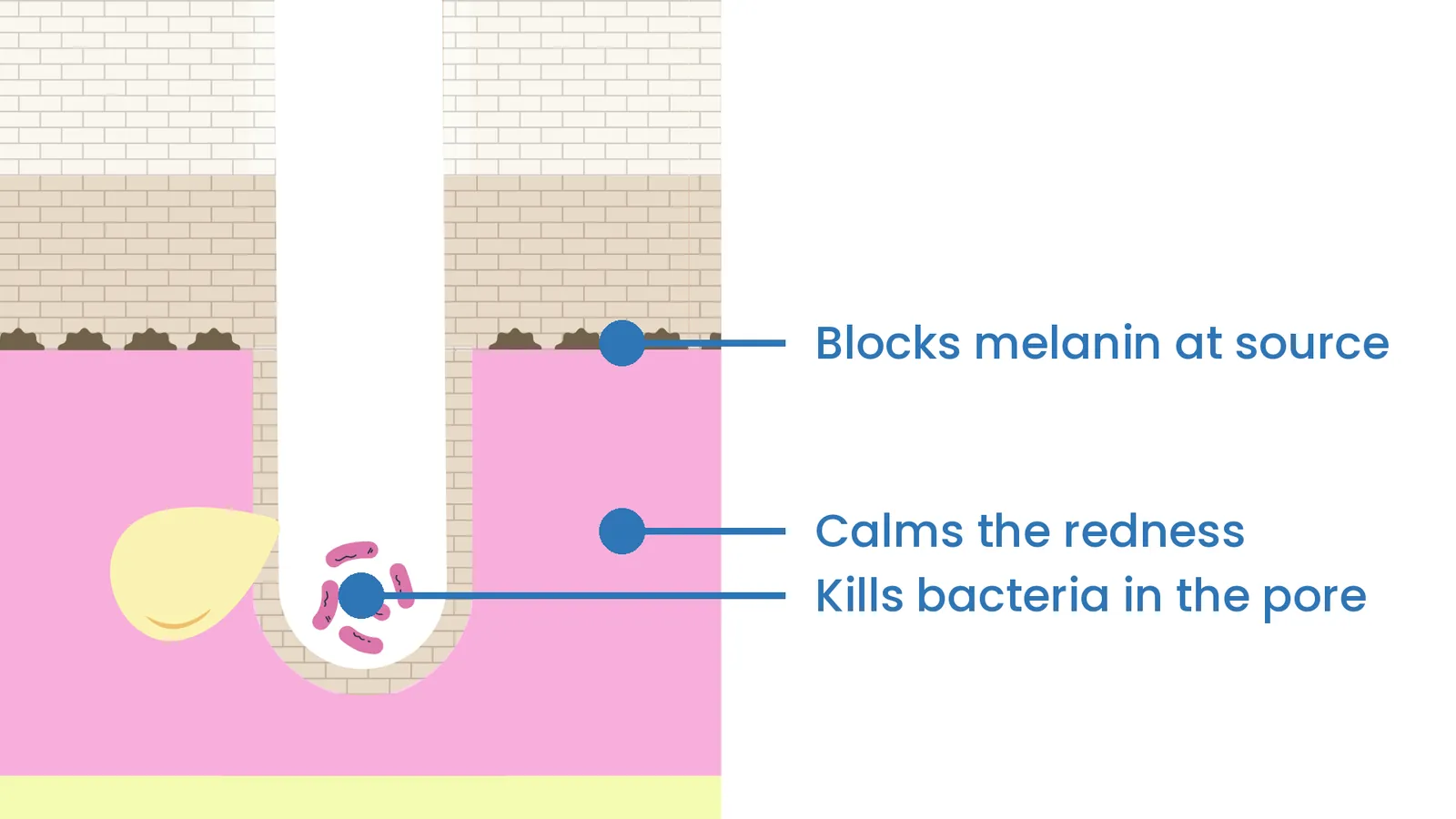
They do different jobs, so the choice is about your main complaint
Pick azelaic acid if your skin is red, reactive or marked: Rosacea, flushing, post-acne brown marks and active spots all respond to it. It is one of very few ingredients that treats acne and pigment at once without making skin fragile.
Pick glycolic acid if your skin is dull, rough or congested: Bumpy texture, blackheads, and a general lack of glow are what it does best.
Pick both if your skin tolerates it: Using them on alternate nights, or one in the morning and one at night, is a common approach for post-acne marks.
Which is gentler
Azelaic acid is the safer starting point on sensitive skin: It does not thin the surface or increase sun sensitivity, and it is the standard choice when redness is part of the picture.
Glycolic acid asks more of the skin barrier: It works by loosening the bonds between surface cells, which is exactly why it can sting and why it needs sunscreen alongside it.
Dark marks on deeper skin tones
Azelaic acid is usually the first choice here: It targets overactive pigment cells and leaves normal pigment alone, so it is unlikely to over-lighten the surrounding skin.
Glycolic acid can help, but it carries more risk: Irritation itself can trigger more pigment on deeper skin tones, so a low-and-slow approach matters, and a strong peel is a decision for a clinician rather than a shopping cart.
Before you start either one
Introduce one new active at a time, and give it eight weeks
Start two or three nights a week rather than daily
Wear sunscreen every morning — mandatory with glycolic acid, sensible with both
Expect a mild sting from azelaic acid early on; expect it to settle
Do not layer either one over freshly exfoliated or broken skin
%2520-%2520Render.webp)