Kojic Acid vs Azelaic Acid
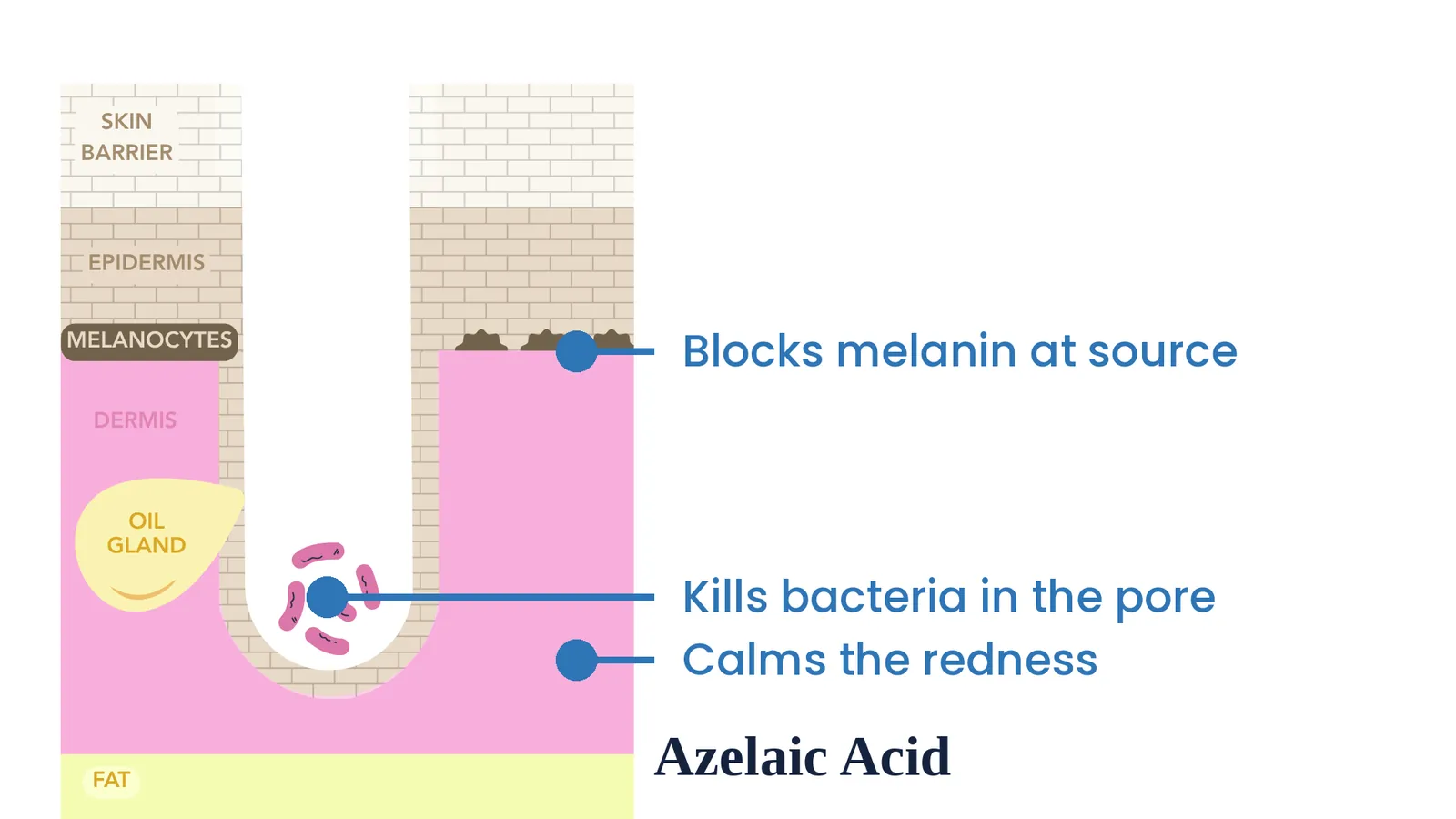
Kojic acid does one job: fading dark spots. It blocks the enzyme skin uses to build pigment, and it is a strong blocker. Azelaic acid does several jobs at once — dark marks, redness and acne — and it is the gentler of the two. If pigment is your only complaint, kojic acid is the more focused pick. If your skin is also spotty or flushed, azelaic acid handles both without a second product.
What you do
A serum, cream or cleansing bar. Serums are usually left on; bars are rinsed off, so they do less.
A cream, gel or foam smoothed over the whole area rather than dabbed on spots.
What you will see
Sun spots, melasma patches and brown marks left by old acne gradually lose their contrast against the surrounding skin.
Less redness, fewer inflamed spots, and dark marks fading. It treats the acne that keeps making new marks.
What it will not do
Kojic acid has no useful effect on spots, and it can irritate red or reactive skin.
Azelaic acid does not exfoliate, so rough or bumpy skin needs something else alongside it.
How long until it works
Fading is gradual. Anything faster than that usually means the spot was surface-level to begin with.
Spots improve first, pigment later.
How long it lasts
Spots return if the trigger — sun, inflammation, hormones — is still there.
Redness and spots drift back over a few months after stopping.
The downside
It can sting and cause a rash in some people, more so with long use. It also oxidises easily, so the product itself turns brown and loses strength.
A mild sting or itch in the first couple of weeks is common and usually settles. Some gels feel gritty on the skin.
Cost
Sold in drugstore serums, creams and soaps.
The prescription strength costs more and may be covered by insurance for acne or rosacea.
The at-home or drugstore version
Kojic acid is an over-the-counter ingredient. There is no prescription version. A clinician treating stubborn pigment reaches for other prescription options instead.
The over-the-counter version is the same ingredient, weaker, and it works more slowly. The prescription version is the one used for rosacea and stubborn pigment.
%2520-%2520Render.webp)
How each one blocks pigment
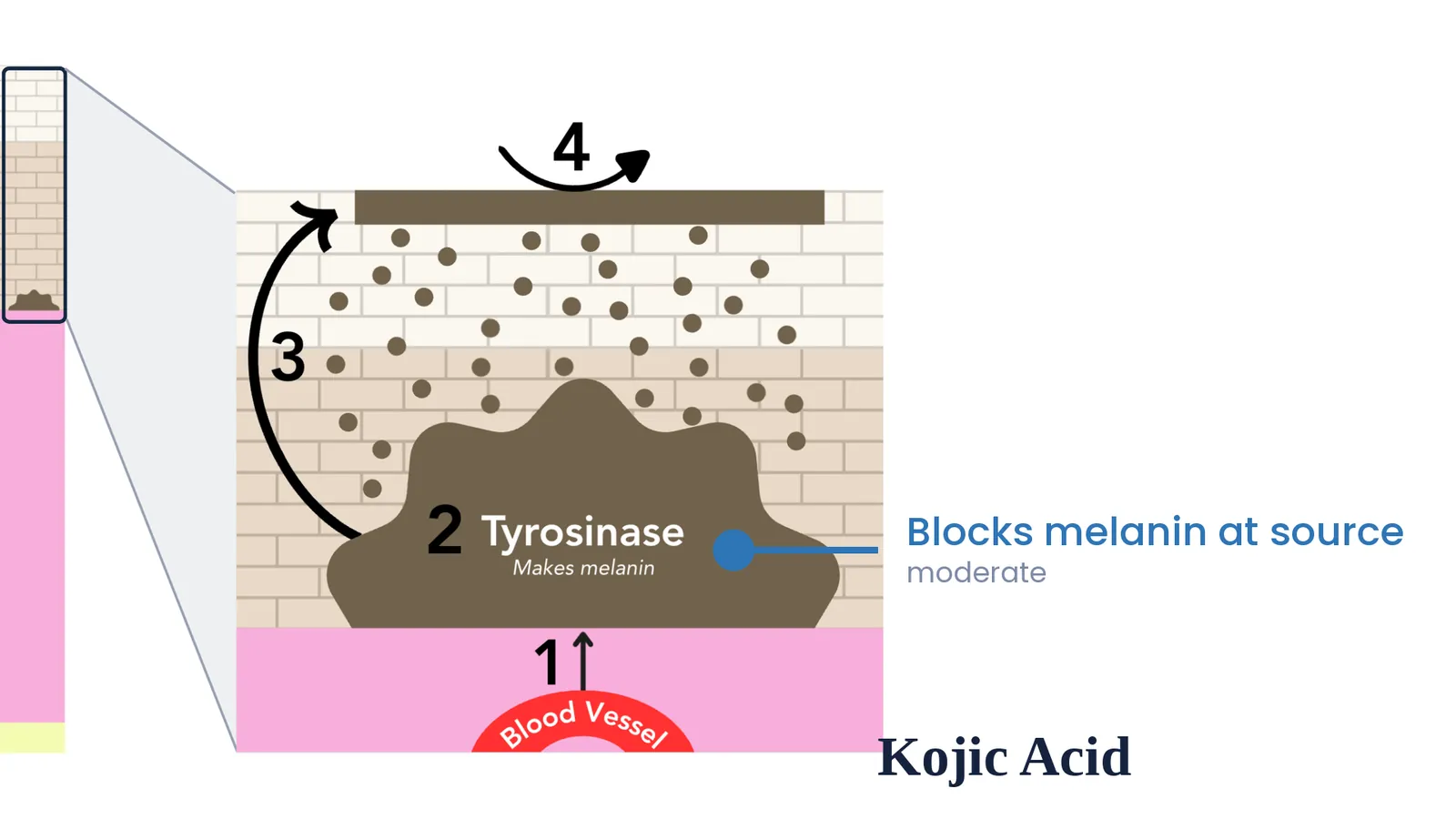
Kojic acid switches off the pigment enzyme everywhere it touches: Tyrosinase, the enzyme that makes melanin, needs copper to work. Kojic acid grabs that copper. That makes it powerful and unselective.
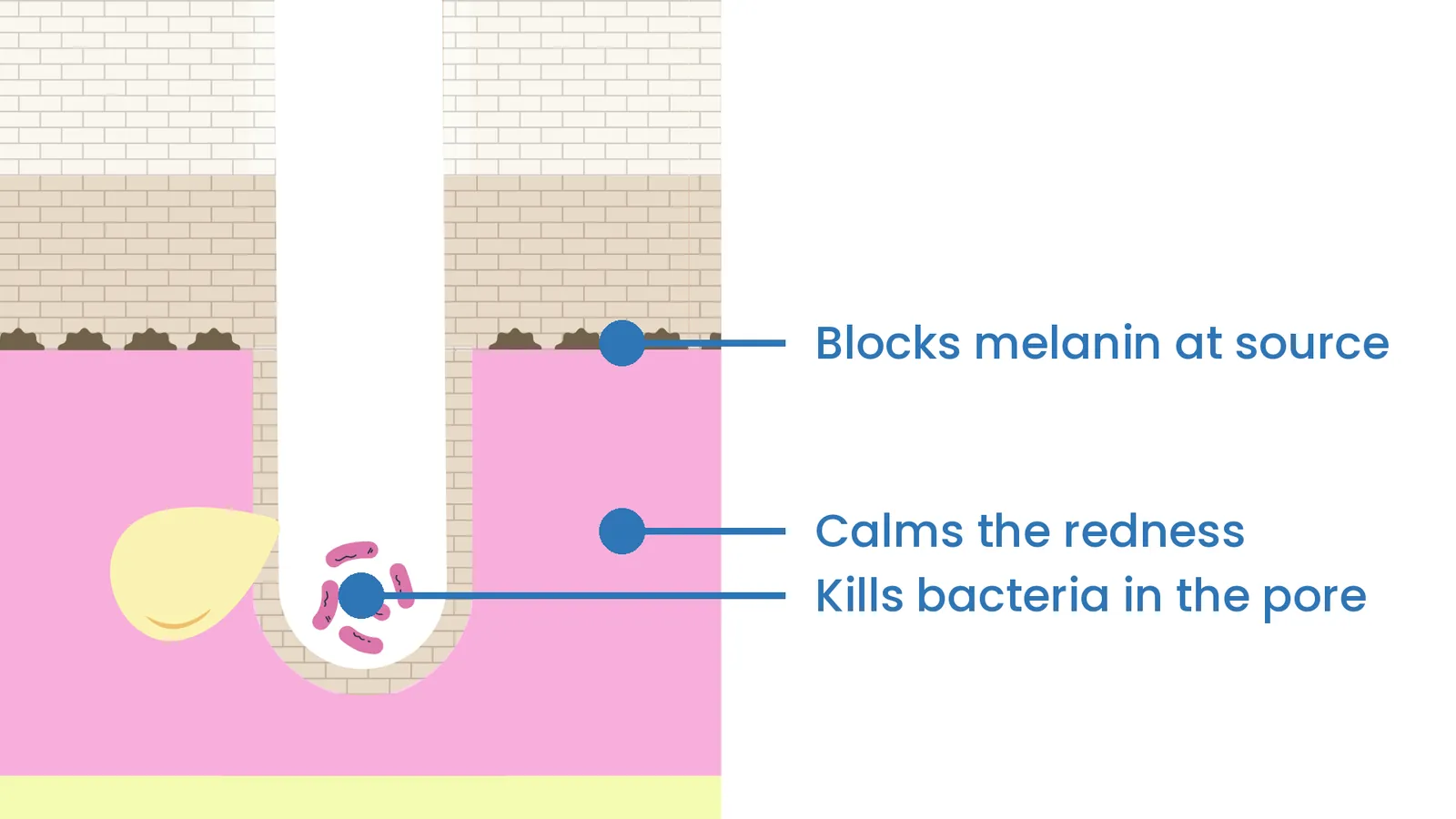
Azelaic acid targets overactive pigment cells and leaves normal ones alone: So it fades the marks without lightening the skin around them.
That difference matters most on deeper skin tones: An unselective blocker can leave a pale halo around a treated spot. A selective one is less likely to.
Which to reach for
Choose kojic acid for stubborn sun spots and melasma on skin that is not reactive: It is one of the stronger over-the-counter brighteners, and it works well next to sunscreen and a retinoid.
Choose azelaic acid if acne, rosacea or sensitivity is part of the picture: It is the safer starting point, and it treats the cause of new marks rather than only the marks themselves.
Using both is possible but not automatic: They work on pigment through different routes, so the effect can add up — and so can the irritation. Introduce one, wait eight weeks, then decide.
The part people skip
Sunscreen does more for dark spots than either ingredient: Pigment cells respond to light. Fading spots while adding new sun exposure is slow, expensive and discouraging work.
Picking spots is the other half: Most brown marks on acne-prone skin start as an inflamed spot that was squeezed. Fewer squeezed spots means fewer marks to fade later.
Before you start either one
Introduce one brightening ingredient at a time and give it eight weeks
Take a photo in the same light on day one, because slow fading is hard to judge by memory
Wear sunscreen every morning, including on grey days and indoors near windows
Keep kojic acid products sealed and out of light, and replace them once they darken
Stop and reassess if the skin around a spot looks paler than the rest
Ask a clinician about prescription options if nothing has shifted after three months