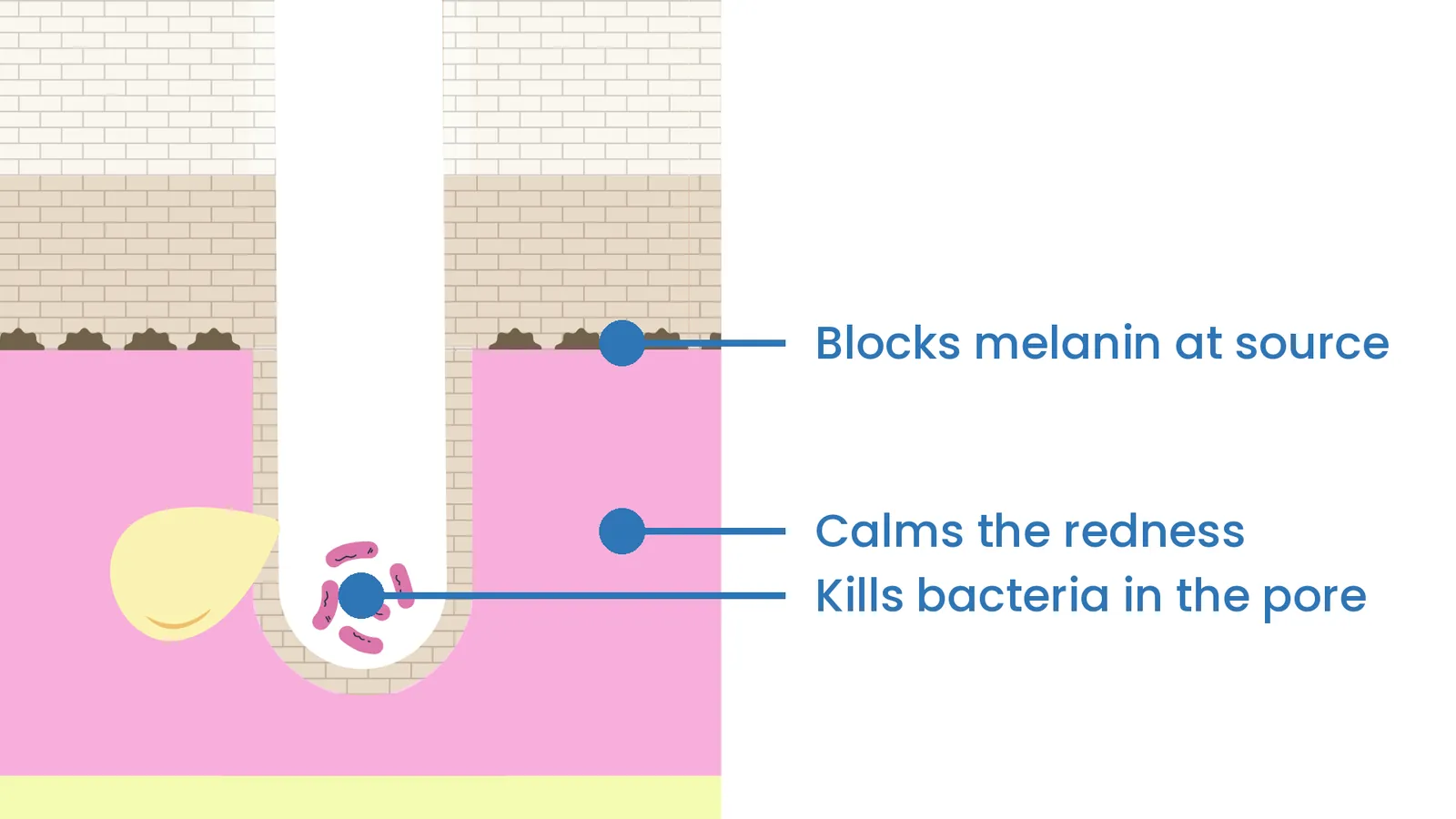
Lactic Acid vs Salicylic Acid
Salicylic acid is better for clogged pores, blackheads and oily skin. It dissolves in oil, so it gets down inside the pore and clears it out. Lactic acid is better for dry, dull or sensitive skin. It works on the surface and holds water, so it exfoliates without stripping. The choice comes down to one question: is your problem inside the pores, or on top of the skin?
What you do
A serum, toner or lotion left on the skin. Some people use it as a weekly mask instead.
A cleanser, toner, serum or spot treatment. Leave-on versions do more than a wash that goes straight down the drain.
What you will see
Less flaking, less dullness, and a slow fade of surface discolouration. Skin feels plumper rather than tighter.
Fewer blackheads and whiteheads, less congestion on the nose and chin, and less oily shine by the afternoon.
What it will not do
Lactic acid cannot get into oil, so blackheads mostly stay put. It also will not reduce oiliness.
Salicylic acid has no moisturizing effect at all. Used too often on dry skin it makes tightness and flaking worse.
How long until it works
Softness comes quickly. Discolouration takes a few months of steady use.
Blackheads clear gradually. Deeper congestion takes longer than the surface does.
How long it lasts
The downside
Like all AHAs it makes skin more sensitive to sun, so sunscreen matters. It can sting on freshly washed skin.
Overuse is the common mistake. Tight, peeling, irritated skin makes acne look worse, not better.
Cost
Widely available in drugstore serums and lotions. Clinic peels cost more.
One of the cheapest effective acne ingredients in the aisle. Clinic peels cost more.
The at-home or drugstore version
Over-the-counter lactic acid is the same acid a clinic uses, at a lower strength and a higher pH. It works more slowly and with no peeling. A clinic peel is the same molecule turned up.
Drugstore salicylic acid genuinely reaches the pore — that part does not depend on strength. A clinic salicylic peel goes further and can lift stubborn congestion the home version leaves behind.
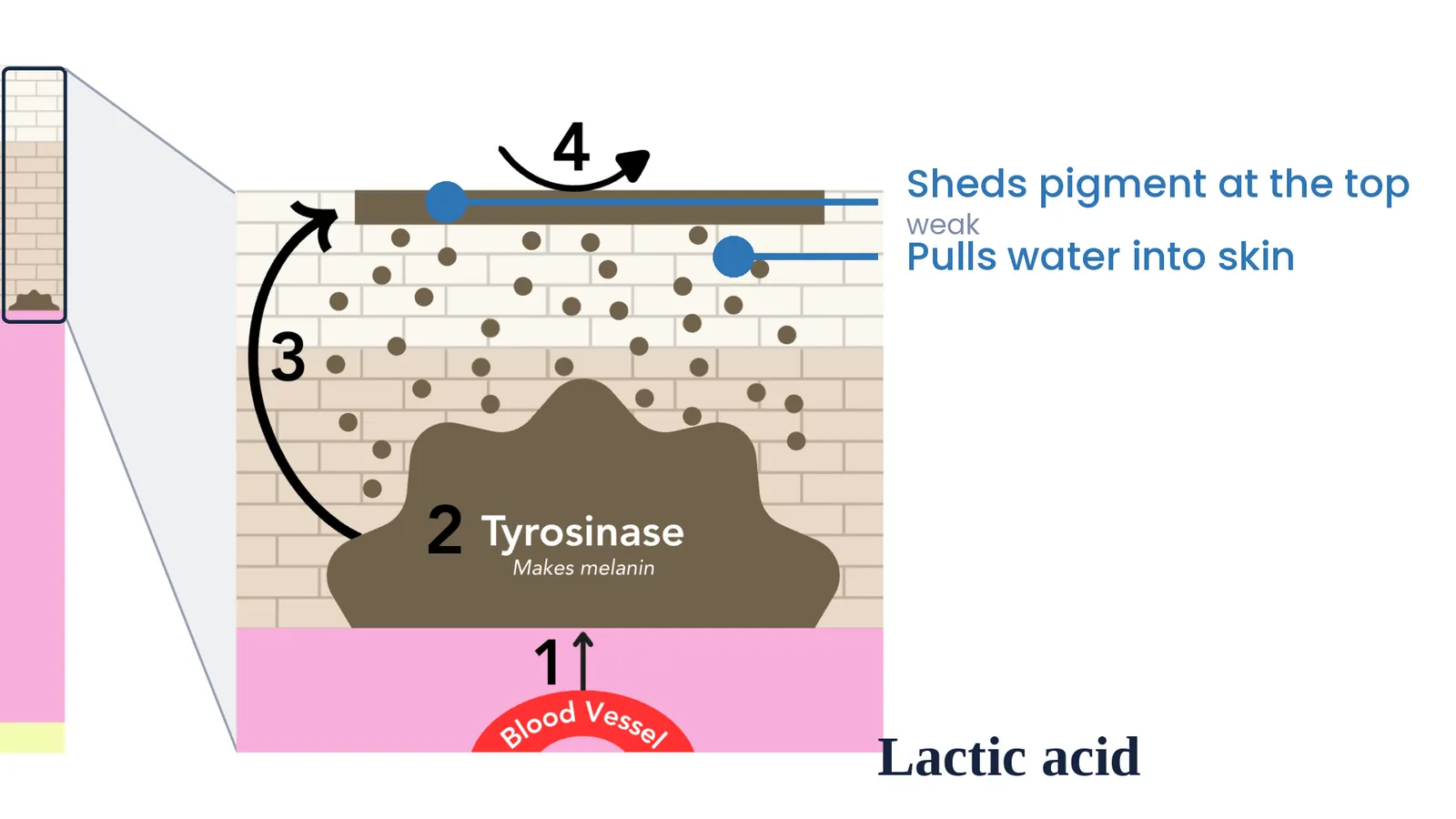
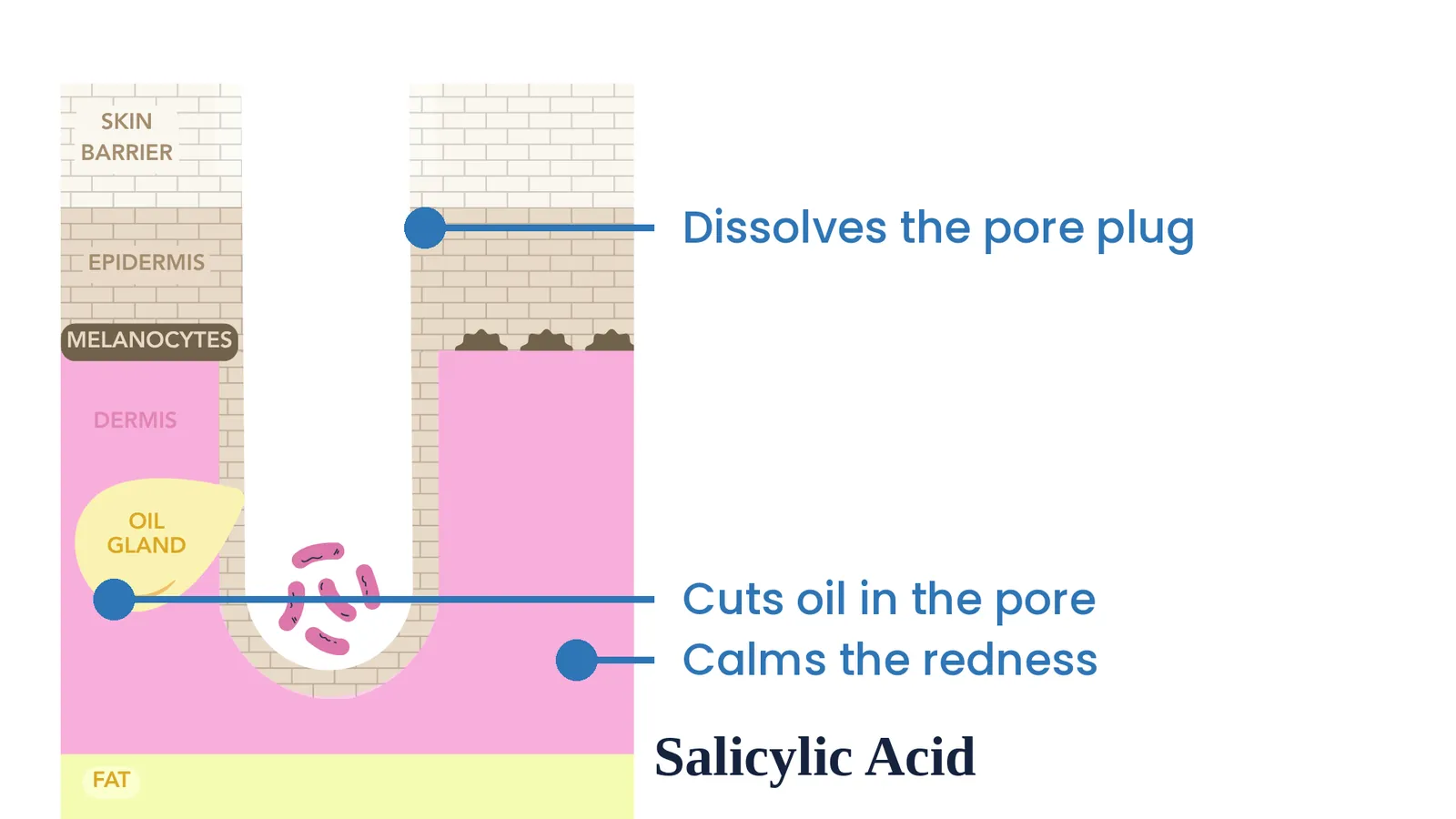
They exfoliate in different places
Salicylic acid is oil-soluble, so it travels into the pore: Pores are lined with oil. An ingredient that mixes with oil can get inside and loosen the plug. That is the whole reason it dominates the acne aisle.
Lactic acid is water-soluble, so it stays on the surface: It loosens the bonds between dead cells on top of the skin. That smooths texture and brightens, but it never reaches the blockage.
This is also why lactic acid feels kinder: It is one of the larger alpha hydroxy acids, so it moves through the skin more slowly than glycolic acid does. Slower usually means less sting.
Which one for which skin
Choose salicylic acid for oily, congested or acne-prone skin: Blackheads, whiteheads and an oily T-zone are its territory. It also helps with bumpy skin on the back and chest.
Choose lactic acid for dry, dull or easily irritated skin: It exfoliates and draws water into the skin at the same time, which is unusual for an acid.
Choose both if your skin is combination: Salicylic acid on the oily zones, lactic acid everywhere else, is a workable split. Using both all over on the same night is how people end up with a damaged barrier.
The mistake that undoes both
More often is not better: Both acids are used daily by people whose skin is already stripped, and both then get blamed for making things worse.
Peeling is not progress: Visible flaking means the barrier is damaged. Damaged skin gets redder, produces more oil, and heals spots more slowly.
Two or three nights a week is a reasonable starting point for either one: Build up only if the skin stays calm.
Before you start either one
Choose based on your main complaint: pores and oil, or dryness and dullness
Begin two or three nights a week and build up only if the skin stays calm
Leave-on products do more than a cleanser that gets rinsed straight off
Keep a plain moisturizer in the routine from the first night
Wear sunscreen every morning, especially with lactic acid
Give it six weeks before adding anything else to the routine