Perioral Dermatitis vs Rosacea
Perioral dermatitis is a ring of small bumps around the mouth, nose or eyes. It is often started or made worse by steroid creams, and stopping them is the first step in treating it. Rosacea is flushing and lasting redness across the cheeks and nose. A narrow rim of clear skin right at the lip line points to perioral dermatitis.
What it is
The exact cause is not known. It follows steroid creams, steroid inhalers and nasal sprays, heavy moisturizers, and sometimes fluoride toothpaste.
Vessels in the central face widen too easily and stay widened. Inflammation follows, and in some people that adds bumps and pustules.
What it looks like
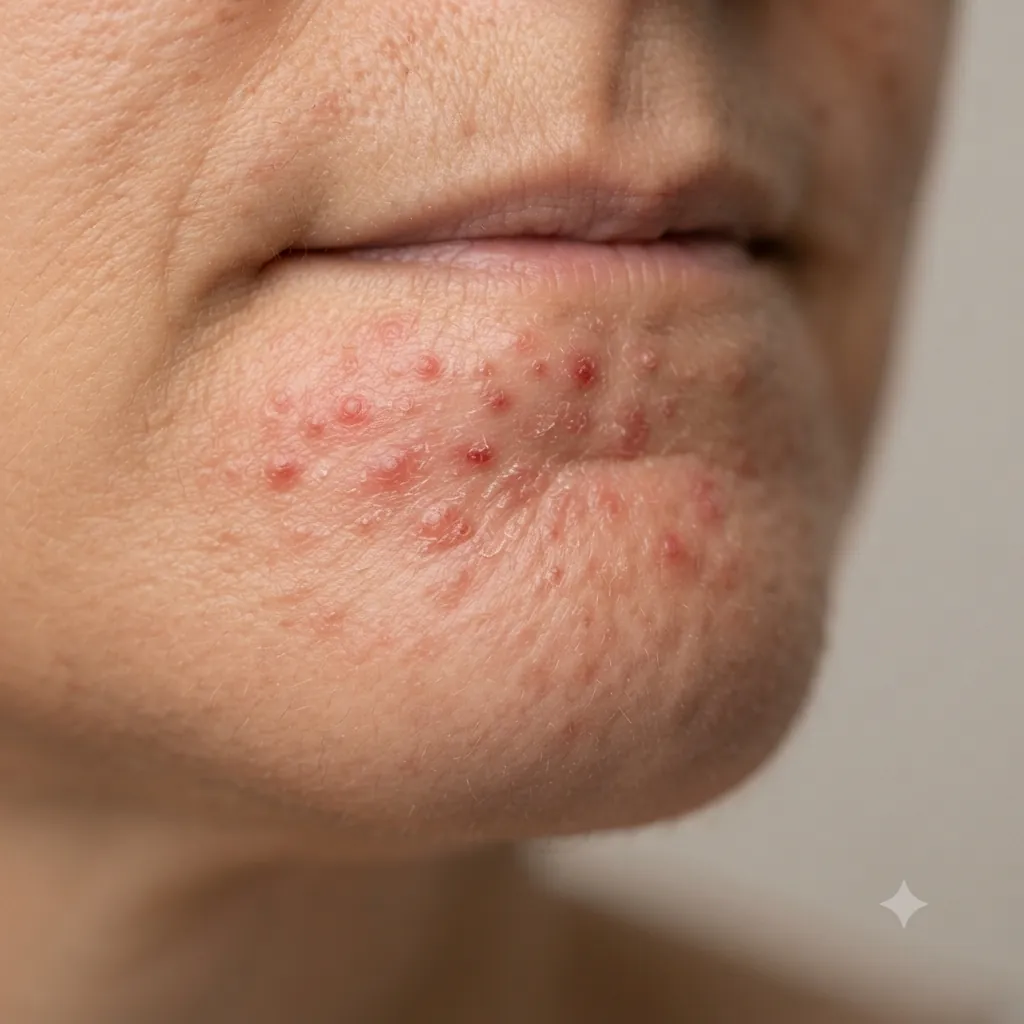
Small pink or skin-toned bumps packed together in patches, often with a fine dry flake over them. Some carry a pinhead of pus.
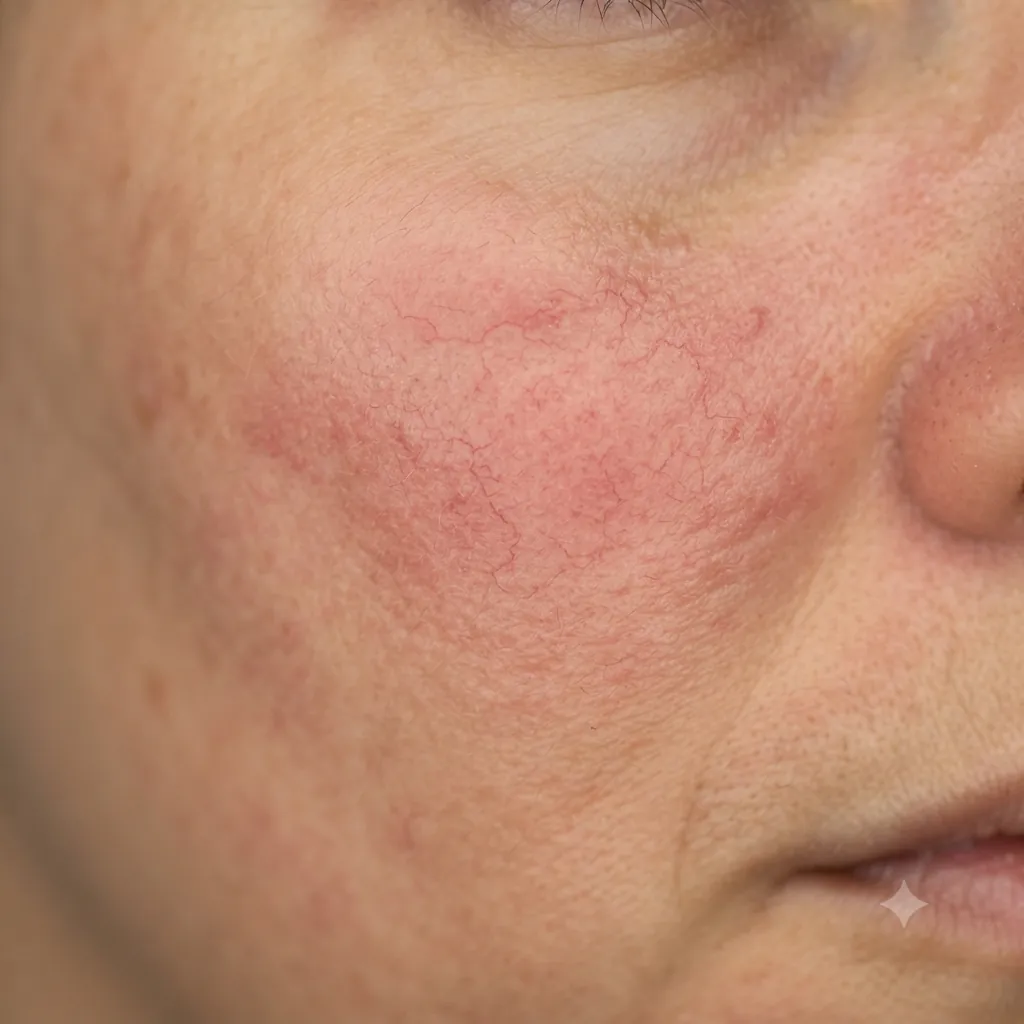
Flushing and lasting pink over the cheeks, nose, chin and forehead, with fine visible blood vessels in it. Any bumps are scattered, not clustered.
Where exactly it sits
Most often in the folds beside the nose and the skin above the upper lip. A narrow strip of clear skin right at the lip border is close to a giveaway.
Cheeks, nose, chin and centre of the forehead, with no clear rim at the lip.
Does it flush
The rash stays put. A hot room or a glass of wine does not turn it on and off.
Flushing is the core feature. Heat, sun, alcohol, spicy food, hot drinks, exercise and stress all set it off.
How it feels
More burning and stinging than itching. The skin over the bumps often feels dry and rough.
Skincare products sting on contact and the face feels hot during a flush. Eyes often feel gritty or sore too.
Who gets it
It also turns up in children, where it tends to sit around the eyes and nose.
It usually starts between 30 and 50, and it is uncommon in children.
What steroid creams do to it
The rash clears while the cream is on and returns stronger when it stops. Each round tends to be worse than the last.
Strong steroids on a rosacea face settle it briefly and then cause a rebound flare with more bumps and more redness.
What actually treats it
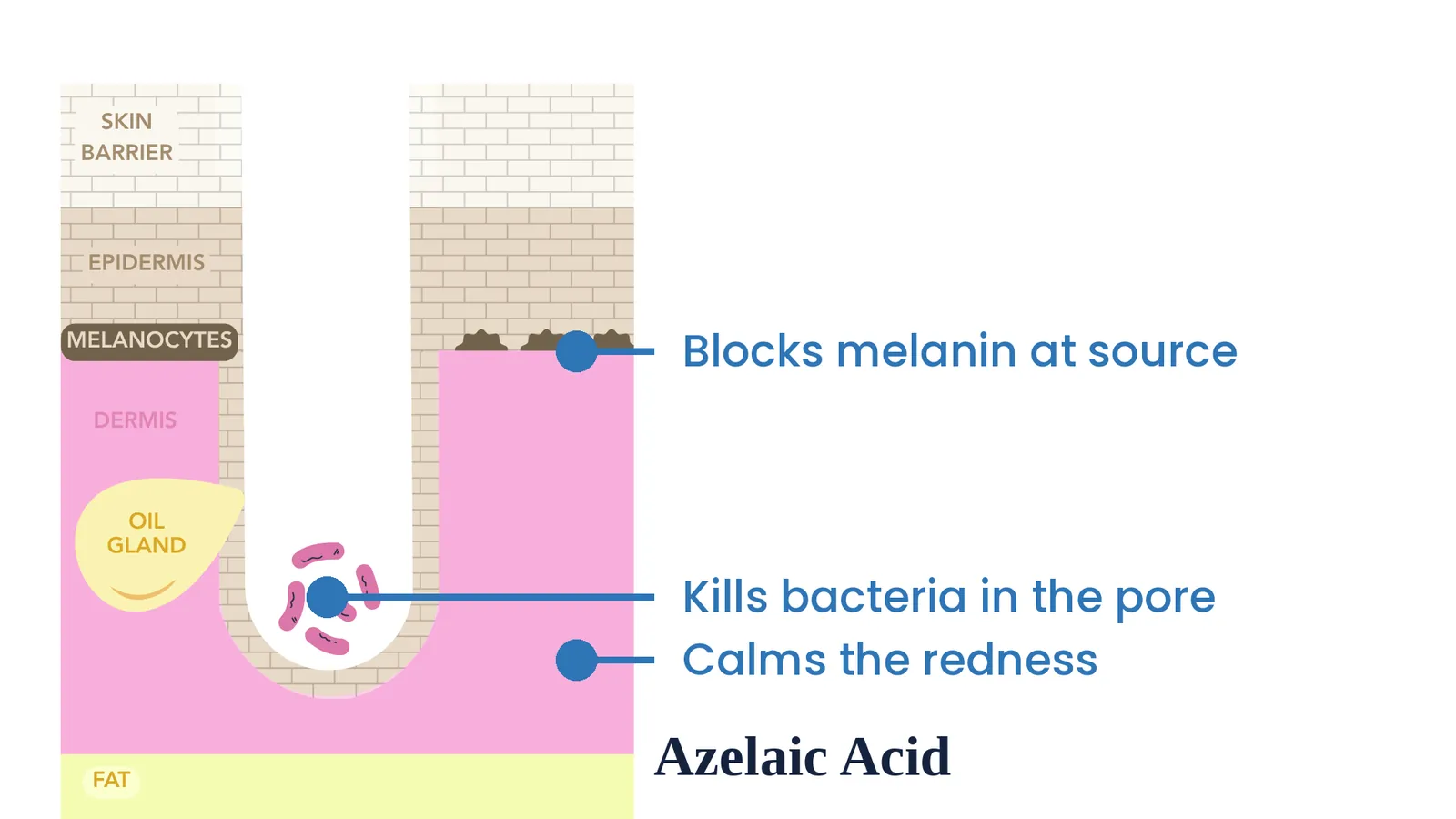
Stop the steroid and cut back to water and a light moisturizer. Then metronidazole, azelaic acid, clindamycin or ivermectin cream, or a six to eight week course of doxycycline for stubborn cases.
Sunscreen and gentle cleansing come first. Metronidazole, azelaic acid or ivermectin cream treat the bumps, doxycycline is used for more inflamed cases, and laser or intense pulsed light treats fixed redness.
Does it go away
Most people clear over a few weeks to a few months and never get it again, as long as the trigger stays away.
Rosacea is a long-term condition. Treatment and trigger control keep it quiet rather than curing it.
When it needs a doctor
Most cases need a prescription to clear properly. Using a steroid cream on your face for weeks is worth an appointment on its own.
Redness that keeps getting worse, gritty sore eyes, or skin on the nose that is starting to thicken all deserve an appointment.
Steroid creams are the trap
A steroid cream makes perioral dermatitis look better for about a week: The bumps flatten and the redness fades, which is exactly why people keep reaching for the tube. Then the rash comes back, usually worse than before, and the cycle starts again.
Stopping the steroid makes it worse before it makes it better: The first one to three weeks after stopping are the hardest part, and that rebound is expected. It is the main reason people go back to the tube and stay stuck for months.
This is why the rash needs a name: Both conditions get treated as "some kind of face rash" with whatever hydrocortisone is in the cupboard. Neither one is treated with a steroid, and one of them is caused by it.
What stopping everything means
The first treatment for perioral dermatitis is to take things off your face: No steroid cream, no heavy moisturizer, no makeup on the area, no scrubs and no acids. Water, and at most a light moisturizer.
It works, and it is slow: Many mild cases clear on this alone over several weeks. Most people want something faster, which is where a prescription cream or a course of antibiotic tablets comes in.
Check the products that are not obviously creams: Steroid inhalers and nasal sprays leave residue around the mouth and nose. Fluoride toothpaste and thick sunscreens are reported triggers too.
Telling them apart at the mirror
Look at the lip line: Perioral dermatitis usually leaves a narrow band of normal skin against the lip border, with the rash sitting just outside it. Rosacea has no such rim.
Ask whether you flush: Rosacea has a switch. A hot room, a hot drink or a glass of wine turns the face red for a while, then it settles. Perioral dermatitis has no switch.
Look at the shape of the bumps: Perioral dermatitis comes in dense clusters over a small area. Rosacea scatters bumps across a broad red background.