Red Light Therapy vs Genesis Laser
Red light therapy can calm inflamed, reactive skin. It does not heat blood, so it will not clear a broken capillary you can see in the mirror. The Genesis laser does heat blood, and that is what fades standing redness and shrinks small vessels. It runs as a course of clinic visits, and no trial has put the two against each other.
What it is
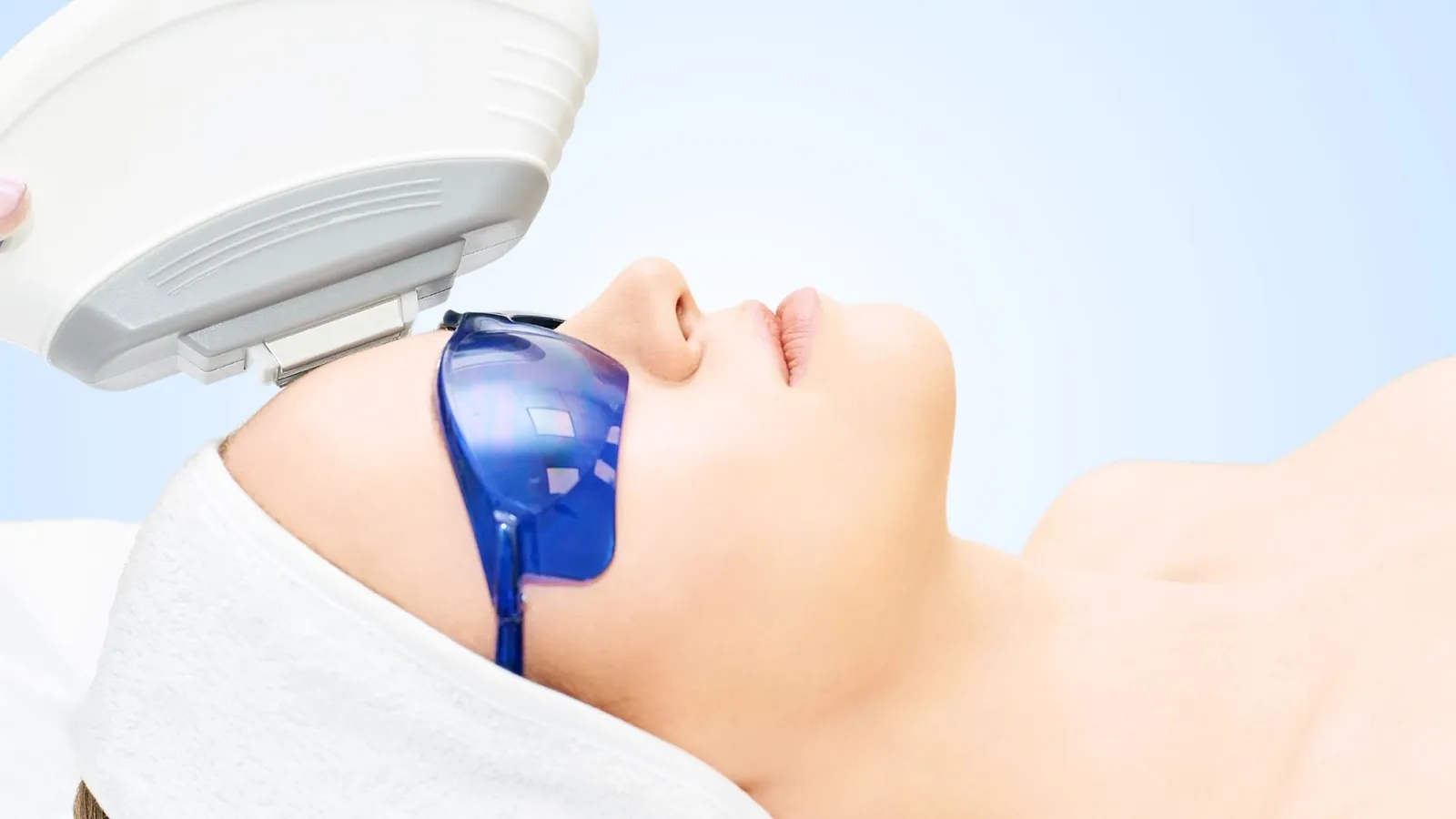
Rows of small red and near-infrared diodes, usually 630 to 850 nm. Nothing is heated, and nothing is damaged.
The handpiece is swept back and forth in repeated passes, warming the skin gradually rather than firing at one spot.
What it aims at
The light is absorbed inside skin cells and dials down the inflammation that drives flushing and irritation.
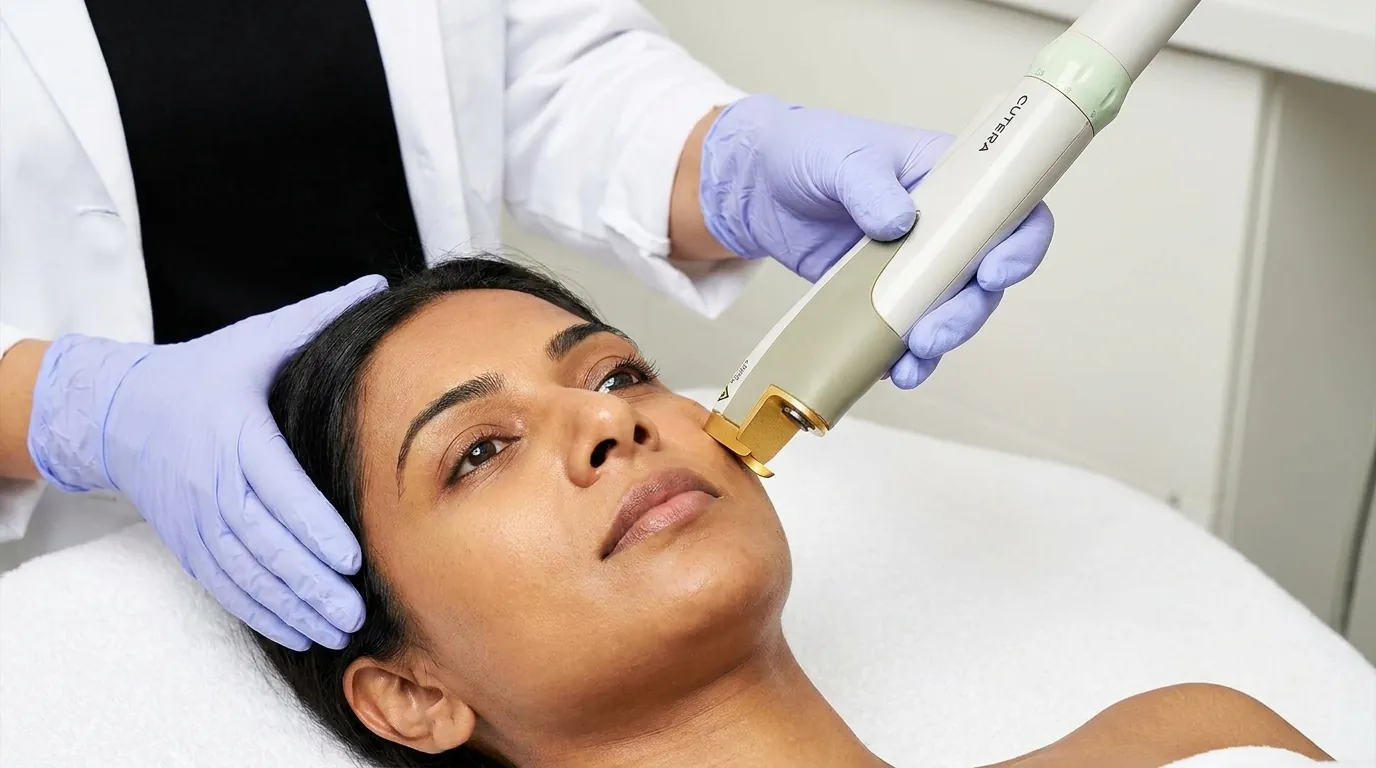
The laser is absorbed by haemoglobin. The vessel heats, collapses and is cleared away by the body.
What it is best at
Burning, stinging and the general sense that your skin is always annoyed. Best used alongside the rest of your rosacea care.
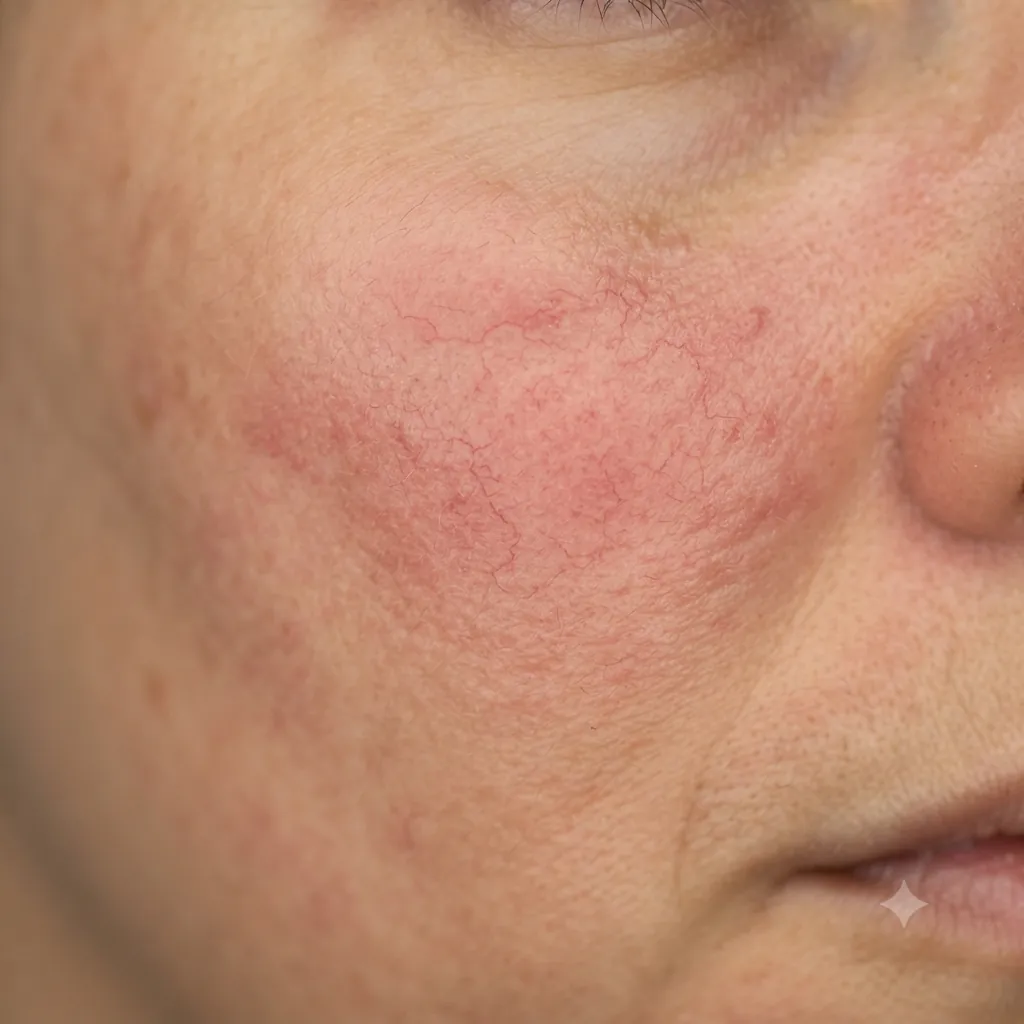
Diffuse facial redness and fine visible capillaries, especially around the nose and cheeks.
What it will not do
A vessel you can trace with a fingertip is a physical structure. Non-heating light leaves it exactly where it was.
The laser clears what is there now. The underlying tendency to flush is unchanged, so redness slowly returns.
How long until it works
Most protocols are around ten minutes, most days. Stop for a month and the benefit fades.
Spaced roughly three to four weeks apart. Change builds across the course rather than after one visit.
How long it lasts
What it feels like
You wear eye protection. There is no sting and no pain.
Heat rises over successive passes until the skin feels hot. Most people manage it without numbing cream.
Downtime
You can use it before work.
Mild redness and slight puffiness that usually settles the same day. Make-up the next morning is fine.
Skin tone
Safe across every skin tone, because nothing in the light is aimed at melanin.
At 1064 nm, less of the energy is absorbed by melanin than at shorter wavelengths. That makes it one of the more forgiving vascular lasers, not a risk-free one.
Cost
A panel or mask is bought once. Cheap devices and expensive ones look similar and are not.
Ask for the total cost of the course, and what a maintenance visit costs after it.
The at-home or drugstore version
There is no clinic version that is fundamentally different. Clinic panels are bigger and stronger, so sessions are shorter, but the mechanism is identical.
No home device delivers laser energy at this power. A red light mask marketed for redness is a fraction of the output and never reaches the vessel.
The two are doing different jobs
Red light therapy works on inflammation: The light is absorbed inside skin cells and quietens the inflammatory signals that make skin flush, sting and stay irritated. Nothing gets hot, so nothing gets destroyed.
The Genesis laser works on blood vessels: The light is absorbed by haemoglobin, the vessel heats up, and the body clears the damaged vessel over the following weeks. Something gets hot, and something is destroyed on purpose.
That difference decides which one you need: Redness that comes and goes with heat, alcohol or stress is inflammation. Redness that is there every day, in the same place, is vessels.
What the evidence actually shows
Red light therapy has small, mostly positive studies: They report less redness, less burning and less itching after a course of sessions. The studies are small, they use clinic-grade equipment, and consumer masks are not the same devices.
The 1064 nm laser has a longer track record for redness: Published work on this wavelength for facial redness and visible vessels goes back years, and it is used routinely in dermatology for exactly that. The Genesis brand name has less of its own published work than the wavelength does.
Nobody has run them against each other: They are not really rivals, so there has been little reason to.
If your main problem is visible vessels
A laser is the honest answer, and it may not be this one: The Genesis mode is gentle by design, which is part of its appeal. For a strong, well-defined capillary, a pulsed dye laser or the 532 nm setting on a vascular platform usually clears it in fewer visits.
Ask which setting is planned and why: A clinic that owns a vascular laser can normally offer more than one mode. Matching the mode to your problem matters more than the name on the machine.
Before you buy or book
Decide first whether your redness is flushing or fixed vessels. They need different treatments.
If you buy a panel, look for the wavelength and the output power in the specification. A device that will not state them is telling you something.
Ask the clinic how many sessions are planned, what the course costs, and what happens after it.
Keep the rest of your rosacea care going. Neither of these replaces a prescription cream that is working.
Do not book a laser within a few weeks of a sun holiday.