Skin Pen vs Microneedling
SkinPen is a microneedling device, not a rival to microneedling. If a clinic treats you with a SkinPen, the treatment you had was microneedling. What varies between pens is the cartridge and how the needles move, not the idea behind the procedure. Sharp, sterile needles that go straight in and out do a cleaner job than blunt ones that drag, and that is the difference worth asking about.
What it is
A handpiece that drives a cartridge of fine needles in and out at speed. Several companies make one.
Thousands of tiny channels are made in the skin. Healing them is what builds new collagen.
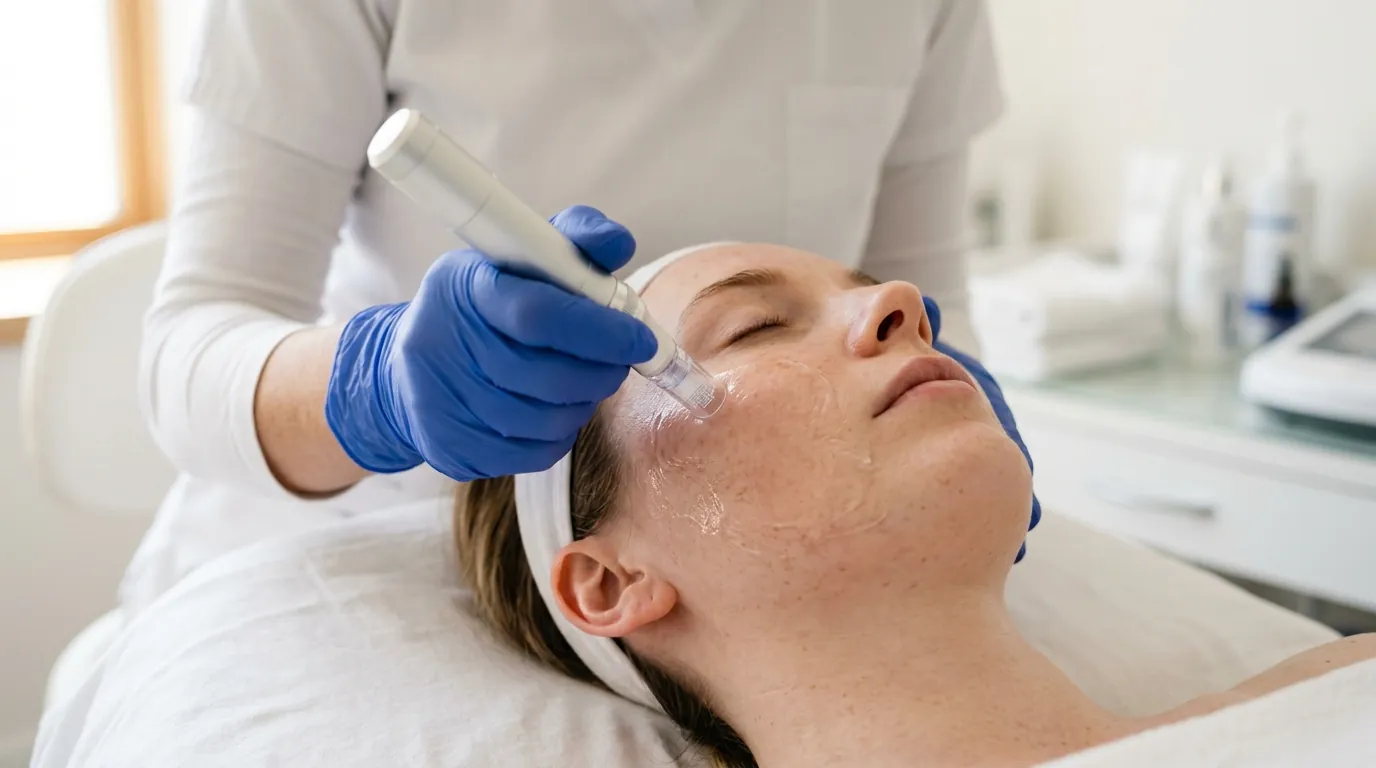
What happens in the room
About 20 to 30 minutes for a face, plus half an hour for the numbing to work.
The pen brand does not change the shape of the visit.
What it is used for
SkinPen is the pen with the most published work behind it, mostly on facial acne scars.
The same list. Deep icepick scars improve least, whichever pen is used.
What varies between pens
Its cartridges are single-use and sterile, and the needles retract straight rather than on a spring. That reduces sideways drag across the skin.
A cheap pen with a blunt or reused cartridge is a worse treatment than a good pen, and it is also the main infection route.
Downtime
Redness on the day, then light flaking. Make-up is usually fine after a day.
The same recovery. Depth and how many passes were done change it more than the brand does.
How many sessions
Cost
Clinics that have paid for the brand tend to charge for it.
Ask for the total, and ask which pen is included in that price.
The at-home or drugstore version
The cartridges are sold to clinics. Devices sold online under similar names are not the same product.
A roller drags sideways as it turns, so it tears the skin instead of puncturing it. Home needles are short and blunt quickly, and a blunt needle does more damage than a sharp one.
Why this comparison does not really exist
SkinPen sits inside microneedling, so there is no contrast to find: Comparing them is like comparing "car" with one model of car. The mechanism, the recovery and the results all belong to the procedure, not to the badge on the handpiece.
The question worth asking is which pen, and in whose hands: A clinic that uses a well-made pen with a fresh cartridge every time is offering a better version of the same treatment than a clinic that does not.
What actually changes your result
Needle sharpness matters more than the brand name: Sharp needles make a clean channel. Blunt needles push and tear, which means more inflammation for less remodelling. Cartridges are meant to be used once and thrown away.
How the needle moves matters too: A pen drives the needles straight in and straight out. Better cartridges retract cleanly instead of dragging sideways across the surface, which is gentler on the skin between the channels.
Depth and number of passes matter most of all: Those are chosen by the person treating you, for your skin, on the day. Two clinics with identical pens can produce very different results.
What does not change with the brand
No pen fades brown patches or redness: Needling works on the shape of the skin, not its colour. Pigment and blood vessels need a light-based treatment.
No pen tightens a soft jawline: There is no heat involved, so nothing makes collagen contract. Firmness needs a device that adds energy.
No pen makes this a one-visit treatment: Every version of microneedling is a course.
Before you book
Ask which pen the clinic uses and whether the cartridge is new for every client.
Ask what depth is planned for your concern, and why.
Ask what the full course costs, not one session.
Ask what will be applied to your skin afterwards. Open channels take in whatever is put on them.
If you get cold sores, say so when you book rather than on the day.