Spider Veins vs Stretch Marks
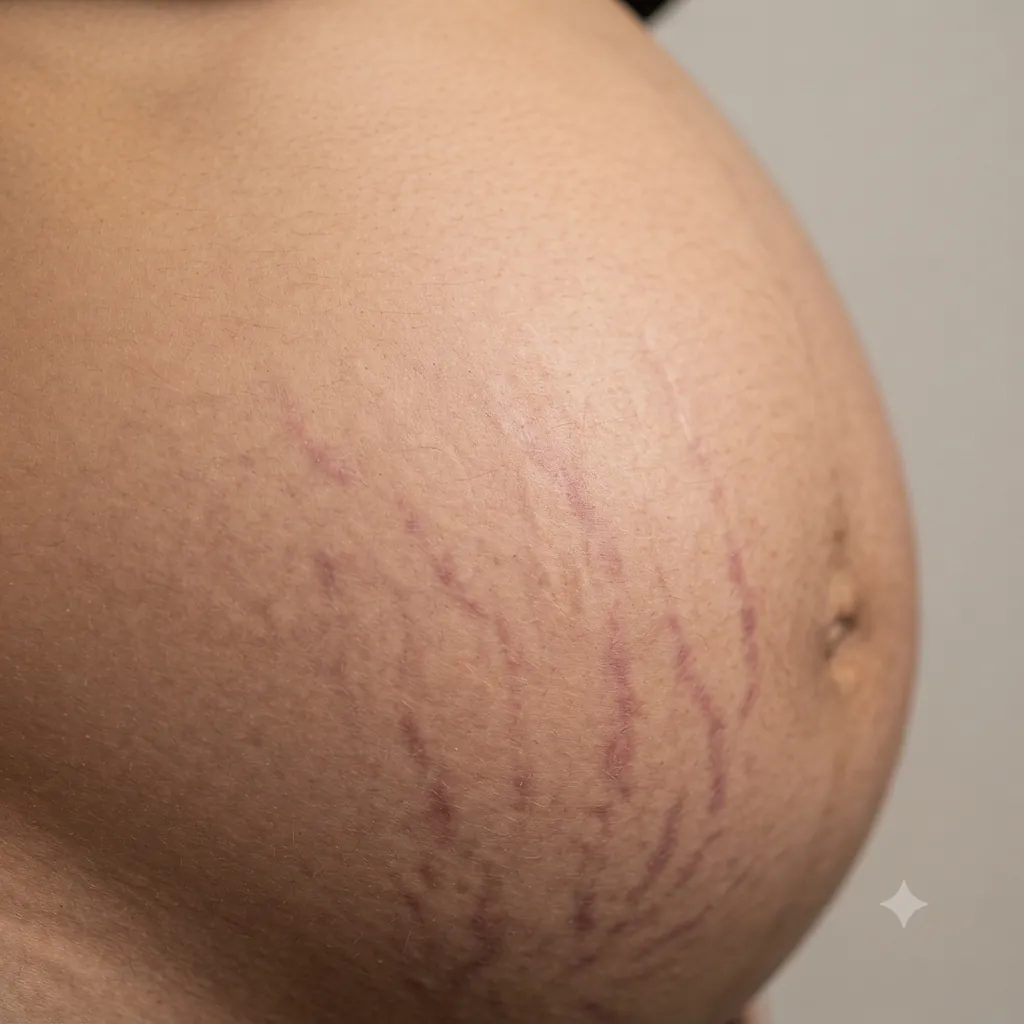
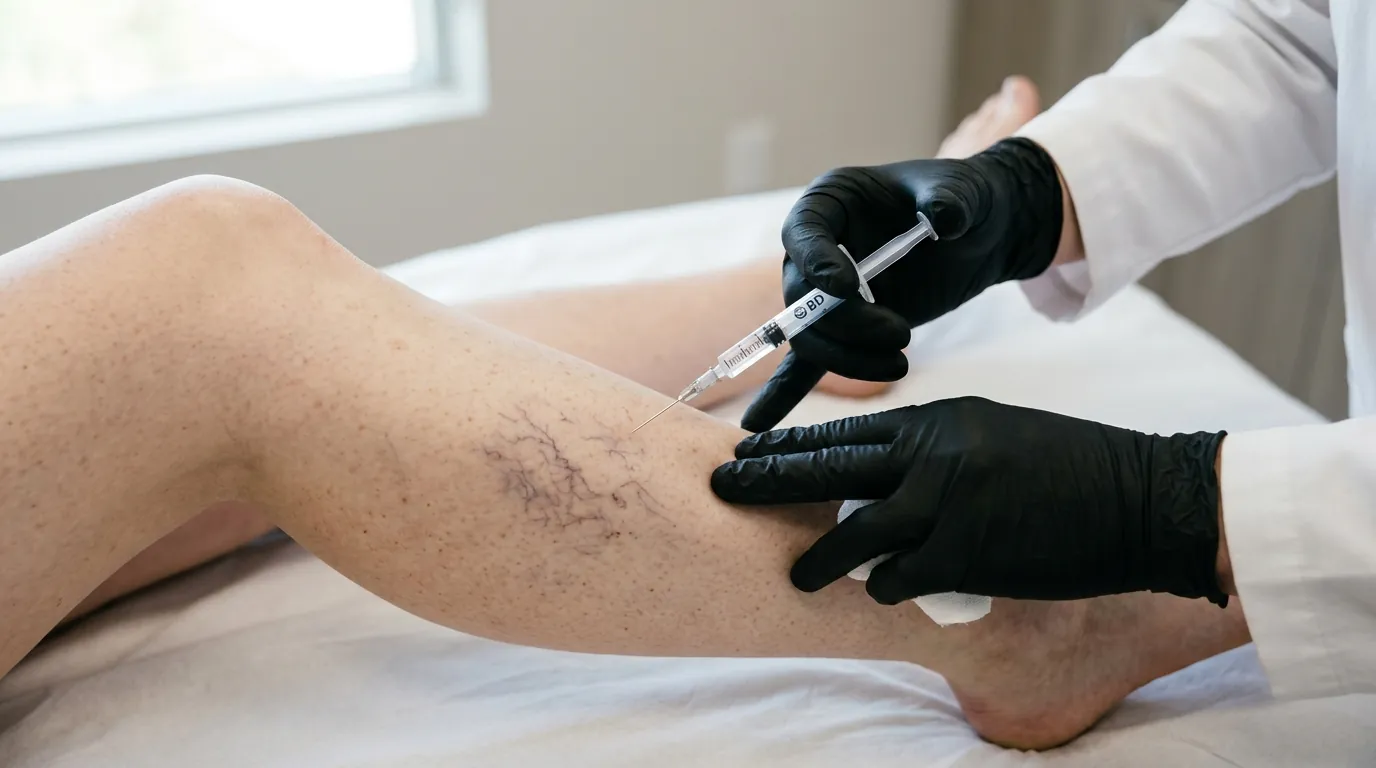
Spider veins are tiny blood vessels you can see through the skin. They are red, blue or purple threads that branch and web out from a central point. Stretch marks are scars left by skin stretching too fast. They are wider bands that run parallel, all pointing the same way, and they fade from purple to silver. Branching means veins and parallel stripes means stretch marks. Press on it: a spider vein goes pale and fills back in, and a stretch mark does not change at all.
What it is
Blood vessels close to the surface stretch open and stay open. They were always there. They are now wide enough to see.
The skin stretched faster than the collagen and elastin underneath could keep up with. Those fibres tore, and the mark is the scar that healed over the tear.
What it looks like
Hair-thin lines, less than a millimetre wide, that branch out from a point like a spilled web or a bare tree.
Two to ten millimetres across, with two clean edges, running side by side. New marks are pink, red or purple. Old ones are pale silver.
The pattern
Lines meet, split and cross each other. They spread outward in all directions from a centre.
Every mark points the same way, at right angles to the direction the skin was pulled. They do not cross.
What happens when you press
Push firmly with a fingertip and the colour empties out. Let go and it fills back in within a second or two, from the centre outward.
The colour does not shift under pressure. There is nothing inside a stretch mark to move.
Where it shows up
Legs first, especially the outer thigh and behind the knee. On the face they cluster on the nose and cheeks.
Thighs, hips, backs of the knees, stomach, breasts, upper arms and lower back. Growth spurts, weight changes and rapid muscle gain from lifting.
What it does over time
Existing spider veins do not fade. New ones tend to arrive over the years, especially in people who stand for work.
The colour fades a lot over one to two years. The texture change stays. A silver stretch mark is a settled scar that has become hard to see.
What treatment does
Sclerotherapy injects a solution that seals the vessel shut, and vascular lasers do the same with heat. Both work well on the legs. Treated veins do not come back, but new ones can form.
Prescription retinoids, vascular lasers and microneedling all help while a mark is still red. Silver marks improve very little.
When it needs a doctor
Spider veins on their own are a cosmetic matter. Aching, heavy legs, swollen ankles by evening, or skin around an ankle turning brown or hard is worth a check for a deeper vein problem.
Stretch marks are harmless. Marks that appear suddenly, are wide and purple, and come with weight gain around the middle are worth mentioning to a doctor.
Why they get confused on the thigh
A new stretch mark on the thigh is purple: So is a spider vein. On the outer thigh, where both are common, the colour on its own tells you nothing.
The layout separates them immediately: Spider veins spread like a crack in glass, with lines running off at every angle. Stretch marks line up like a barcode, all the same direction, evenly spaced.
Width is the other giveaway
A spider vein is thinner than a pencil line: Under a millimetre, and it varies along its length, getting thinner as it branches.
A stretch mark is several millimetres wide: It has a definite width that holds steady along the mark, and two edges you can see clearly.
What causes each one
Spider veins come from pressure inside small vessels: Standing for long periods, family history, age, sun damage on the face, and injury to the skin. Rosacea causes them across the cheeks and nose.
Stretch marks come from speed: Skin can stretch a long way slowly. It tears when it has to do it fast: a growth spurt, a quick weight change, fast muscle gain, or a long course of steroid creams or tablets.
Which one is easier to treat
Spider veins treat well: Sclerotherapy on the legs and vascular laser on the face both give a clear result, usually over two or three sessions. It is one of the more reliable cosmetic treatments there is.
Stretch marks treat partially: The red stage responds. The silver stage barely does. Expect a mark to become less noticeable rather than to disappear, whatever the advertising says.