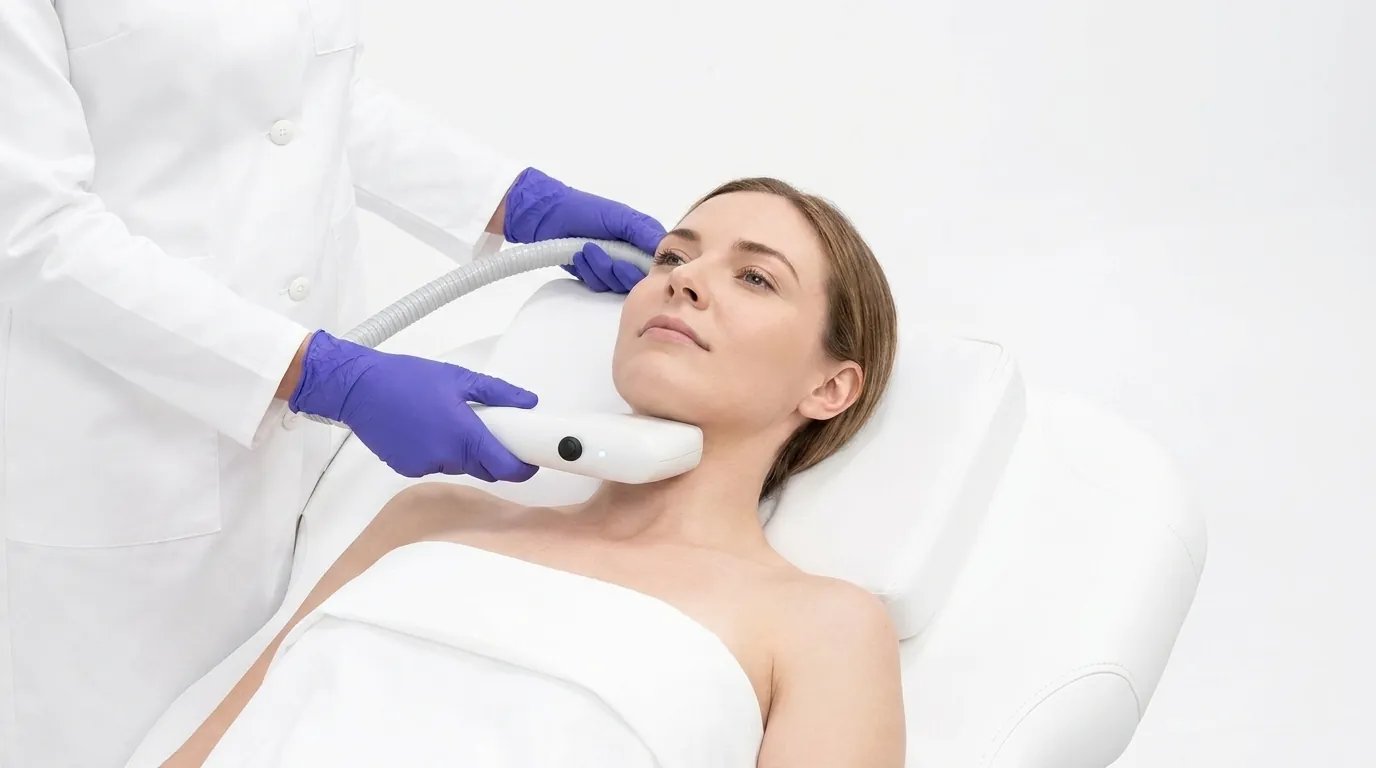
Ultherapy vs Fraxel
Ultherapy is for sagging. It focuses ultrasound to a point deep under the skin, never breaks the surface, and firms the brow, jawline and neck over a few months. Fraxel is for the surface. It puts columns of controlled heat into the skin to treat texture, acne scars, sun damage and lines, and it costs you several days of peeling. They do not treat the same problem, so plenty of people end up having both at different times.
What it does to your skin
The energy passes through the surface untouched and concentrates deep down, like sunlight through a magnifying glass. Tissue at that point heats and contracts.
The laser treats a fraction of the surface and leaves the skin between the columns alone. That untouched skin heals the rest.
How deep it goes
The deepest setting reaches the sheet of tissue below the fat that a surgeon tightens in a facelift.
Depth varies with the setting, but it works in the skin rather than beneath it.
What it is best at
It firms tissue that has started to drop. The change is real and modest.
Sunken acne scars, rough or crepey skin, fine lines and surgical scars.
What it will not do
Nothing breaks the skin, so there is no way to treat scars, pores or roughness.
Resurfacing changes the surface. Slack tissue underneath is a different problem.
What it feels like
This is the well-known drawback. Reports range from mild to the worst treatment a person has had, and the brow and neck are the worst of it.
Numbing cream first. The heat lingers for hours afterwards.
Downtime
Swelling, tenderness and sometimes bruising for a few days. Tingling or patchy numbness along the jaw can last a week or two.
Swelling and a bronzed, rough look for five to seven days. The strongest version removes surface skin and needs one to two weeks of wound care.
How many sessions
Repeated for maintenance rather than to finish the job.
The gentler setting is a course, four to six weeks apart.
How long until it works
The lift is collagen rebuilding, so nothing much shows on the day.
Skin looks brighter once the peeling ends. Scars and texture keep improving for months.
How long it lasts
Ageing carries on underneath. Most people who like it repeat every one to two years.
New collagen is real change. Sun exposure brings new pigment back sooner.
Skin tone
It heats tissue rather than aiming at colour, so it is reasonable across skin tones.
Any laser can leave a patch that heals darker. That is more likely on deeper skin tones, and it is managed with lower energy and longer gaps.
Cost
Ask for the price of the areas you actually want treated.
Ask what a full plan costs rather than one visit.
The at-home or drugstore version
Home ultrasound wands sold for tightening put a small fraction of the energy into the surface. They never reach the layer this device heats.
Home fractional wands reach only the very top of the skin at a fraction of the power. A nightly retinoid is slower than resurfacing and it genuinely works on texture and fine lines.
Who each suits
Lift or resurface
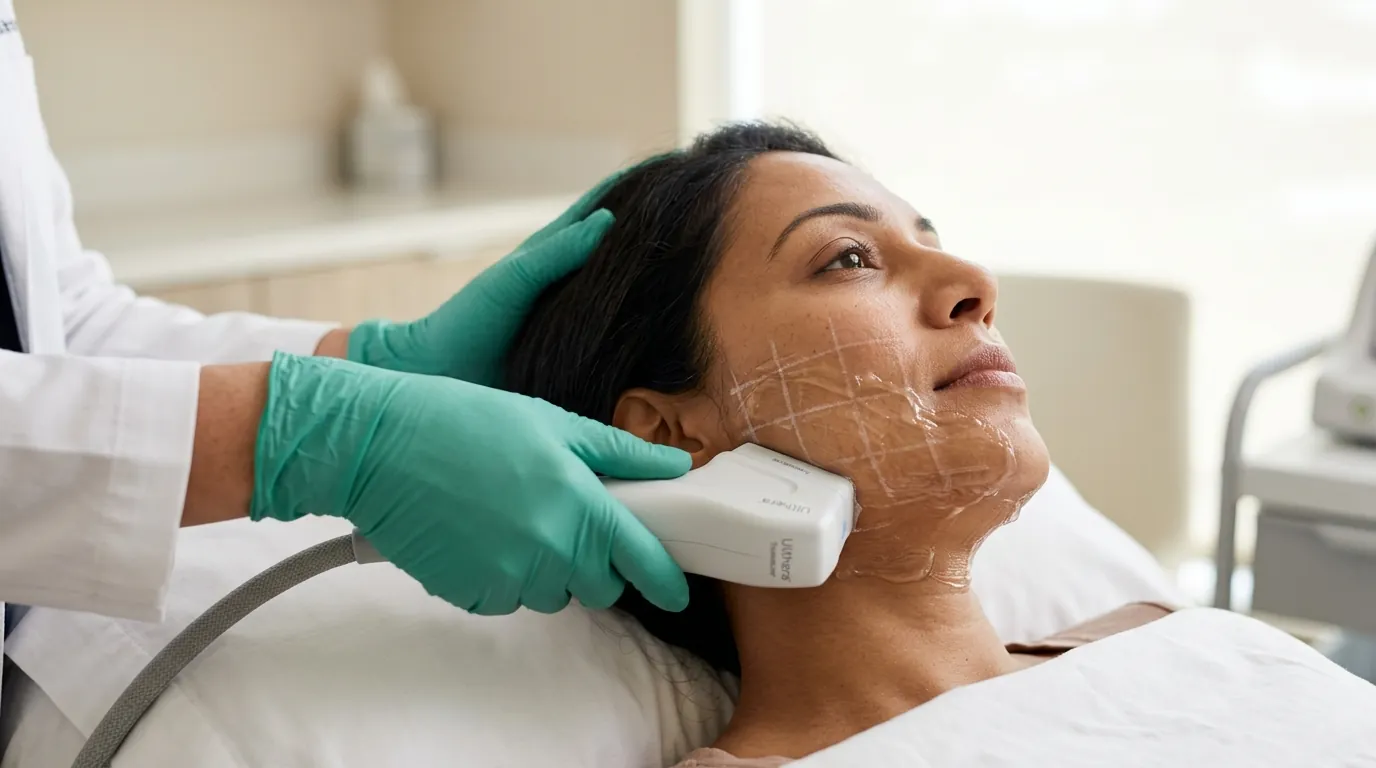
Ultherapy works below the skin and cannot touch the surface: The energy skips past the epidermis on purpose, which is exactly why there is no wound and no visible healing. It also means scars, pores and roughness are untouched.
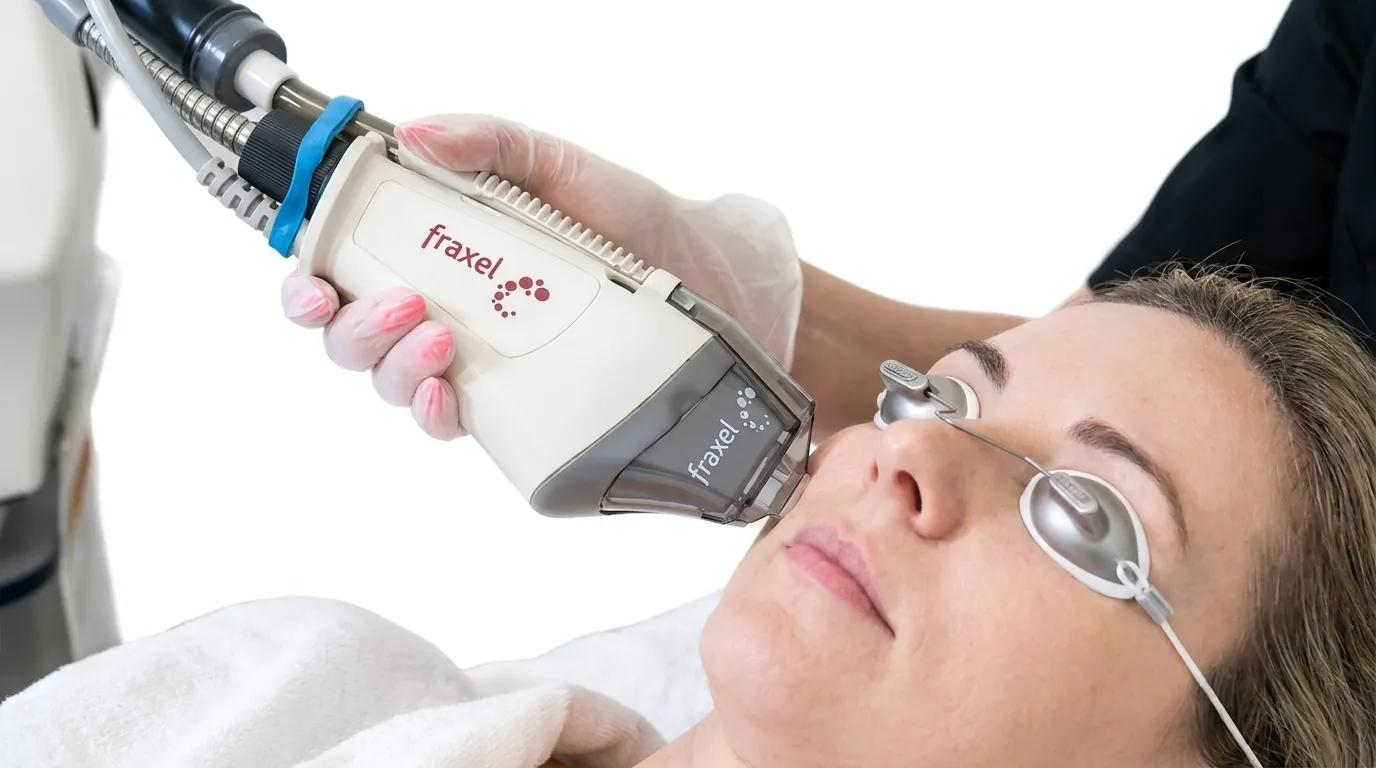
Fraxel works in the skin and cannot lift: It remodels the layers where texture and scarring live. Slackness sits deeper than it reaches.
So the question is which one describes your complaint: Sagging points one way. Surface quality points the other. No published trial has compared the two, which is unsurprising when they treat different problems.
Pain and downtime trade places
Ultherapy hurts during, and costs you nothing after: Most people go back to work the same day, sometimes swollen and sore. The discomfort is concentrated in the appointment itself.
Fraxel is manageable during, and costs you the week after: Numbing cream handles most of the session. The peeling is the part to plan around.
Neither pattern is better: Choose the one that fits the life you actually have.
"Fraxel" is a family, not one machine
The name covers several devices of very different strength: A clinic price list saying "Fraxel" does not tell you which week you are buying.
The gentler versions leave the surface intact: They heat columns under the skin and let it flake lightly, and they are a course.
The strongest one removes surface skin: It does far more in one session and asks for proper wound care afterwards.
Ask which one is planned before you compare prices: Two clinics quoting the same brand may be offering very different treatments.
Before you book
Point at what bothers you in a mirror. Slackness and surface texture are treated by different machines.
With Fraxel, ask which device and which setting, and why that one.
With Ultherapy, ask what pain relief is offered and say how much you are willing to take.
Ask for the total cost of the plan, not the price of one visit.
Mention melasma, active acne, recent isotretinoin or a history of cold sores before any laser.