Ultherapy vs Sculptra
Ultherapy is for skin that has gone slightly loose. Focused ultrasound heats tissue under the skin so it firms over the following months, with no needles and no time off. Sculptra is for a face that has gone hollow. It is injected, and it rebuilds volume by prompting your own collagen across a course of visits.
What it is
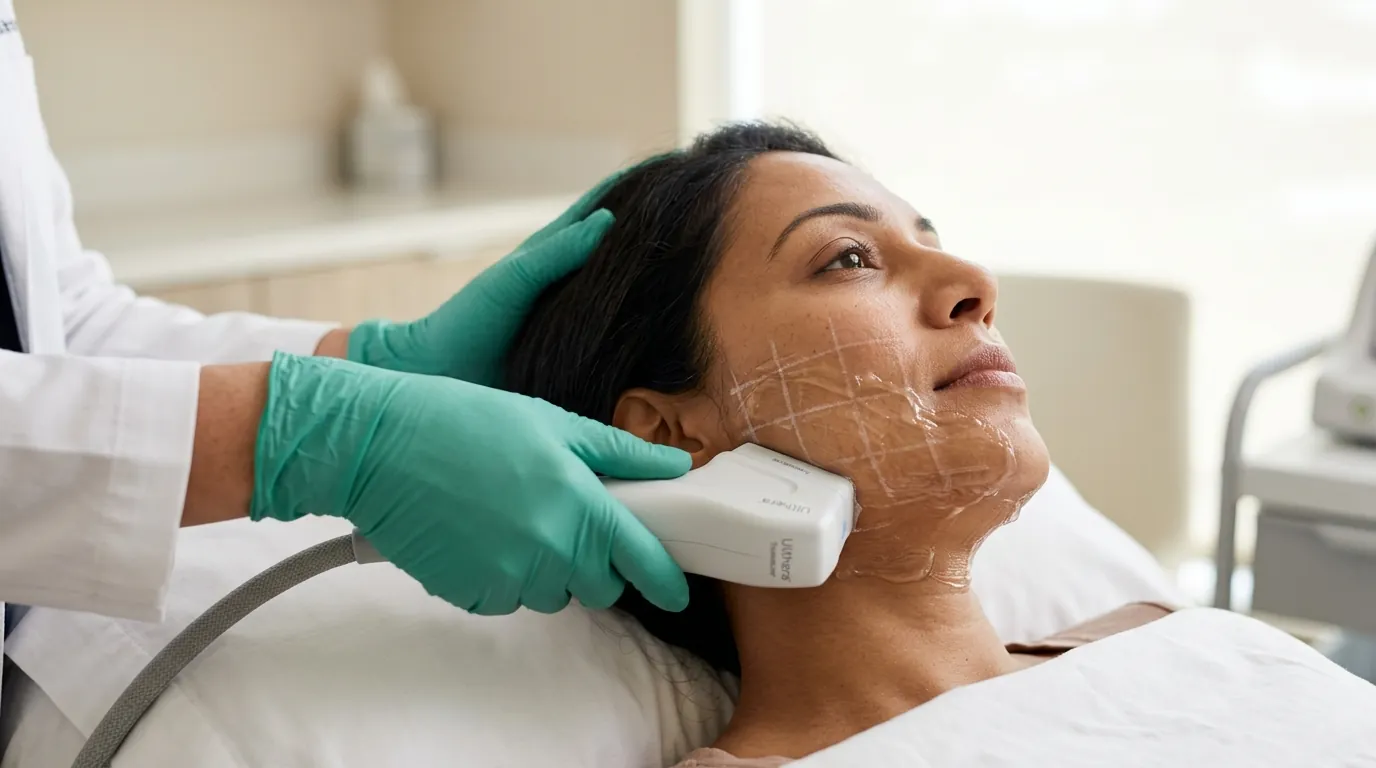
A handpiece delivers heat to set depths below the surface. Nothing is left behind in the tissue.
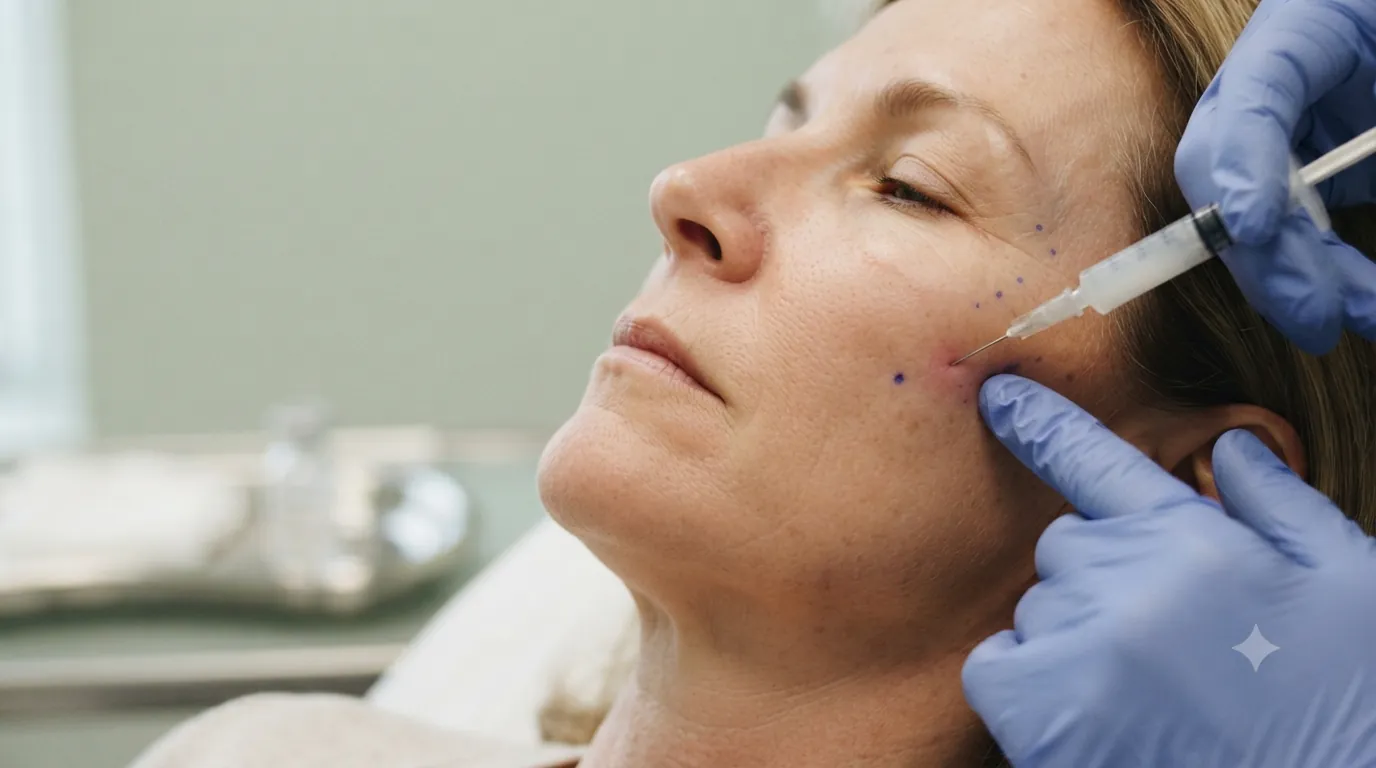
Poly-L-lactic acid, the same material used in dissolvable stitches, spread thinly under the skin.
What problem it fixes
Skin that is starting to soften along the jaw, under the chin or on the brow.
Hollow cheeks, flat temples and a face that has thinned everywhere at once.
What happens on the day
You lie still while the handpiece passes over the face and neck. It is uncomfortable in short bursts, and you go straight back to your day.
Numbing first. Many injectors then ask you to massage the area for five minutes, five times a day, for five days.
When you see the result
Almost nothing happens on the day. Collagen builds slowly, so you judge it at three months.
How many visits
Many people repeat it every twelve to eighteen months to hold the effect.
Spaced about a month apart. It is a course, not an appointment.
How long it lasts
It does not stop the skin ageing. It sets the clock back a little.
The particles break down over that time and leave the collagen behind.
Downtime
Some redness, tenderness and mild swelling for a day or two.
Bruises at the injection points are common and cover easily.
Can it be undone
No material is placed, so there is nothing to dissolve. There is also no way to reverse the tightening if you dislike it.
There is no antidote. A result you dislike has to be waited out, and the wait runs into years.
The main risk to know
Heat can shrink fat in the treated area, which some people notice as hollowness. Nerve irritation causing temporary numbness or a weak smile is reported and usually settles.
Uncommon, and they can appear months later. Spreading the product widely and massaging afterwards is what prevents them.
Cost
Because it is repeated every year or two, work out the cost over five years.
Ask what the whole plan costs, not what one session costs.
The at-home or drugstore version
Devices sold online use the same words but a fraction of the energy, and they cannot focus it at the depth the clinic device reaches. They warm the surface.
No cream carries poly-L-lactic acid down to the layer where collagen is built. Collagen drinks and collagen creams borrow the word.
Who each suits
Loose or hollow is the question to answer first
Pinch the skin along your jaw and lift it gently: If lifting is what gives you the face you want, looseness is your problem and Ultherapy is the treatment aimed at it.
Now press your cheek where it looks sunken: If filling that dip is what you want, volume is your problem and Sculptra is aimed at that.
Most faces have some of each, which is why people are told both: The useful question in a consultation is which one bothers you more, not which product the clinic prefers.
Both build collagen, but they do different things with it
Ultherapy heats tissue so it contracts, and new collagen firms it further: The result is a modest tightening of what you already have.
Sculptra leaves a material that your body builds collagen around: The result is added thickness and volume where the face had thinned.
That is why one cannot stand in for the other: Tightening a hollow face can make the hollow more obvious, and adding volume to loose skin usually looks heavy rather than lifted.
Managing expectations on both sides
Ultherapy gives a modest change, and it varies between people: Two people can have the same treatment and get different amounts of firming, because it depends on how much collagen each body makes.
Sculptra is also unpredictable in its own way: It is dosed across a course precisely because the injector adjusts as they see how you respond.
Neither one competes with surgery: If skin has clearly dropped, a device and a syringe are both the wrong tool, and a surgical consultation is the cheaper conversation to have first.
What neither one does
Neither one softens a frown line or crow's feet: Those lines come from muscle movement, and botulinum toxin is the treatment that works on muscle.
Neither one improves texture, pores or pigment: Those are treated with resurfacing, peels or topical medicines.
Before you book
Decide whether your complaint is looseness or hollowness, and say that word in the consultation.
Ask to see before-and-after photos of that practitioner's own patients at your age.
Ask what result they expect for you specifically. "A modest tightening" is an honest answer for Ultherapy.
Ask how many sessions the plan involves and what the total will cost.
Bring a photo of yourself from a few years ago rather than a photo of someone else.