Ultraformer vs Ultherapy
These are two machines doing the same job. Both focus ultrasound to make heat several millimetres under the skin, so your body rebuilds collagen there. Ultherapy is the original and has the longer published record. It is slower, more painful and usually dearer. Ultraformer is quicker, easier to sit through and cheaper, with more depth settings and much less published evidence. No trial has compared them directly.
What it is
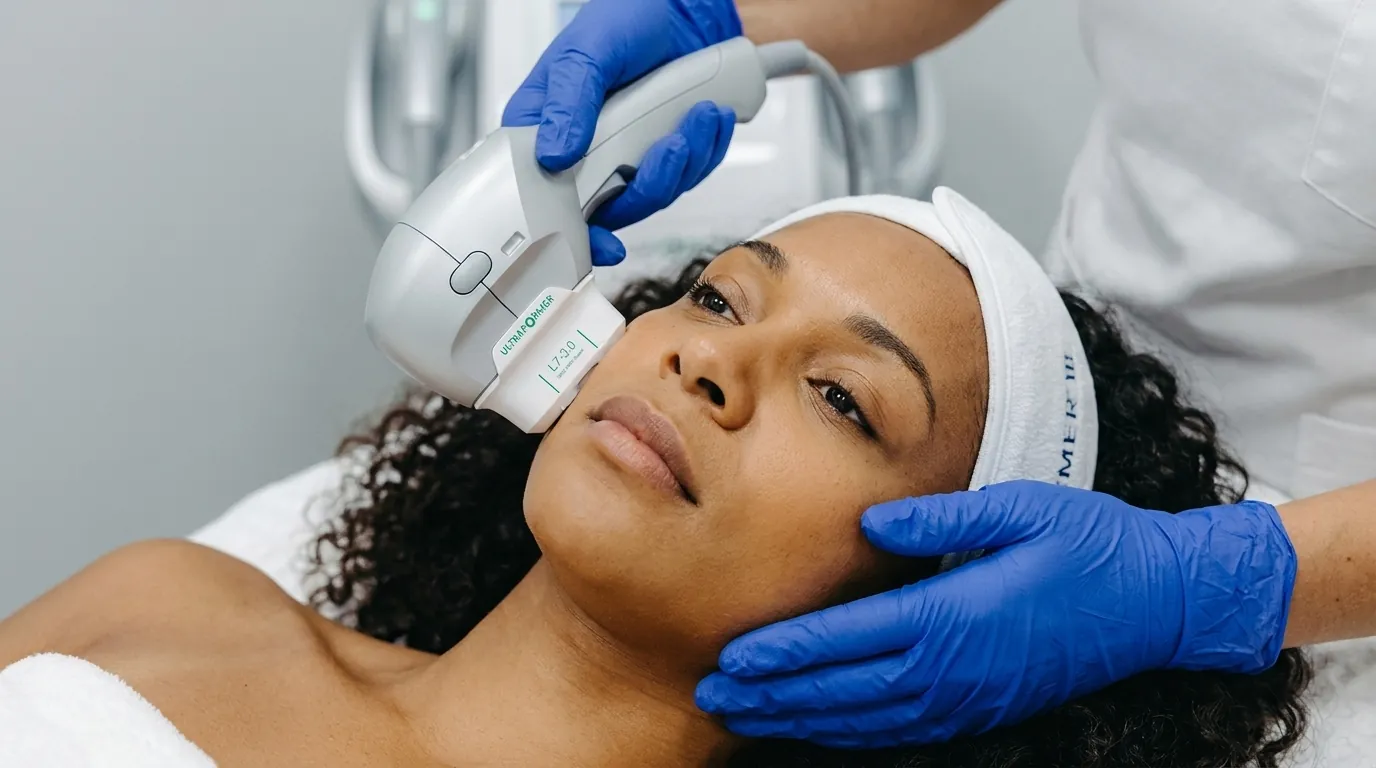
A Korean-made HIFU device. Different cartridges set different depths, so one session can treat several layers.
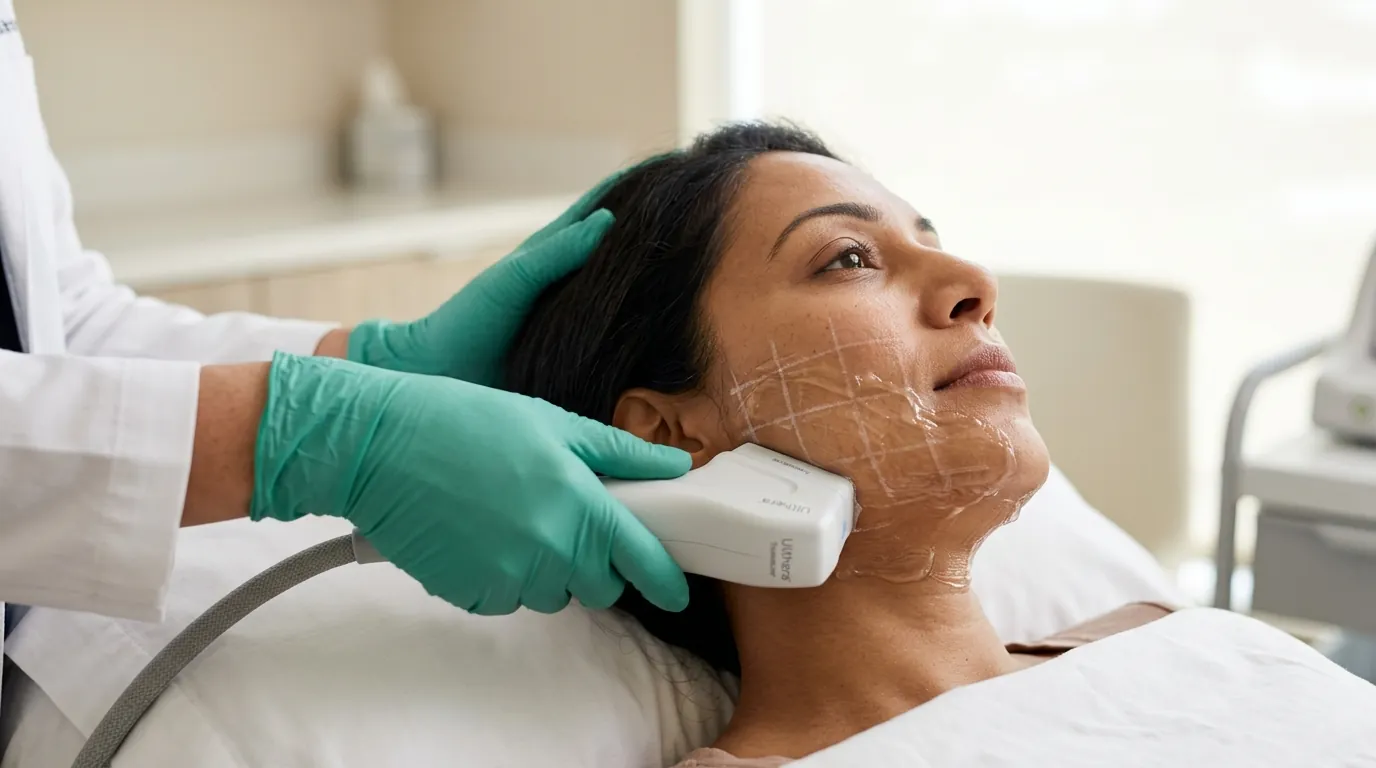
The first machine of its kind. The operator sees the tissue on a screen and places the energy in the layer they are aiming at.
How deep it goes
Commonly 1.5, 2, 3 and 4.5 mm, with a body cartridge for deeper work.
About 1.5, 3 and 4.5 mm. The deepest reaches the layer below the fat that supports the lower face.
What you should see
The same aims: a cleaner jawline, a firmer neck, a slightly lifted brow.
The lift claim rests on more published work than any other machine in this category.
What it will not do
What it feels like
Energy is delivered in smaller, faster pulses, which most people find easier. Numbing cream is usual.
Bigger pulses at each point. Many clinics add oral pain medicine, and some people rate it the most painful treatment they have had.
How long it takes
How long until it works
Some tightening in the first weeks, then a slow build.
Occasionally a small lift on the day, but the real change is the collagen.
How long it lasts
Downtime
Pinkness and mild tenderness for a day or so.
Swelling and tenderness for a few days. Patchy numbness along the jaw can last a week or two.
Cost
The at-home or drugstore version
Home ultrasound wands do not focus. They spread a fraction of the power across the surface.
The gap is the same. Nothing sold for home use heats tissue several millimetres down, and a device that could would not be safe untrained.
Who each suits
They work the same way
Both focus ultrasound to a point below the skin: Everything above the focus is left alone. At the focus, the tissue reaches a temperature that makes it contract, and the repair that follows lays down new collagen over the next few months.
Both aim at the deep layer for lift: That is the fibrous sheet beneath the fat which a surgeon tightens in a facelift. Reaching it is why either treatment can claim lift rather than firmness alone.
Neither one breaks the skin: That is why there is nothing to hide afterwards with either.
The differences that actually matter
Ultherapy shows the operator what they are treating: Its screen displays the tissue layers, so the energy can be placed rather than assumed. That is the clearest technical difference between the two.
Ultraformer offers more depth settings in one session: Swapping cartridges lets an operator treat shallow and deep layers in the same appointment.
Ultraformer is faster and easier to sit through: Smaller, quicker pulses mean less pain per point, and a full face is often done in well under half the time.
Ultherapy has far more published research: Ultraformer studies exist but are fewer and smaller. That gap is about evidence, not proof that one works better.
Availability shapes the choice more than anything
Ultherapy is the machine most US clinics own: If you are in the United States, that may be the only one you are offered.
Ultraformer is widely used in Asia, Australia, the Middle East and parts of Europe: In those markets it is often the cheaper default, and Ultherapy is the premium option.
So the real decision is usually local: Compare the clinic and the operator in front of you, not the two brand names in the abstract.
The risks worth knowing
Both are low risk in trained hands: Redness, swelling and tenderness are common with either and settle within days.
Both carry the same small risks from working deep: Temporary numbness or tingling along the jaw is the usual version. Rarely a nerve is irritated enough to cause a few weeks of weakness or a drooping lip, and it recovers.
A very slim face is the one to flag: Deep heating affects fat as well, and in a face with little to spare that can leave a hollow look. Say so if you are naturally very thin.
Before you book
Ask which machine it is, and ask to see it. "HIFU" on a price list tells you nothing.
Ask how many lines of energy are planned for each area, and get the number in writing.
Ask what pain relief is offered, and say how much you are willing to accept.
Ask to see the clinic's own before-and-after photos, taken in the same light and at the same angle.