Wart vs Basal Cell Carcinoma
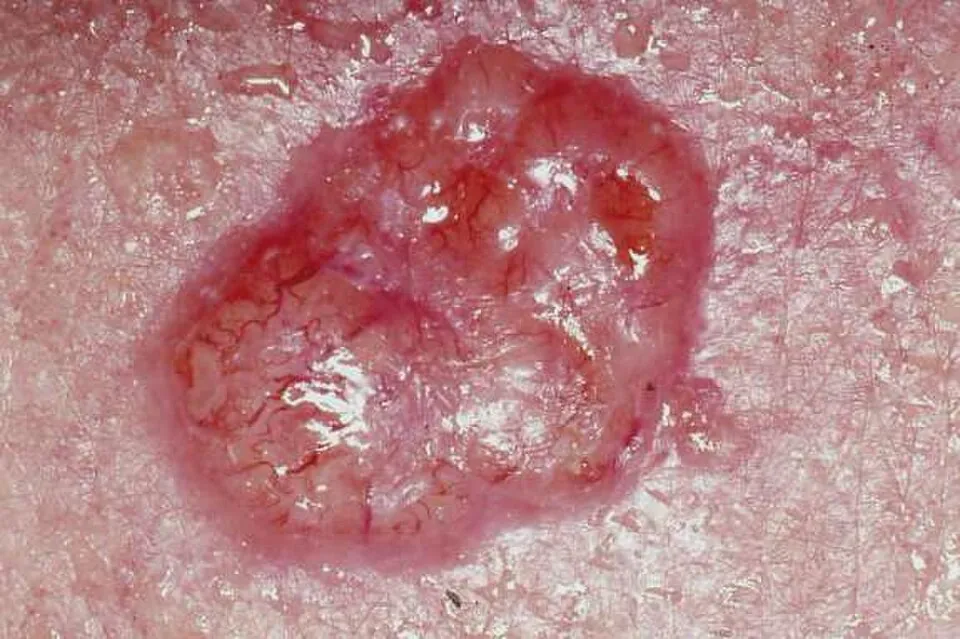
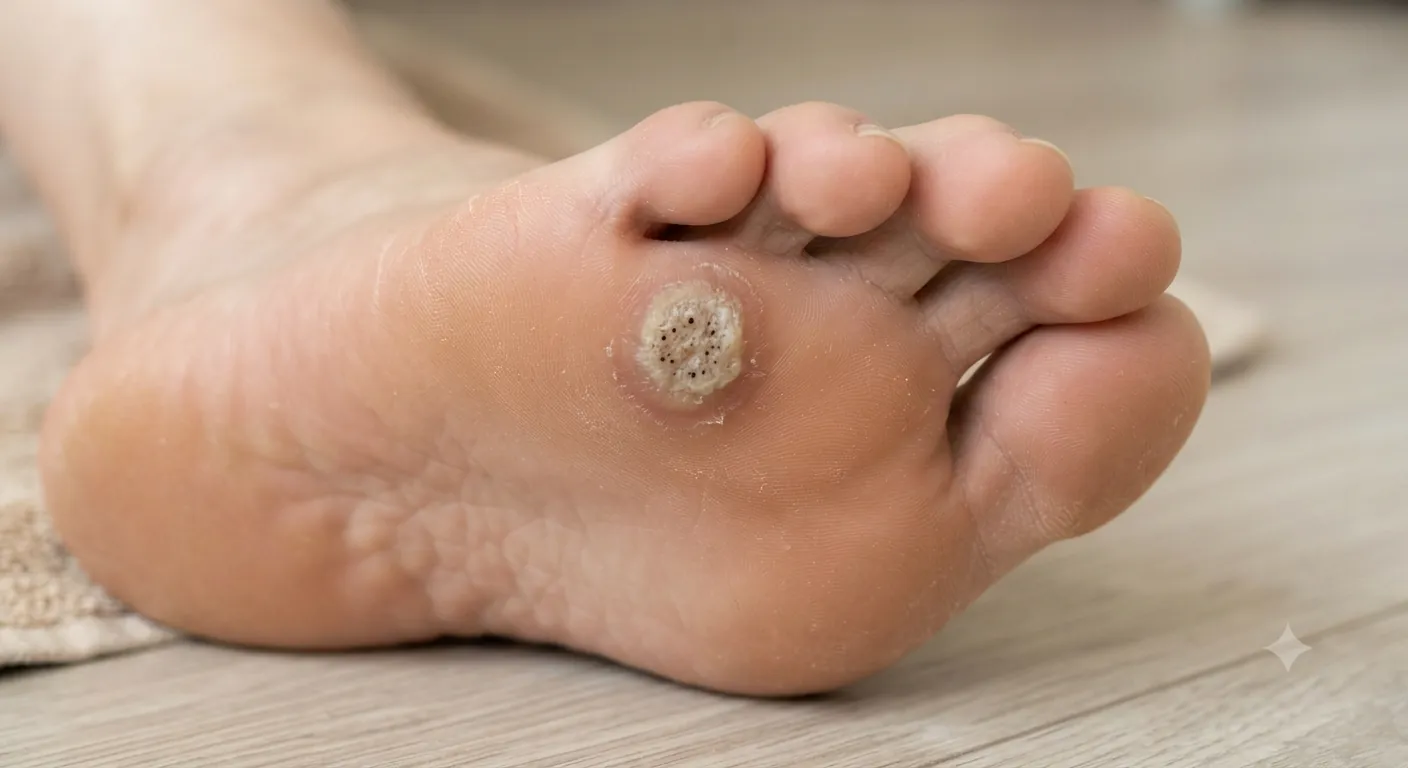
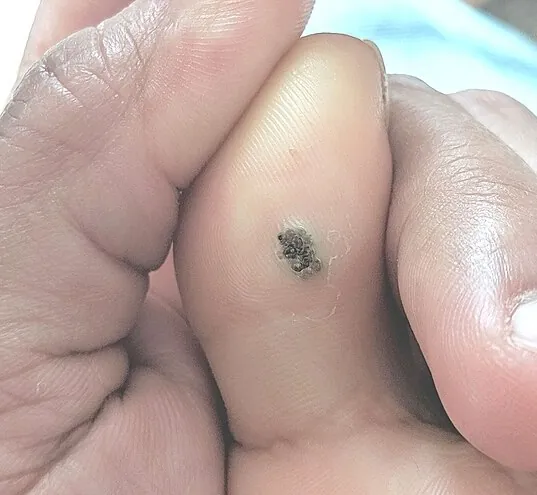
A wart is a virus growing in the top layer of skin. It is rough and grainy on top, and most have tiny dark dots inside them. A basal cell carcinoma is a slow-growing skin cancer. It looks pearly or waxy rather than rough, often with fine blood vessels running across the surface, and it scabs and bleeds without ever fully healing. Rough with dark dots points to a wart. Shiny, and it keeps scabbing in the same spot, points to a basal cell carcinoma.
What it is
A human papillomavirus gets in through a small break in the surface. It makes the skin cells there grow faster, and that thickened growth is what you see.
Cells at the base of the outer layer stop responding to the signal to stop. Years of sun damage are the usual cause. It grows outward and downward into the skin.
What it looks like
Cauliflower-like on top, with a thickened rim. Most have tiny black or dark red dots inside, which are small blood vessels feeding it.
A raised bump with a glossy or waxy look, sometimes with a dip in the middle and a rolled edge. Fine threadlike vessels run over the surface. It can also look like a pale flat scar.
Size
It starts small and thickens over weeks. Several can join into one larger patch.
Slow, but it never stops and it never shrinks. Left for years it can do real local damage.
Does it heal
The immune system usually clears the virus in the end. In children that takes months to two years, and adults tend to take longer.
It scabs, looks better for a week or two, then breaks down in the same place. That repeating cycle is the most reliable warning sign it gives.
Where it shows up
Backs of the hands, around the fingernails, knees and the soles of the feet. Warts also turn up on the face, where they look flatter.
Skin with years of cumulative sun on it. The nose is the single most common site. Also the neck, shoulders and backs of the hands.
Is it contagious
The virus spreads by skin contact and damp shared floors. It also spreads on your own body, so picking or shaving over a wart moves it.
Cancer is not catching. You cannot pass a basal cell carcinoma to anyone, and you did not get it from anyone.
When it needs a doctor
Warts are harmless and often clear without treatment. Worth a visit if drugstore treatment has failed for months, or if a wart is on the face.
A growth that keeps scabbing and bleeding, or a sore still there after four weeks, should be looked at by a dermatologist. Most turn out to be harmless. These are far easier to treat while they are small.
Texture is the first test
A wart feels like fine sandpaper: Draw a fingertip across it and the surface is dry and grainy, with a hard thickened rim around the edge. The skin lines of your fingerprint stop at the wart and pick up again on the other side.
A basal cell carcinoma feels smooth: The surface is taut and slightly glossy, like a small bead of wax. If part of it has broken down, that area is crusted, but the edge around it is still shiny and raised.
The dots and the vessels are different things
The dark dots in a wart sit inside it: They are pinpoint, black or dark red, scattered through the thickened area. People call them seeds. They are the ends of tiny blood vessels, and they are the single most useful sign that a growth is a wart.
The vessels on a basal cell carcinoma sit on top of it: They are fine red threads that branch and run across the surface, not dots. You often need good light and a stretch of the skin to see them.
Location changes the odds
Warts are common on hands and feet: That is where the skin gets small breaks and where the virus meets it. A rough lump on a knuckle or a sole is very likely a wart.
Basal cell carcinoma is a sun-exposed skin problem: Nose, ears, cheeks, scalp, neck. It is uncommon on the soles of the feet and between the toes, so a rough growth there is far more likely to be viral.
Why the mix-up matters
Treating a wart at home is reasonable: Salicylic acid daily, with filing between applications, is the usual first step and it takes weeks to months. Freezing in a clinic is the common next move.
Treating a basal cell carcinoma at home is not: Salicylic acid, freezing kits and wart plasters do not remove a cancer. They damage the surface, hide what is underneath, and buy the growth more time. That is the real cost of confusing the two.
A biopsy answers it: A small sample under local anaesthetic tells a lab exactly what the growth is made of. It is a short appointment and it ends the guessing.