Warts vs Molluscum
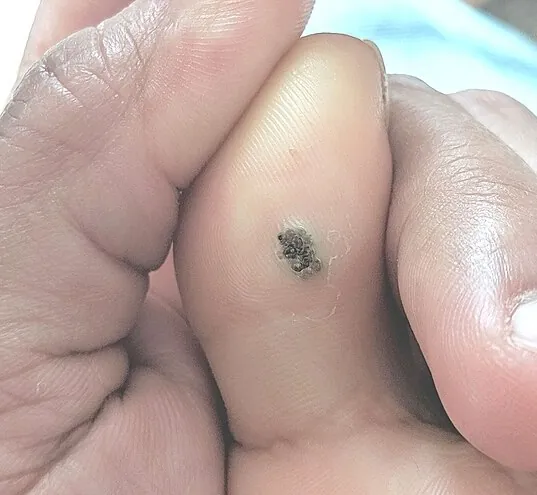
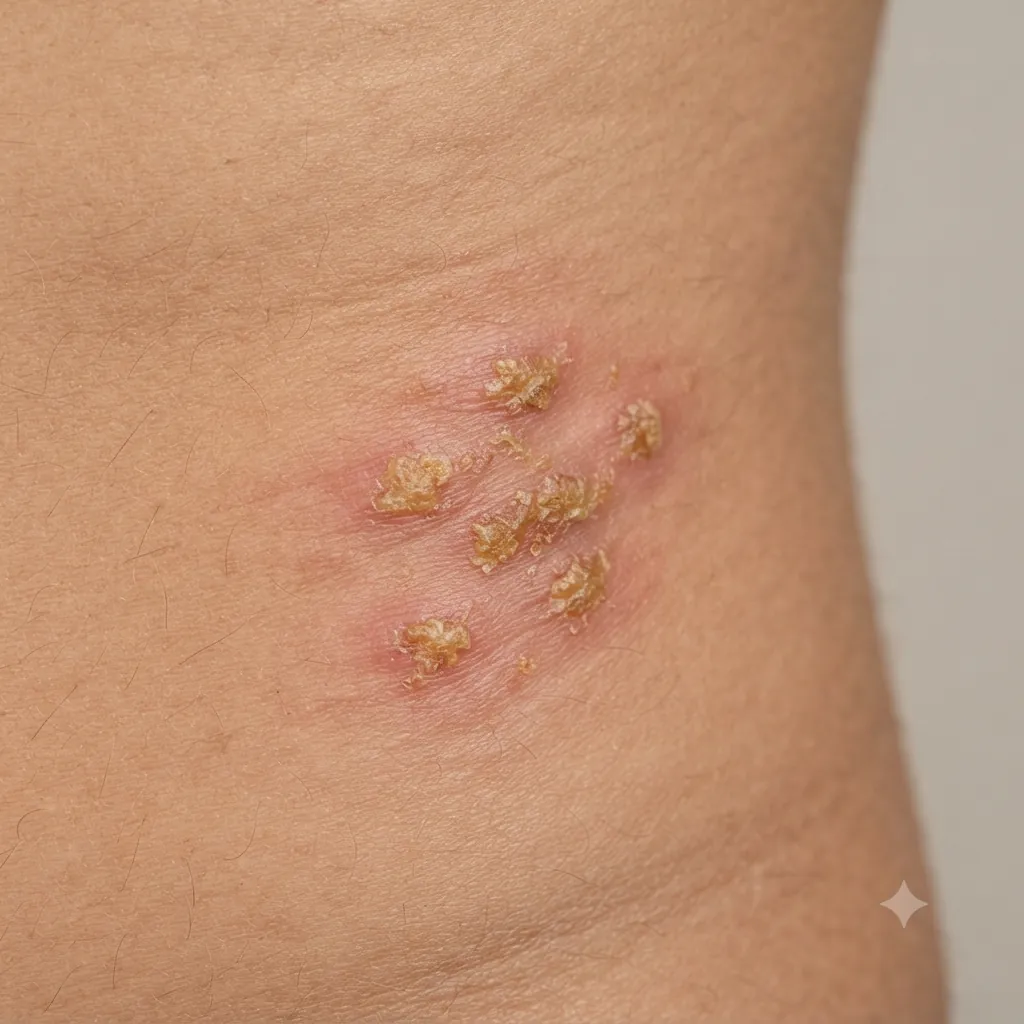
A wart is a rough skin growth caused by a human papillomavirus, or HPV. The surface feels like fine sandpaper, and most warts have tiny dark dots inside. Molluscum is a different virus that makes small round bumps. They are smooth, pearly and dome-shaped, and most have a tiny dimple in the middle. Run a fingertip over it: rough points to a wart, smooth points to molluscum.
What it is
A human papillomavirus gets into the top layer of skin through a small break. It makes the skin cells there grow faster. That extra growth is the lump you can see.
A virus from the pox family infects the same top layer. Instead of thickening the skin, it fills each bump with a soft white core.
What it looks like
The surface is dry and grainy, with a thickened rim around it. Most warts have tiny black or dark red dots inside. Those are small blood vessels that have clotted.
Skin-coloured or slightly pink, shiny and firm. The small pit in the middle is the most useful sign. It is hard to see on a bump under two millimetres.
Size
One wart starts small and thickens over weeks. Several can join into a single larger patch.
Each bump stays about the size of a pinhead or a small bead. What grows is the number of bumps, not the size of them.
Does it hurt
Warts on the hands are painless. A wart on the sole of the foot takes your body weight and can feel like standing on a stone.
Molluscum can itch, and a scratched bump turns red and sore. That red ring often means the bump is finally clearing.
Where it shows up
Backs of the hands, around the fingernails, knees, and the soles of the feet.
Chest, tummy, sides, armpits, the crooks of the elbows and the backs of the knees. Face and neck in small children.
What it does over time
The immune system does get there in the end. Children often clear warts within two years. Adults usually take longer.
New bumps keep appearing while old ones fade, so the crop looks endless for a while. Then it stops.
How it is treated
Daily salicylic acid with gentle filing between applications is the usual first step. Freezing with liquid nitrogen in a clinic is the common next step, over several visits.
Most children are left to clear on their own, because the bumps go anyway and the treatments sting. A clinician can scrape or freeze single bumps that are bothersome.
When it needs a doctor
Worth a visit if a growth bleeds without being knocked, changes colour or shape, spreads despite months of drugstore treatment, or sits on the face.
Worth a visit if bumps are on the eyelid, if one becomes hot and swollen with spreading redness, or if you are not sure what you are looking at.
Texture is the fastest test
A wart is rough: Draw a fingertip across it and it feels dry and grainy, like fine sandpaper, with a raised rim at the edge. The dark specks people call seeds are not seeds. They are tiny clotted blood vessels, and they are the strongest sign that a bump is a wart.
Molluscum is smooth: It feels like a small firm bead with normal skin over the top. Stretch the skin around one and the central dimple usually shows. That pit is where the soft core sits.
Both spread, and both spread the same way
Warts move on contact and on damp shared surfaces: Pool decks, changing room floors and shared files carry the virus. They also travel on your own body, so picking or shaving over a wart can move it to new skin.
Molluscum moves on contact too, plus shared towels and bath water: Brothers and sisters often catch it from each other. Scratching one bump and then scratching normal skin is how a child ends up with a line of them.
Why molluscum is usually left alone
Molluscum ends by itself, so the goal is to avoid a scar: Freezing, scraping and acid all work, but each one can leave a small mark, and there may be thirty bumps. Most clinicians treat only the few that are irritated or in the way.
Warts are treated more often, because they last longer: A hand wart can sit for years, and treating it shortens that. Salicylic acid used daily, with filing between applications, is the part most people give up on too early.
Neither one is a sign of anything wrong
Both are ordinary childhood infections: Molluscum in particular is most common between the ages of two and five, when immune systems are still learning and children are in constant physical contact.
A very large crop is worth mentioning to a doctor: Hundreds of bumps, or bumps that keep coming for years, can be a reason to look at the immune system. That is uncommon.