Witch Hazel vs Alcohol
Witch hazel is a plant extract that degreases and tightens skin. Most drugstore bottles are about 14% alcohol, so it is a gentler version of the same idea. Rubbing alcohol is a disinfectant. Its job is killing germs on surfaces and on skin before a needle, and it is far too harsh to use as a face product.
What is in the bottle
An extract from the bark and leaves of the witch hazel shrub, rich in tannins. Standard drugstore witch hazel is distilled and sits at around 14% alcohol.
Alcohol and water, and nothing else. The 70% version kills germs better than the 91% one, because it needs some water to do the job.
What it does on skin
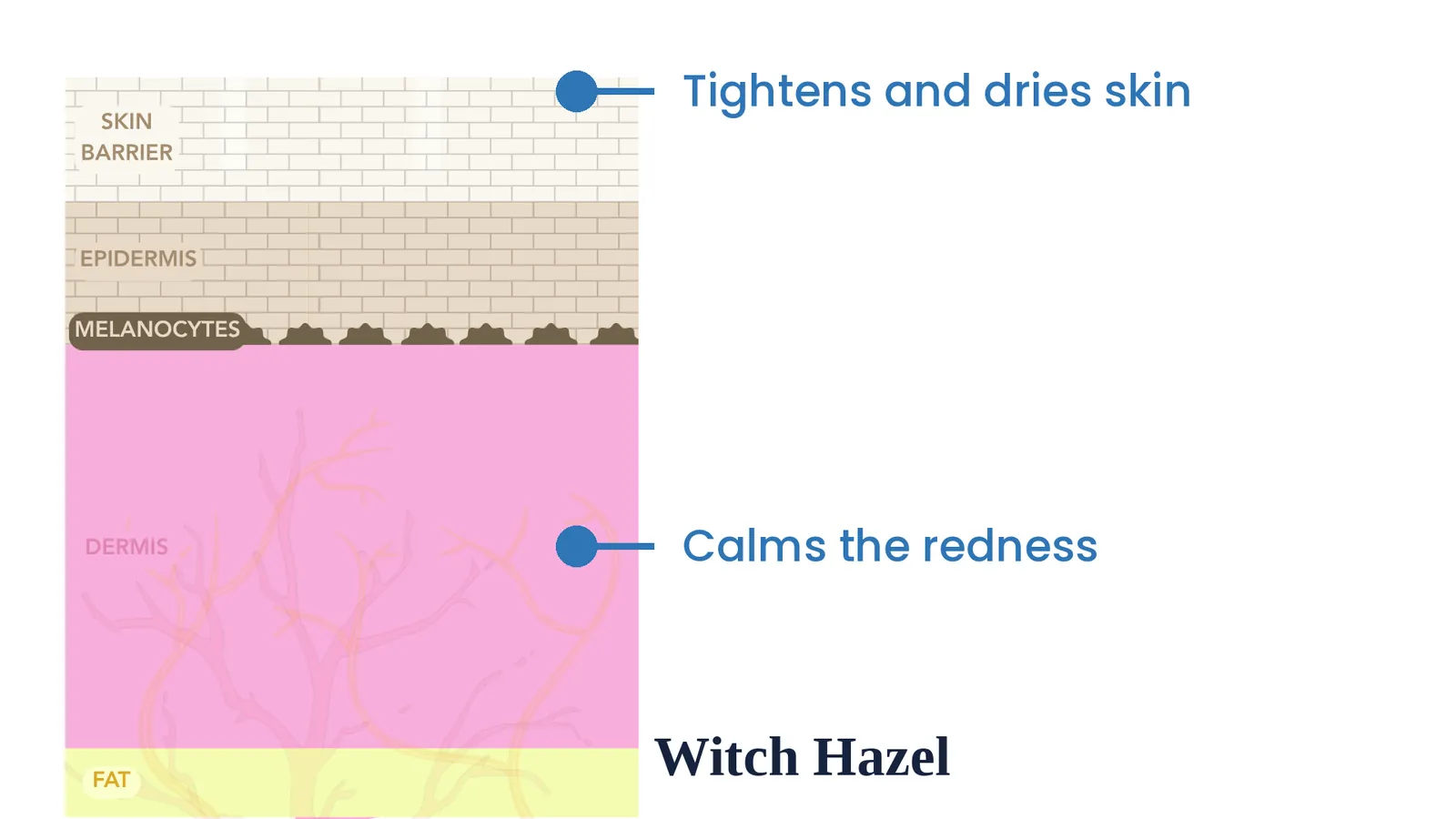
Tannins make skin feel taut and briefly shrink the look of pores. The alcohol takes surface oil away with it.
It kills bacteria on the surface within seconds, and removes nearly all the oil at the same time.
What it will not do
Wiping it over unwashed skin leaves the makeup and the sunscreen behind. It is a step after cleansing, not a cleanser.
A pimple forms below the surface, inside the follicle. Surface germs are not the problem, so dabbing alcohol on a spot does nothing for it.
Is it safe on your face
Some people with oily skin tolerate it a few times a week on the T-zone. Dry, sensitive, rosacea-prone or eczema-prone skin usually does not.
It is far too strong for facial skin. Daily use strips the barrier, causes flaking and stinging, and can leave the skin oilier than it started.
On a cut or a graze
It is not a wound antiseptic and it will not sterilise anything.
Alcohol on an open wound stings badly and damages the cells trying to heal. Rinse a graze under running water and use plain soap around it.
What it is genuinely good for
A short-lived matte finish on an oily T-zone, and cooling relief on insect bites, razor burn and hemorrhoids, which is where most witch hazel is actually used.
Wiping down phones, tweezers, nail tools and thermometers, and cleaning skin right before an injection or a finger-prick test.
The downside
Daily use of the alcohol version is the usual cause. Tight skin gets read as clean, when it usually means the barrier has just been stripped.
It removes the fats that hold water in the skin. It also evaporates fast, dries out in an open bottle, and is flammable.
Cost
One of the least expensive products in any pharmacy, and a bottle lasts months.
Sold in larger bottles for less money.
Witch hazel usually is alcohol, partly
The two are less different than the labels suggest: Standard drugstore witch hazel is distilled with alcohol and lands at roughly 14%. That is far less than rubbing alcohol, but it is the same ingredient doing much of the same work.
That is why witch hazel feels the way it does: The alcohol evaporates in seconds, takes surface oil with it, and leaves skin matte and tight. People read that feeling as clean.
Alcohol-free witch hazel exists and is worth looking for: It keeps the tannins and drops most of the sting. If you like using witch hazel, that is the version to buy.
Being fair to witch hazel
Witch hazel does a few things genuinely well: Tannins are mildly astringent and mildly anti-inflammatory. On an insect bite, on razor burn, on hemorrhoids, or on an oily T-zone before makeup, a witch hazel pad is cheap, easy and soothing.
What it does not do is treat anything: It will not clear acne, shrink pores for good, or replace a cleanser, a moisturizer or sunscreen. Sold as a toner, it is an optional extra step.
Used every day on a whole face, it usually backfires: Stripped skin flakes, stings, and can produce more oil in response, which is the opposite of the goal. A few times a week on oily areas is plenty for anyone.
What rubbing alcohol is actually for
Rubbing alcohol is a disinfectant, not a skincare product: It kills germs quickly on a hard surface or on intact skin just before a needle goes in. It does that job extremely well.
Using it as a toner does real damage: It removes the fats that hold water in the outer layer, so the barrier stops working. That shows up as flaking, stinging, redness, and skin that suddenly reacts to products it used to tolerate.
On a wound it does more harm than good: It hurts, and it damages the cells doing the healing. Clean running water and gentle soap around the edges are the standard advice for a graze.
If acne is the reason you are asking
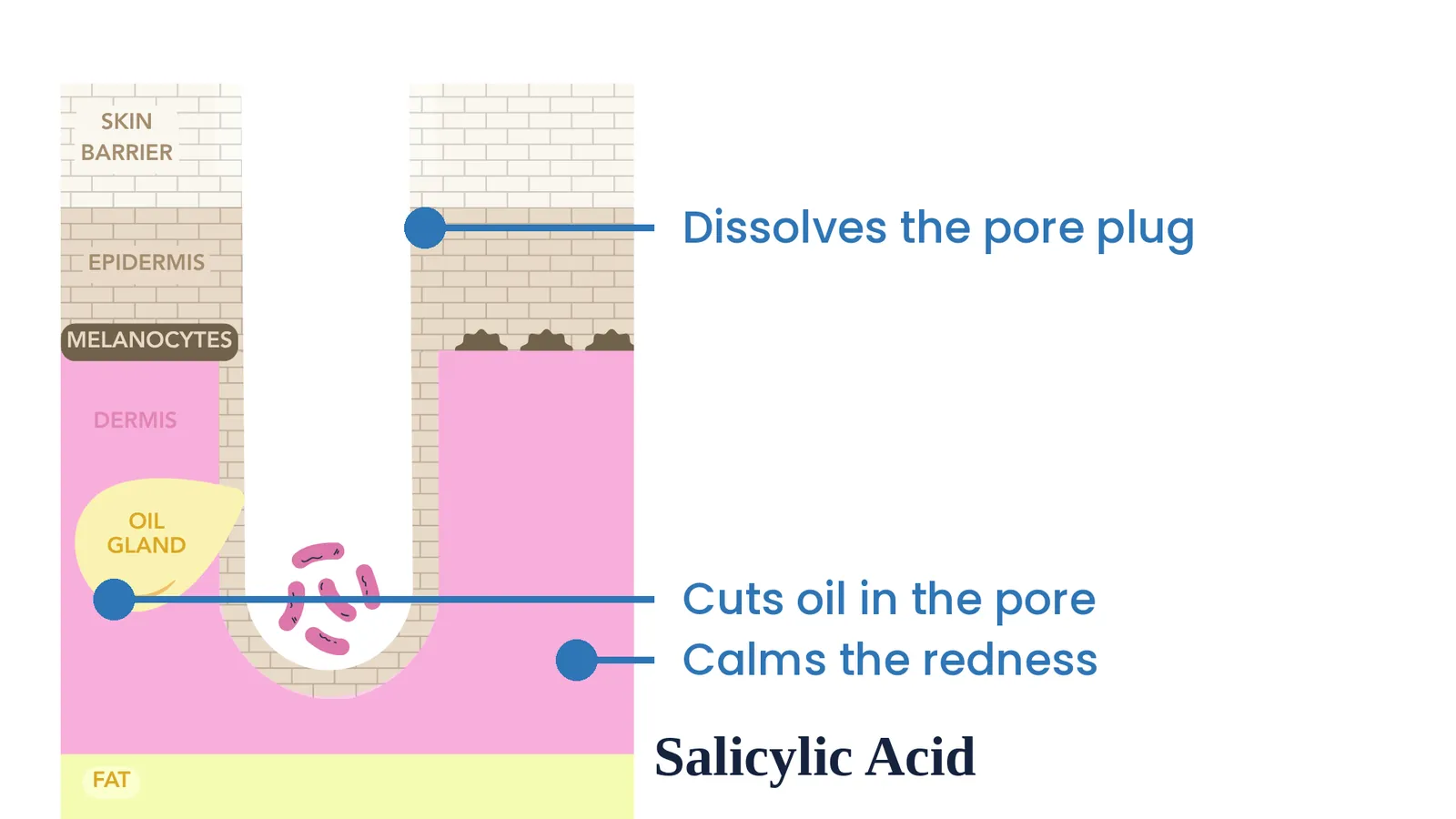
Neither one treats acne: A spot forms deep in the follicle from trapped oil, dead skin and inflammation. Wiping the surface reaches none of that.
The active ingredients are the treatment: Benzoyl peroxide, salicylic acid and adapalene sit on the same shelf, cost about the same, and are what actually works.
Drying the skin out makes acne look worse: Flaky, stripped skin sits over the spots and makes the whole area look angrier than it is.