Dermatologist's Take
Contact dermatitis is a rash triggered by something that touched your skin, and the single most useful clue is timing. If the rash showed up within minutes to hours, burns or stings, and stops exactly where the substance stopped, it is probably irritant — direct chemical damage from soap, solvents, water, or hand sanitiser. If it showed up a day or two later, itches intensely, and creeps past the contact area, it is probably allergic, and the thing that caused it was something you touched on Monday, not Wednesday. Finding and removing the trigger is the whole treatment; steroids and moisturizers only control symptoms while you do that. If the rash keeps coming back and you cannot work out why, ask a dermatologist about patch testing, which is the only test that finds delayed contact allergies.
At a glance
- How Common: Very common. One of the most frequent reasons people see a dermatologist for a rash.
- Two Types: Irritant (direct damage, no immune memory) and allergic (delayed immune reaction). Irritant is the more common of the two.
- Who Gets It: Anyone. Irritant type is especially common in people who do wet work — healthcare, cleaning, hairdressing, food handling, childcare.
- Chronic or Curable: Curable in the sense that it clears completely once the trigger is gone. But an allergy, once you have it, is usually for life.
- Rx Required: No for mild cases. Yes for stubborn, widespread, or facial cases.
- Contagious? No. Not even the blisters.
What is it?
Contact dermatitis is inflammation of the skin caused by something that touched it. The rash appears where the contact happened, which is why it often shows up in odd, tell-tale shapes — a band around the wrist, a stripe under a waistband, a patch behind the earlobes.
There are two completely different mechanisms behind it, and they only look similar on the surface.
Irritant contact dermatitis is chemical damage. A substance strips the oils out of your skin barrier, or directly injures the cells, and the skin becomes inflamed in response. No allergy and no immune memory is involved. This is the more common of the two — in occupational hand rashes, around 80% of cases are irritant. Anyone will get it given enough exposure. A nurse washing her hands forty times a shift will eventually develop it; there is nothing unusual about her immune system.
Allergic contact dermatitis is a genuine immune reaction, specifically a delayed (type IV) hypersensitivity reaction driven by T cells. Your immune system has learned to recognise a particular chemical and attacks the skin wherever it finds it. That learning step is called sensitisation, and it happens quietly — the first exposure often causes nothing at all. Once you are sensitised, you generally stay sensitised for life, and even tiny amounts can set the rash off.
Here is the framing that makes it click: irritant contact dermatitis is a dose problem, and allergic contact dermatitis is a memory problem. With an irritant, less exposure means less rash, and you can often keep using something if you cut back and protect the skin. With an allergen, your immune system has already made up its mind, and there is no safe amount.
What it looks like
A rash where the contact was. Red or pink on lighter skin; on brown and Black skin it more often looks purple, grey, or simply darker than the surrounding skin, and redness can be hard to see at all. Look for swelling, texture change, and shine instead of colour.
Sharp edges (usually irritant). Irritant rashes often stop abruptly at the line where the substance stopped. A glove line, a splash mark, a rectangle under a plaster.
Burning and stinging (usually irritant). Irritant contact dermatitis is more often described as sore, raw, burning, or stinging than as itchy.
Intense itch (usually allergic). Allergic contact dermatitis itches, and it itches badly enough to wake people up.
Blisters and weeping. Small fluid-filled bumps, sometimes larger blisters, that ooze and then crust. More typical of a strong allergic reaction, such as poison ivy.
Dryness, cracking and scaling. The picture in longer-standing cases, especially on the hands. Skin becomes dry, split at the fingertips and knuckles, and painful.
Thickened, leathery skin. After weeks or months of rubbing and scratching, skin can toughen and the normal skin lines become exaggerated. This is called lichenification.
Spread beyond the contact area (allergic only). Allergic rashes can appear in places the substance never directly touched — often because your fingers carried it there. The eyelids, neck and genitals are common secondary sites because the skin there is thin and hands are careless.
What causes it
Contact dermatitis is caused by an outside substance, not by anything wrong inside you. The list of possible culprits is long, but a small number of substances account for most cases.
Common irritants — these damage skin by direct chemical action, and the more exposure, the worse the rash:
- Soaps, detergents, shampoos and dish liquid
- Water itself, especially repeated wetting and drying ("wet work")
- Alcohol hand sanitiser
- Solvents, degreasers, and metalworking fluids
- Acids, alkalis, cement and bleach
- Friction, sweat and occlusion under gloves
- Strong skincare actives used too often — retinoids, benzoyl peroxide, exfoliating acids
Common allergens — these cause a delayed immune reaction in people who have become sensitised:
- Nickel. The most common contact allergen. Found in cheap jewellery, earring posts, belt buckles, jean studs, watch backs, eyeglass frames, keys and some phones and laptops.
- Fragrance. Present in perfume, but also in soap, laundry products, wipes and "unscented" products that use a masking fragrance. Essential oils count as fragrance.
- Preservatives. Methylisothiazolinone (MI) is a well-known offender in wet wipes, shampoos and liquid soaps. Formaldehyde releasers — ingredients like quaternium-15, DMDM hydantoin and imidazolidinyl urea that slowly give off formaldehyde — are another major group.
- Poison ivy, oak and sumac. All three contain an oil called urushiol. It stays active on clothing, tools and pet fur for a year or more, which is how people get "re-exposed" without going near a plant.
- Rubber accelerators. Chemicals used to make rubber, found in gloves, elastic waistbands, shoes and swim goggles. A common cause of hand and foot rashes in healthcare workers.
- Hair dye (PPD). Paraphenylenediamine, in permanent hair dye and in black henna temporary tattoos. Typically causes a rash on the scalp margin, ears and eyelids rather than the scalp itself.
- Topical antibiotics. Neomycin and bacitracin, both sold over the counter in triple-antibiotic ointments. If a wound gets itchier and redder after you start the ointment, suspect this.
- Acrylates. Gel and acrylic nail products. Causes rashes on the fingers, and often the face and eyelids from touching.
- Topical corticosteroids. Yes, the steroid cream itself can be the allergen. It is uncommon but real, and the giveaway is a rash that fails to improve or slowly worsens on treatment that should be working.
What does not cause it: contact dermatitis is not caused by poor hygiene, and it is not contagious. You cannot catch it from someone else, and the fluid inside a poison ivy blister does not spread the rash — not to other people and not to other parts of your own body. When poison ivy seems to spread over several days, that is either urushiol still on your skin or clothing, or areas of thinner skin reacting more slowly than others.
Triggers
Repeated hand washing and sanitising. The single most common driver of irritant hand dermatitis. Each wash removes a little more of the oil layer.
Wet work. Any job or hobby where hands are wet for hours — dishes, hairdressing, bartending, nursing, childcare, cleaning.
Occlusive gloves worn for long stretches. Sweat trapped against skin is itself an irritant. Rubber gloves add the accelerator allergens on top.
Cold, dry weather and indoor heating. Low humidity weakens the barrier, so the same soap that was fine in July causes a rash in January.
Layering strong actives. Retinoid plus acid plus vitamin C, used daily, is a reliable way to produce irritant dermatitis on the face.
A new product introduced 2 to 3 days ago. Because allergic reactions are delayed, the guilty product is rarely the one you used this morning. Think back two or three days.
Sweat and heat. Sweat dissolves nickel out of metal and carries allergens into skin, which is why a necklace that was fine all winter causes a rash in summer.
Scratching and rubbing. Scratching does not just feel good — it drives inflammation and thickens the skin, keeping the rash going after the trigger is long gone.
Transferring allergen with your fingers. Nail products, hair dye and plant oils regularly cause rashes on the eyelids and neck rather than the hands, because those areas have thinner skin.
Treatment Overview
Everyone with this condition
Keep in mind
At-Home Treatment
Step one is not a cream. It is finding the trigger. Everything else on this list controls symptoms while the real problem continues. If you treat the rash and keep touching the cause, you will be back where you started. Work through what touches that area of skin — including things you have used for years, since allergies develop to familiar products all the time — and cut them out. For a suspected allergy, think about what you touched 2 to 3 days before the rash started, not that morning.
How the cause gets identified.
Most of the time, diagnosis is clinical: a dermatologist looks at the pattern and shape of the rash, asks what touched it and when, and works backwards. The shape often gives it away — a rash in the exact outline of a watch strap does not need a test.
The questions that matter most are where the rash is and how long after exposure it appeared. A rash confined to the earlobes, wrists and belly button points at nickel. A rash on the eyelids and neck but not the hands points at something carried there by fingers. A rash that appeared within an hour of a splash points at an irritant; one that appeared two days after a new shampoo points at an allergy.
If the diagnosis is unclear, or the rash keeps returning, or standard treatment is not working, the next step is patch testing.
What patch testing is
Patch testing is the only test that identifies delayed contact allergies. Small amounts of individual chemicals, each mixed to a standard non-irritating concentration, are held against the skin of your upper back under adhesive patches. The chemicals sit there for 48 hours. If your immune system recognises one, a small patch of eczema forms in that exact square, and the dermatologist reads it.
It takes multiple visits over about a week. This surprises people, so plan for it:
- Visit 1 (day 0). The patches go on. You go home wearing them.
- Visit 2 (day 2). The patches come off and a first reading is taken.
- Visit 3 (day 4, sometimes day 7). A second, more important reading. Many true allergic reactions are not visible at 48 hours and only appear on this later reading, which is exactly why a single-visit test would miss them.
Between visits you cannot shower properly, get your back wet, sweat heavily, or sunbathe, because any of these can lift the patches or wash out the result.
How many things get tested. A standard baseline series covers the allergens responsible for most cases and will identify roughly 70% of contact allergies. Depending on your job, hobbies and where the rash is, extra panels can be added — hairdressing, dental, plant, cosmetic, shoe, or your own products brought from home. Testing 30 to over 100 substances at once is normal.
Preparation. Potent topical steroids should be off the back for about three days beforehand, and high-dose oral steroids or immune-suppressing drugs can suppress the reaction and cause false negatives. Antihistamines are fine and do not interfere, because this is not a histamine reaction.
Patch testing is not the same as prick or scratch allergy testing. This is the most common point of confusion, and it matters:
- Prick or scratch testing puts allergen into the top of the skin with a tiny lancet and reads the result in about 15 minutes. It detects immediate (IgE) allergy — hay fever, pet dander, peanut, hives, anaphylaxis.
- Patch testing puts allergen on intact skin and reads it days later. It detects delayed (type IV) allergy — the kind that causes contact dermatitis.
They test different arms of the immune system and are not interchangeable. A normal prick test panel tells you nothing about whether you are allergic to nickel or hair dye. Blood allergy tests (specific IgE) are equally unhelpful here.
Reading the result. Reactions are graded from doubtful through to strongly positive, and the dermatologist also judges relevance — whether a positive result actually explains the rash you came in with. A positive to a chemical you are never exposed to is interesting but not the answer. Finding the relevant allergen is the point, because avoiding it is the cure.
Other tests. A skin scraping for fungus is often done to rule out tinea, which can mimic contact dermatitis closely. A swab may be taken if the skin looks infected. A biopsy is occasionally used when the diagnosis is genuinely uncertain, though it usually shows eczema rather than naming the cause.
Step two is barrier repair. Both types of contact dermatitis damage the skin barrier, and skin that has lost its barrier keeps reacting to things that would otherwise be harmless. This is why rashes drag on after the trigger is gone.
- Moisturize heavily and often. Thick creams and ointments beat lotions. Apply within a few minutes of washing, on slightly damp skin. On hands, aim for after every wash — realistically, keep a tube in every place you wash your hands.
- Switch to a gentle, fragrance-free cleanser. Use lukewarm water, not hot. Skip the loofah and anything labelled exfoliating, antibacterial or clarifying while the skin is inflamed.
- Protect with gloves, but do it properly. Vinyl or nitrile rather than latex, cotton liners underneath, and short stretches rather than all day, because sweat trapped inside is its own irritant.
Step three is calming the inflammation.
- Over-the-counter hydrocortisone 1% twice daily for a week or two is reasonable for a mild rash on the body. It is too weak for thick skin like palms and soles and usually not strong enough for anything severe.
- Cool compresses. A damp cloth for 10 to 15 minutes several times a day genuinely helps weeping, blistered skin, and is safe anywhere.
- Colloidal oatmeal baths soothe widespread itch.
A useful correction about antihistamines. Oral antihistamines do little for the itch of contact dermatitis. The itch is not driven by histamine — it runs through different nerve and cytokine pathways — which is why people take a non-drowsy antihistamine and feel no change. A sedating antihistamine at night may help you sleep through the itch, but that is a sedative effect, not an anti-itch one. Antihistamines are genuinely effective for hives, which is a different problem.
What to expect. Once the trigger is truly removed, a mild rash settles in a few days to two weeks. A severe one, or one on the hands, can take several weeks. Itch usually improves well before the skin looks normal. If it is not clearly improving after two weeks of avoiding the suspected cause and treating it, the diagnosis or the trigger is probably wrong — see a doctor rather than escalating the steroid.
Prescription treatments
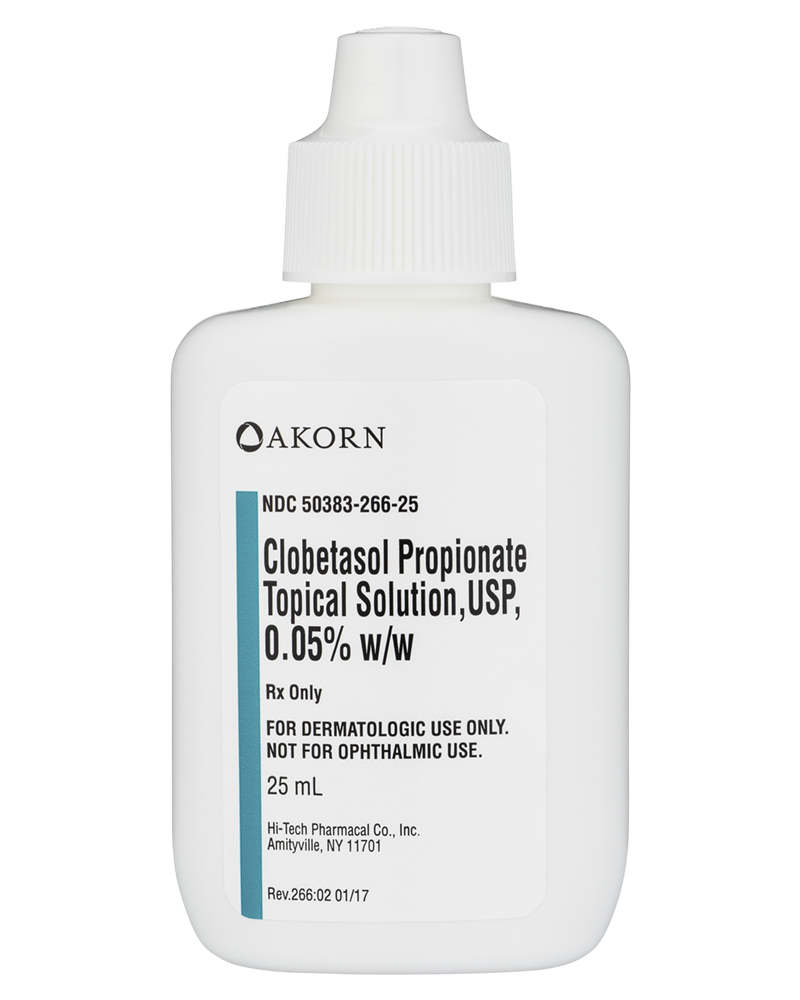

Prescription topical steroids. The mainstay for anything beyond mild. Potency should match the body site, because skin thickness varies enormously:
- Face, eyelids, neck, skin folds and genitals: low potency only, and for short periods. Thin skin absorbs far more and thins further with use.
- Body, arms, legs: medium potency for one to three weeks.
- Palms, soles and thickened plaques: high or very high potency. Standard-strength creams barely penetrate palm skin.
See the topical steroids page for how potency classes work and the real risks of long-term use.
Topical calcineurin inhibitors. Protopic (tacrolimus) and Elidel (pimecrolimus) reduce inflammation without thinning skin, which makes them the preferred option for the face, eyelids and folds — and useful for anyone who needs treatment for weeks rather than days. They can sting or burn for the first few applications; this usually settles within a week.
Oral steroids. Reserved for severe, blistering, or widespread reactions — a bad poison ivy exposure covering large areas is the classic case. When they are used, the course usually needs to run two to three weeks with a taper, because short courses often let the rash rebound as soon as the drug stops. They are not a treatment for chronic or recurring contact dermatitis; the side effects of repeated courses outweigh the benefit, and the answer there is finding the allergen.
Patch testing. Worth naming as a treatment, not just a test. For recurrent contact dermatitis, identifying the allergen and then avoiding it is the only thing that produces a lasting cure. Everything else is maintenance.
Other options for severe, chronic cases. Where hand or widespread dermatitis persists despite avoidance and topical treatment, dermatologists may use phototherapy (narrowband UVB), oral immune-suppressing drugs, or newer targeted drugs such as dupilumab. Evidence for the newer biologics specifically in allergic contact dermatitis is still limited and mostly comes from case series rather than large trials, so this remains specialist territory.
In-office procedures
Look-Alikes
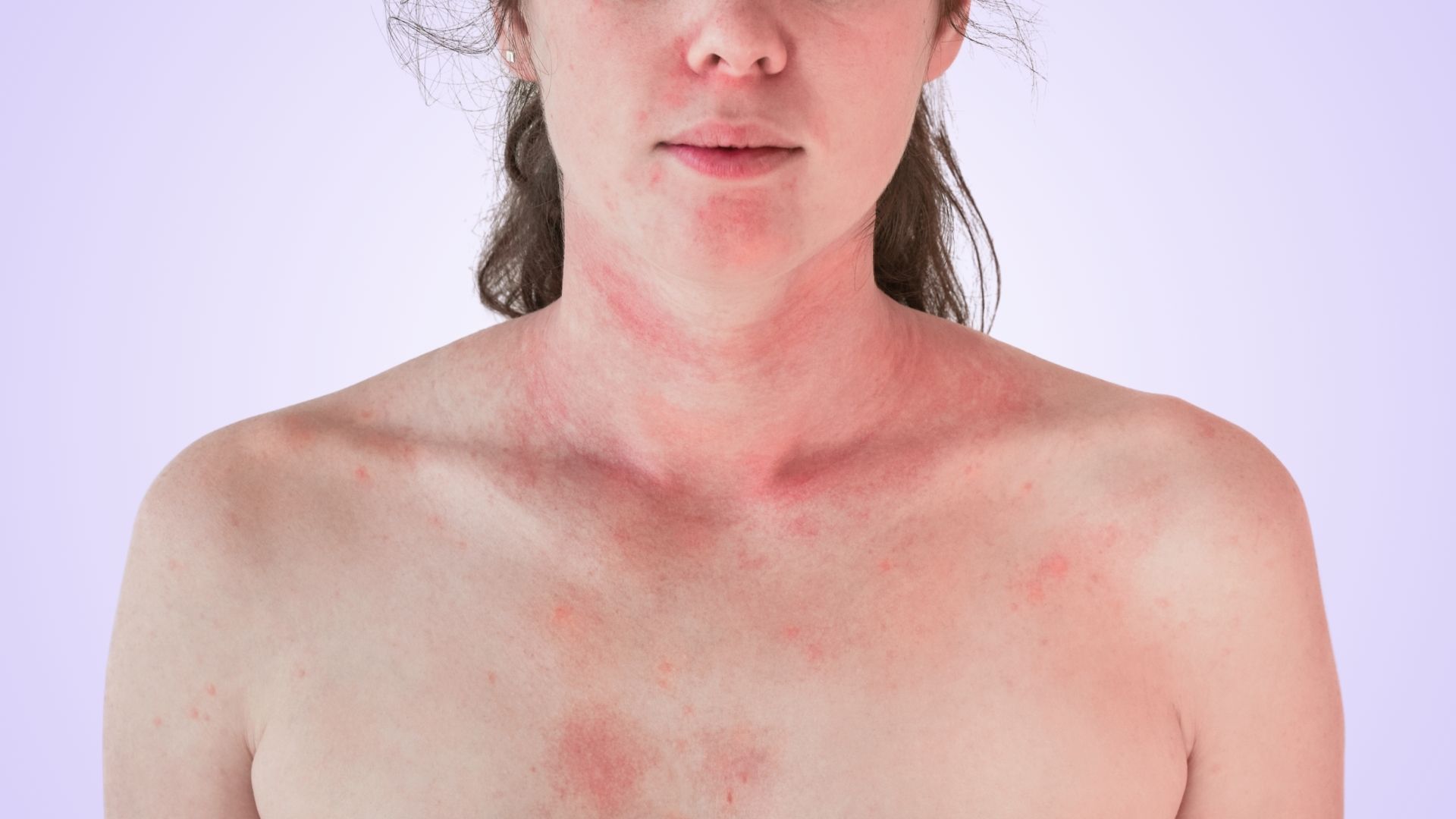
Atopic dermatitis (eczema). The closest mimic, and the two often coexist — eczema damages the barrier, which makes contact dermatitis more likely on top. Atopic dermatitis tends to favour the elbow and knee creases, starts in childhood, and comes with a personal or family history of asthma or hay fever. Contact dermatitis follows the shape of an exposure instead. If long-standing eczema suddenly stops responding to treatment that used to work, contact allergy — sometimes to the treatment itself — is a real possibility.
Psoriasis. Sharply bordered plaques with thick silvery scale, typically on elbows, knees and scalp, and usually more symmetrical. Psoriasis itches less than allergic contact dermatitis and rarely weeps or blisters. Nail pitting points to psoriasis.
Fungal infection (tinea). This one matters most. Tinea often has a raised, scaly, advancing edge with clearer skin in the middle — the classic ring. Contact dermatitis is inflamed all the way across. Treating tinea with a steroid makes it worse: the steroid calms the redness and itch for a few days, so it seems to work, while the fungus spreads under cover. The result is a strange, poorly defined rash called tinea incognito that is hard to recognise. If a "contact dermatitis" keeps expanding on steroid cream, ask for a skin scraping.
Cellulitis. A bacterial skin infection. Warm to the touch, tender rather than itchy, spreading, and usually accompanied by feeling unwell or feverish. Cellulitis is almost always on one side only. A hot, painful, one-sided rash with fever needs same-day care.
Hives (urticaria). Raised welts that move around and individually vanish within 24 hours, leaving normal skin. Hives are an immediate reaction; contact dermatitis is fixed in place and scales or blisters. If your rash looks different in a different spot each day, it is hives.
Seborrheic dermatitis. Greasy yellowish scale in oily areas — sides of the nose, eyebrows, scalp, behind the ears, chest. Recurs in the same places indefinitely and is only mildly itchy.
The distinguishing feature of contact dermatitis: the rash has a geography that matches something you touched, and it goes away and stays away once that thing is gone. If you can draw the outline of an object on the rash, or explain why it stops where it stops, that is contact dermatitis.
More specific patterns on this site. Contact dermatitis in particular locations behaves differently enough to warrant their own pages: eyelid dermatitis, where the culprit is usually something applied to the hands or hair rather than the eyes; hand dermatitis, where irritant causes dominate; and perioral dermatitis, which looks like contact dermatitis around the mouth but is a different condition, often driven by steroid use.