Athlete's Foot vs Dry Feet
Athlete's foot is a fungal infection. It usually starts in the split between the smallest toes, it itches, and it spreads. Dry feet are skin that has lost water. The heel and the ball of the foot go tight, rough and pale, and they stay put. Soggy white skin between the toes is fungus, not dryness.
What it is
Dermatophytes are the same family of fungi that cause ringworm. They live on keratin in the top layer of skin. Warm, damp shoes are what let them take hold.
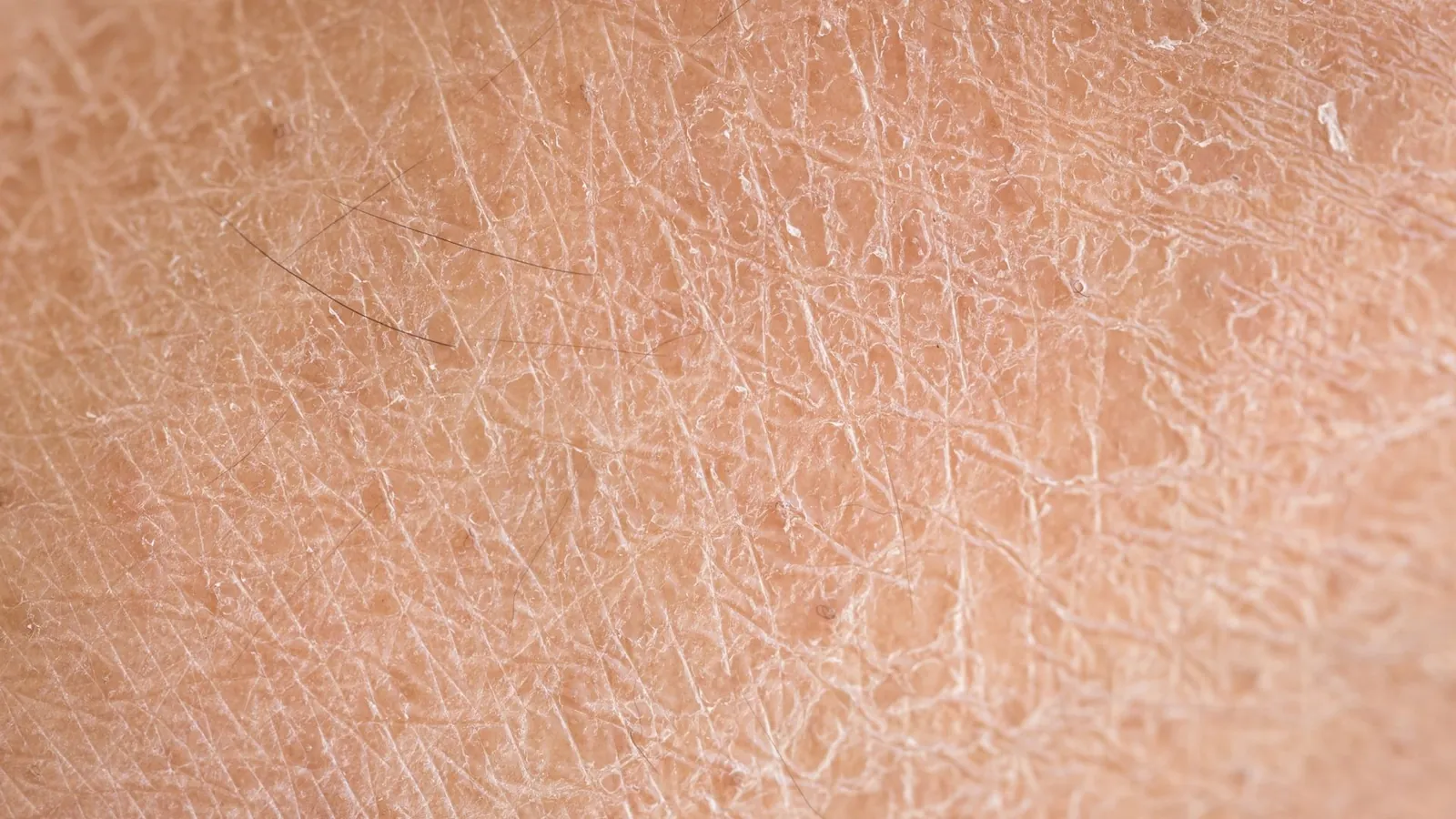
The outer layer holds less moisture than it should, so it stiffens and flakes off. Soles have no oil glands, so they dry faster than the rest of you.
What it looks like
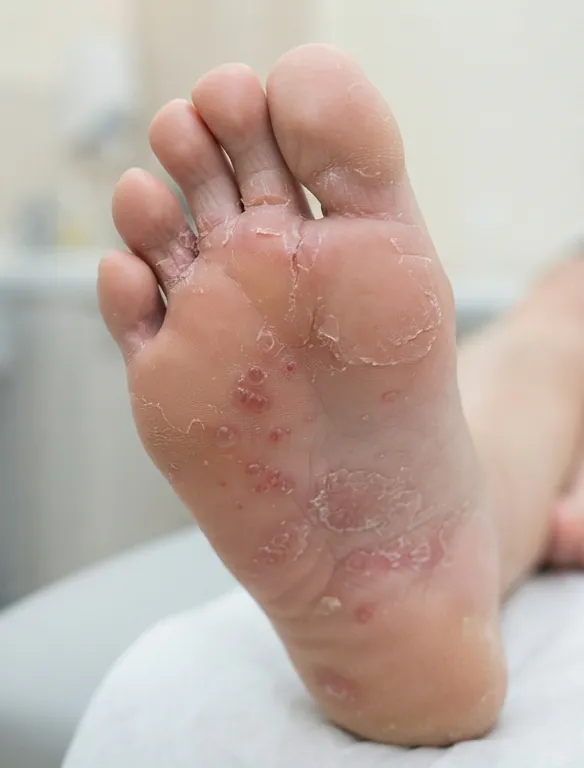
Between the toes the skin turns white, soft and split. On the sole it can look like dry scale that covers the heel and creeps up the sides, like a slipper.
Rough and greyish on the heel and the ball of the foot. Deep cracks can open along the heel rim. The colour is even and there is no clear border.
Does it itch
Itching and burning, worst between the toes and worst when the shoes come off.
Tightness is the main feeling. A cracked heel can sting when you walk on it.
Where it shows up
Most often the gap between the fourth and fifth toes. From there it moves to the sole, the sides and the toenails. It often starts on one foot.
The pressure areas, on both feet, fairly evenly. It stops well short of the toe webs.
What it does over time
It will not clear on its own. Left alone it reaches the toenails, which are much harder to treat, and it passes to other people on shared floors.
Worse in winter, in dry air, and after long hot showers. Better within days of regular moisturizing. It does not spread and you cannot catch it.
What actually treats it
Terbinafine or clotrimazole from the drugstore, rubbed in twice a day. Keep going for a week or two after the skin looks normal, or it comes straight back.
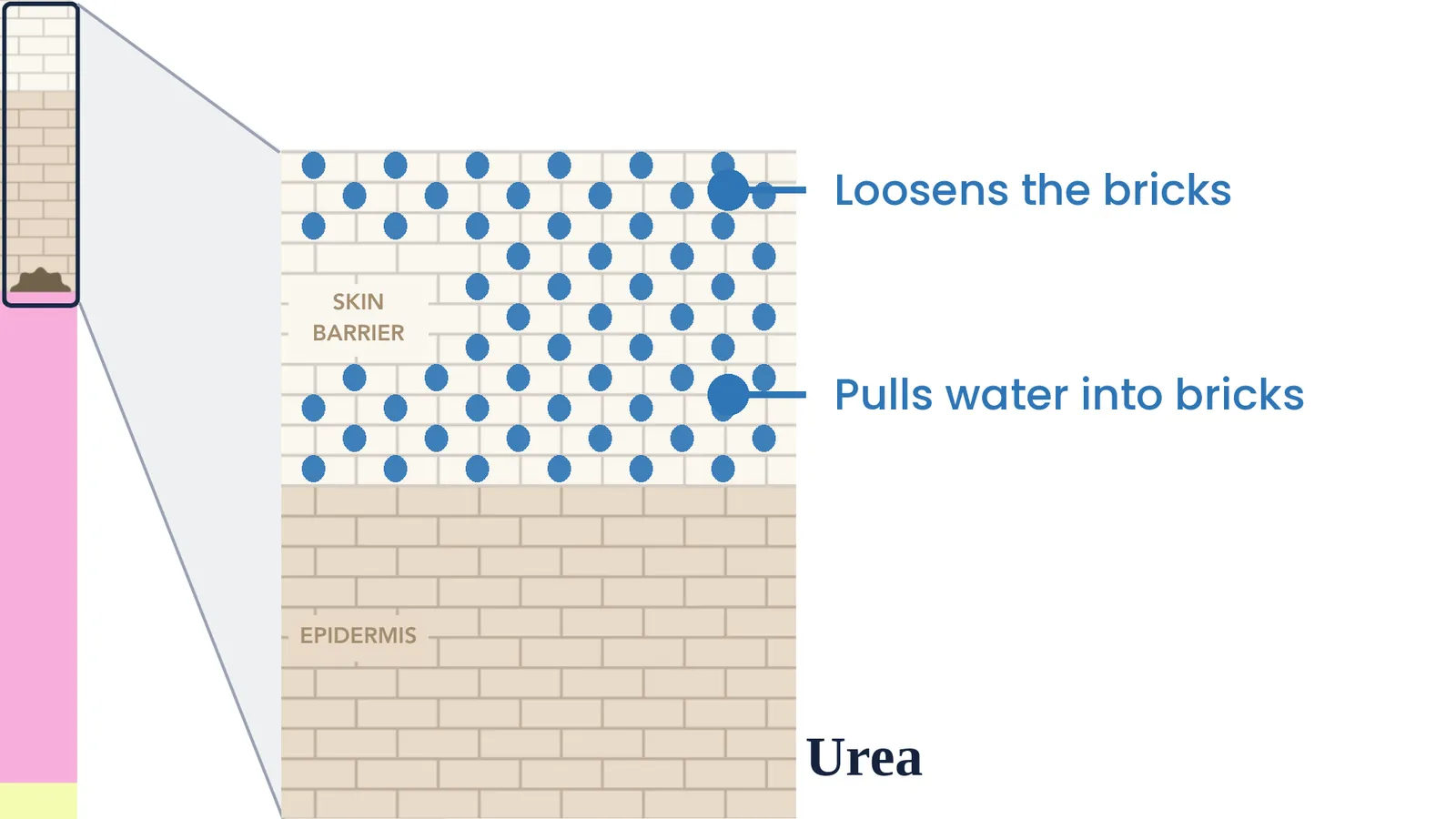
Put it on damp skin after a shower. Urea pulls water into hard skin and softens it. Gentle filing of a damp heel helps, a little at a time.
When it needs a doctor
Also worth checking if redness is spreading up the foot, or the toenails have turned thick and yellow.
Or dryness that has not shifted after a few weeks of daily cream.
The check you can do at the bedroom door
Sit down, and pull each pair of toes apart. Look right into the gap.
Athlete's foot lives in that gap. You are looking for skin that is white, soft and peeling, with a split at the base of the toes. Dry skin does not do that. It builds up on the parts of the foot that take your weight and touch the floor.
Then look at the two feet side by side. Dryness is a mirror image. A fungal infection is often ahead on one foot.
Moisturizer helps one and feeds the other
Rich cream is the treatment for dry feet: It replaces what the skin has lost and softens hard heels. Used daily, it works within a week or two.
Rich cream between the toes makes athlete's foot worse: The fungus grows in damp warmth, and a thick cream in a closed space keeps the skin wet. This is the most common reason a foot gets worse after weeks of careful care.
If you are treating dry feet, keep the cream on the heels and soles and out of the toe webs.
You can have both at once
Dry, cracked skin is easier for a fungus to get into. Plenty of people have hard dry heels and a fungal infection in the toe webs on the same foot.
That is fine to treat together. Antifungal cream in the webs, moisturizer on the heels, and dry socks in between. If it is not clearly better in four weeks, a clinician can scrape a few flakes of skin and look at them under a microscope. That takes minutes and it answers the question.
Why athlete's foot keeps coming back
The fungus does not only live on you. It lives in your shoes, in the towel, and on the floor of the changing room.
Dry your feet properly, especially between the toes. Rotate shoes so each pair dries out for a day. Wear socks that move sweat away from the skin, and change them if they get damp. Antifungal powder in shoes you wear often is a reasonable extra step.
Treating the skin and putting the same damp shoes back on is why so many people feel they get this every summer.