Athlete's Foot vs Psoriasis
Athlete's foot is a fungal infection. It usually starts in the gap between the toes, it itches, it spreads, and one foot is often ahead of the other. Psoriasis on the feet is the immune system making skin too fast. It builds thick plaques with edges you can feel, usually on both soles, and it comes and goes for years.
What it is
Dermatophytes live on keratin in the top layer of skin. They come from damp floors, shared towels and shoes, and sweaty closed shoes let them settle.
The immune system speeds up skin cell production. Cells pile up before the old ones shed, which builds a thick raised plaque. It runs in families and you did not catch it.
What it looks like
Between the toes the skin goes white, soft and split. On the sole it can be fine dry scale over the heel and up the sides, like a slipper.
Well-defined red or dark patches with dry silvery scale on top. The skin underneath is thickened, and cracks often open across the heel and the ball of the foot.
The edge of the patch
The border blurs into normal skin, but the outer rim is often redder and scalier than the middle, because that is where the fungus is growing.
You can trace where the plaque stops. Run a finger across and there is a clear step up onto thicker skin.
Does it itch
Itching and burning, worst between the toes and worst when the shoes come off.
Itch varies. The bigger complaint is soreness from deep cracks in a thickened sole, which can make walking uncomfortable.
Where on the foot
Most often the gap between the fourth and fifth toes. It also thrives on the sole and the sides, where shoes hold moisture.
Weight-bearing skin, and often the palms as well. It usually leaves the gaps between the toes alone.
One foot or both
A fungal infection spreads from where it landed, so one foot is commonly worse for weeks or months.
Psoriasis turns up on both feet in a matching pattern, because it is coming from the immune system rather than the floor.
What else to check
Nails go thick, crumbly and yellow-brown, starting at the free edge. A hand can be involved too, usually only one.
Look for the same scaly patches on the elbows, knees, lower back or scalp. Then check the nails for small pits, an oily brown spot, or a nail lifting from its bed.
What actually treats it
Terbinafine or clotrimazole from the drugstore, twice a day. Terbinafine clears more infections and does it in about a week, where clotrimazole takes around four.
Thick scale blocks medication, so treatment usually starts with a urea or salicylic acid cream. A prescription steroid, often with a vitamin D cream, goes on underneath. Stubborn cases have tablet and injection options.
When it needs a doctor
Also spreading redness up the foot, or nails that have turned thick and crumbly.
Foot psoriasis rarely clears with drugstore products, and cracks deep enough to change how you walk are worth treating properly.
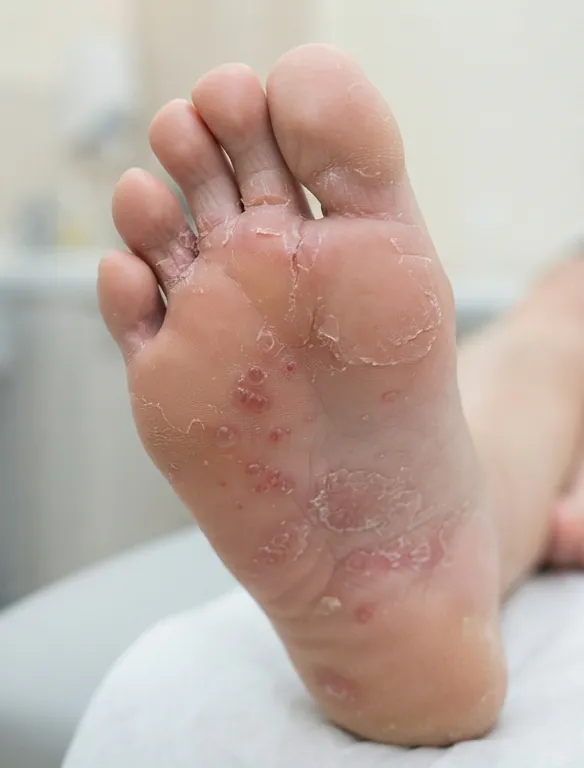
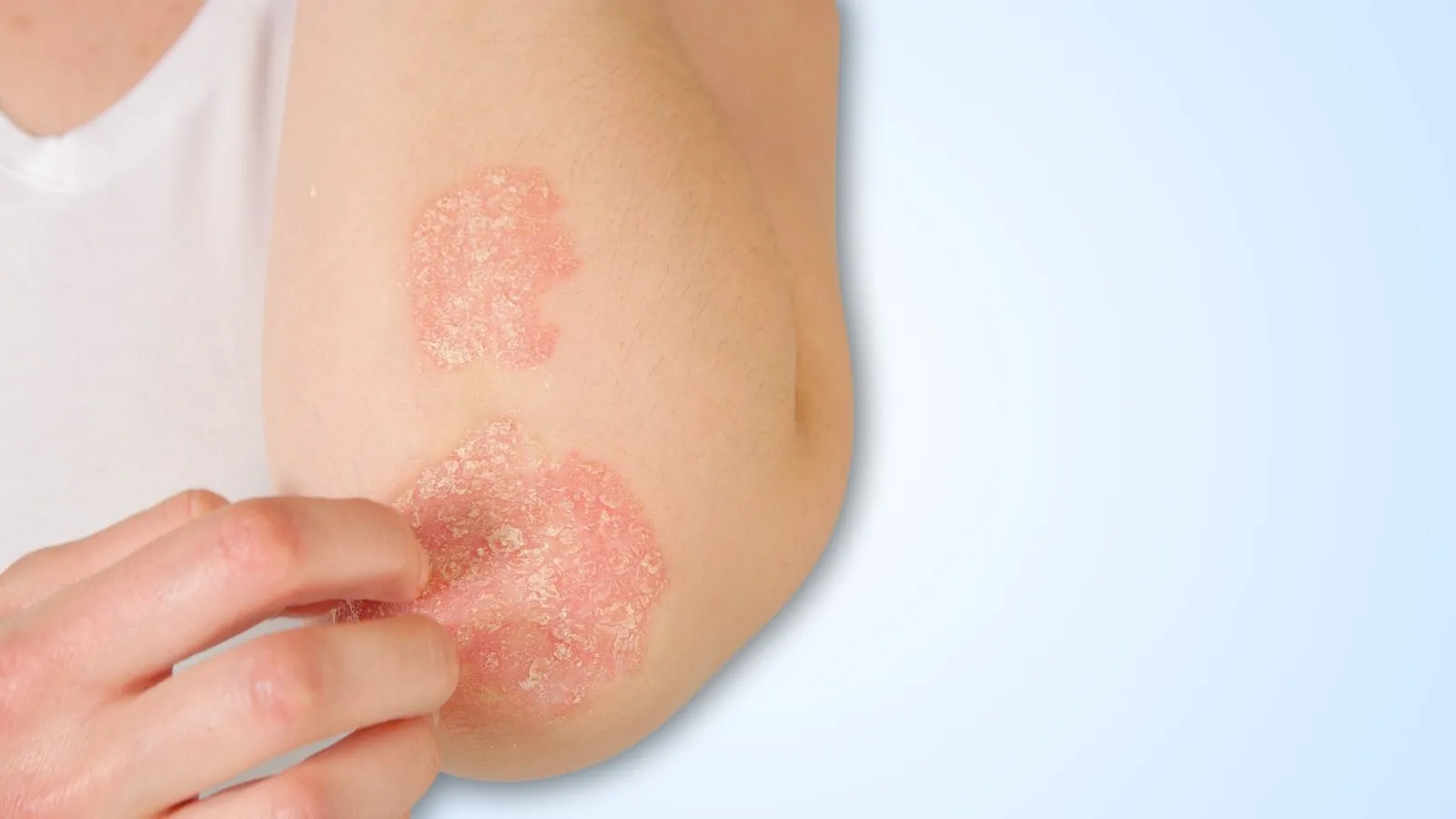
Look at the rest of your body first
Psoriasis rarely stays on the feet. Before you decide, check your elbows, your knees, your lower back, your scalp and the crease between your buttocks. Matching scaly patches with a sharp edge in any of those places makes psoriasis much more likely.
Then look at your fingernails and toenails. Small pits like pinpricks, an oily brown-yellow patch under the nail, or a nail lifting away from its bed all point to psoriasis. Nails that are thick, crumbly and yellow from the outer edge inwards point to a fungal infection instead.
Nail changes are close to a giveaway on both sides, and they take ten seconds to check.
Steroid cream turns one better and the other worse
A steroid cream is a normal part of psoriasis treatment: It calms the overactive immune response, and a plaque usually flattens over a few weeks.
A steroid cream on athlete's foot lets the fungus spread: It turns down the immune response that had been limiting the infection. The itch settles for a few days, then the rash comes back wider with a fainter, harder-to-read edge.
So a combined steroid and antifungal cream is a poor first choice. It is the wrong answer for a foot rash nobody has named yet.
They can happen at the same time
Psoriasis on your feet does not protect you from a fungal infection. Cracked psoriatic skin is easier for a fungus to get into.
The clue is a change in pattern. Long-standing symmetrical plaques that suddenly go asymmetric, or start itching in the toe webs, are worth a scraping rather than a stronger steroid.
Treating both at once is routine, and the order matters: clear the fungus, then keep treating the psoriasis.
What sets each one off
Athlete's foot follows moisture. Gyms, pools, communal showers, and shoes that never dry out. Drying between the toes, rotating shoes and changing damp socks prevents most repeats.
Psoriasis follows the immune system. Flares often follow an infection, a stressful stretch, a skin injury, smoking or stopping a treatment. Pressure and friction on the soles can also trigger a plaque in the exact spot that took the rubbing.