Beta Glucan vs Hyaluronic Acid
Beta glucan and hyaluronic acid are both humectants. They pull water into the skin and hold it there, so they do largely the same job. Beta glucan does one thing more. It also calms irritated skin and appears to help the barrier rebuild itself, though that part rests on a much smaller body of research.
What it is
Also taken from barley and some mushrooms. It is a much larger molecule than hyaluronic acid.
One well-defined molecule, sold in several sizes. It has been in skincare for decades.
What it does
It binds water like any humectant, and its size means it also lays a thin film on the surface that slows water escaping.
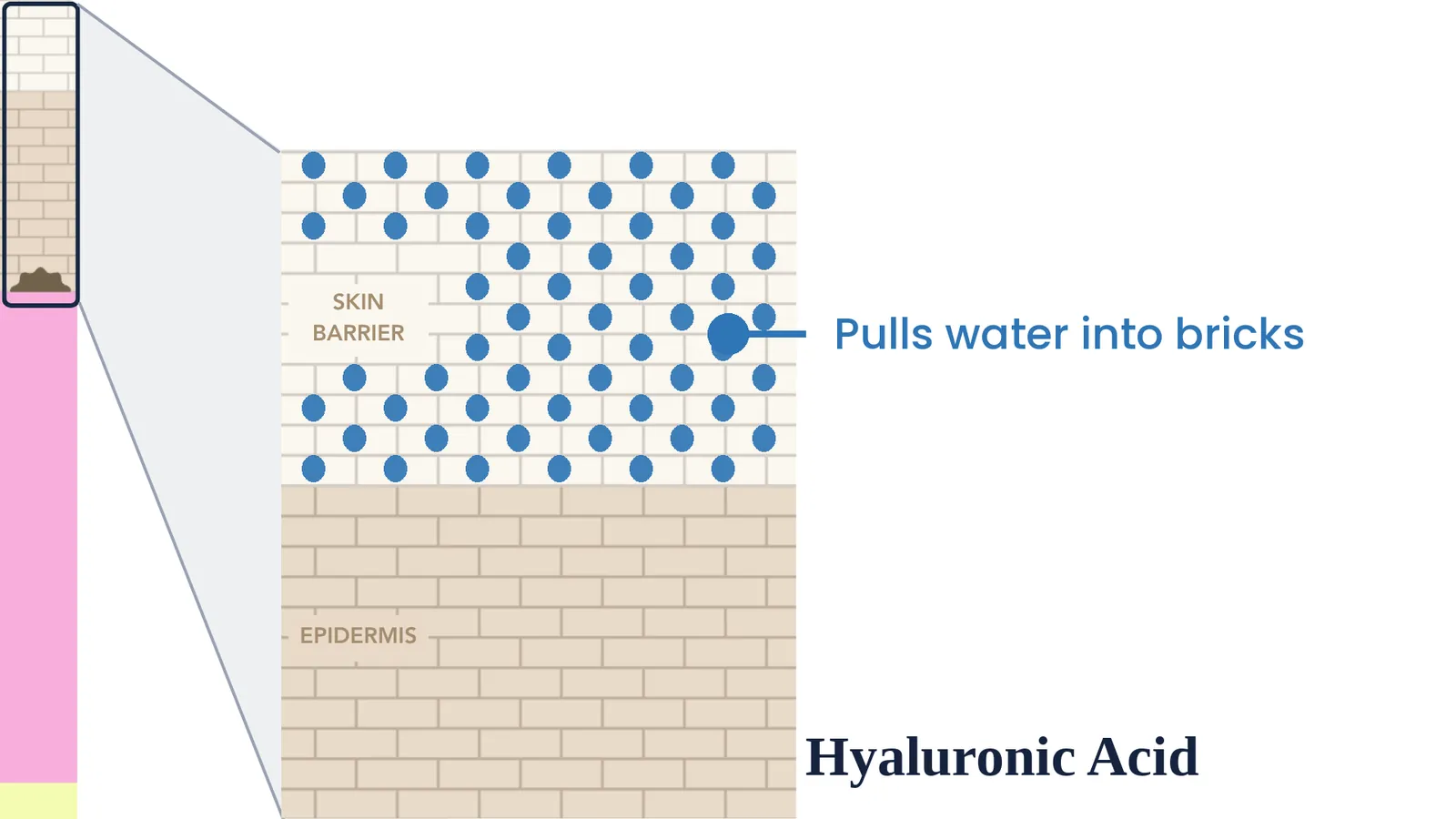
It binds a large amount of water and keeps it in the outer layers of skin.
What it is best at
Redness after acids or a retinoid, skin recovering from a procedure, and eczema-prone skin.
Skin that feels papery and looks flat, with no redness to deal with.
What it will not do
It supports and calms. It does not clear acne, fade pigment or build collagen.
Hyaluronic acid holds water, and that is the whole of it.
How good is the evidence
The strongest signal is for barrier repair and wound healing. Hydration and soothing are supported by a smaller number of studies, several of them run by makers.
Decades of use and a simple mechanism nobody disputes. It has been studied far more than beta glucan.
What it feels like
It sits on the skin a little longer than a watery serum before sinking in.
It disappears in seconds, and can feel tacky until a moisturizer goes over it.
The downside
Fewer products contain it, and the ones that do tend to cost more. Some come from oats, which matters if you react to them.
In very dry air, a humectant with nothing sealing it can draw water out of deeper skin instead of in.
Cost
It is a newer ingredient in a smaller number of products, and priced accordingly.
It is already in a large share of drugstore moisturizers and serums.
The at-home or drugstore version
There is no clinic version. Where it matters is the amount in the bottle, and few brands publish it.
The serum on the shelf is the same molecule a clinic uses. The injected version is a filler placed under the skin to add volume, which no serum can do.
Who each suits
The overlap is most of the story
Both are humectants, which means both bind water: Put either one on damp skin and the outer layers hold more moisture for the next few hours.
Beta glucan is the bigger molecule: That size means less of it gets into the skin, but it lays down a film on the surface that slows water evaporating away.
Hyaluronic acid is the smaller one: It draws more water into the outer layers, and is why skin looks plumper within minutes of using it.
What beta glucan adds
It seems to calm skin, not just hydrate it: Beta glucan is used on wounds and on irritated skin, and the research behind that use is the strongest part of its case.
It also appears to prompt the skin to rebuild: Laboratory work suggests it signals skin cells to make more barrier fats rather than simply adding moisture on top. That is a promising idea rather than a settled one.
Treat the marketing claims carefully: You will read that beta glucan beats hyaluronic acid on hydration. Those comparisons come from a small number of studies, several of them run by companies selling it.
Do you need both
No. One humectant is enough: Layering a second changes very little, and neither one seals water in on its own.
Both are already in plenty of products: Some serums carry the pair, which is a reasonable way to have both without buying twice.
The moisturizer over the top matters more than the choice: Humectants pull water in, and something has to stop it leaving again.
Which one to pick
Pick hyaluronic acid if your skin is simply dehydrated: It is cheaper, easier to find, and the evidence for what it does is not in question.
Pick beta glucan if your skin is dry and angry: Skin recovering from a retinoid, a peel or a flare is where the soothing side earns its price.
Pick either if you are just trying to feel less tight: Both work, and the difference between them is smaller than the difference between using one and using none.
Before you buy
Apply either to damp skin, then seal with a moisturizer
Check where the ingredient sits on the label, since a trace amount does nothing
Skip oat-derived beta glucan if oats irritate your skin
Do not expect either one to treat acne, redness from rosacea, or pigment
If money is tight, hyaluronic acid gets you most of the way