Bio Retinol vs Retinol
Bio-retinol is a marketing name, not a defined ingredient. It usually means bakuchiol, a plant compound that switches on some of the same pathways as retinol, but the label is also used for plant extracts with almost no research behind them. Retinol is a form of vitamin A with decades of evidence. Bakuchiol is the one bio-retinol worth taking seriously, and it is gentler rather than stronger.
What it actually is
Bakuchiol comes from the seeds and leaves of the babchi plant. Other products use the same phrase for rosehip, moth bean or cockspur extracts.
A single, well-defined molecule. Skin converts it into the active form once it is applied.
What the research shows
Over three months, bakuchiol matched retinol on wrinkles and pigment, and caused less scaling and stinging. It is one small trial, not a body of work.
Retinoids are the most studied anti-ageing ingredients in skincare, with consistent results for lines, texture and tone.
What it is best at
Sensitive or reactive skin, and anyone who has tried a retinoid and given up on it.
It is the closest thing skincare has to an all-rounder, and it is the reference every alternative is measured against.
How long until you see a change
The trial ran twelve weeks and showed change by then. Expect a slow, quiet improvement.
Texture first, then tone, then lines. The first six weeks often look worse rather than better.
What it feels like
No peeling stage, no building up, and it can be used morning and night.
Peeling around the nose and mouth in the early weeks is normal. Starting two nights a week avoids most of it.
The downside
Bio-retinol is not a regulated term. Two bottles with the same words on the front can hold completely different plants.
Redness, flaking and stinging while skin adjusts. It also makes skin burn more easily, so sunscreen is not optional.
Cost
Bakuchiol sits mostly in higher-priced serums, and cheap options are still uncommon.
A drugstore retinol and a luxury one hold the same molecule. Price mostly buys the texture and the packaging.
The at-home or drugstore version
The bottle on the shelf is all there is. No stronger bakuchiol exists behind a counter.
The prescription version is tretinoin, which is stronger and faster because skin can use it directly. Retinol has to be converted first, so it is a slower version of the same thing.
Who each suits
Read the ingredient list, not the front of the box
"Bio-retinol" means whatever the brand wants it to mean: No rule governs the phrase. It is a way of saying plant-derived and retinol-like on the same label.
Bakuchiol is the version with real research: If the ingredient list says bakuchiol, you are buying the thing the studies were done on.
Anything else is largely untested: Other plant extracts sold under the same phrase have little published work behind them. That is limited evidence, not weak evidence, but you are still paying for a promise.
What bakuchiol has been shown to do
One trial put it directly against retinol: Over twelve weeks both reduced wrinkles and pigment by a similar amount, and the people using retinol reported more scaling and stinging.
That is a good result and a small one: It is a single study of a few dozen people over three months. Retinol has hundreds of studies behind it, running for years.
Nobody has shown bakuchiol does more than retinol: The honest claim is that it looks comparable and feels kinder, not that it is better.
They work in different ways
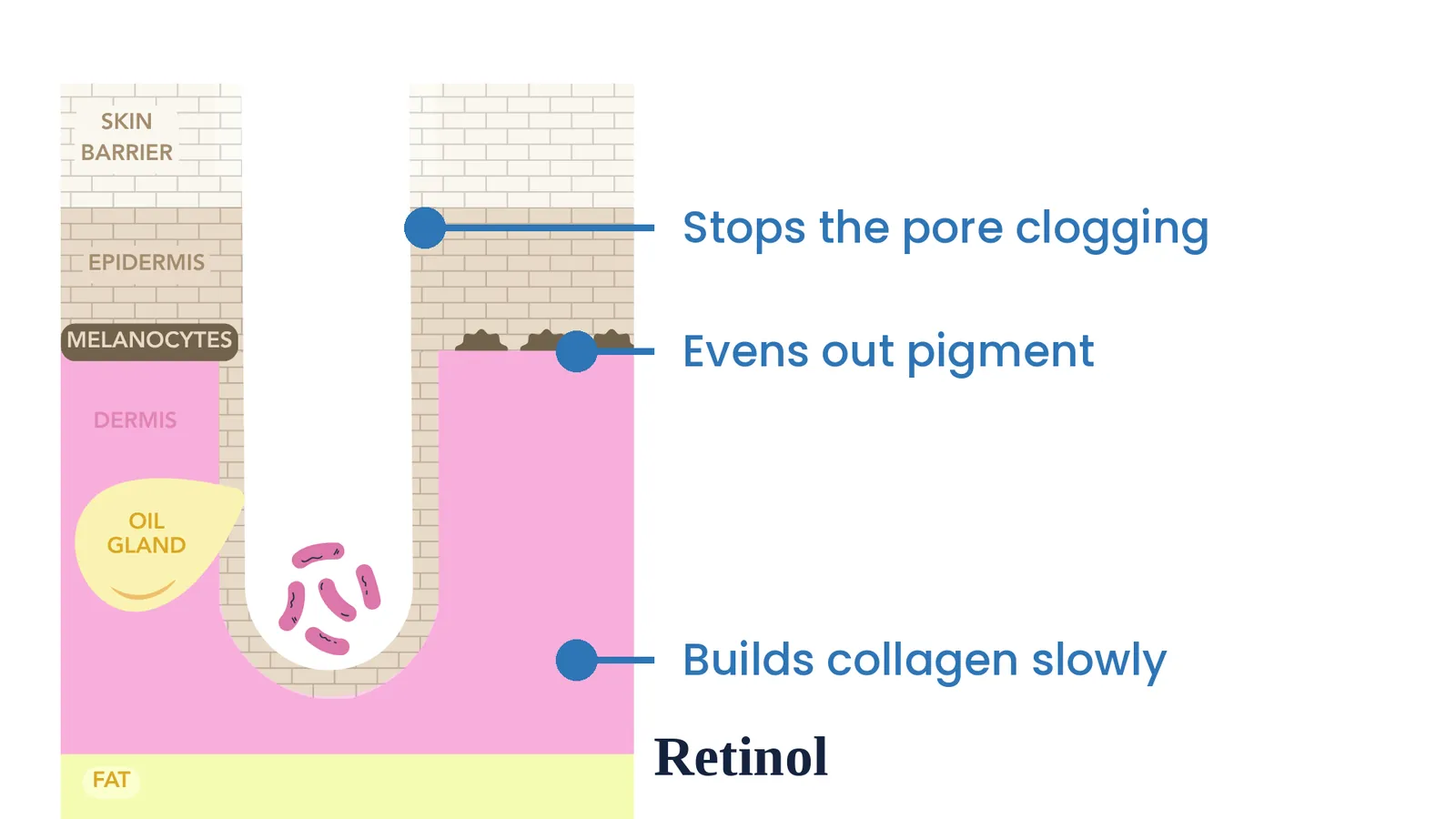
Retinol acts on receptors inside skin cells: It changes how those cells mature and shed, which is why it clears pores as well as smoothing the surface.
Bakuchiol appears to switch on some of the same genes without using those receptors: That is the likely reason it produces similar effects without the peeling stage.
Bakuchiol is not a retinoid: It is a different molecule that happens to end up in a similar place, and it has no track record in acne.
Which one to choose
Choose retinol if your skin tolerates it: It has the strongest evidence, it is inexpensive, and it does more than smooth lines.
Choose bakuchiol if retinol has already beaten you: Plenty of people abandon a retinoid in the first month. A gentler option that you actually keep using beats a stronger one sitting in a drawer.
Do not pay a premium for a vague label: If the bottle says bio-retinol and the ingredient list does not say bakuchiol, you are buying the wording.
Before you buy
Look for bakuchiol by name in the ingredient list
Start retinol two nights a week and build up over a month
Bakuchiol can be used morning and night, which suits people who forget
Give either one three months before deciding it has not worked
Keep sunscreen in the routine with both
Using both together is possible but unnecessary, and it doubles the chance of irritation